


Quick Summary: Detroit Regional Chamber Endorsed Republicans Focus on Tax Cuts and While Democrats Propose Strategic Growth
- The Detroit Regional Chamber endorsed Mike Duggan, disrupting traditional candidate debates.
- Republicans focus on tax cuts, while Democrats propose strategic growth initiatives.
- Business leaders seek stability beyond election cycles, emphasizing long-term strategies.
- Inflation fears dominate voter concerns, influencing political strategies at Mackinac.
- The Michigan House passed property-tax-cut bills, intensifying the tax debate.
Source: Read original article
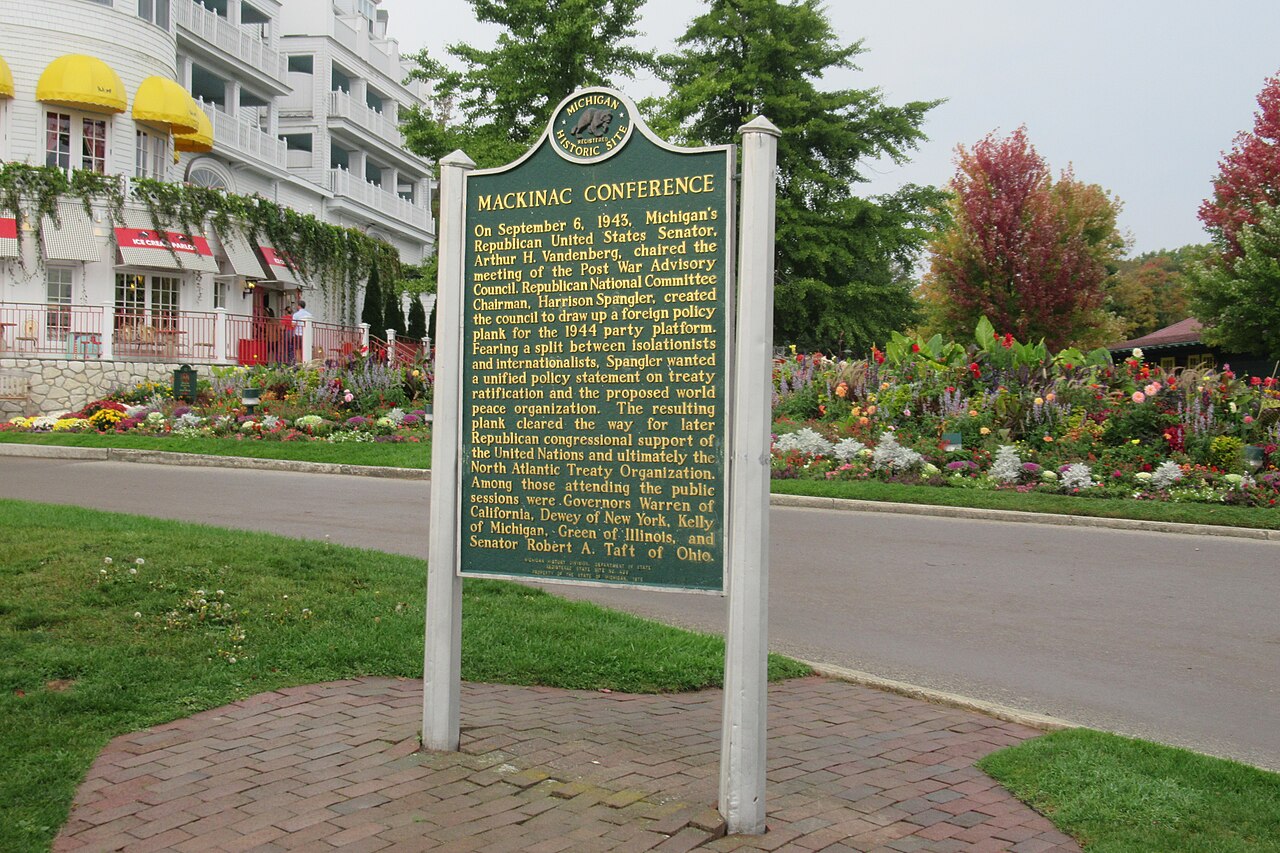
The Mackinac Conference has become a political battlefield, with the Detroit Regional Chamber’s endorsement of Mike Duggan shaking up the status quo. This unexpected move has forced candidates to rethink their strategies and seek new platforms to make their voices heard.
At the heart of the Mackinac discussions is the debate over tax cuts versus economic development. Republicans are pushing for sweeping tax reductions, while Democrats like Jocelyn Benson advocate for targeted growth strategies, including a new department for arts and tourism to boost Michigan’s economy.
Business leaders are calling for stability, with the Detroit Regional Chamber emphasizing the need for long-term strategies that transcend election cycles. This reflects the broader voter sentiment, as a recent poll shows high inflation concerns and a volatile political landscape.
As the conference unfolds, the focus remains on how these political maneuvers will shape Michigan’s future. The endorsement of Duggan by a major business group signals a shift towards predictability and cross-partisan appeal, challenging candidates to adapt to the new dynamics.
A Detroit Regional Chamber poll conducted April 28 through May 1 among 600 likely general-election voters found inflation fears at 49%, the highest level in the chamber’s annual conference polling since 2023, according to Michigan Advance’s report on the survey. The clearest new development out of Mackinac Island is that the 2026 governor’s race is now being fought as an open audition for business-class legitimacy after the Detroit Regional Chamber broke with tradition and endorsed independent Mike Duggan, helping blow up the usual all-candidate island debate and forcing rival hopefuls to make their case elsewhere.
25% income tax, but Bridge noted he did not detail what spending cuts would be needed to make that work. Those figures matter because they suggest Michigan’s 2026 electorate is volatile, economically frustrated, and open to outsider or anti-establishment appeals even as major business groups try to impose some order on the field.
Bridge Michigan said Republicans at the forum centered their campaigns on broad tax reductions, while Benson and Genesee County Sheriff Chris Swanson argued for restructuring and targeted growth strategies instead. WEMU highlighted that the Michigan House had just passed property-tax-cut bills on Wednesday night, while critics warned that lowering taxes without replacement revenue could hit schools and public services.
Bridge Michigan reported that other candidates declined to participate in what had traditionally been a marquee Mackinac debate after the Detroit Regional Chamber backed Duggan, leaving a separate candidate forum near the conference as the closest thing to a gubernatorial showdown. The central conflict running through the latest reporting is whether Michigan’s next governor should promise sweeping tax cuts or defend a more activist economic-development model at a moment of deep voter anxiety.
The irony, as other coverage has noted, is that a conference branded “A Quest for Common Ground” opened with a governor’s field already split over whether the host institution tilted the playing field. The schedule itself shows where the power centers are concentrating over the next 48 hours.
The Michigan House passed property-tax-cut bills, intensifying the tax debate. Republicans are pushing for sweeping tax reductions, while Democrats like Jocelyn Benson advocate for targeted growth strategies, including a new department for arts and tourism to boost Michigan’s economy.
WEMU highlighted that the Michigan House had just passed property-tax-cut bills on Wednesday night, while critics warned that lowering taxes without replacement revenue could hit schools and public services. The irony, as other coverage has noted, is that a conference branded “A Quest for Common Ground” opened with a governor’s field already split over whether the host institution tilted the playing field.
Business leaders seek stability beyond election cycles, emphasizing long-term strategies. Inflation fears dominate voter concerns, influencing political strategies at Mackinac.
The scale and speed of this development has caught many observers off guard. Each new update adds another dimension to a story that is still unfolding, and the full picture will only become clear as more verified details emerge from the people and institutions directly involved.
Analysts who have tracked this issue closely say the current moment represents a genuine turning point. The decisions made in the coming weeks are expected to set the direction for months ahead, with ripple effects likely to extend well beyond the immediate actors in the story.
For those directly affected, the practical impact is already visible. People navigating this fast-changing situation are dealing with real consequences while new information continues to reshape what is known and what remains open to interpretation.
Historical parallels offer some context, though experts caution against drawing too close a comparison. Similar situations have played out before, but the specific combination of pressures, personalities, and timing here makes this moment distinct in ways that matter for how it ultimately resolves.
The political and economic dimensions of this story are deeply intertwined. What appears as a single event on the surface is in practice the convergence of multiple pressures that have been building quietly over a longer period than most public reporting has captured.