

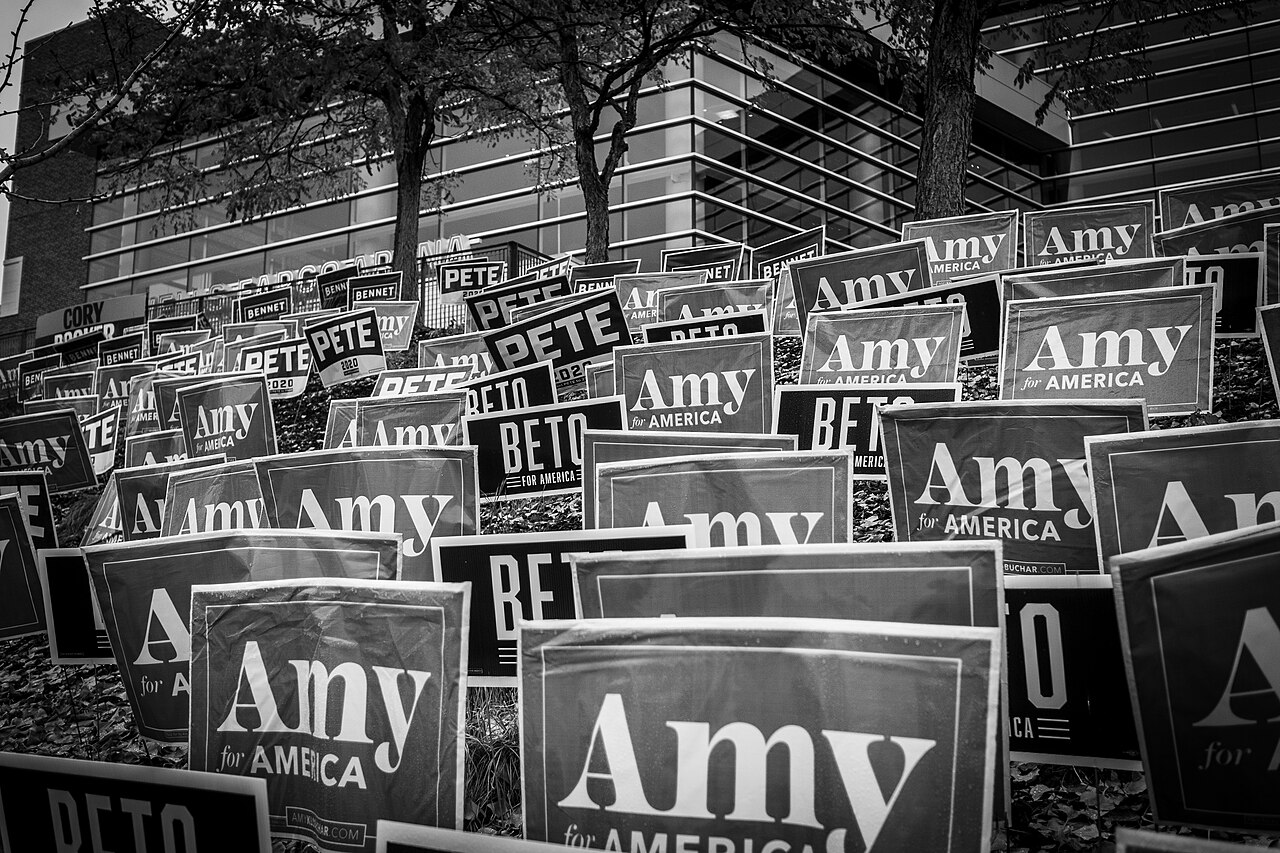

Quick Summary: Klobuchar Secures Minnesota DFL Endorsement for Governor on First Ballot
- Amy Klobuchar secured the Minnesota DFL endorsement for governor on May 30, winning on the first ballot.
- Despite protests from the party’s left, Klobuchar’s moderate stance prevailed among delegates.
- Kobey Layne challenged Klobuchar, advocating for a more progressive agenda.
- Klobuchar emphasized her ability to counter Republican policies and Trump’s agenda.
- Her endorsement sets the stage for a general election battle against the GOP’s Kendall Qualls.
Source: Read original article
Amy Klobuchar’s triumph in securing the Minnesota DFL endorsement for governor was not just a political victory; it was a statement of her enduring influence and moderate appeal. On May 30, Klobuchar clinched the endorsement on the first ballot, overcoming a vocal protest from the party’s left wing.
The endorsement process was not without drama. Kobey Layne, a former legislative assistant, mounted a challenge, arguing that Klobuchar’s rapid ascent stifled necessary debate within the party. Despite this, Klobuchar’s statewide popularity and pragmatic approach won the day, with delegates favoring her over a more progressive message.
This endorsement highlights a deeper tension within the Democratic-Farmer-Labor Party. While Klobuchar’s allies, like U.S. Rep. Kelly Morrison, touted her as the Democrats’ best hope against Republican policies, critics from the left demanded a more aggressive stance on issues like trans rights and systemic inequality.
As Klobuchar moves into the general election, she faces the challenge of uniting a party divided by ideological differences. Her choice of former Fergus Falls Mayor Ben Schierer as a running mate underscores her commitment to a pragmatic, inclusive campaign. The upcoming election against Republican Kendall Qualls will test whether Klobuchar’s first-ballot win can translate into broader electoral success.
In a parallel statewide fight, Axios reported on May 27 that Senate candidate Peggy Flanagan’s campaign believed it had about 75% of DFL delegates lined up before Rep. The sharpest development in the latest reporting is that Klobuchar did not merely coast through a ceremonial endorsement: she faced a floor challenge from Kobey Layne, a former Minnesota Senate legislative assistant who openly argued that Klobuchar’s fast rise after Tim Walz said in January 2026 that he would not run again had short-circuited a real debate inside the party.
By Saturday night, reporting also showed Republicans had endorsed Kendall Qualls for governor after a 10-round process marred by ballot problems, setting up a clearer general-election contrast. Amy Klobuchar’s biggest immediate win was not just securing the Minnesota DFL endorsement for governor on Saturday, May 30, but doing it on the first ballot despite an organized protest from the party’s left that tried to turn the convention into a broader fight over how confrontational Democrats should be in the post-Walz era.
Early Saturday, May 30, Klobuchar locked up the endorsement; that same convention also endorsed Attorney General Keith Ellison and Secretary of State Steve Simon for reelection, while Republicans meeting in Duluth were simultaneously choosing their own statewide ticket. The Star Tribune reported that Klobuchar nonetheless “won the endorsement on the first round of balloting,” a sign that most delegates still preferred her statewide popularity and moderate profile over a more insurgent progressive message.
Layne argued, “What it takes to change these systems is a working-class candidate who refuses to be bought,” directly framing Klobuchar as too tied to the party establishment at a moment when many activists want a more combative response to Trump, ICE and structural inequality. On Friday, May 29, delegates gathered in Rochester for the DFL convention, where Klobuchar and Layne appeared in a gubernatorial Q&A and the left-flank resistance became visible.
Her campaign must now hold together delegates who wanted a sharper stance on trans rights and systemic change while capitalizing on the very argument that won her the endorsement: that her long record and broad name recognition give Democrats their best chance to keep the governorship after Walz. The conflict driving the story is between electability and ideological urgency.
In a parallel statewide fight, Axios reported on May 27 that Senate candidate Peggy Flanagan’s campaign believed it had about 75% of DFL delegates lined up before Rep. Quick Summary: Klobuchar Secures Minnesota DFL Endorsement for Governor on First Ballot Amy Klobuchar secured the Minnesota DFL endorsement for governor on May 30, winning on the first ballot.
By Saturday night, reporting also showed Republicans had endorsed Kendall Qualls for governor after a 10-round process marred by ballot problems, setting up a clearer general-election contrast. This endorsement highlights a deeper tension within the Democratic-Farmer-Labor Party.
Amy Klobuchar’s biggest immediate win was not just securing the Minnesota DFL endorsement for governor on Saturday, May 30, but doing it on the first ballot despite an organized protest from the party’s left that tried to turn the convention into a broader fight over how confrontational Democrats should be in the post-Walz era. Early Saturday, May 30, Klobuchar locked up the endorsement; that same convention also endorsed Attorney General Keith Ellison and Secretary of State Steve Simon for reelection, while Republicans meeting in Duluth were simultaneously choosing their own statewide ticket.
The Star Tribune reported that Klobuchar nonetheless “won the endorsement on the first round of balloting,” a sign that most delegates still preferred her statewide popularity and moderate profile over a more insurgent progressive message. Layne argued, “What it takes to change these systems is a working-class candidate who refuses to be bought,” directly framing Klobuchar as too tied to the party establishment at a moment when many activists want a more combative response to Trump, ICE and structural inequality.
The scale and speed of this development has caught many observers off guard. Each new update adds another dimension to a story that is still unfolding, and the full picture will only become clear as more verified details emerge from the people and institutions directly involved.
Analysts who have tracked this issue closely say the current moment represents a genuine turning point. The decisions made in the coming weeks are expected to set the direction for months ahead, with ripple effects likely to extend well beyond the immediate actors in the story.
For those directly affected, the practical impact is already visible. People navigating this fast-changing situation are dealing with real consequences while new information continues to reshape what is known and what remains open to interpretation.
Historical parallels offer some context, though experts caution against drawing too close a comparison. Similar situations have played out before, but the specific combination of pressures, personalities, and timing here makes this moment distinct in ways that matter for how it ultimately resolves.
The political and economic dimensions of this story are deeply intertwined. What appears as a single event on the surface is in practice the convergence of multiple pressures that have been building quietly over a longer period than most public reporting has captured.