

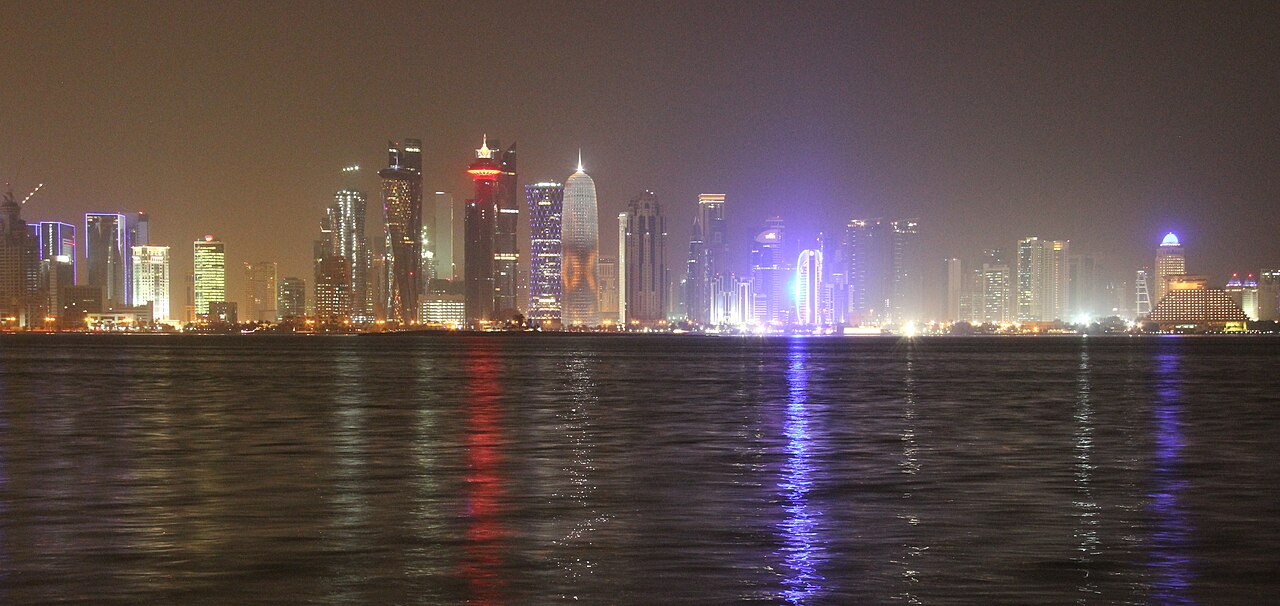

Quick Summary: Qatar Hosted 66% Increase in New Non – Qatari Companies
- Qatar hosted 3,295 new non-Qatari companies in Q1 2026, marking a 66% increase year over year.
- The Beijing-Qatar Investment Summit on June 9 aims to turn Chinese interest into concrete investments.
- Chinese automakers now hold nearly 30% of Qatar’s auto market, reflecting significant market penetration.
- Qatar’s infrastructure investments for the 2022 World Cup are paying off in business and logistics.
- Qatar’s strategy includes attracting Chinese firms across sectors like biotech, logistics, and fintech.
Source: Read original article
Qatar is no longer just a Middle Eastern hub; it’s a burgeoning business powerhouse, strategically courting Chinese investment like never before. The upcoming Beijing-Qatar Investment Summit on June 9 is the latest move in Doha’s grand strategy to transform Chinese corporate curiosity into tangible commitments.
Chinese automakers have already seized nearly 30% of Qatar’s car market, a testament to the shifting economic landscape. This isn’t just about cheaper cars; it’s about a deeper economic realignment. Qatar’s massive infrastructure investments for the 2022 FIFA World Cup have laid the groundwork for this transformation, boosting logistics and mobility sectors.
Beyond automobiles, Qatar is eyeing Chinese giants in biotech, logistics, and fintech. The June 9 summit is not just a meeting; it’s a culmination of high-level talks and strategic planning to make Qatar a resilient base for Chinese enterprises amid global volatility.
With 3,295 new non-Qatari businesses established in the first quarter of 2026 alone, Qatar’s business climate is ripe for foreign participation. The real question is whether these efforts will translate into lasting economic partnerships and further market penetration.
The biggest fresh development is not a signed deal but a June 9 summit in Beijing that shows Qatar is making a concentrated new push to turn Chinese corporate interest into investment commitments just as Chinese car brands are already taking nearly 30% of the Qatari auto market. The same current roundup says 3,295 non-Qatari companies set up business in Qatar in the first quarter of 2026, up 66% year over year.
On June 6, 36Kr Global published the English report announcing the June 9 Beijing summit and highlighting the nearly 30% Chinese auto share. Jaidah links the market shift to Qatar’s long infrastructure buildup for the 2022 FIFA World Cup, including roads, rail, ports, and Hamad International Airport, arguing that those investments are now paying off in logistics, mobility, and business activity.
The June 6 report explicitly frames the opportunity across “China-Qatar cooperation, industry opportunities, market policies and recent activities,” while pairing the June 9 summit with statistics on real estate transactions, government tenders, and startup-facing programs. Jaidah said buyer behavior has changed as more people see cars as “a medium of transport” rather than a luxury status symbol, helping cheaper Chinese models gain traction against legacy brands.
The same June 6 Chinese-language roundup reports that Invest Qatar chief executive Sheikh Ali bin Alwaleed Al-Thani recently led a high-level delegation to China and held senior meetings and closed-door business exchanges in Shanghai and Hangzhou with companies including WuXi Biologics, Shanghai SUS Environment, Cainiao Group, and Ant International. In other words, the June 9 Beijing summit appears to be the public culmination of a live roadshow already targeting heavyweight Chinese multinationals.
The next concrete milestone is June 9 in Beijing, when the summit and negotiation conference is scheduled to take place. The latest report, published on June 6 by 36Kr Global, says the “Beijing-Qatar” Investment Cooperation Summit and Negotiation Conference will be held in Beijing on June 9, co-hosted by Invest this topic and this topic National Bank with support from the Beijing Council for the Promotion of International Trade.
this topic’s infrastructure investments for the 2022 World Cup are paying off in business and logistics. Chinese automakers have already seized nearly 30% of this topic’s car market, a testament to the shifting economic landscape.
this topic’s massive infrastructure investments for the 2022 FIFA World Cup have laid the groundwork for this transformation, boosting logistics and mobility sectors. With 3,295 new non-this topici businesses established in the first quarter of 2026 alone, this topic’s business climate is ripe for foreign participation.
The same current roundup says 3,295 non-this topici companies set up business in this topic in the first quarter of 2026, up 66% year over year. On June 6, 36Kr Global published the English report announcing the June 9 Beijing summit and highlighting the nearly 30% Chinese auto share.
Jaidah links the market shift to this topic’s long infrastructure buildup for the 2022 FIFA World Cup, including roads, rail, ports, and Hamad International Airport, arguing that those investments are now paying off in logistics, mobility, and business activity. The June 6 report explicitly frames the opportunity across “China-this topic cooperation, industry opportunities, market policies and recent activities,” while pairing the June 9 summit with statistics on real estate transactions, government tenders, and startup-facing programs.
The scale and speed of this development has caught many observers off guard. Each new update adds another dimension to a story that is still unfolding, and the full picture will only become clear as more verified details emerge from the people and institutions directly involved.
Analysts who have tracked this issue closely say the current moment represents a genuine turning point. The decisions made in the coming weeks are expected to set the direction for months ahead, with ripple effects likely to extend well beyond the immediate actors in the story.
For those directly affected, the practical impact is already visible. People navigating this fast-changing situation are dealing with real consequences while new information continues to reshape what is known and what remains open to interpretation.
Historical parallels offer some context, though experts caution against drawing too close a comparison. Similar situations have played out before, but the specific combination of pressures, personalities, and timing here makes this moment distinct in ways that matter for how it ultimately resolves.
The political and economic dimensions of this story are deeply intertwined. What appears as a single event on the surface is in practice the convergence of multiple pressures that have been building quietly over a longer period than most public reporting has captured.