


Quick Summary: Park Geun – Hye Failed Conservatives Fail to Shift National Sentiment
- South Korea’s June 3 local elections saw conservatives fail to shift national sentiment despite high-profile campaigning.
- Former presidents Park Geun-hye and Lee Myung-bak campaigned extensively but couldn’t reverse broader political trends.
- The conservative camp maintained strongholds like Daegu but failed to win over competitive regions.
- Critics argue that relying on past leaders shows a lack of renewal within the conservative movement.
- Internal divisions and local splits further weakened the conservative strategy.
Source: Read original article
The June 3 local elections in South Korea were a litmus test for the conservative camp, which hoped that the star power of former presidents Park Geun-hye and Lee Myung-bak could sway the national mood. Despite their extensive campaigning, the strategy fell flat, revealing deeper issues within the conservative movement.
While Park and Lee managed to solidify support in traditional strongholds like Daegu, their influence did not extend to more competitive regions. This highlights a critical flaw in the conservative approach: nostalgia and symbolic authority are insufficient to win over moderates and independents.
Critics within and outside the conservative bloc argue that relying on figures tied to past controversies signals a failure to renew and adapt. The elections exposed fractures within the conservative ranks, with independent candidacies siphoning off core supporters and internal divisions undermining unity.
As the dust settles, the conservative camp faces a pivotal moment. The results suggest that a focus on mobilizing the base is not enough to reclaim broader political ground. The challenge now is to redefine conservatism in South Korea and address the internal and external factors that contributed to this electoral setback.
What happens next, based on the latest reporting, is not an immediate formal vote or hearing but an intensifying struggle over who gets to define the conservative rebuild after June 3. ” Democratic secretary-general Cho Seung-rae mocked conservatives by saying, “Now I think you’re saying let’s go from ‘Yoon-e-gain’ to ‘Park-e-gain,’” while Democratic Gyeonggi governor candidate Choo Mi-ae said the former president, described as “the protagonist of the manipulation of state affairs,” should be apologizing rather than touring campaign stops.
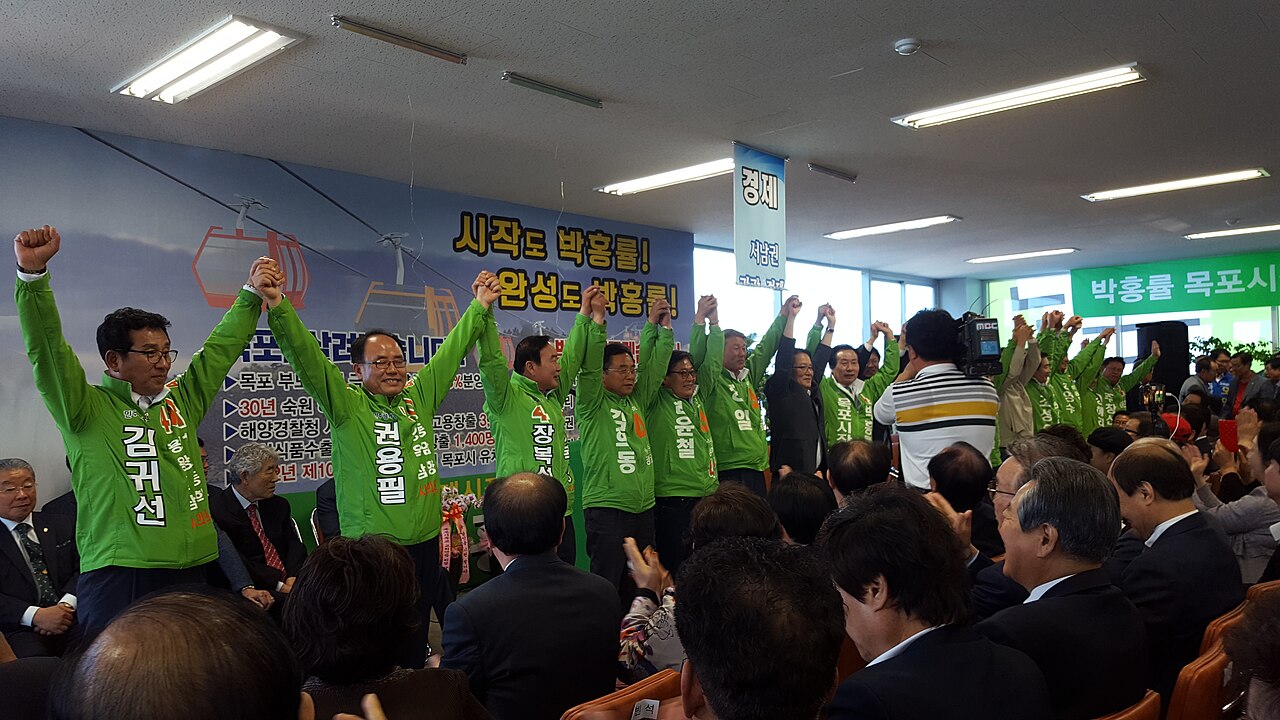
In separate Maeil reporting on local-government contests published four days ago, conservative solidarity was described as fractured in some areas, with independent candidacies drawing away core supporters; one race in South Gyeongsang even turned on a razor-thin margin of 44 votes. kr) Maeil Business reports that the conservative side staged what it called an “unusual scene,” with former presidents Park Geun-hye and Lee Myung-bak campaigning alongside other senior conservative figures including former lawmaker Yoo Seung-min and former minister Kim Moon-soo in a near-total mobilization effort ahead of the June 3 vote.
That matters because it suggests the June 3 results were shaped not only by the limited pull of former presidents, but also by local splits that high-profile campaigning could not paper over. The central political test was whether nostalgia and symbolic authority could rescue the People Power camp beyond its base.
The answer, in the latest reporting, is mostly no: the party “succeeded in protecting the conservative core area” but failed to reverse the broader national trend. kr) The clearest concrete result highlighted in the latest coverage is Daegu.
One of the most striking details is just how aggressively Park returned to the trail. Maeil says she campaigned not only in Daegu but across North Chungcheong, Daejeon, South Gyeongsang, Ulsan and Busan, and that this was her first such direct support in national elections since her impeachment.
Maeil Business reports that the conservative side staged what it called an “unusual scene,” with former presidents Park Geun-hye and Lee Myung-bak campaigning alongside other senior conservative figures including former lawmaker Yoo Seung-min and former minister Kim Moon-soo in a near-total mobilization effort ahead of the June 3 vote. Quick Summary: Park Geun – Hye Failed Conservatives Fail to Shift National Sentiment South Korea’s June 3 local elections saw conservatives fail to shift national sentiment despite high-profile campaigning.
Former presidents Park Geun-hye and Lee Myung-bak campaigned extensively but couldn’t reverse broader political trends. Despite their extensive campaigning, the strategy fell flat, revealing deeper issues within the conservative movement.
The elections exposed fractures within the conservative ranks, with independent candidacies siphoning off core supporters and internal divisions undermining unity. The answer, in the latest reporting, is mostly no: the party “succeeded in protecting the conservative core area” but failed to reverse the broader national trend.
The scale and speed of this development has caught many observers off guard. Each new update adds another dimension to a story that is still unfolding, and the full picture will only become clear as more verified details emerge from the people and institutions directly involved.
Analysts who have tracked this issue closely say the current moment represents a genuine turning point. The decisions made in the coming weeks are expected to set the direction for months ahead, with ripple effects likely to extend well beyond the immediate actors in the story.
For those directly affected, the practical impact is already visible. People navigating this fast-changing situation are dealing with real consequences while new information continues to reshape what is known and what remains open to interpretation.
Historical parallels offer some context, though experts caution against drawing too close a comparison. Similar situations have played out before, but the specific combination of pressures, personalities, and timing here makes this moment distinct in ways that matter for how it ultimately resolves.
The political and economic dimensions of this story are deeply intertwined. What appears as a single event on the surface is in practice the convergence of multiple pressures that have been building quietly over a longer period than most public reporting has captured.