

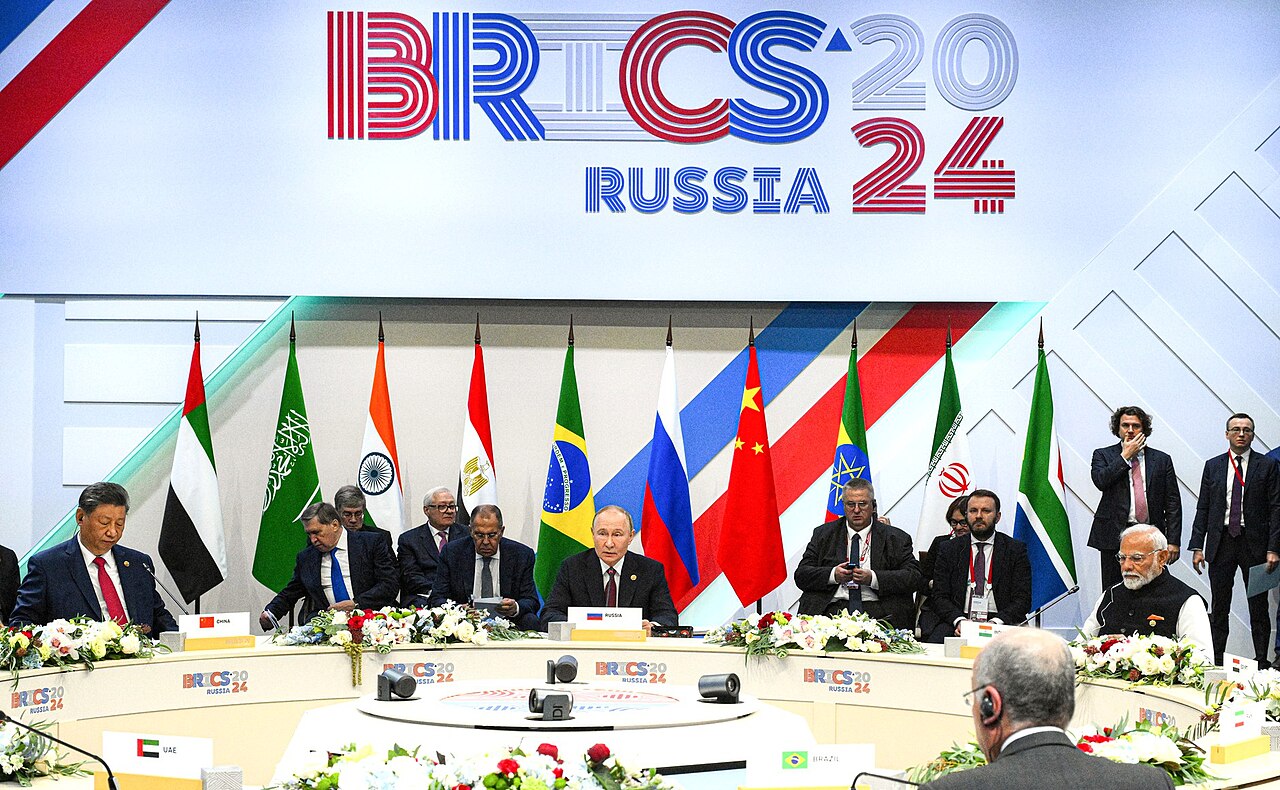

Quick Summary: Iran Emphasized Failure in Producing a Joint Statement
- Iran’s ambassador to Russia, Kazem Jalali, emphasized BRICS’ role in global energy security, urging the bloc to stabilize energy routes.
- At the BRICS foreign ministers’ meeting, Iran’s push for anti-US and Israeli language led to a failure in producing a joint statement.
- India’s External Affairs Minister highlighted the need for BRICS to play a stabilizing role, contrasting Iran’s confrontational stance.
- The Iran conflict has caused shipping disruptions in the Strait of Hormuz, affecting global energy flows.
- BRICS’ next leaders’ meeting in India will test the bloc’s ability to coordinate on energy security and crisis management.
Source: Read original article
Iran is not mincing words. Tehran is demanding that BRICS, the bloc of emerging economies, step up and prove its mettle in global energy security. Iran’s ambassador to Russia, Kazem Jalali, has made it clear that BRICS countries hold a decisive role in this sector and must work towards a more just and stable energy order.
The recent BRICS foreign ministers’ meeting in New Delhi highlighted the deep divisions within the group. Iran’s insistence on condemning US and Israeli actions clashed with the UAE’s focus on Iranian aggression, resulting in a stalemate and no joint statement. This discord underscores the challenges BRICS faces in uniting its members under a common energy security agenda.
India, a key player within BRICS, is attempting to mediate these tensions. External Affairs Minister Subrahmanyam Jaishankar has called for the bloc to adopt a constructive and stabilizing role, a sentiment that starkly contrasts with Iran’s aggressive demands. The stakes are high, as the ongoing conflict in Iran has already disrupted shipping lanes in the Strait of Hormuz, threatening global energy supplies.
As the next BRICS leaders’ meeting approaches, the question remains: Can the bloc move beyond rhetoric and take concrete steps to ensure energy security? Iran’s call to action is a test of BRICS’ unity and effectiveness in addressing global challenges.
Recent reporting points to the next BRICS leaders’ meeting in India, expected in September or October 2026, as the next major test of whether the bloc can move from vague support for energy stability to concrete coordination on market access, transit security, and crisis language. India’s External Affairs Minister Subrahmanyam Jaishankar said at the New Delhi ministers’ meeting, “We meet at a time of considerable flux in international relations,” adding that emerging countries expect BRICS to play a “constructive and stabilizing role,” a formulation that contrasts with Iran’s more confrontational ask.
Other recent coverage describes the near closure of Hormuz as a threat to the “free flow of energy,” a phrase echoed in diplomacy around BRICS as members try to balance strategic loyalty with the practical need to keep oil moving. Petersburg International Economic Forum, Iran’s ambassador to Russia, Kazem Jalali, said global energy security is now being driven by the Global South, “particularly BRICS member states,” and framed that influence as a responsibility, not just an advantage.
teleSUR’s report, mirrored by other regional coverage on June 7, places Jalali’s intervention inside a broader effort by Tehran to elevate BRICS from symbolism into an organizing center for energy policy. Kazem Jalali is the Iranian official now fronting the argument from St.
Analysts and recent reporting have emphasized that the Iran war has “tested” BRICS and revealed how divergent the interests of its members really are, especially when one member’s security agenda collides with another’s energy infrastructure and maritime interests. On May 14-15, BRICS foreign ministers met in New Delhi under the shadow of the Iran war and failed to produce a joint statement.
Between now and then, the real measure will be whether BRICS members can bridge the split revealed in New Delhi: Iran wants political backing against the US and Israel, while others want uninterrupted energy flows, de-escalation, and protection of infrastructure. If those positions harden, Jalali’s June 7 appeal may be remembered less as a breakthrough than as a public challenge to BRICS to prove it has the unity Tehran claims it does.
India’s External Affairs Minister highlighted the need for BRICS to play a stabilizing role, contrasting Iran’s confrontational stance. Petersburg International Economic Forum, Iran’s ambassador to Russia, Kazem Jalali, said global energy security is now being driven by the Global South, “particularly BRICS member states,” and framed that influence as a responsibility, not just an advantage.
The scale and speed of this development has caught many observers off guard. Each new update adds another dimension to a story that is still unfolding, and the full picture will only become clear as more verified details emerge from the people and institutions directly involved.
Analysts who have tracked this issue closely say the current moment represents a genuine turning point. The decisions made in the coming weeks are expected to set the direction for months ahead, with ripple effects likely to extend well beyond the immediate actors in the story.
For those directly affected, the practical impact is already visible. People navigating this fast-changing situation are dealing with real consequences while new information continues to reshape what is known and what remains open to interpretation.
Historical parallels offer some context, though experts caution against drawing too close a comparison. Similar situations have played out before, but the specific combination of pressures, personalities, and timing here makes this moment distinct in ways that matter for how it ultimately resolves.
The political and economic dimensions of this story are deeply intertwined. What appears as a single event on the surface is in practice the convergence of multiple pressures that have been building quietly over a longer period than most public reporting has captured.