

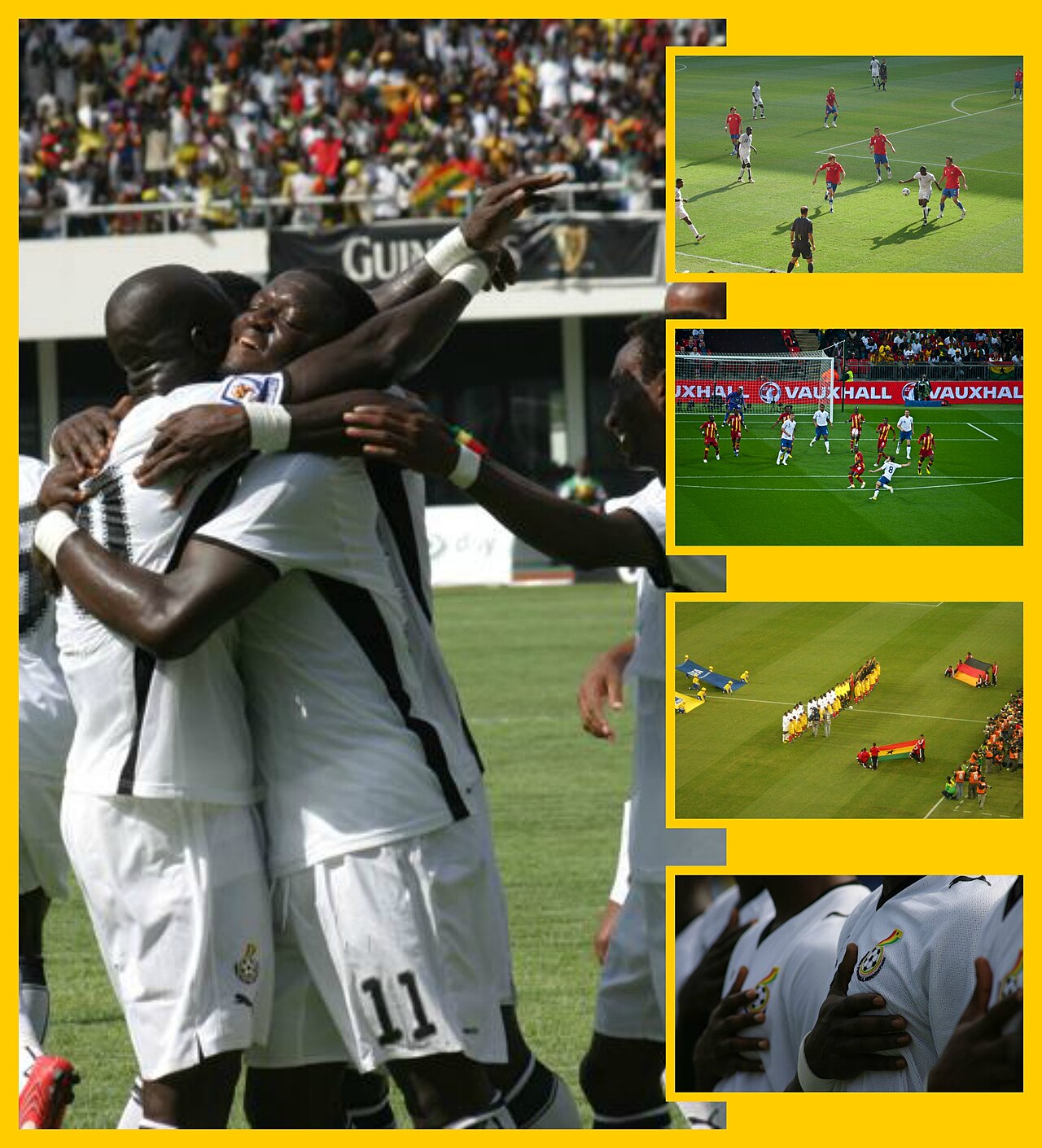

Quick Summary: Ghana Opens World Cup Campaign Under Pressure Despite Dominant Qualifying Run
- Ghana qualified for the 2026 World Cup as group winners, boasting 8 wins, 1 draw, and 1 defeat, with Jordan Ayew contributing 7 goals and 7 assists.
- Panama and Curaçao remained unbeaten in the 2026 Concacaf qualifiers, with Panama leading in turnovers won and pressing sequences.
- Carlos Queiroz becomes the third coach to manage teams at five different World Cup editions, highlighting his experience.
- The opening match against Panama is seen as a must-win for Ghana, with the stakes described as critical by local outlets.
- Ghana’s recent World Cup form shows vulnerability, with only 1 win in their last 7 matches, raising concerns about their defense.
Source: Read original article
As Ghana gears up for their World Cup opener against Panama, the stakes couldn’t be higher. With a history of strong qualifying performances but shaky tournament results, the Black Stars find themselves in a must-win scenario.
Under the leadership of Carlos Queiroz, who joins an elite group of coaches managing at five World Cup editions, Ghana faces a formidable Panama team that remained unbeaten during qualifiers. Queiroz has emphasized commitment and mentality, urging his squad to rise above their talent.
Ghana’s opening match against Panama is not just a game; it’s a litmus test for their World Cup ambitions. With a challenging schedule ahead, including matches against England and Croatia, the outcome of this match could set the tone for their entire campaign.
Despite Ghana’s rich football history, recent World Cup performances have been less than stellar, with only one win in their last seven matches. This vulnerability adds pressure on Queiroz and his team to deliver a disciplined and resilient performance against Panama.
Concacaf’s official preview says Ghana qualified for the 2026 World Cup as group winners with 8 wins, 1 draw and 1 defeat, scoring 23 goals, with 9 of them — 39 percent — coming via headers, while Jordan Ayew was directly involved in 14 goals in qualifying, with 7 goals and 7 assists. Concacaf says Panama and Curaçao were the only teams to remain unbeaten through the 2026 Concacaf qualifiers among sides that reached the final round, with Panama posting 7 wins and 3 draws, leading the region in turnovers won with 82 and pressing sequences with 138.
Concacaf notes that by leading Ghana in this tournament, Queiroz becomes only the third head coach ever to manage teams at 5 different World Cup editions, joining Carlos Alberto Parreira, who did it 6 times, and Bora Milutinović, who also reached 5. The biggest hard-news development around the match is not a late injury or disciplinary shock but the scale of the opening-game stakes, which Queiroz and local Ghanaian outlets are now describing in near must-win terms.
Ghana’s football association tied that appeal directly to the June 17 opener against Panama in Toronto, the first match of a Group L schedule that then sends Ghana to England on June 23 and Croatia on June 27. FIFA separately confirmed Ghana appointed Queiroz only about two months before the tournament, an unusually late high-profile change that helps explain why so much coverage has focused less on settled tactical patterns than on mentality, cohesion and whether a veteran coach can stabilize a team on short notice.
The first-ever meeting between the two countries at any level of international competition therefore lands with a surprising edge: Ghana may have the bigger name and deeper history, but Panama’s unbeaten qualifying campaign and high-pressure profile make them a live threat rather than an undercard opponent. ET in Toronto, and the result will shape the rest of Group L before Ghana face England on June 23 and Croatia on June 27.
In the most substantive recent comments traceable from Ghana’s camp, Queiroz delivered a blunt message to his squad with 30 days to the opener, saying, “The world will only respect us when our commitment, humility, sacrifice, and mentality are bigger than our talent,” a line that has become the clearest statement of his approach since taking over. But that same preview underscores Ghana’s vulnerability on the biggest stage: the Black Stars have won only 1 of their last 7 World Cup matches, and they have conceded in each of their last 10 World Cup games, allowing 2 or more goals in each of their last 6.
Panama and Curaçao remained unbeaten in the 2026 Concacaf qualifiers, with Panama leading in turnovers won and pressing sequences. Concacaf says Panama and Curaçao were the only teams to remain unbeaten through the 2026 Concacaf qualifiers among sides that reached the final round, with Panama posting 7 wins and 3 draws, leading the region in turnovers won with 82 and pressing sequences with 138.
The biggest hard-news development around the match is not a late injury or disciplinary shock but the scale of the opening-game stakes, which Queiroz and local Ghanaian outlets are now describing in near must-win terms. Ghana’s recent World Cup form shows vulnerability, with only 1 win in their last 7 matches, raising concerns about their defense.
The scale and speed of this development has caught many observers off guard. Each new update adds another dimension to a story that is still unfolding, and the full picture will only become clear as more verified details emerge from the people and institutions directly involved.
Analysts who have tracked this issue closely say the current moment represents a genuine turning point. The decisions made in the coming weeks are expected to set the direction for months ahead, with ripple effects likely to extend well beyond the immediate actors in the story.
For those directly affected, the practical impact is already visible. People navigating this fast-changing situation are dealing with real consequences while new information continues to reshape what is known and what remains open to interpretation.
Historical parallels offer some context, though experts caution against drawing too close a comparison. Similar situations have played out before, but the specific combination of pressures, personalities, and timing here makes this moment distinct in ways that matter for how it ultimately resolves.
The political and economic dimensions of this story are deeply intertwined. What appears as a single event on the surface is in practice the convergence of multiple pressures that have been building quietly over a longer period than most public reporting has captured.