


Quick Summary: Colorados Centennial Exposition Unveils Political Strategy Amid 1876 Election
- Colorado’s Centennial display was a strategic move to secure statehood and electoral votes amidst a politically charged 1876 election.
- Governor John Routt and other Republicans aimed to capitalize on the Centennial Exposition to promote Colorado’s statehood.
- The Centennial Exposition in Philadelphia featured a two-story Colorado exhibit, attracting significant attention and acclaim.
- Internal political divisions and ethnic tensions in Colorado contrasted with the public image of unity.
- Southern Colorado’s Hispano population pushed for language rights, reflecting deeper societal divides.
Source: Open external resource
Source: Read original article
In 1876, as America stood on the brink of a divisive presidential election, the Colorado Territory was busy crafting a facade of unity at the Centennial Exposition in Philadelphia. But beneath the surface, this display was a calculated political maneuver by Colorado Republicans to gain statehood and secure three critical electoral votes.
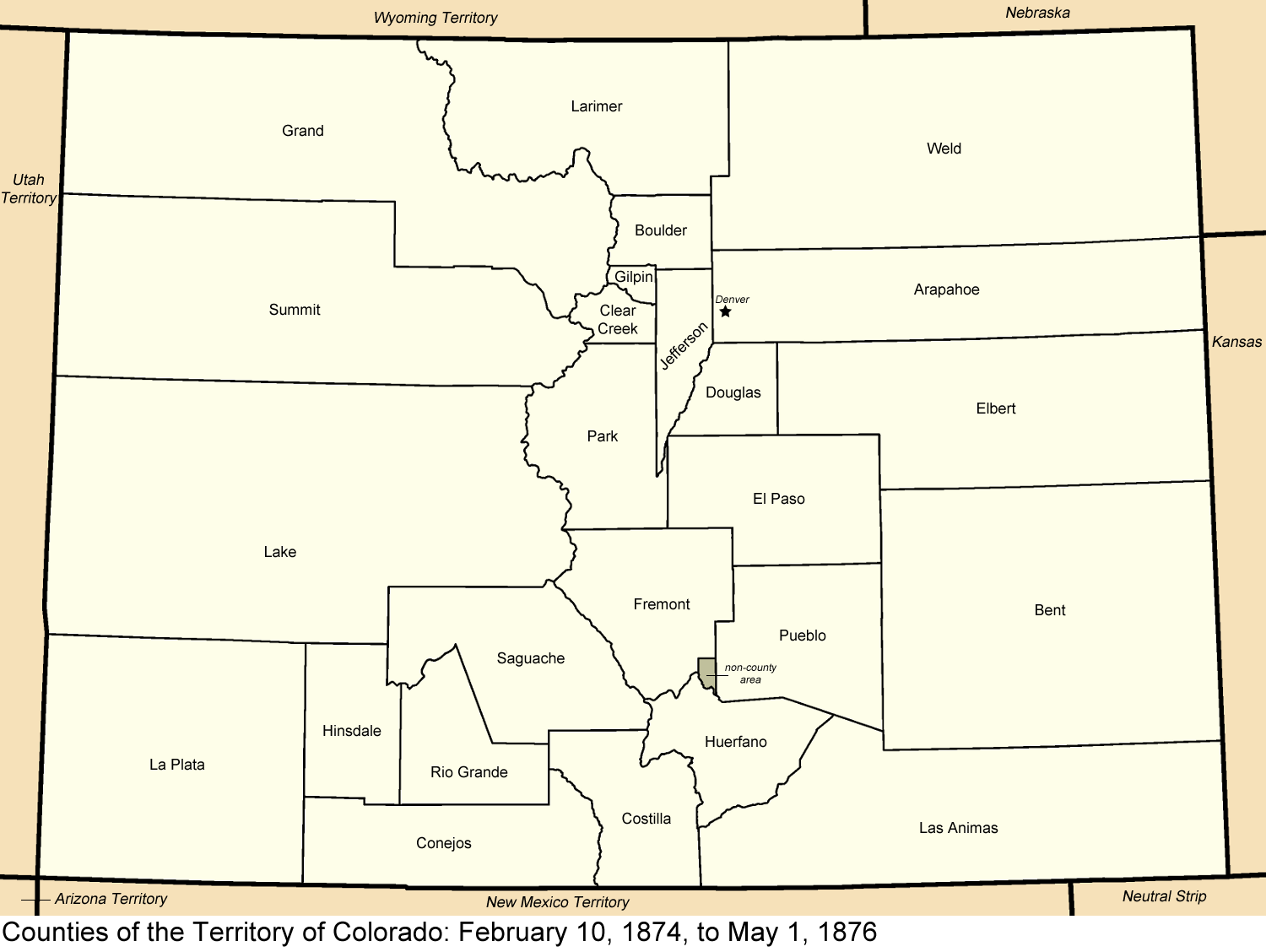
Governor John Routt, alongside political heavyweights Jerome Chaffee and Henry Teller, spearheaded the effort. Their goal was to leverage the Centennial celebration to bolster Colorado’s bid for statehood, presenting an image of harmony and prosperity. However, this unity was largely superficial, masking underlying political and ethnic tensions within the territory.
At the heart of the exposition was Colorado’s two-story exhibit, shared with Kansas, which became a highlight of the fair. The display, featuring Martha Maxwell’s Rocky Mountain diorama, was a testament to Colorado’s natural wealth and cultural distinctiveness. Yet, back home, the territory was rife with political infighting and ethnic discord, particularly among its significant Hispano population, who demanded Spanish-language rights in government affairs.
This juxtaposition of public unity and private division underscores the complex political landscape of the time. The Centennial Exposition served as a stage for Colorado to project an image of unity, while the reality was one of strategic political calculations and societal fractures.
And in reporting from last month, the Philadelphia expo piece showed how, even as Colorado’s image-makers were captivating eastern audiences, Maxwell’s collection was leaving Denver for good; the Denver Times warned on May 3, 1876, “Denverites regret to see it leave, for fear it will not come back,” and those fears proved correct. The story says Territorial Governor John Routt, Jerome Chaffee and Henry Teller traveled to the Republican National Convention in Cincinnati in early June 1876 as the party faced a national backlash from the Panic of 1873 and multiple Grant-era scandals.
The most important new detail comes from the latest Kiowa County Press/Colorado Newsline reporting published June 13, 2026, which ties the Centennial imagery directly to election-year hardball. At the Centennial Exposition in Philadelphia, opened May 10, 1876, a crowd of nearly 80,000 watched Grant declare the fair open as a 100-gun salute sounded.
Another recent report in the same series shows Democrats had made real gains in the territory by 1874, when Thomas Patterson won the non-voting delegate seat after 14 years of Republican control. Southern Colorado’s large Hispano population leaned Democratic, and convention delegates Casimiro Barela, Jesús María García and Agapito Vigil pushed to protect Spanish-language access to government.
On January 25, 1876, García backed Barela’s proposal requiring laws to be published in English and Spanish, and Denver Republican Frederick J. Ebert added German; the final constitution kept publication in all 3 languages until 1900, a remarkable compromise that undercut any simple story of Anglo political harmony.
On June 13, 2026, the newest article reframed the run-up to the 1876 election around scandal, patronage and the Republican convention in Cincinnati. Just two weeks earlier, related reporting highlighted how the territorial press was also consumed by violent crime and sensational trials in early June 1876, further puncturing any myth of a calm Centennial consensus.
The story says Territorial Governor John Routt, Jerome Chaffee and Henry Teller traveled to the Republican National Convention in Cincinnati in early June 1876 as the party faced a national backlash from the Panic of 1873 and multiple Grant-era scandals. In 1876, as America stood on the brink of a divisive presidential election, the Colorado Territory was busy crafting a facade of unity at the Centennial Exposition in Philadelphia.
At the Centennial Exposition in Philadelphia, opened May 10, 1876, a crowd of nearly 80,000 watched Grant declare the fair open as a 100-gun salute sounded. Southern Colorado’s large Hispano population leaned Democratic, and convention delegates Casimiro Barela, Jesús María García and Agapito Vigil pushed to protect Spanish-language access to government.
The scale and speed of this development has caught many observers off guard. Each new update adds another dimension to a story that is still unfolding, and the full picture will only become clear as more verified details emerge from the people and institutions directly involved.
Analysts who have tracked this issue closely say the current moment represents a genuine turning point. The decisions made in the coming weeks are expected to set the direction for months ahead, with ripple effects likely to extend well beyond the immediate actors in the story.
For those directly affected, the practical impact is already visible. People navigating this fast-changing situation are dealing with real consequences while new information continues to reshape what is known and what remains open to interpretation.
Historical parallels offer some context, though experts caution against drawing too close a comparison. Similar situations have played out before, but the specific combination of pressures, personalities, and timing here makes this moment distinct in ways that matter for how it ultimately resolves.
The political and economic dimensions of this story are deeply intertwined. What appears as a single event on the surface is in practice the convergence of multiple pressures that have been building quietly over a longer period than most public reporting has captured.