

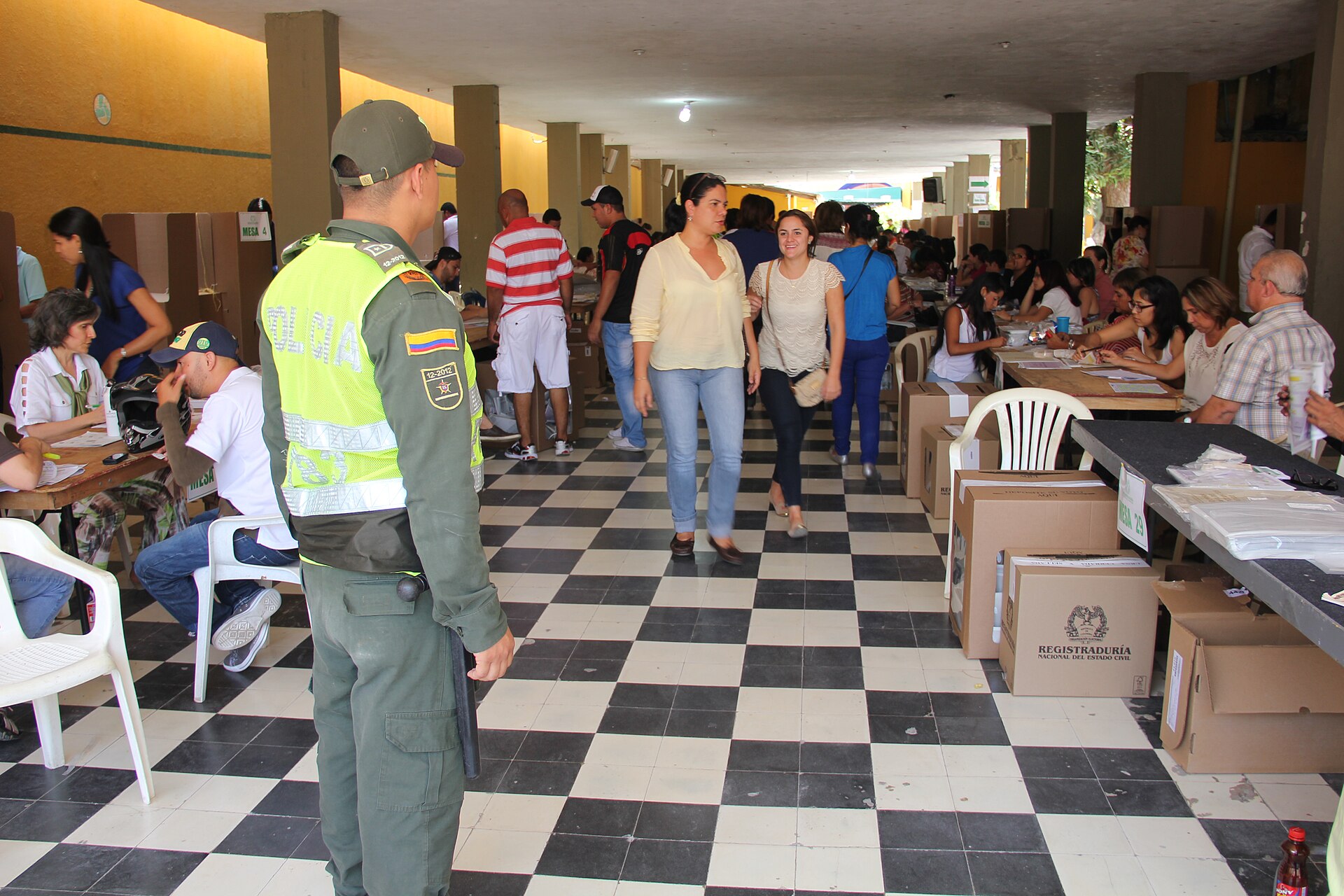

Quick Summary: OAS Raises Alarm Over Tone of Colombias Presidential Campaign
- Colombia’s second-round presidential election is set for June 21, 2026, with strict voting protocols in place.
- Over 41 million Colombians are eligible to vote in a tight runoff between Abelardo de la Espriella and Iván Cepeda.
- The Misión de Observación Electoral has deployed 2,638 observers, reporting over 1,000 potential irregularities.
- Recent polls show de la Espriella leading with 50.3% against Cepeda’s 42.6%, within a margin of error of 2 points.
- International observers, like the OAS, express concern over the confrontational tone of the campaign.
Source: Open external resource
Source: Read original article
The Colombian presidential election has reached a fever pitch as voters head to the polls for a decisive second round. On June 21, 2026, over 41 million Colombians will decide between two starkly different futures represented by candidates Abelardo de la Espriella and Iván Cepeda. Colombias is at the center of this development.
In this high-stakes runoff, de la Espriella, a hard-line outsider, faces off against Cepeda, who promises continuity with the current administration. The election is not just a battle of ideologies but a test of Colombia’s electoral integrity, with over 1,000 reports of potential irregularities already noted by observers.
With the OAS observing and expressing concern over the campaign’s tone, the legitimacy and acceptance of the results hang in the balance. The stakes are high as Colombians, both at home and abroad, cast their votes under the watchful eyes of thousands of observers.
As the polls close, the nation will not only learn who their next leader will be but also witness whether the electoral process can withstand the pressures of a polarized political climate. The outcome could set the course for Colombia’s future, making this election a pivotal moment in the country’s history.
Official election authorities had already set June 21, 2026, as the date for the second round, and weekend restrictions such as ley seca were part of the voting protocol described in pre-election guidance. 4 million eligible voters are choosing between two sharply opposed futures for Colombia, and the result should begin to take shape within hours.
90 percent, according to the OAS observation mission and regional election trackers. The Misión de Observación Electoral said it deployed 2,638 accredited observers across 445 municipalities, covering 77 percent of Colombia’s electoral potential, and said that by Thursday, June 18, it had recorded 1,045 reports of possible irregularities, including 85 specifically during the runoff period.
” Reporting this week said overseas voting runs from June 15 through June 21, with 253 polling locations in 67 countries, 1,489 tables operating before Sunday and 2,181 on the final day, making the expatriate vote unusually operationally significant in a contest expected to be decided by margins rather than landslides. The OAS has already signaled concern about the tone of the campaign, and the country is effectively waiting to see not just who wins but whether the losing side accepts the result quickly and cleanly.
local time on Sunday, June 21, with 41,421,973 citizens eligible to decide a polarized presidential runoff between Abelardo de la Espriella and Iván Cepeda after a first round that was far tighter than many expected. , while overseas voting had already been underway since June 15, giving the diaspora nearly a full week to cast ballots.
6 percent, with a sample of 2,030 adults and a margin of error of plus or minus 2 points. ” That kind of language matters because it turns the runoff from a choice between two policy programs into a referendum on how the next president would govern and confront other institutions if elected.
On June 21, 2026, over 41 million Colombians will decide between two starkly different futures represented by candidates Abelardo de la Espriella and Iván Cepeda. 6%, within a margin of error of 2 points.
In this high-stakes runoff, de la Espriella, a hard-line outsider, faces off against Cepeda, who promises continuity with the current administration. As the polls close, the nation will not only learn who their next leader will be but also witness whether the electoral process can withstand the pressures of a polarized political climate.
The Misión de Observación Electoral has deployed 2,638 observers, reporting over 1,000 potential irregularities. local time on Sunday, June 21, with 41,421,973 citizens eligible to decide a polarized presidential runoff between Abelardo de la Espriella and Iván Cepeda after a first round that was far tighter than many expected.
The scale and speed of this development has caught many observers off guard. Each new update adds another dimension to a story that is still unfolding, and the full picture will only become clear as more verified details emerge from the people and institutions directly involved.
Analysts who have tracked this issue closely say the current moment represents a genuine turning point. The decisions made in the coming weeks are expected to set the direction for months ahead, with ripple effects likely to extend well beyond the immediate actors in the story.
For those directly affected, the practical impact is already visible. People navigating this fast-changing situation are dealing with real consequences while new information continues to reshape what is known and what remains open to interpretation.
Historical parallels offer some context, though experts caution against drawing too close a comparison. Similar situations have played out before, but the specific combination of pressures, personalities, and timing here makes this moment distinct in ways that matter for how it ultimately resolves.
The political and economic dimensions of this story are deeply intertwined. What appears as a single event on the surface is in practice the convergence of multiple pressures that have been building quietly over a longer period than most public reporting has captured.