

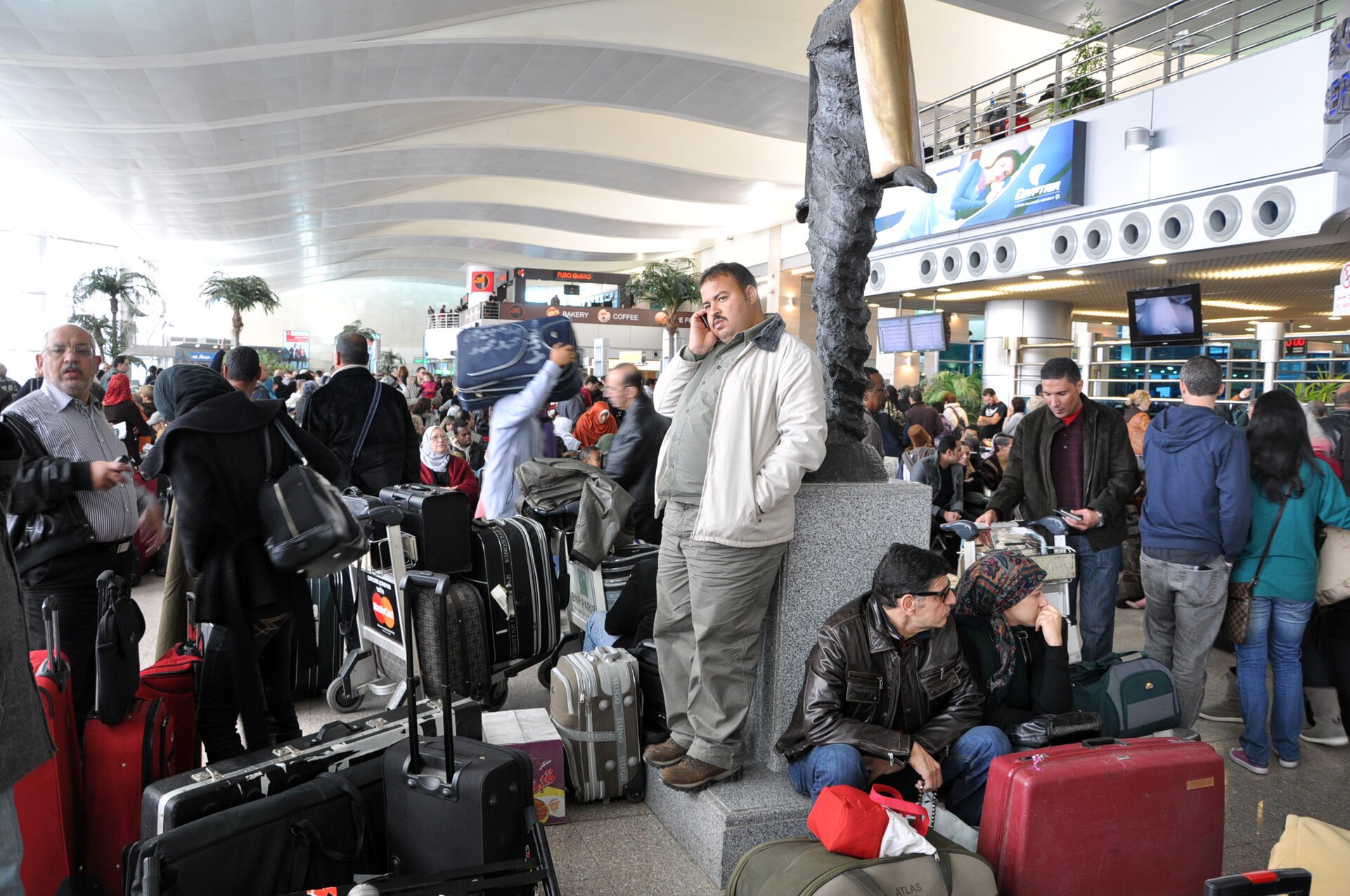

Quick Summary: Passenger Confusion as LATAM Grounds Flights at Brazils Main Hub
- LATAM Airlines canceled or delayed nine flights at São Paulo-Guarulhos on July 4, 2026, affecting major routes.
- Hundreds of passengers were stranded or rerouted, with no clear public explanation from LATAM.
- The disruption impacted high-frequency domestic routes and short regional flights, including the São Paulo-Rio shuttle.
- Passengers faced confusion due to changing departure times and lack of timely alternatives.
- LATAM’s response included rebooking and refund options, but lacked a detailed operational explanation.
Source: Open external resource
Source: Read original article
Chaos unfolded at São Paulo-Guarulhos International Airport on July 4, 2026, as LATAM Airlines grounded nine flights, leaving hundreds of travelers stranded. The airline’s silence on the cause of the disruption has only fueled passenger frustration.
LATAM’s operational breakdown affected key routes, including the crucial São Paulo-Rio shuttle, one of Brazil’s busiest corridors. The lack of clear communication left passengers scrambling for information and alternatives, relying on third-party trackers to verify flight status.
This incident highlights a significant gap in LATAM’s information management. The absence of a detailed explanation has left travelers and analysts questioning the airline’s resilience and operational stability at Brazil’s main hub.
As the story unfolds, the focus will be on LATAM’s ability to restore schedule stability and address passenger grievances. The airline’s communication strategy and operational transparency will be under scrutiny in the coming weeks.
As for timeline, the key event date in the latest coverage is Friday, July 4, 2026, when the cancellations and rolling delays were reported and tracked; the most recent follow-up reporting was published July 4 and July 5. The strongest detail available right now is the count itself: at least nine LATAM-operated services in or out of GRU were canceled or significantly delayed on July 4, 2026, according to the latest travel-sector coverage and flight-tracking-based reporting.
Reporting says services on the São Paulo–Rio shuttle were disrupted, and that matters because this is one of Brazil’s busiest air corridors; passengers connecting onward to international flights from either city faced a heightened risk of misconnecting. The biggest new fact in the latest reporting is that the disruption appears to have been a concentrated LATAM operational breakdown at São Paulo–Guarulhos on July 4, with at least nine flights canceled or heavily delayed in a short window and no clear public explanation from the airline as of Saturday afternoon, raising fresh questions about aircraft and crew resilience at Brazil’s main hub.
I did not find a fresh LATAM press statement directly explaining the July 4 Guarulhos event, but LATAM’s current customer-help guidance says passengers on canceled or rescheduled flights can rebook at no extra cost, leave the ticket open for up to 12 months in some cases, or seek a refund for unused segments, fees, seats and baggage depending on the itinerary. What makes the story more than a routine airport-delay brief is the reporting’s suggestion that this was not being publicly framed as a weather event.
” That is the central tension in the story: passengers were dealing with major disruption while the airline had not, at least in the public reporting surfaced so far, given a detailed real-time operational explanation. The most compelling route-level detail is that the worst effects were concentrated on high-frequency domestic connectors and short regional flights that feed longer-haul itineraries.
The same reporting says the Mendoza route was also affected, an outsized problem because that service has fewer fallback options than shuttle-heavy domestic sectors. There is also a notable mismatch between the scale of the disruption and the specificity of the public response.
The disruption impacted high-frequency domestic routes and short regional flights, including the São Paulo-Rio shuttle. LATAM’s response included rebooking and refund options, but lacked a detailed operational explanation.
The airline’s silence on the cause of the disruption has only fueled passenger frustration. LATAM’s operational breakdown affected key routes, including the crucial São Paulo-Rio shuttle, one of Brazil’s busiest corridors.
The scale and speed of this development has caught many observers off guard. Each new update adds another dimension to a story that is still unfolding, and the full picture will only become clear as more verified details emerge from the people and institutions directly involved.
Analysts who have tracked this issue closely say the current moment represents a genuine turning point. The decisions made in the coming weeks are expected to set the direction for months ahead, with ripple effects likely to extend well beyond the immediate actors in the story.
For those directly affected, the practical impact is already visible. People navigating this fast-changing situation are dealing with real consequences while new information continues to reshape what is known and what remains open to interpretation.
Historical parallels offer some context, though experts caution against drawing too close a comparison. Similar situations have played out before, but the specific combination of pressures, personalities, and timing here makes this moment distinct in ways that matter for how it ultimately resolves.
The political and economic dimensions of this story are deeply intertwined. What appears as a single event on the surface is in practice the convergence of multiple pressures that have been building quietly over a longer period than most public reporting has captured.