

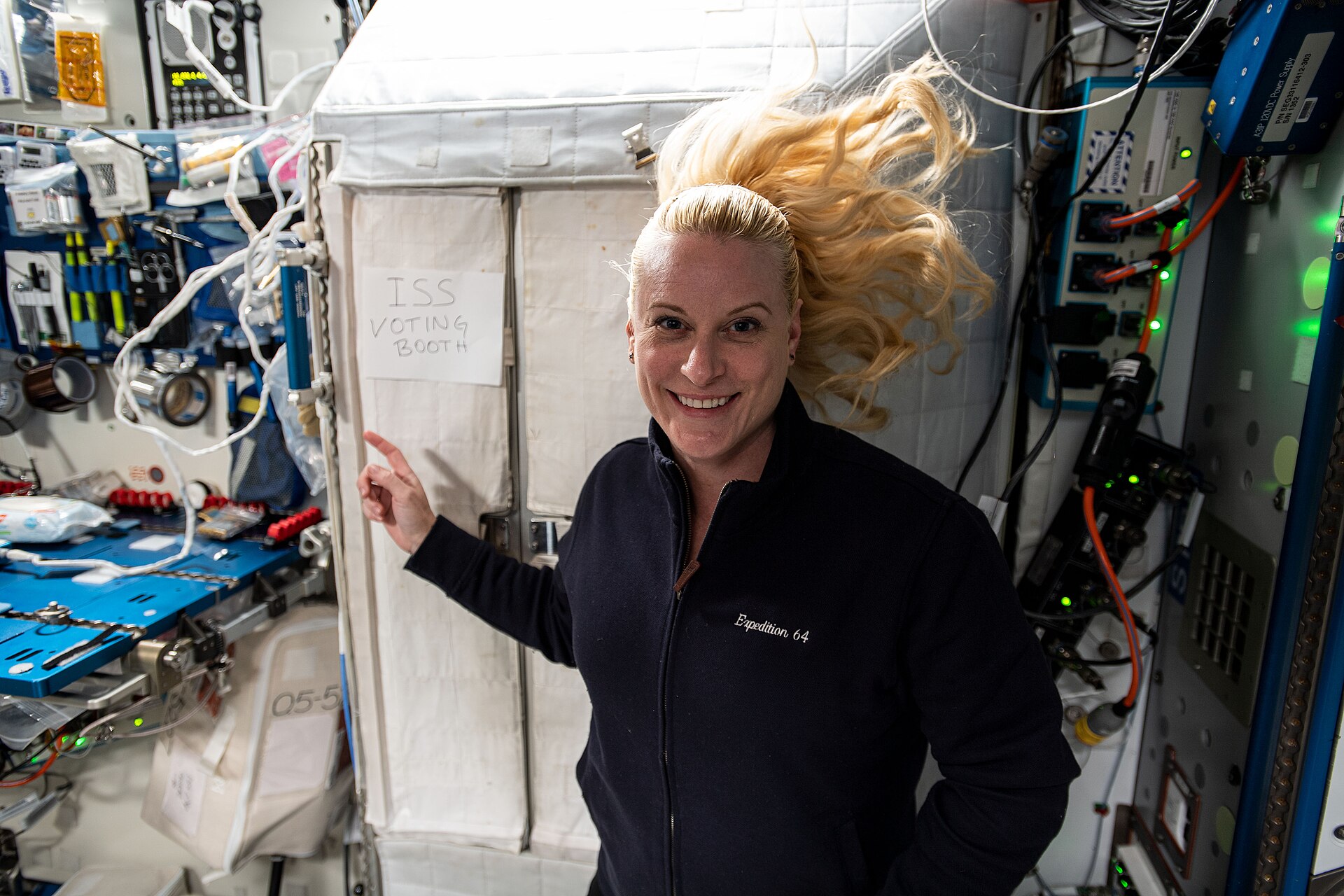

Quick Summary: Boeing Starliner Delay Forces Astronauts to Cast Ballots From ISS
- NASA announced on October 1, 2024, that astronauts Wilmore and Williams joined Crew-9, ensuring their presence in space during the election.
- Voting from space became crucial as Boeing’s Starliner was deemed unsafe for the astronauts’ return.
- The voting system was established in 1997 after a gap was identified in 1996, allowing astronauts to vote from space.
- Wilmore emphasized the importance of voting, stating, “It’s a very important role we play as citizens to be included in those elections.”.
- NASA’s procedures ensure secure voting, with ballots transmitted via encrypted systems to county clerks.
Source: Open external resource
Source: Read original article
In an unprecedented twist, American astronauts Butch Wilmore and Suni Williams are poised to exercise their voting rights from the International Space Station, turning a routine civic duty into a space-age saga. This isn’t just a quirky headline; it’s a testament to the resilience of democratic practices under extraordinary conditions.
Initially, the astronauts were to return on Boeing’s Starliner, but safety concerns grounded the capsule, leaving them to join SpaceX Crew-9. This delay meant they’d remain in orbit during the presidential election, prompting NASA to activate its contingency voting plan. The system, born out of necessity in 1997, ensures astronauts can vote securely from space, a process that involves encrypted ballots and meticulous coordination with Texas election officials.
The broader narrative here isn’t just about voting logistics; it’s about the integrity and adaptability of democratic rights. Wilmore’s statement underscores this: “It’s a very important role we play as citizens to be included in those elections.” NASA’s commitment to maintaining political neutrality and ensuring ballot access, even 250 miles above Earth, highlights the intersection of civic duty and technological innovation.
As the election unfolds, the focus remains on ensuring these astronauts can participate fully in their civic responsibilities. The story of Wilmore and Williams voting from space is a vivid reminder of the lengths to which institutions will go to uphold democratic principles, even when faced with unforeseen challenges. This narrative not only showcases the astronauts’ dedication but also serves as a beacon of how democracy can thrive, no matter the distance.
NASA then said on October 1, 2024, that both astronauts had completed their move to the newly arrived Crew-9 spacecraft, formalizing the contingency plan that kept them in space through the election period. “It’s a very important role we play as citizens to be included in those elections,” he said, according to The Washington Post’s October 30, 2024 report.
Boeing’s Starliner is what turned this from routine election trivia into a bigger story, because the capsule that launched the astronauts on June 5, 2024, was judged too risky for their return. NASA’s own explanation says the current system traces back to 1997, after astronaut John Blaha’s inability to vote from Mir in 1996 exposed the gap.
The timeline that stands out most tightly clusters around late October and early November 2024. The most important specific development is that Wilmore and Williams were not simply on a routine mission during election season; they were still in orbit because NASA decided on August 24, 2024, to bring Boeing’s Starliner back to Earth without crew after technical problems, leaving the pair to return later on SpaceX Crew-9.
The Post also reported that the four American astronauts then aboard the ISS were roughly 250 miles above Earth and orbiting at 17,500 mph when they prepared to vote. On October 1, NASA announced Wilmore and Williams had fully integrated into Crew-9 for their eventual ride home.
On October 30, The Washington Post reported that Wilmore had requested his ballot and intended to vote from orbit. NASA’s own materials also noted that in March 2024, astronauts Loral O’Hara and Jasmin Moghbeli had already cast electronic absentee ballots from the ISS, showing the system was already in active use that year before the presidential election reached its peak.
” NASA’s commitment to maintaining political neutrality and ensuring ballot access, even 250 miles above Earth, highlights the intersection of civic duty and technological innovation. The system, born out of necessity in 1997, ensures astronauts can vote securely from space, a process that involves encrypted ballots and meticulous coordination with Texas election officials.
NASA’s own explanation says the current system traces back to 1997, after astronaut John Blaha’s inability to vote from Mir in 1996 exposed the gap. On October 1, NASA announced Wilmore and Williams had fully integrated into Crew-9 for their eventual ride home.
The scale and speed of this development has caught many observers off guard. Each new update adds another dimension to a story that is still unfolding, and the full picture will only become clear as more verified details emerge from the people and institutions directly involved.
Analysts who have tracked this issue closely say the current moment represents a genuine turning point. The decisions made in the coming weeks are expected to set the direction for months ahead, with ripple effects likely to extend well beyond the immediate actors in the story.
For those directly affected, the practical impact is already visible. People navigating this fast-changing situation are dealing with real consequences while new information continues to reshape what is known and what remains open to interpretation.
Historical parallels offer some context, though experts caution against drawing too close a comparison. Similar situations have played out before, but the specific combination of pressures, personalities, and timing here makes this moment distinct in ways that matter for how it ultimately resolves.
The political and economic dimensions of this story are deeply intertwined. What appears as a single event on the surface is in practice the convergence of multiple pressures that have been building quietly over a longer period than most public reporting has captured.