

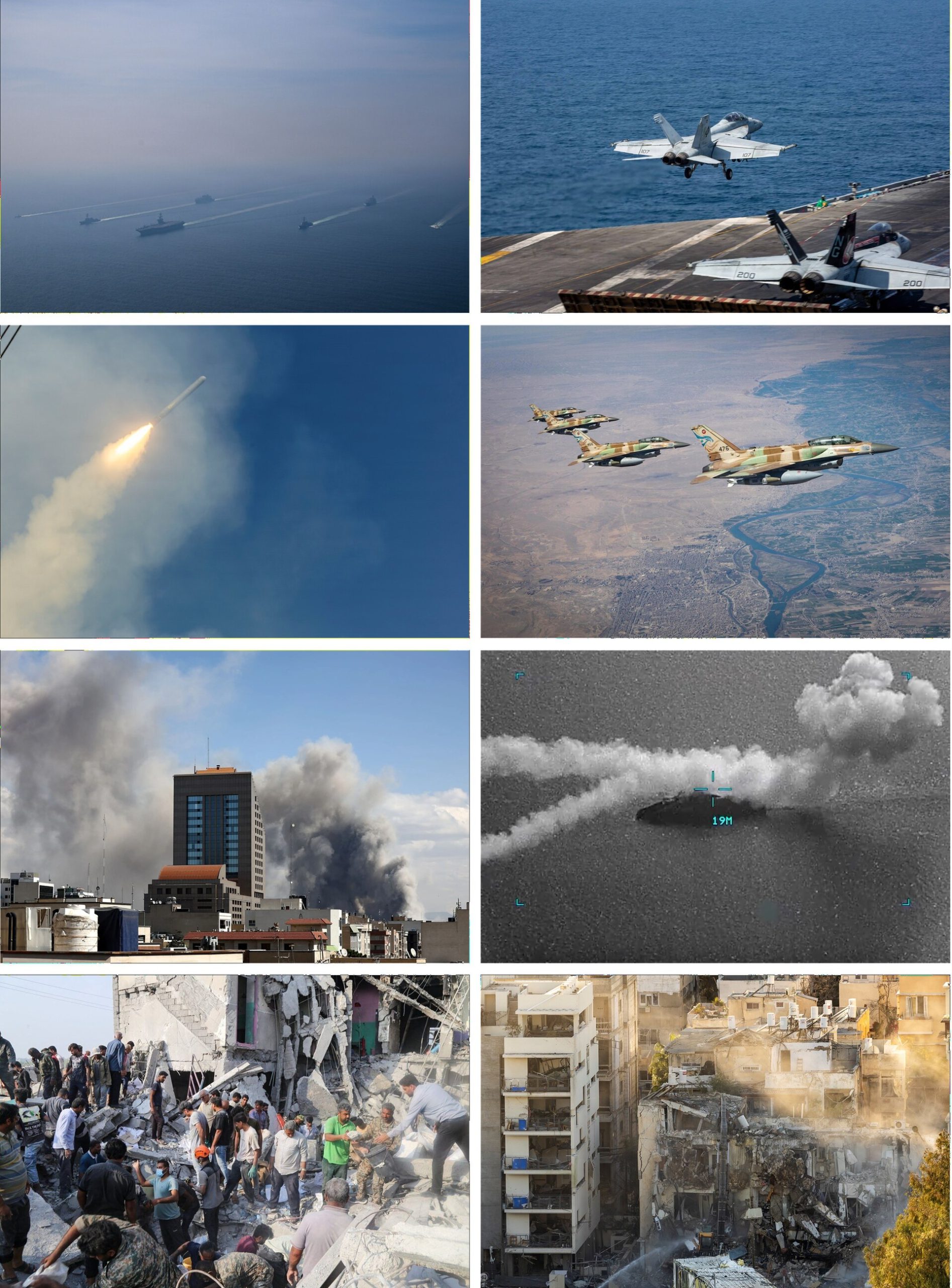

Quick Summary: U.s. Launches 140 Strikes on Iranian Targets Amid Hormuz Tensions
- The U.S. military struck 140 targets in one wave, focusing on missile and drone launch sites, escalating tensions in the Strait of Hormuz.
- President Trump sent mixed signals about the strikes, emphasizing heavy attacks but denying long-term military action.
- Iran reported new attacks on Qeshm Island, with projectiles fired at military sites but no casualties.
- Strikes were not limited to Qeshm; they spread to Hormozgan, Khuzestan, and Markazi provinces, resulting in fatalities.
- The conflict centers on control over the Strait of Hormuz, a critical global energy chokepoint.
Source: Open external resource
Source: Read original article
The Strait of Hormuz is once again a flashpoint in international tensions, with the U.S. and Iran exchanging military blows. The United States launched a significant strike, hitting 140 Iranian targets, intensifying the conflict over this vital maritime passage.
President Trump’s contradictory statements add to the uncertainty, as he both boasts of the intense military action and downplays its long-term impact. Meanwhile, Iran’s reports of attacks on Qeshm Island, a strategic location, highlight the stakes in this geopolitical struggle.
The broader scope of the conflict is evident with strikes reaching multiple Iranian provinces, indicating a geographically expansive confrontation. The Strait of Hormuz, a crucial energy route, remains at the heart of the dispute, with both nations vying for control.
As the situation unfolds, the international community watches closely. The potential for further escalation looms, with diplomatic efforts struggling to keep pace with the rapid developments. The outcome of this standoff could have significant implications for global energy markets and regional stability.
military said it struck 140 targets in one wave, a much heavier attack than the previous rounds, aimed at missile and drone launch sites, ammunition dumps and communications systems tied to Iran’s ability to threaten shipping in and around the Strait of Hormuz. That detail matters because Qeshm sits right beside the shipping lane at the center of the crisis, and it suggests the conflict is no longer just about warning shots at merchant vessels but about degrading Iran’s physical ability to police, close or tax traffic through the strait.
said it had hit 140 targets in its heaviest recent round, after an Iranian attack on a container ship that set it ablaze and reportedly left one crew member missing. ” President Donald Trump has sent mixed signals, saying after one strike wave, “We bombed the hell out of them last night,” while also insisting some of the fighting would not become “long-term” military action.
What makes this story stand out is that Iran’s own reporting described new attacks on military targets on Qeshm, its largest island near the Strait of Hormuz, with the island’s governor saying projectiles were fired at military sites and that there were no casualties there. strikes on Iranian military positions around the waterway, with Iran now openly insisting it alone must control passage through one of the world’s most important energy chokepoints.
At the same time, AP reported attacks in Hormozgan, Khuzestan and Markazi provinces, with at least two people killed, showing the strikes were geographically wider than a single island hit. The central conflict is now blunt: Washington says it is acting to preserve “freedom of navigation,” while Tehran says outside powers have no right to dictate access to the strait.
” Iran’s Revolutionary Guard said it had begun a new round of regional strikes, and Iranian state media reported blasts in Bandar Abbas and Sirik, two southern cities tied directly to Gulf operations. What happens next is a race between further military action and a last-ditch diplomatic salvage effort.
military struck 140 targets in one wave, focusing on missile and drone launch sites, escalating tensions in the Strait of Hormuz. President Trump sent mixed signals about the strikes, emphasizing heavy attacks but denying long-term military action.
The United States launched a significant strike, hitting 140 Iranian targets, intensifying the conflict over this vital maritime passage. President Trump’s contradictory statements add to the uncertainty, as he both boasts of the intense military action and downplays its long-term impact.
” President Donald Trump has sent mixed signals, saying after one strike wave, “We bombed the hell out of them last night,” while also insisting some of the fighting would not become “long-term” military action. What makes this story stand out is that Iran’s own reporting described new attacks on military targets on Qeshm, its largest island near the Strait of Hormuz, with the island’s governor saying projectiles were fired at military sites and that there were no casualties there.
strikes on Iranian military positions around the waterway, with Iran now openly insisting it alone must control passage through one of the world’s most important energy chokepoints. At the same time, AP reported attacks in Hormozgan, Khuzestan and Markazi provinces, with at least two people killed, showing the strikes were geographically wider than a single island hit.
The scale and speed of this development has caught many observers off guard. Each new update adds another dimension to a story that is still unfolding, and the full picture will only become clear as more verified details emerge from the people and institutions directly involved.
Analysts who have tracked this issue closely say the current moment represents a genuine turning point. The decisions made in the coming weeks are expected to set the direction for months ahead, with ripple effects likely to extend well beyond the immediate actors in the story.
For those directly affected, the practical impact is already visible. People navigating this fast-changing situation are dealing with real consequences while new information continues to reshape what is known and what remains open to interpretation.
Historical parallels offer some context, though experts caution against drawing too close a comparison. Similar situations have played out before, but the specific combination of pressures, personalities, and timing here makes this moment distinct in ways that matter for how it ultimately resolves.
The political and economic dimensions of this story are deeply intertwined. What appears as a single event on the surface is in practice the convergence of multiple pressures that have been building quietly over a longer period than most public reporting has captured.