

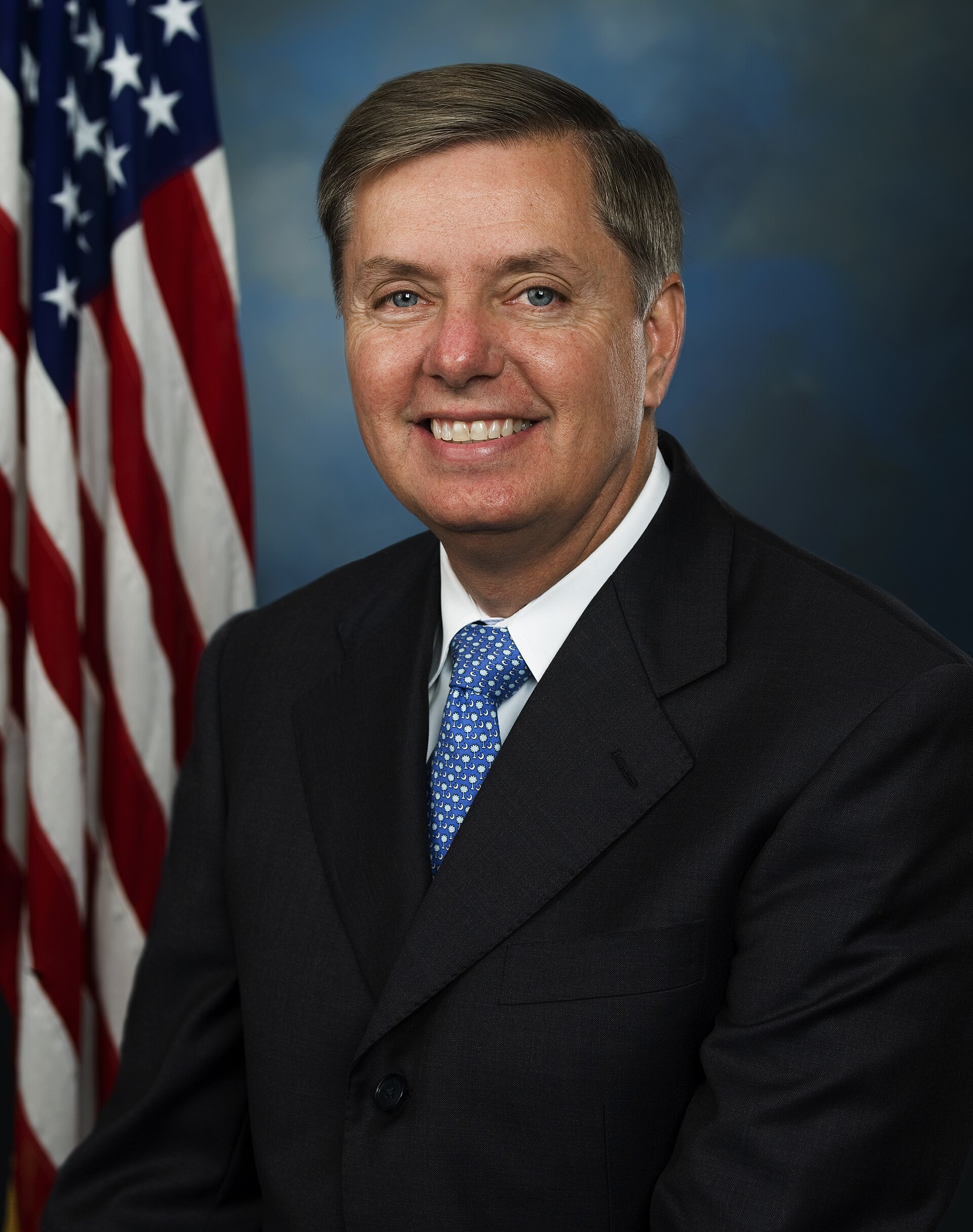

Quick Summary: August 11 GOP Primary Looms as Contenders Eye South Carolina Senate Seat
- Lindsey Graham’s sudden death on July 11 has initiated a rapid succession fight for his Senate seat.
- South Carolina’s special primary filing period is set for July 21-28, with the Republican primary on August 11.
- Governor McMaster’s appointment decision could significantly influence the race’s dynamics.
- Nancy Mace is a potential contender, considering a run for the Senate seat.
- Treasury Secretary Scott Bessent, linked to South Carolina, is not interested in the Senate seat.
Source: Open external resource
Source: Read original article
The sudden passing of Lindsey Graham has not only left a void in South Carolina politics but has also sparked a frantic race to fill his Senate seat. With the special Republican primary scheduled for August 11, the political landscape is shifting rapidly as contenders position themselves for a chance at one of the most pivotal seats in the Senate.
South Carolina’s election laws have set a tight timeline, with the filing period for the special primary running from July 21 to July 28. This compressed schedule leaves potential candidates scrambling to gather support, funds, and endorsements. The race is further complicated by the question of who Governor Henry McMaster will appoint as a temporary senator, a decision that could tip the scales in the upcoming primary.
Among those eyeing the seat is Nancy Mace, a well-known Republican figure who has expressed interest in the role. Her potential candidacy adds another layer of intrigue to an already competitive field. Meanwhile, Treasury Secretary Scott Bessent has ruled himself out of the race, preferring to continue his work with the president.
As the political drama unfolds, the stakes are high not just for South Carolina but for the national Republican landscape. With the Senate already in a delicate balance, the outcome of this race could have far-reaching implications for the party’s legislative agenda.
The result is a frantic seven-day stretch in which a governor’s appointment, a possible Mace decision, and a rapidly forming Republican field could transform a tragic vacancy into one of the most competitive and consequential Senate fights of 2026. AP also reported that Treasury Secretary Scott Bessent, who has South Carolina ties, has fielded calls about the seat but is not interested and “enjoys working for the president,” narrowing the speculative field at least for now.
Under South Carolina law, the filing period for the special primary is expected to begin on July 21 and run through July 28, with the Republican special primary on August 11 and, if nobody clears 50%, a runoff on August 25. AP reported that Evette, South Carolina’s lieutenant governor for nearly eight years, lost the June 23 gubernatorial runoff to Attorney General Alan Wilson but is now getting encouragement from across the state and believes she would have a strong chance in the special primary.
AP reported Monday that Senate Republicans are returning with an “uncertain agenda” because Graham was not just another vote but a committee chairman and one of Trump’s most important allies. The next hard deadline is July 21, when filing is expected to open, and between now and then the most important unanswered question is whether McMaster names a temporary senator who simply holds the seat or someone who changes the race overnight.
Tim Scott said on “Meet the Press” that he did not know whom McMaster would choose, but expected “at least one or two congress members” to be under consideration, underscoring how live the decision remains. The biggest new development is that Lindsey Graham’s sudden death on Saturday, July 11, has triggered not just mourning in South Carolina but an immediate, high-speed succession fight, with an August 11 special Republican primary now looming and multiple top Republicans already maneuvering behind the scenes to claim one of the most important open Senate seats in the country.
AP noted that the winner of the primary would have just over two months to campaign, and it also flagged a serious procedural complication: federal law typically requires military and overseas ballots to be sent 45 days before a federal election, which would have been June 27. Henry McMaster gets to appoint an interim senator to finish the remainder of Graham’s term through January 3, while Republicans also have to pick a ballot replacement for November.
The next hard deadline is July 21, when filing is expected to open, and between now and then the most important unanswered question is whether McMaster names a temporary senator who simply holds the seat or someone who changes the race overnight. Tim Scott said on “Meet the Press” that he did not know whom McMaster would choose, but expected “at least one or two congress members” to be under consideration, underscoring how live the decision remains.
ke Lindsey Graham’s sudden death on July 11 has initiated a rapid succession fight for his Senate seat. Treasury Secretary Scott Bessent, linked to South Carolina, is not interested in the Senate seat.
With the special Republican primary scheduled for August 11, the political landscape is shifting rapidly as contenders position themselves for a chance at one of the most pivotal seats in the Senate. The biggest new development is that Lindsey Graham’s sudden death on Saturday, July 11, has triggered not just mourning in South Carolina but an immediate, high-speed succession fight, with an August 11 special Republican primary now looming and multiple top Republicans already maneuvering behind the scenes to claim one of the most important open Senate seats in the country.
The scale and speed of this development has caught many observers off guard. Each new update adds another dimension to a story that is still unfolding, and the full picture will only become clear as more verified details emerge from the people and institutions directly involved.
Analysts who have tracked this issue closely say the current moment represents a genuine turning point. The decisions made in the coming weeks are expected to set the direction for months ahead, with ripple effects likely to extend well beyond the immediate actors in the story.
For those directly affected, the practical impact is already visible. People navigating this fast-changing situation are dealing with real consequences while new information continues to reshape what is known and what remains open to interpretation.
Historical parallels offer some context, though experts caution against drawing too close a comparison. Similar situations have played out before, but the specific combination of pressures, personalities, and timing here makes this moment distinct in ways that matter for how it ultimately resolves.
The political and economic dimensions of this story are deeply intertwined. What appears as a single event on the surface is in practice the convergence of multiple pressures that have been building quietly over a longer period than most public reporting has captured.