

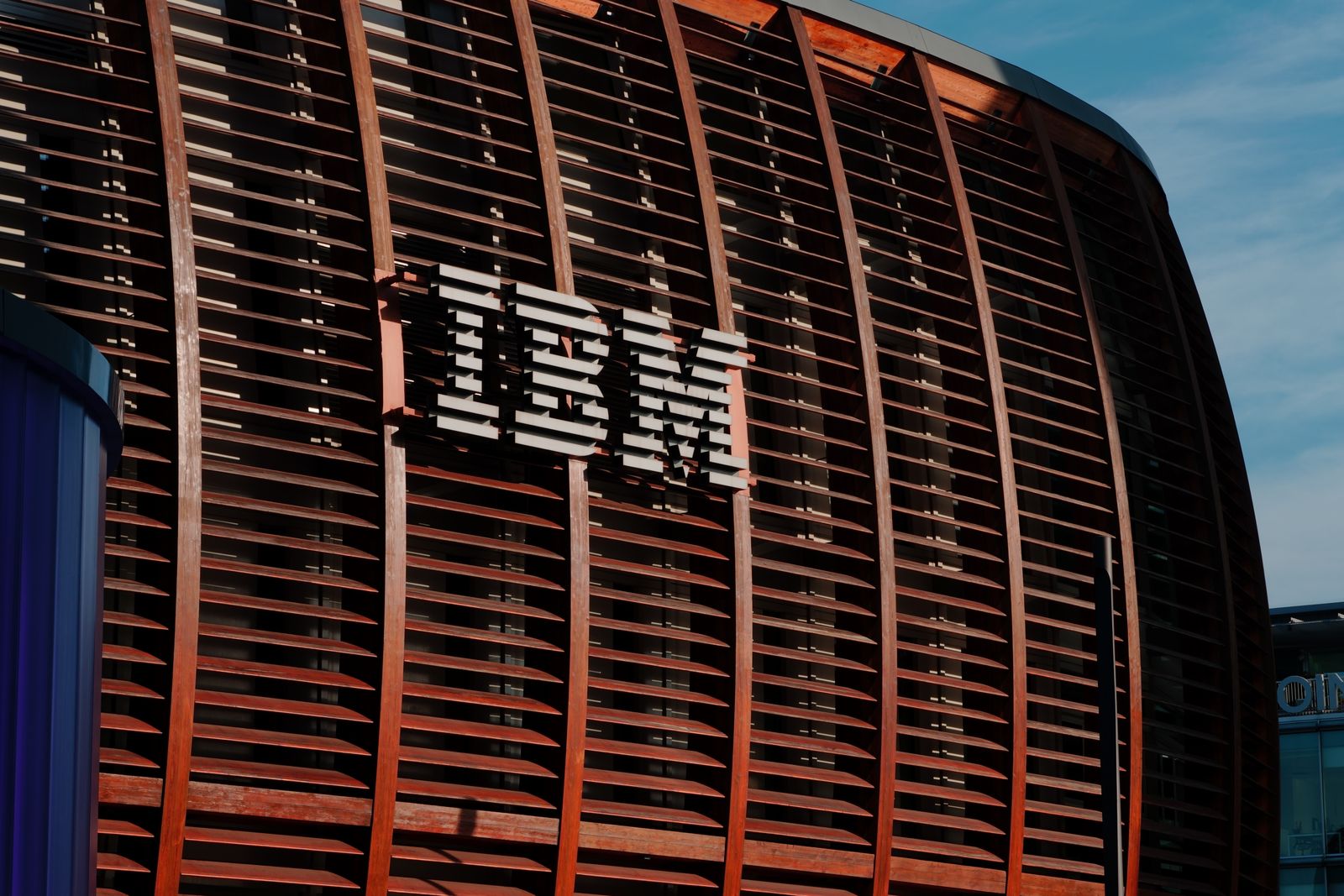

Quick Summary: CEO Krishnas Warning Triggers IBM’s Largest Single
- IBM’s stock plunged 23% to 25% on July 14, erasing $67 billion to $70 billion in market value.
- CEO Arvind Krishna preannounced weaker-than-expected Q2 results, sparking the sell-off.
- Investors are punishing legacy software firms like IBM amid the AI infrastructure boom.
- IBM’s failure to capture AI spending shifts has led to a significant market re-evaluation.
- Analysts debate whether IBM’s slump signals a temporary issue or a deeper structural problem.
Source: Open external resource
Source: Read original article
IBM’s recent market catastrophe is a stark reminder of Wall Street’s unforgiving nature. In a single day, the tech giant saw its stock plummet by as much as 25%, wiping out nearly $70 billion in market value. This dramatic fall was triggered by CEO Arvind Krishna’s preannouncement of a weak second quarter, a move that left investors reeling. Ibms is at the center of this development.
The broader market context only heightens the sting. As AI spending continues to soar, IBM’s inability to capitalize on this trend has become painfully clear. While chipmakers and infrastructure providers thrive, traditional software vendors like IBM find themselves on the losing end of the AI trade. Investors, once enamored with the promise of AI, are now questioning IBM’s relevance in this rapidly evolving landscape.
The market’s harsh reaction underscores a deeper narrative: IBM’s struggle to adapt to a shifting technological paradigm. Analysts are divided on whether this is a temporary setback or indicative of a more profound existential crisis for the company. As the dust settles, the spotlight is firmly on IBM’s upcoming full earnings release, which will either offer a path to redemption or confirm fears of a deeper decline.
AP said the stock was down 23% in morning trading on Tuesday, while Axios said it plunged more than 25%, its worst single-day loss since at least 1968. On July 13, Moneycontrol reported that high-flying AI stocks were correcting after huge gains, noting that TSMC alone had shed more than $111 billion from a recent peak.
IBM’s stock is in the middle of its worst modern-day collapse after CEO Arvind Krishna preannounced a weak second quarter, triggering a roughly 23% to 25% plunge on July 14 that wiped out about $67 billion to $70 billion in market value in a single session and turned what one analyst called “an ugly moment for IBM and software stocks” into the defining Wall Street shock of the week. On July 10, Moneycontrol was already carrying warnings that AI euphoria had reached “dangerous territory,” citing estimates that Alphabet, Amazon, Meta and Microsoft alone could spend around $700 billion in capex this year.
Recent market reporting has framed 2026’s dominant trade as “buy chip stocks and sell software,” and although that trade had already shown signs of wobbling, IBM’s update gave bears a fresh example of why money has rotated away from slower-growth software companies. Forbes calculated that the selloff erased about $67 billion from IBM’s market capitalization, leaving the company valued at just under $205 billion, while Reddit posts and other market chatter cited roughly $69 billion to $70 billion vaporized in one day.
The headline phrase about “over $100 billion” appears to be broader market-value destruction measured from prior highs or over a longer stretch, but the freshest hard reporting centers on a one-day loss closer to $67 billion to $70 billion, not $100 billion-plus in a single session. The central fight driving the story is no longer just whether AI spending is too high, but who is actually winning from it: chipmakers and infrastructure providers, or traditional enterprise software vendors like IBM.
The next decision point will be whether Krishna can persuade the market that the company’s software, cloud and infrastructure franchises can still convert AI spending into durable growth after this warning. Krishna told investors the quarter was “worse than our expectations,” and Axios reported he said IBM had “faltered” in adjusting to the market’s AI spending shift, a striking admission from the company’s top executive at a moment when investors are punishing legacy software names that are not capturing the current AI infrastructure boom.
In a single day, the tech giant saw its stock plummet by as much as 25%, wiping out nearly $70 billion in market value. On July 10, Moneycontrol was already carrying warnings that AI euphoria had reached “dangerous territory,” citing estimates that Alphabet, Amazon, Meta and Microsoft alone could spend around $700 billion in capex this year.
The scale and speed of this development has caught many observers off guard. Each new update adds another dimension to a story that is still unfolding, and the full picture will only become clear as more verified details emerge from the people and institutions directly involved.
Analysts who have tracked this issue closely say the current moment represents a genuine turning point. The decisions made in the coming weeks are expected to set the direction for months ahead, with ripple effects likely to extend well beyond the immediate actors in the story.
For those directly affected, the practical impact is already visible. People navigating this fast-changing situation are dealing with real consequences while new information continues to reshape what is known and what remains open to interpretation.
Historical parallels offer some context, though experts caution against drawing too close a comparison. Similar situations have played out before, but the specific combination of pressures, personalities, and timing here makes this moment distinct in ways that matter for how it ultimately resolves.
The political and economic dimensions of this story are deeply intertwined. What appears as a single event on the surface is in practice the convergence of multiple pressures that have been building quietly over a longer period than most public reporting has captured.