

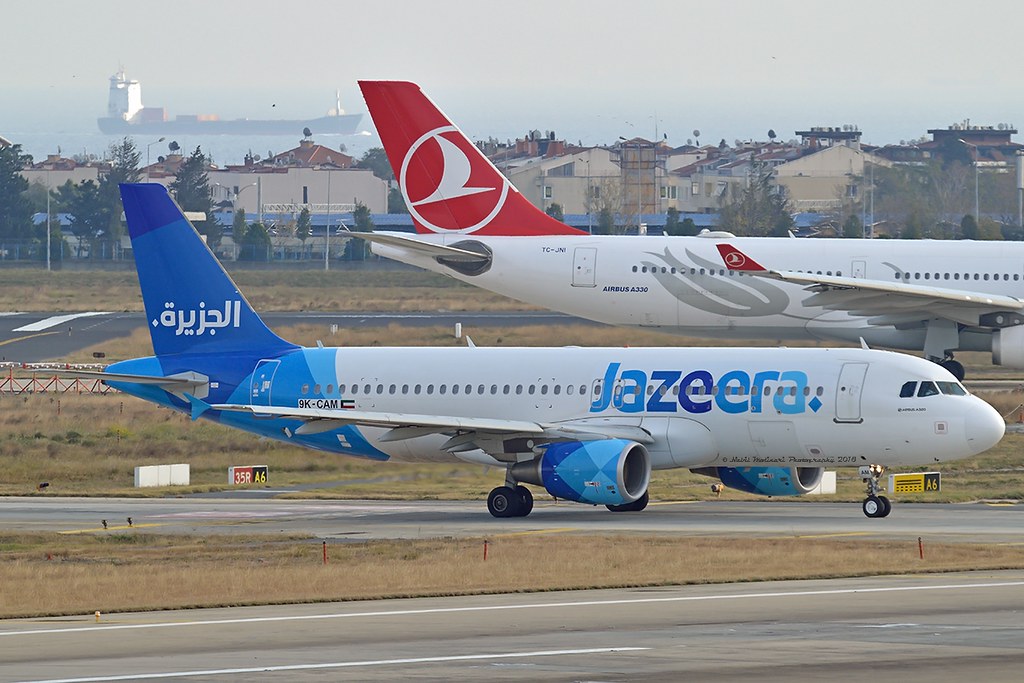

Quick Summary: Jazeera Airways Warns of Disruptions as Middle East Tensions Rise
- Air Astana has halted all flights to the UAE, signaling a significant shift in risk assessment by non-Gulf airlines.
- Jazeera Airways has issued a travel advisory, warning passengers to expect disruptions, but has not suspended flights.
- Finnair extended its suspension of flights to and from Doha and Dubai until October 2, reflecting long-term concerns.
- Despite regional attacks, UAE airports continue to operate with minimal disruption, maintaining largely normal flight schedules.
- Airlines and insurers are making route-by-route decisions based on missile, drone, and airspace threats, despite government assurances.
Source: Open external resource
Source: Read original article
The Middle East is once again a focal point of aviation uncertainty as airlines grapple with escalating safety concerns. Air Astana’s abrupt halt of UAE flights is a stark indicator of how non-Gulf carriers are reassessing risks more aggressively than their local counterparts. Meanwhile, Jazeera Airways has issued a travel advisory, urging passengers to brace for potential disruptions without halting operations entirely.
This situation highlights a growing divide between public assurances of operational normalcy and the reality of airline-specific restrictions. Finnair’s decision to extend its flight suspensions until October 2 underscores the long-term nature of these concerns. While UAE airports continue to function with minimal disruption, the confidence required to keep foreign airlines operating smoothly is eroding.
Contextually, this aviation disruption unfolds against the backdrop of renewed military escalations in the region. Despite previous ceasefires, the current environment is marked by missile and drone threats, prompting airlines and insurers to make cautious, route-specific decisions. The contrast between operational claims and actual airline pullouts creates a volatile landscape for travelers.
As the situation evolves, the focus remains on airline updates, particularly regarding Air Astana’s future plans and whether Jazeera Airways will escalate its advisory to cancellations. The broader question is whether these disruptions will lead to a more extensive commercial retreat or remain isolated incidents.
By July 14, however, the outlet’s live flight update showed the picture worsening at the airline level: Air Astana halted UAE flights, Jazeera Airways issued its warning, and Finnair’s extended suspension to October 2 illustrated how quickly short-term disruption can become long-dated schedule damage. The latest reporting from The National, published on July 14, says Air Astana has halted UAE services outright, making it one of the clearest signs yet that airlines outside the Gulf are reassessing risk more aggressively than local carriers.
The National reported that Bahrain and Jordan were attacked after the US completed a third wave of strikes on Iran, while Finnair has extended its suspension of flights to and from Doha and Dubai until October 2 and is also avoiding the airspace over Iraq, Iran, Syria and Israel. On July 13, The National reported that flight disruption remained “minimal” across much of the Gulf despite attacks across the region, with UAE airports largely operating and local carriers such as Emirates, Etihad and Qatar Airways not announcing broad shutdowns.
The reversal now — with new warnings, reroutings and suspensions — suggests the market had begun normalizing before the latest military escalation reopened safety concerns. What happens next will likely depend less on airport readiness than on military and regulatory decisions in the airspace stretching from Iran and Iraq to Israel and the Gulf.
The standout new development is that Air Astana has abruptly suspended all flights to the UAE while Jazeera Airways is still flying but has warned passengers to expect disruptions, underscoring how the renewed Iran-linked security crisis is now hitting even previously resilient Gulf travel corridors. In the same update, Jazeera Airways stopped short of a full suspension but issued a travel advisory telling customers to update contact details, check in online, confirm baggage allowances and arrive at the airport at least four hours early, a concrete signal that the airline expects operational turbulence rather than routine summer congestion.
Finnair expanded its own restrictions deep into the autumn, setting October 2 as a key date. The National says Iraqi airspace has reopened following the April ceasefire, and a June 29 report noted that a flight from Tehran landed in Dubai for the first time since the war began on February 28.
The latest reporting from The National, published on July 14, says Air Astana has halted UAE services outright, making it one of the clearest signs yet that airlines outside the Gulf are reassessing risk more aggressively than local carriers. On July 13, The National reported that flight disruption remained “minimal” across much of the Gulf despite attacks across the region, with UAE airports largely operating and local carriers such as Emirates, Etihad and Qatar Airways not announcing broad shutdowns.
Airlines and insurers are making route-by-route decisions based on missile, drone, and airspace threats, despite government assurances. Meanwhile, Jazeera Airways has issued a travel advisory, urging passengers to brace for potential disruptions without halting operations entirely.
Contextually, this aviation disruption unfolds against the backdrop of renewed military escalations in the region. The reversal now — with new warnings, reroutings and suspensions — suggests the market had begun normalizing before the latest military escalation reopened safety concerns.
Finnair’s decision to extend its flight suspensions until October 2 underscores the long-term nature of these concerns. In the same update, Jazeera Airways stopped short of a full suspension but issued a travel advisory telling customers to update contact details, check in online, confirm baggage allowances and arrive at the airport at least four hours early, a concrete signal that the airline expects operational turbulence rather than routine summer congestion.
The scale and speed of this development has caught many observers off guard. Each new update adds another dimension to a story that is still unfolding, and the full picture will only become clear as more verified details emerge from the people and institutions directly involved.
Analysts who have tracked this issue closely say the current moment represents a genuine turning point. The decisions made in the coming weeks are expected to set the direction for months ahead, with ripple effects likely to extend well beyond the immediate actors in the story.
For those directly affected, the practical impact is already visible. People navigating this fast-changing situation are dealing with real consequences while new information continues to reshape what is known and what remains open to interpretation.
Historical parallels offer some context, though experts caution against drawing too close a comparison. Similar situations have played out before, but the specific combination of pressures, personalities, and timing here makes this moment distinct in ways that matter for how it ultimately resolves.
The political and economic dimensions of this story are deeply intertwined. What appears as a single event on the surface is in practice the convergence of multiple pressures that have been building quietly over a longer period than most public reporting has captured.