

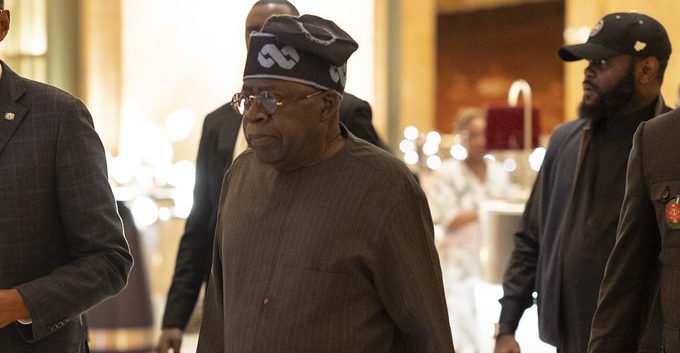

Quick Summary: Tinubus Security Reform Gains Momentum With House Adoption
- Nigeria’s House of Representatives adopted President Tinubu’s state-police bill on July 14, 2026, advancing a major security reform.
- Tinubu’s bill passed first and second readings and is now under review by the House Committee on Constitutional Review.
- Senate Leader Opeyemi Bamidele highlighted a recent attack as evidence of rising organized crime in the South-West.
- 39 pupils and seven teachers were rescued on July 10 after 56 days in captivity; eight terrorists were arrested.
- The Senate urged a nationwide crackdown on bandits and terrorists, coinciding with the House’s adoption of the state-police bill.
Source: Open external resource
Source: Read original article
Nigeria is on the brink of a significant security transformation. On July 14, 2026, the House of Representatives took a decisive step by embracing President Bola Tinubu’s state-police bill, abandoning its own proposal. This move aligns both legislative chambers towards a unified path in addressing the nation’s pressing security concerns. Tinubus is at the center of this development.
Tinubu’s bill, having cleared initial legislative hurdles, is now in the hands of the House Committee on Constitutional Review. This committee will scrutinize the proposed dual federal-state policing system, ensuring it includes necessary safeguards and an effective operational framework. The urgency of this reform is underscored by recent events, including the rescue of 39 pupils and seven teachers from captivity, which highlighted the inefficiencies of the current centralized security structure.
The Senate, echoing the House’s urgency, has called for an intensified crackdown on criminal elements nationwide. Senate Leader Opeyemi Bamidele pointed to the recent abductions as a disturbing trend of organized crime infiltrating the South-West, emphasizing the need for swift legislative action.
This legislative shift is not just about policy but about addressing real-world threats. As Tinubu and his supporters argue, the current security apparatus is too slow and centralized to effectively combat the rising tide of crime. The proposed decentralization aims to empower local forces, providing quicker response times and more tailored security measures.
The path forward is clear: the constitutional review committee must assess the bill’s provisions before it returns to the full House for further deliberation. The alignment of both chambers around Tinubu’s proposal marks a pivotal moment in Nigeria’s legislative history, driven by a shared urgency to protect its citizens from escalating threats.
Nigeria’s most consequential fresh development in PM News reporting is the House of Representatives’ decision on July 14, 2026 to abandon its own state-police bill and instead adopt President Bola Tinubu’s executive proposal, a move that pushes one of the country’s biggest security overhauls much closer to reality. PM News reports that Tinubu’s Constitution of the Federal Republic of Nigeria (Alteration) (State Police) Bill, 2026 scaled both first and second readings in the House on Tuesday and was sent to the House Committee on Constitutional Review, which will now examine the legal framework, safeguards and operating structure of a dual federal-state policing system.
Senate Leader Opeyemi Bamidele said the attack marked “a disturbing expansion of organised criminal activities into the South-West,” and Senator Fatai Buhari called the abduction a “Black Friday” for his district. The political weight of the move is amplified by timing: the House action came “barely two weeks after the Senate passed a similar constitutional amendment bill,” meaning both chambers are now converging on the same broad reform path.
According to PM News, 39 pupils and seven teachers were abducted on May 15 and rescued on July 10 after 56 days in captivity; eight suspected terrorists were arrested and several others were killed in the operation. On July 14, the Senate publicly pressed the government to widen the crackdown on bandits and terrorists, and on that same date the House adopted Tinubu’s state-police bill after giving it first and second readings.
” That is the core debate now before the constitutional review process: decentralization as a cure for insecurity, or decentralization as a new source of political misuse. The main figures in this story are Tinubu, Speaker Tajudeen Abbas, Senate Leader Opeyemi Bamidele and the House Committee on Constitutional Review, which now becomes the next decisive arena.
” Bamidele, meanwhile, is tying the institutional reform argument to the real-world terror threat, framing recent kidnappings as proof that the country cannot afford delay. The surprise is not that state police is back on the agenda, but that within days of a high-profile rescue operation, the federal legislature moved from debate to alignment around the presidency’s preferred blueprint.
On July 14, the Senate publicly pressed the government to widen the crackdown on bandits and terrorists, and on that same date the House adopted Tinubu’s state-police bill after giving it first and second readings. Tinubu’s bill passed first and second readings and is now under review by the House Committee on Constitutional Review.
This committee will scrutinize the proposed dual federal-state policing system, ensuring it includes necessary safeguards and an effective operational framework. The Senate, echoing the House’s urgency, has called for an intensified crackdown on criminal elements nationwide.
The scale and speed of this development has caught many observers off guard. Each new update adds another dimension to a story that is still unfolding, and the full picture will only become clear as more verified details emerge from the people and institutions directly involved.
Analysts who have tracked this issue closely say the current moment represents a genuine turning point. The decisions made in the coming weeks are expected to set the direction for months ahead, with ripple effects likely to extend well beyond the immediate actors in the story.
For those directly affected, the practical impact is already visible. People navigating this fast-changing situation are dealing with real consequences while new information continues to reshape what is known and what remains open to interpretation.
Historical parallels offer some context, though experts caution against drawing too close a comparison. Similar situations have played out before, but the specific combination of pressures, personalities, and timing here makes this moment distinct in ways that matter for how it ultimately resolves.
The political and economic dimensions of this story are deeply intertwined. What appears as a single event on the surface is in practice the convergence of multiple pressures that have been building quietly over a longer period than most public reporting has captured.