

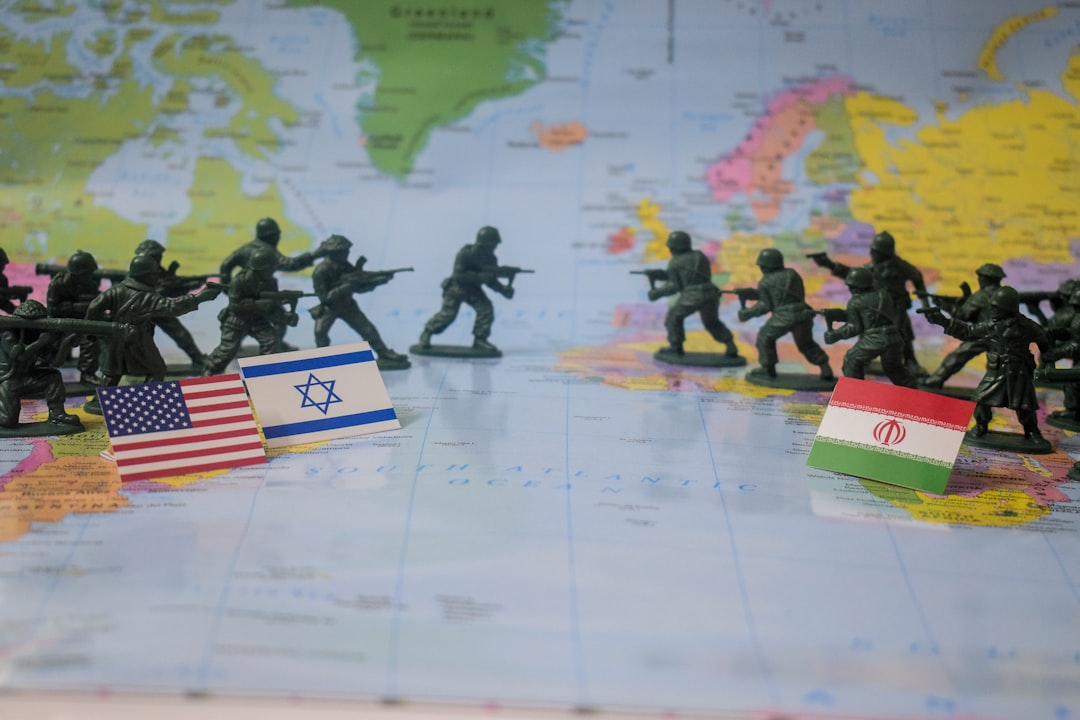

Quick Summary: Military Strain Grows Amid Trumps Abrupt Halt to Iran Strikes
- Trump halted new strikes on July 24 after 13 days of approved attack plans, signaling strategic inconsistency.
- Trump’s aides describe him as increasingly erratic, with policy shifts causing domestic and international concern.
- The administration faces a stalemate with Iran, with no clear path to de-escalation or victory.
- Oil prices have surged past $100 a barrel, adding economic pressure to the political conflict.
- U.S. military officials express concern over resource strain, challenging the sustainability of prolonged conflict.
Source: Open external resource
Source: Read original article
In a dramatic turn of events, President Trump abruptly halted military strikes against Iran on July 24, after nearly two weeks of consistent attack approvals. This sudden shift has left both his aides and international observers questioning the stability of his decision-making process.
Reports from The Daily Beast and other outlets reveal that Trump’s aides are increasingly concerned about his erratic behavior. The president’s vacillation between aggressive military threats and sudden retreats has created a whiplash effect, leaving the administration without a clear strategic endpoint.
The situation with Iran has reached a stalemate, with neither side willing to back down. This impasse comes at a high cost, as oil prices have soared, impacting global markets and adding another layer of complexity to the conflict. The U.S. military’s concerns about resource strain further underscore the challenges of maintaining a prolonged engagement.
The broader geopolitical context is fraught with tension. The administration’s mixed signals have not only confused allies but also emboldened adversaries. As the conflict continues to simmer, the question remains: can this administration find a path to de-escalation, or will it be drawn into an even more perilous situation?
military not to conduct new strikes, ending a run of 13 straight days in which he had approved daily strike plans. ” Intelligence-based reporting from The Washington Post says the administration faces a stalemate, and that escalation, including possible ground involvement, carries high political risk at home without any guarantee of success.
AP notes that roughly a fifth of the world’s oil normally passes through that strait, while Axios says oil prices have already risen above $100 a barrel. military had halted bombing raids over the weekend, but Waltz said the administration had not ruled out ramping attacks back up, and Trump himself had only days earlier said he was “close” to a decision on a larger offensive.
Waltz publicly rejected reports of munitions strain, saying the military has “everything that it needs,” but The Washington Post says Pentagon officials have privately expressed much greater anxiety about replenishing weapons stocks. Axios reported that every afternoon for nearly two weeks Trump had been green-lighting attack packages, then abruptly withheld approval on Friday and said the “smarter strategy” was to “make a deal” with Iran.
” On the Iranian side, foreign ministry spokesman Esmaeil Baghaei said, “We have received messages,” confirming that mediated contacts are active even amid the fighting. strikes, but over the same weekend Yemen’s Iran-backed Houthis claimed attacks on Saudi Aramco oil facilities in Yanbu and Jazan, and Iranian state-affiliated media reported a tanker explosion in the Strait of Hormuz.
What happens next is likely to turn on whether the current pause produces real talks or merely a brief intermission before another military spike. strikes on Friday, July 24, even as aides and allied reporting describe him as increasingly “erratic” and desperate for a face-saving exit from a war that has become politically and militarily stuck.
In a dramatic turn of events, President Trump abruptly halted military strikes against Iran on July 24, after nearly two weeks of consistent attack approvals. Oil prices have surged past $100 a barrel, adding economic pressure to the political conflict.
” Intelligence-based reporting from The Washington Post says the administration faces a stalemate, and that escalation, including possible ground involvement, carries high political risk at home without any guarantee of success. AP notes that roughly a fifth of the world’s oil normally passes through that strait, while Axios says oil prices have already risen above $100 a barrel.
military had halted bombing raids over the weekend, but Waltz said the administration had not ruled out ramping attacks back up, and Trump himself had only days earlier said he was “close” to a decision on a larger offensive. The president’s vacillation between aggressive military threats and sudden retreats has created a whiplash effect, leaving the administration without a clear strategic endpoint.
The scale and speed of this development has caught many observers off guard. Each new update adds another dimension to a story that is still unfolding, and the full picture will only become clear as more verified details emerge from the people and institutions directly involved.
Analysts who have tracked this issue closely say the current moment represents a genuine turning point. The decisions made in the coming weeks are expected to set the direction for months ahead, with ripple effects likely to extend well beyond the immediate actors in the story.
For those directly affected, the practical impact is already visible. People navigating this fast-changing situation are dealing with real consequences while new information continues to reshape what is known and what remains open to interpretation.
Historical parallels offer some context, though experts caution against drawing too close a comparison. Similar situations have played out before, but the specific combination of pressures, personalities, and timing here makes this moment distinct in ways that matter for how it ultimately resolves.
The political and economic dimensions of this story are deeply intertwined. What appears as a single event on the surface is in practice the convergence of multiple pressures that have been building quietly over a longer period than most public reporting has captured.