

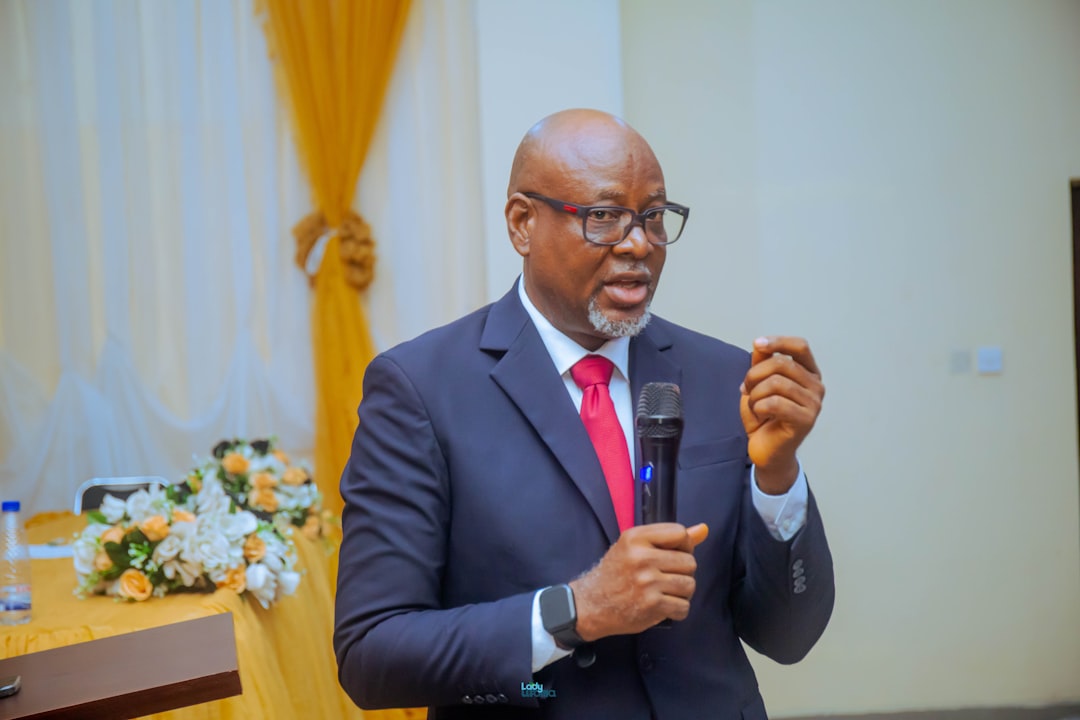

Quick Summary: Central Bank Governor Cardoso Leads Talks on Nigerias Economic Strategy
- The Africa Emerging Markets Forum will be held on July 29-30, 2026, at the CBN headquarters in Abuja, Nigeria.
- Olayemi Cardoso and Ngozi Okonjo-Iweala will lead discussions, focusing on economic resilience amidst global uncertainties.
- The forum aims to address macroeconomic stability, regional integration, and technology-led growth.
- Key topics include inflation management, cross-border payments, and foreign direct investment.
- The event seeks to demonstrate Nigeria’s commitment to reform and economic credibility.
Source: Open external resource
Source: Read original article
In a world fraught with economic uncertainties, the upcoming Africa Emerging Markets Forum in Abuja is poised to be a pivotal event. Scheduled for July 29-30, 2026, this forum will gather heavyweights like Olayemi Cardoso, Nigeria’s Central Bank Governor, and Ngozi Okonjo-Iweala, Director-General of the WTO, to chart a course for economic resilience.
This isn’t just another conference filled with ceremonial speeches. The forum’s agenda is packed with sessions on macroeconomic stability, cross-border payments, and technology-led growth. The goal is clear: to transform reform rhetoric into tangible actions that can withstand the pressures of global fragmentation and domestic economic challenges.
The context here is crucial. With Nigeria grappling with high inflation and borrowing costs, the forum is more than timely. It’s an urgent call to action for policymakers to prove that regional integration and fiscal coordination can effectively counteract geopolitical shocks.
As the forum unfolds, all eyes will be on whether Cardoso and Okonjo-Iweala can move beyond broad discussions and commit to specific measures in areas like inflation management and investment mobilization. This is not just a meeting; it’s a test of Nigeria’s economic mettle.
The forum opens on Tuesday, July 29, and runs through Wednesday, July 30, 2026, at the CBN headquarters in Abuja. Cardoso, as head of Nigeria’s central bank, is the domestic face of reform and monetary discipline; Okonjo-Iweala, as WTO chief, brings the trade and multilateral dimension.
Those figures are from separate Punch reports published the same day, but together they sharpen why this forum matters now: Nigeria is trying to show movement in credit conditions and foreign-exchange market activity even as borrowing remains punishingly expensive and reform fatigue is a real risk. The reporting also names finance minister and coordinating minister of the economy Taiwo Oyedele, science and technology minister Dr Kingsley Udeh, World Bank chief economist Indermit Gill, Emerging Markets Forum founder Harinder Kohli, and Ahmadu Bello University vice-chancellor Professor Adamu Ahmed.
As of the latest reporting available now, the hard news is the convening itself, the unusually senior lineup, the July 29–30 timetable, and the explicit attempt to confront “geoeconomic uncertainties” with a coordinated Africa-focused response. The most concrete detail from the latest reporting is the scope of the agenda, which goes well beyond ceremonial speeches.
That breadth is the story’s core signal: policymakers are treating today’s pressure points—prices, payments, and capital flows—as interlinked rather than isolated. The central tension driving the story is whether Africa, and Nigeria in particular, can keep reform momentum alive while the external environment gets harsher and more fragmented.
In plain terms, the debate is whether tighter monetary policy, fiscal coordination, and regional integration can shield economies from geopolitical shocks, or whether those shocks are now outrunning policymakers’ tools. What makes the story stand out this week is the contrast between the modest immediacy of the headline and the larger stakes underneath it.
Scheduled for July 29-30, 2026, this forum will gather heavyweights like Olayemi Cardoso, Nigeria’s Central Bank Governor, and Ngozi Okonjo-Iweala, Director-General of the WTO, to chart a course for economic resilience. Quick Summary: Cardoso, Okonjo-Iweala to lead Africa Emerging Markets Forum – Punch Newspapers The Africa Emerging Markets Forum will be held on July 29-30, 2026, at the CBN headquarters in Abuja, Nigeria.
The forum aims to address macroeconomic stability, regional integration, and technology-led growth. Key topics include inflation management, cross-border payments, and foreign direct investment.
The event seeks to demonstrate Nigeria’s commitment to reform and economic credibility. In a world fraught with economic uncertainties, the upcoming Africa Emerging Markets Forum in Abuja is poised to be a pivotal event.
The scale and speed of this development has caught many observers off guard. Each new update adds another dimension to a story that is still unfolding, and the full picture will only become clear as more verified details emerge from the people and institutions directly involved.
Analysts who have tracked this issue closely say the current moment represents a genuine turning point. The decisions made in the coming weeks are expected to set the direction for months ahead, with ripple effects likely to extend well beyond the immediate actors in the story.
For those directly affected, the practical impact is already visible. People navigating this fast-changing situation are dealing with real consequences while new information continues to reshape what is known and what remains open to interpretation.
Historical parallels offer some context, though experts caution against drawing too close a comparison. Similar situations have played out before, but the specific combination of pressures, personalities, and timing here makes this moment distinct in ways that matter for how it ultimately resolves.
The political and economic dimensions of this story are deeply intertwined. What appears as a single event on the surface is in practice the convergence of multiple pressures that have been building quietly over a longer period than most public reporting has captured.