

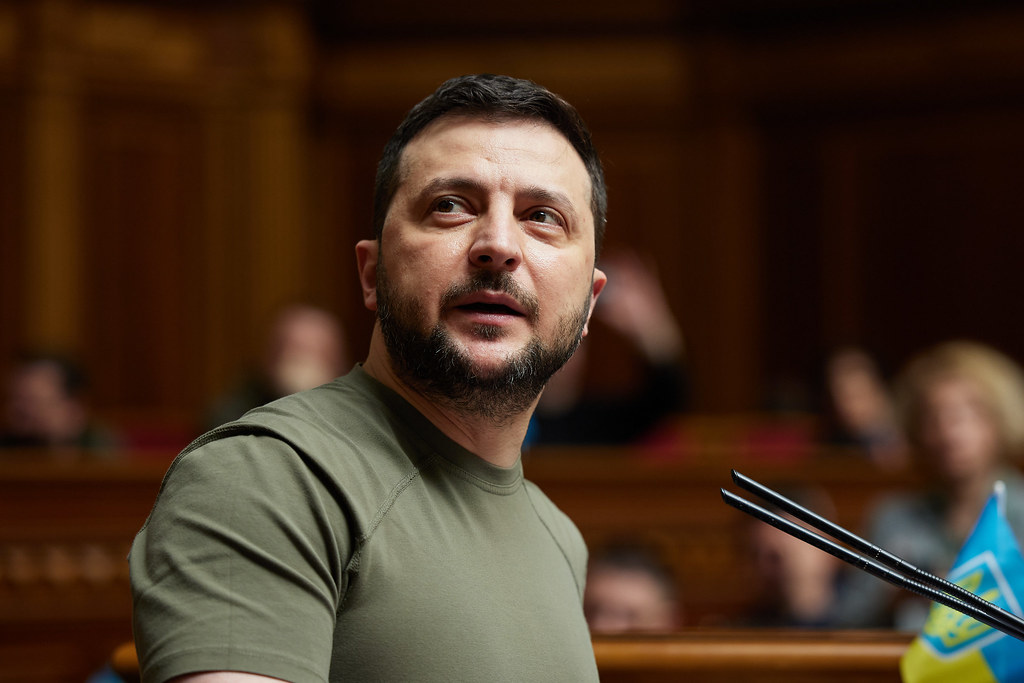

Quick Summary: Zelensky Reveals Russian Plans for 30,000 North Korean Troops
- The US Senate passed an 86-12 vote advancing a significant Russia sanctions bill, signaling potential increased economic pressure on Moscow.
- Zelensky revealed intelligence that Russia plans to receive 30,000 additional North Korean troops, escalating military tensions.
- During his US visit, Zelensky pushed for domestic production of Patriot interceptors and enhanced defense collaboration with Lockheed Martin.
- The sanctions bill, named after Lindsey Graham, gained momentum after his death, highlighting political shifts in Washington.
- Ukrainian forces reported intense combat with 226 clashes and significant Russian military activity over a single day.
Source: Open external resource
Source: Read original article
In a dramatic turn of events, Ukraine finds itself at the heart of a geopolitical storm as the US Senate moves forward with a decisive sanctions bill against Russia. This 86-12 vote is more than just numbers; it represents a potential game-changer in the ongoing conflict, offering Ukraine a beacon of hope for stronger support from Washington. Zelensky is at the center of this development.
Volodymyr Zelensky’s visit to the US wasn’t just about diplomacy; it was a strategic maneuver to bolster Ukraine’s defense capabilities. The Ukrainian President’s revelation of Russia’s plans to bring in 30,000 North Korean troops adds a chilling layer to the already tense military landscape. Meanwhile, Zelensky’s discussions with Lockheed Martin signal a push for technological advancement in Ukraine’s defense strategy.
The sanctions bill, now known as the Lindsey O. Graham Sanctioning Russia and Iran Act of 2026, gained traction following Graham’s untimely death. This legislative push, which had been mired in political negotiations, now stands as a testament to Graham’s legacy and a clear message to Moscow.
On the ground, the situation remains dire. Ukrainian forces continue to face relentless attacks, with 226 combat clashes reported in just one day. The scale of Russian military operations underscores the urgent need for the international community to act decisively.
As the world watches, Ukraine’s future hangs in the balance. The next steps in Washington and Kyiv will be crucial in shaping the outcome of this conflict. With the sanctions bill moving through the Senate, the focus now shifts to the House, where the battle for Ukraine’s survival continues.
Graham Sanctioning Russia and Iran Act of 2026, and Kyiv Post says Graham had only announced on July 11, one day before his sudden death, that an agreement with Trump had finally cleared the way for movement. Kyiv Post’s live Ukraine coverage on July 29, 2026 is being driven by a major Washington turn: while Volodymyr Zelensky was in the US, the Senate delivered an 86-12 bipartisan vote to advance a sweeping Russia sanctions bill, giving Ukraine its strongest new sign in months that Washington may be preparing both harder economic pressure on Moscow and deeper defense cooperation with Kyiv.
The sharpest new warning in the coverage, and arguably the most startling military revelation, is Zelensky’s claim that Russia is preparing to receive 30,000 additional North Korean troops. In the early hours of July 29, Kyiv Post published the White House meeting story, the 86-12 Senate vote story, and the warning about 30,000 more North Korean troops.
The revised measure would also let President Donald Trump impose tariffs of up to 100% on goods from countries that remain among the biggest buyers of Russian oil and gas, a narrower but still severe version of an earlier proposal that had threatened 500% tariffs. Kyiv Post says the compromise came only after the measure was cut back from the earlier 500% concept to a more targeted 100% framework aimed at the five biggest importers of Russian crude or gas and the five countries most involved in helping Moscow evade sanctions.
Democratic Senator Richard Blumenthal said flatly, “This bill is the one that will pass. ” In a parallel report, Kyiv Post said Zelensky met Lockheed Martin representatives to discuss “joint production and technology exchange” focused on Patriot systems as well as platforms tied to F-16s, HIMARS, and ATACMS.
The report adds that Reuters independently said North Korea had already deployed roughly 14,000 troops to support Russia under the two countries’ mutual defense agreement. The Armed Forces of Ukraine said there were 226 combat clashes over the 24 hours ending late on July 28, including 29 Russian attacks on the Pokrovsk axis and 27 near Kostiantynivka.
Zelensky revealed intelligence that Russia plans to receive 30,000 additional North Korean troops, escalating military tensions. Kyiv Post’s live Ukraine coverage on July 29, 2026 is being driven by a major Washington turn: while Volodymyr Zelensky was in the US, the Senate delivered an 86-12 bipartisan vote to advance a sweeping Russia sanctions bill, giving Ukraine its strongest new sign in months that Washington may be preparing both harder economic pressure on Moscow and deeper defense cooperation with Kyiv.
The Ukrainian President’s revelation of Russia’s plans to bring in 30,000 North Korean troops adds a chilling layer to the already tense military landscape. Graham Sanctioning Russia and Iran Act of 2026, gained traction following Graham’s untimely death.
Ukrainian forces continue to face relentless attacks, with 226 combat clashes reported in just one day. Democratic Senator Richard Blumenthal said flatly, “This bill is the one that will pass.
The scale and speed of this development has caught many observers off guard. Each new update adds another dimension to a story that is still unfolding, and the full picture will only become clear as more verified details emerge from the people and institutions directly involved.
Analysts who have tracked this issue closely say the current moment represents a genuine turning point. The decisions made in the coming weeks are expected to set the direction for months ahead, with ripple effects likely to extend well beyond the immediate actors in the story.
For those directly affected, the practical impact is already visible. People navigating this fast-changing situation are dealing with real consequences while new information continues to reshape what is known and what remains open to interpretation.
Historical parallels offer some context, though experts caution against drawing too close a comparison. Similar situations have played out before, but the specific combination of pressures, personalities, and timing here makes this moment distinct in ways that matter for how it ultimately resolves.
The political and economic dimensions of this story are deeply intertwined. What appears as a single event on the surface is in practice the convergence of multiple pressures that have been building quietly over a longer period than most public reporting has captured.