


Quick Summary: Federal High Courts Decision Threatens Adelekes Political Future
- Inspector-General of Police met with Adeleke over rising tensions before the election, with 1,954,800 registered voters in Osun.
- INEC scheduled the Osun governorship election for August 8, 2026, amid campaign confusion and legal battles.
- Adeleke seeks re-election under Accord, turning a typical race into a complex contest involving party realignment.
- Court rejected Adeleke’s attempt to join a suit against Accord’s deregistration, heightening uncertainty over his candidacy.
- Adeleke’s main challenger, APC’s Oyebamiji, promises not to prioritize one LG over others if elected.
Source: Open external resource
Source: Read original article
Ademola Adeleke’s political journey in Osun State is anything but straightforward. As the state gears up for its gubernatorial election, the stakes are high, and the atmosphere is charged with tension and uncertainty. Adelekes is at the center of this development.
With the election set for August 8, 2026, Adeleke’s bid for re-election under the Accord party has turned a routine incumbency race into a high-stakes battle. The legal and political challenges surrounding Accord’s status have cast a shadow over his candidacy, with court rulings threatening to disrupt his campaign.
Adding to the complexity, Adeleke’s main opponent, APC’s Bola Oyebamiji, is capitalizing on the situation, promising fair governance and dismissing allegations against him as baseless. Meanwhile, the Inspector-General of Police’s involvement underscores the heightened tensions and the critical role of security in the upcoming election.
In the backdrop of these developments, the election narrative is dominated by the interplay of legal battles, party realignments, and campaign strategies. The outcome hinges not just on the candidates’ promises but also on the resolution of these underlying conflicts.
As the election date approaches, the focus remains on whether the electoral process can proceed without further disruptions, ensuring a fair and credible outcome for Osun’s voters.
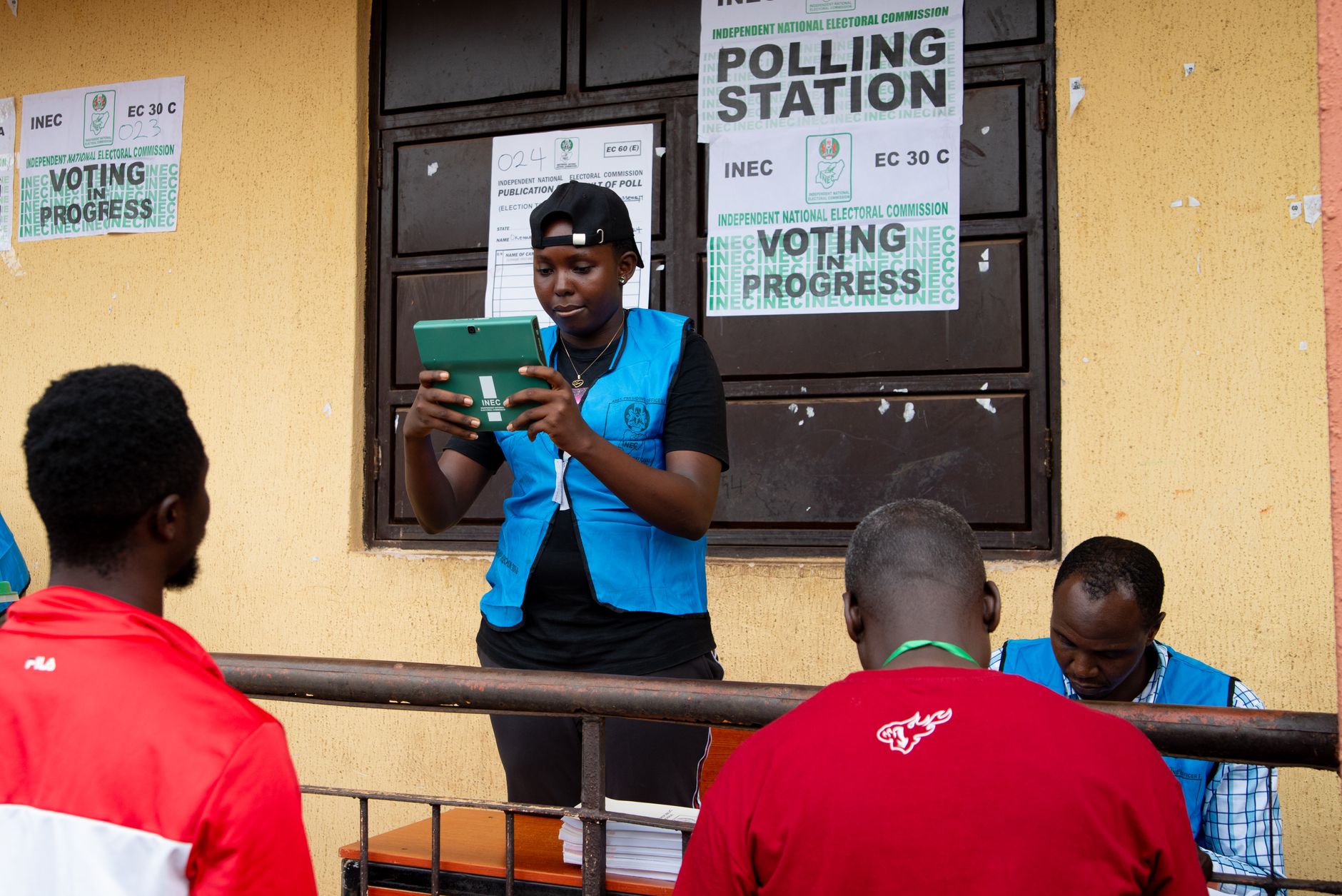
Channels reported that Inspector-General of Police Tunji Disu met Adeleke and other stakeholders on July 3, 2026 over rising tensions before the election, while INEC data cited there put Osun’s registered voters at 1,954,800, with 1,594,006 PVCs collected and 360,794 still unclaimed. INEC’s published schedule put the Osun governorship election on August 8, 2026, though several campaign reports and political statements referenced August 15, 2026; by late July, candidates including Adeleke and Oyebamiji signed a peace accord, and by June and July the courts, police, and party campaigns were already dominating the race narrative.
Premium Times also reported he got a political boost when supporters of former APC national secretary Iyiola Omisore defected to back him, while Adeleke publicly reaffirmed support for President Bola Tinubu’s 2027 re-election bid, an unusual cross-party signal in such a tense state contest. Premium Times reported that a Federal High Court ruling ordered INEC to deregister five parties including Accord, creating a direct threat to Adeleke’s candidacy, while Adeleke’s camp insisted the judgment “cannot stay” because the matter is already before the Court of Appeal.
Reporting showed Adeleke, who won Osun in 2022 on the PDP platform, was seeking re-election under Accord, and that shift turned a normal incumbency race into a hybrid contest involving party realignment, litigation, and speculation over alliances. Premium Times said the court battle came after the window for changing parties had already closed, making the stakes unusually high for Adeleke personally and for INEC administratively.
The court also rejected Adeleke’s bid to join one of the related suits seeking Accord’s deregistration, a procedural setback that sharpened the uncertainty around his candidacy. ng) One striking twist is that this was not a straightforward PDP-versus-APC rematch by mid-2026.
What happens next, based on the latest verifiable reporting, is less about celebration than resolution: the appeal over Accord’s status remains crucial, INEC’s handling of ballot access and logistics remains under scrutiny, and any final political outcome depends on whether the electoral timetable, court process, and security arrangements converge without another disruption. I did not find a reliable, current source from the past 7 days confirming a brand-new INEC declaration that Adeleke has just won an Osun election this week; what I found instead is a high-stakes pre- or peri-election struggle over ballot legitimacy, party survival, and whether Osun’s vote can proceed cleanly under legal and security pressure.
INEC scheduled the Osun governorship election for August 8, 2026, amid campaign confusion and legal battles. Court rejected Adeleke’s attempt to join a suit against Accord’s deregistration, heightening uncertainty over his candidacy.
With the election set for August 8, 2026, Adeleke’s bid for re-election under the Accord party has turned a routine incumbency race into a high-stakes battle. The court also rejected Adeleke’s bid to join one of the related suits seeking Accord’s deregistration, a procedural setback that sharpened the uncertainty around his candidacy.
One striking twist is that this was not a straightforward PDP-versus-APC rematch by mid-2026. What happens next, based on the latest verifiable reporting, is less about celebration than resolution: the appeal over Accord’s status remains crucial, INEC’s handling of ballot access and logistics remains under scrutiny, and any final political outcome depends on whether the electoral timetable, court process, and security arrangements converge without another disruption.
The scale and speed of this development has caught many observers off guard. Each new update adds another dimension to a story that is still unfolding, and the full picture will only become clear as more verified details emerge from the people and institutions directly involved.
Analysts who have tracked this issue closely say the current moment represents a genuine turning point. The decisions made in the coming weeks are expected to set the direction for months ahead, with ripple effects likely to extend well beyond the immediate actors in the story.
For those directly affected, the practical impact is already visible. People navigating this fast-changing situation are dealing with real consequences while new information continues to reshape what is known and what remains open to interpretation.
Historical parallels offer some context, though experts caution against drawing too close a comparison. Similar situations have played out before, but the specific combination of pressures, personalities, and timing here makes this moment distinct in ways that matter for how it ultimately resolves.
The political and economic dimensions of this story are deeply intertwined. What appears as a single event on the surface is in practice the convergence of multiple pressures that have been building quietly over a longer period than most public reporting has captured.