

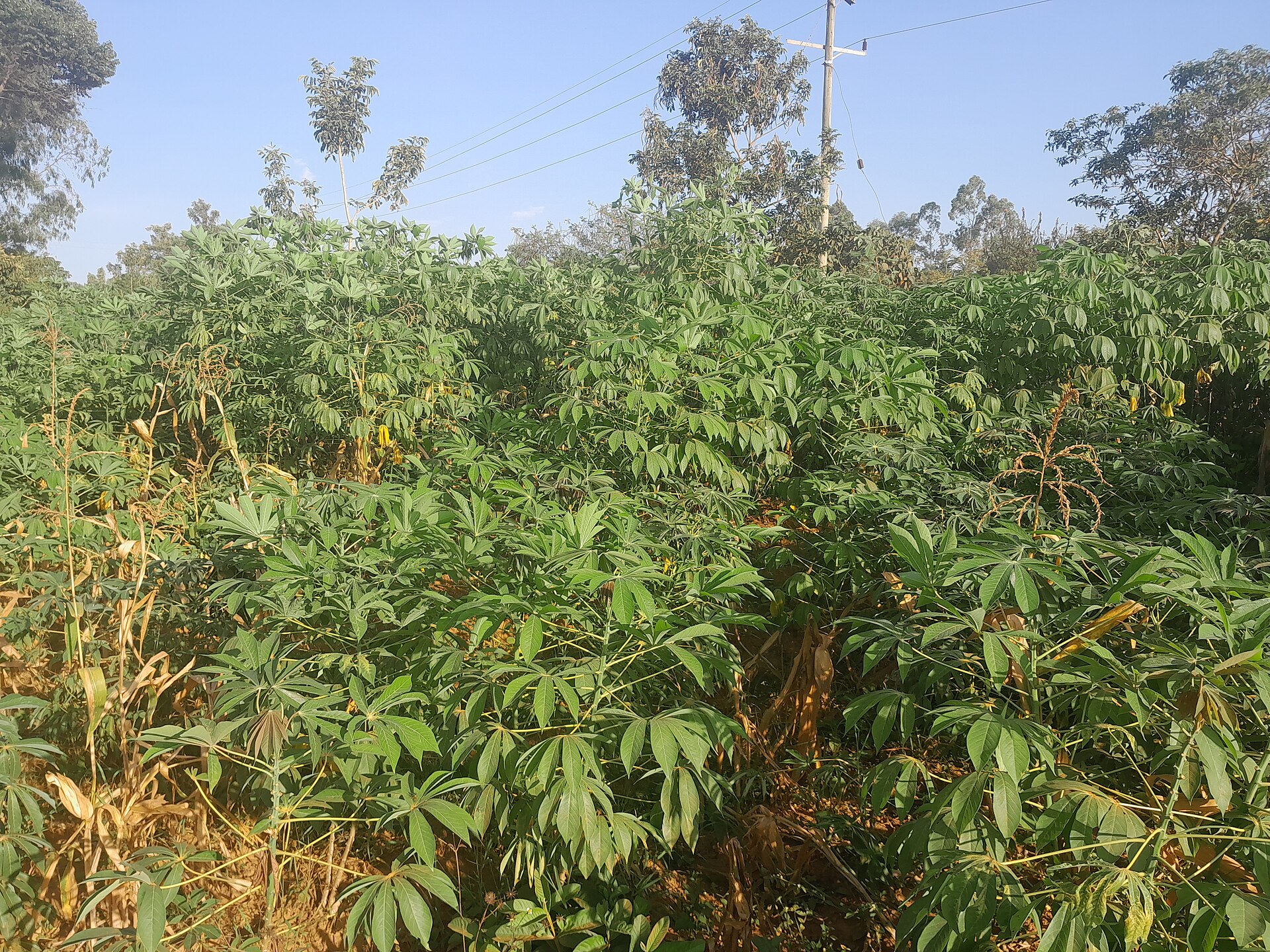

Quick Summary: NCIA Highlights Underfunding in Nigerian Cassava Networks
- Nigeria’s cassava-processing facilities operate at 30-40% capacity — unreliable supply chains are the main issue.
- The Nigeria Cassava Investment Accelerator highlights underinvestment in farmer networks and transport links.
- Ogun State praised Dangote Cement Plc for a new processing facility — yet existing plants struggle with supply.
- Research institutes face budgetary challenges — public underfunding affects cassava productivity.
- Nigeria remains the largest cassava producer but still imports processed derivatives — industrial processing capacity is lacking.
Source: Open external resource
Source: Read original article
Nigeria’s cassava industry is caught in a vicious cycle of weak investment and supply chain inefficiencies. Despite being the world’s largest cassava producer, the country’s processing facilities are operating at a mere 30 to 40 percent capacity. This isn’t due to a lack of demand but rather a chronic failure in the supply chain that prevents cassava from reaching processors reliably.
The Nigeria Cassava Investment Accelerator has pointed out that the issue isn’t just a lack of funding for machinery. It’s a systemic problem rooted in underinvestment in farmer networks, transport links, and procurement systems. Plants are running at low capacity, incurring full fixed costs but capturing only a fraction of the revenue, which makes debt service a significant challenge.
While Ogun State has made strides by partnering with Dangote Cement Plc to open a new processing facility, the broader picture remains grim. Many plants can’t source enough cassava, and research bodies struggle with inadequate funding. This highlights a deeper issue of public underfunding affecting agricultural productivity.
Despite these challenges, Nigeria continues to import starches and other derivatives, underscoring the gap between raw cassava production and industrial processing capacity. The debate isn’t whether Nigeria grows enough cassava, but whether it can convert this into industrial value efficiently.
As stakeholders push for more coordinated farmer-linkage models and factory expansions, the question remains: will these efforts lift utilization rates, or will Nigeria continue to add plants on paper while existing facilities remain underfed?
On June 28, 2026, Guardian reported that Ogun State praised Dangote Cement Plc for handing over a cassava garri and fufu processing facility. A second Guardian Nigeria report, published March 26, 2026, shows how this factory problem is rooted upstream on farms.
Guardian quoted NCIA warning that “a plant running at 40 per cent capacity carries the fixed costs of a full-capacity operation, while capturing only a fraction of the revenue. At a training event in Oyo State that drew more than 6,000 farmers, participants said Nigeria is losing millions of naira annually because of falling cassava yields, weak extension support and poor policy execution.
In a June 27, 2026 Guardian commentary tied to World Cassava Day 2026, Oska Seyi Aiyeleso wrote that Nigeria remains the world’s biggest cassava producer yet still imports “starches, sweeteners, flours and industrial derivatives” that local manufacturers need. Commissioner for Agriculture and Food Security Bolu Owotomo said the state had mobilised and trained more than 16,000 cassava farmers under OGSTEP, given direct production support to more than 12,400 beneficiaries, subsidised 65 per cent of mechanisation costs and registered over 160,000 farmers, including about 90,000 cassava farmers, on its digital database.
Together, they are describing the same system from different angles: investors need predictable volumes, farmers need support and markets, and government is being pressed to turn slogans about import substitution into practical supply-chain coordination. The sharpest takeaway from the latest Guardian Nigeria reporting is that the country’s cassava-processing push is being undermined less by demand than by a supply-chain failure so severe that many factories are running at just 30 to 40 per cent of installed capacity.
” The article’s clearest revelation is that weak investment is not simply about too little money for machines, but about underinvestment in the farmer networks, transport links and procurement systems needed to keep plants fed. Investors and processors want scale, but they cannot secure dependable cassava from fragmented smallholder networks, while farmers face volatile prices and inconsistent buyer demand.
On June 28, 2026, Guardian reported that Ogun State praised Dangote Cement Plc for handing over a cassava garri and fufu processing facility. Quick Summary: ‘How weak investment undermines local cassava processing’ – The Guardian Nigeria News Nigeria’s cassava-processing facilities operate at 30-40% capacity — unreliable supply chains are the main issue.
A second Guardian Nigeria report, published March 26, 2026, shows how this factory problem is rooted upstream on farms. Guardian quoted NCIA warning that “a plant running at 40 per cent capacity carries the fixed costs of a full-capacity operation, while capturing only a fraction of the revenue.
Nigeria’s cassava industry is caught in a vicious cycle of weak investment and supply chain inefficiencies. This isn’t due to a lack of demand but rather a chronic failure in the supply chain that prevents cassava from reaching processors reliably.
The scale and speed of this development has caught many observers off guard. Each new update adds another dimension to a story that is still unfolding, and the full picture will only become clear as more verified details emerge from the people and institutions directly involved.
Analysts who have tracked this issue closely say the current moment represents a genuine turning point. The decisions made in the coming weeks are expected to set the direction for months ahead, with ripple effects likely to extend well beyond the immediate actors in the story.
For those directly affected, the practical impact is already visible. People navigating this fast-changing situation are dealing with real consequences while new information continues to reshape what is known and what remains open to interpretation.
Historical parallels offer some context, though experts caution against drawing too close a comparison. Similar situations have played out before, but the specific combination of pressures, personalities, and timing here makes this moment distinct in ways that matter for how it ultimately resolves.
The political and economic dimensions of this story are deeply intertwined. What appears as a single event on the surface is in practice the convergence of multiple pressures that have been building quietly over a longer period than most public reporting has captured.