

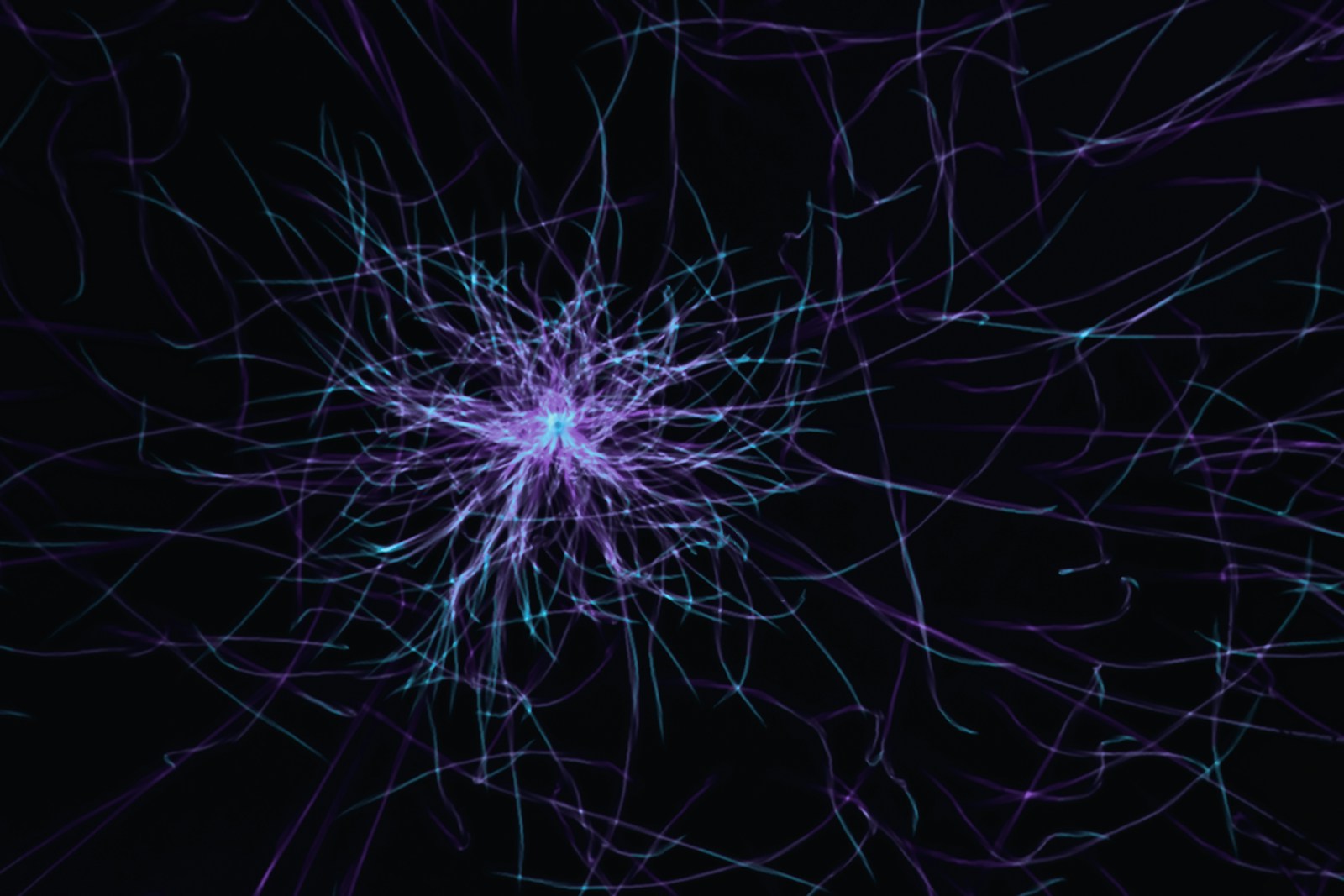

Quick Summary: St. Judes Study Reveals Brainstems Role in Prolonged Anxiety
- St. Jude’s research pinpointed C1 neurons in the brainstem as key drivers of anxiety, signaling into the periaqueductal gray.
- C1 neurons can switch anxiety into a long-lasting state, with effects persisting up to a week after stress in mice.
- The study suggests anxiety might not only originate in the forebrain but also involve ancient brainstem systems.
- Blocking these neurons reduced the impact of stress, indicating potential for new anxiety treatments.
- The research challenges existing anxiety treatment paradigms by focusing on a specific brainstem pathway.
Source: Open external resource
Source: Read original article
In a groundbreaking study, researchers at St. Jude Children’s Research Hospital have identified a new player in the anxiety game: C1 neurons in the brainstem. These neurons, previously overlooked, are now seen as pivotal in driving anxiety by signaling into the periaqueductal gray.
The revelation that C1 neurons can prolong anxiety effects for up to a week in mice challenges the traditional view that anxiety is primarily a forebrain issue. This discovery suggests that ancient brainstem systems could be significant contributors to anxiety disorders.
Lead researcher Lindsay Schwarz argues that targeting these neurons could offer a more precise treatment for anxiety, avoiding the broad effects of current medications. The study, supported by major research foundations, highlights the potential for developing interventions that prevent stress from evolving into prolonged anxiety.
This research marks a potential shift in understanding anxiety disorders, moving away from symptom suppression towards addressing the underlying causes. As the scientific community digests these findings, the focus will be on replicating the results and exploring new treatment avenues.
A July 2026 neuroscience report highlighted a striking new claim: a tiny population of epinephrine-producing brainstem cells called C1 neurons can switch anxiety into a long-lasting state, with St. In coverage tied to a Neuron paper published on July 9, 2026, St.
The paper appeared in Neuron on July 9, 2026, and St. The practical next step is not a vote, hearing or formal deadline but the more consequential test for this field: replication, mechanistic follow-up and attempts to determine whether inhibiting the C1-to-PAG pathway can be translated into a treatment strategy for the more than 300 million people globally affected by anxiety disorders, the figure cited in the release.
Jude Children’s Research Hospital said its team pinpointed C1 neurons in the rostral ventrolateral medulla, or RVLM, as a previously underappreciated driver of fear and anxiety, and showed those cells signal into the periaqueductal gray, or PAG. Jude researchers saying strong activation in mice kept the effect going for up to a week after stress had passed.
The reporting also includes several concrete details about who did the work and how. The work used a “precision-targeting system” from the Schwarz lab to isolate C1 neurons from other cells in the RVLM, a region better known for controlling breathing and cardiac function.
The study was backed by the Brain & Behavior Research Foundation, the National Institutes of Health under grant 1DP2NS115764, and ALSAC, St. Jude’s public release was issued the same day.
The practical next step is not a vote, hearing or formal deadline but the more consequential test for this field: replication, mechanistic follow-up and attempts to determine whether inhibiting the C1-to-PAG pathway can be translated into a treatment strategy for the more than 300 million people globally affected by anxiety disorders, the figure cited in the release. Jude Children’s Research Hospital said its team pinpointed C1 neurons in the rostral ventrolateral medulla, or RVLM, as a previously underappreciated driver of fear and anxiety, and showed those cells signal into the periaqueductal gray, or PAG.
The study, supported by major research foundations, highlights the potential for developing interventions that prevent stress from evolving into prolonged anxiety. Jude’s research pinpointed C1 neurons in the brainstem as key drivers of anxiety, signaling into the periaqueductal gray.
C1 neurons can switch anxiety into a long-lasting state, with effects persisting up to a week after stress in mice. Jude Children’s Research Hospital have identified a new player in the anxiety game: C1 neurons in the brainstem.
The work used a “precision-targeting system” from the Schwarz lab to isolate C1 neurons from other cells in the RVLM, a region better known for controlling breathing and cardiac function. The study was backed by the Brain & Behavior Research Foundation, the National Institutes of Health under grant 1DP2NS115764, and ALSAC, St.
The scale and speed of this development has caught many observers off guard. Each new update adds another dimension to a story that is still unfolding, and the full picture will only become clear as more verified details emerge from the people and institutions directly involved.
Analysts who have tracked this issue closely say the current moment represents a genuine turning point. The decisions made in the coming weeks are expected to set the direction for months ahead, with ripple effects likely to extend well beyond the immediate actors in the story.
For those directly affected, the practical impact is already visible. People navigating this fast-changing situation are dealing with real consequences while new information continues to reshape what is known and what remains open to interpretation.
Historical parallels offer some context, though experts caution against drawing too close a comparison. Similar situations have played out before, but the specific combination of pressures, personalities, and timing here makes this moment distinct in ways that matter for how it ultimately resolves.
The political and economic dimensions of this story are deeply intertwined. What appears as a single event on the surface is in practice the convergence of multiple pressures that have been building quietly over a longer period than most public reporting has captured.