

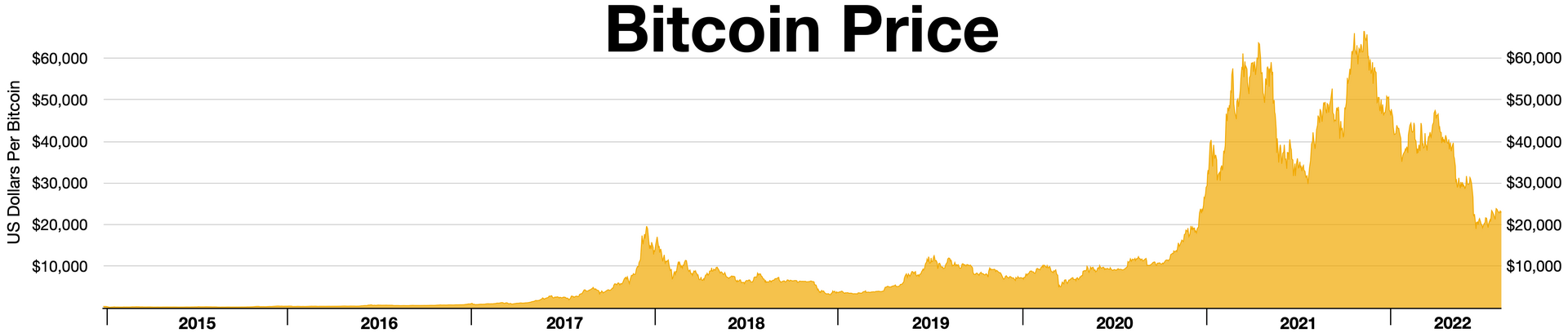

Quick Summary: Bitcoin Surges Past $70,000 Amid ETF Inflows and Short Squeeze
- Bitcoin’s price surged past $70,000, driven by a short squeeze rather than organic growth.
- Spot Bitcoin ETFs saw inflows of $181 million on July 14 and $108 million on July 15, indicating some demand.
- Bitcoin trades below three major on-chain valuation models, suggesting potential undervaluation.
- The short-term holder cost basis, around $68,000, remains a critical resistance level.
- If Bitcoin fails to hold above key levels, it may slide back towards $53,000.
Source: Open external resource
Source: Read original article
Bitcoin’s recent climb above $70,000 might seem like a triumphant return, but don’t let the headlines fool you. This isn’t the story of a clean breakout; it’s a tale of a market caught in the throes of a short squeeze. The real question now is whether this rally has the legs to transform into a sustained recovery or if it’s just a temporary spike.
The numbers tell a complex story. While Bitcoin ETFs recently attracted significant inflows, the cryptocurrency remains below crucial valuation models, signaling potential undervaluation. However, the short-term holder cost basis, hovering around $68,000, is the real battleground. If Bitcoin can’t hold above this level, the rally might fizzle out, leaving investors disappointed.
Analysts are watching closely, with some suggesting that this rally could merely serve as ‘exit liquidity’ for those looking to break even. The market’s response will determine whether this is a fleeting moment or the start of a more robust recovery. The stakes are high, and the outcome is anything but certain.
In the coming days, Bitcoin’s ability to maintain its position above key levels will be crucial. If it falters, we could see a retreat to lower support levels around $53,000. But if it holds, this could mark the beginning of a genuine recovery, turning skeptics into believers.
In a separate market note, The Block said perpetual funding rates had recovered to an annualized 6% to 7% after turning negative in June, a sign that derivatives sentiment had improved even if leverage had not yet exploded. spot Bitcoin ETFs took in $181 million on July 14 and another $108 million on July 15 in one of the more recent demand tests cited in its coverage, while another of its July pieces said Bitcoin was trading near $61,465, still 51% below its October 2025 record of $126,080 and down 44% over the prior year.
BeInCrypto’s own recent reporting said Bitcoin trades below three of the four major on-chain valuation models, which can be read as undervaluation and recovery potential, but the same piece warned that every attempt to reclaim the short-term-holder cost basis since late 2025 had failed, including the March rebound. The latest reporting emphasizes that inflation data and softer yields helped Bitcoin rebound in mid-July, that ETF inflows improved over back-to-back sessions, and that traders then watched whether price could press from the low $60,000s toward the upper $60,000s and $70,000.
The single level showing up again and again in the latest reporting is the short-term holder cost basis, clustered around $68,000 to $69,500, and it has become the central battlefield. ” The Block sharpened that point, writing that “Bitcoin remains capped by the Short-Term Holder Cost Basis near $68,000,” which it described as the average cost basis for market participants over the last five months.
If those conditions fail, the latest BeInCrypto analysis suggests the market could slide back toward the realized-price zone near $53,000 or revisit lower support bands first flagged during the June washout. If they hold, then the headline move above $70,000 stops looking like a squeeze-driven fake-out and starts to look like the beginning of a structurally stronger recovery.
The most consequential thread in the latest reporting is that Bitcoin’s push back through $70,000 is increasingly being described not as a clean breakout but as a mechanically driven squeeze whose credibility now hinges on whether real spot demand, ETF flows, and short-term holder behavior can confirm it over the next several sessions. In the most current chatter around August 19 and August 20, traders were again describing an abrupt upward move as a likely short squeeze and warning not to overread it unless volume and spot follow-through hold.
Spot Bitcoin ETFs saw inflows of $181 million on July 14 and $108 million on July 15, indicating some demand. The short-term holder cost basis, around $68,000, remains a critical resistance level.
If Bitcoin fails to hold above key levels, it may slide back towards $53,000. Bitcoin’s recent climb above $70,000 might seem like a triumphant return, but don’t let the headlines fool you.
However, the short-term holder cost basis, hovering around $68,000, is the real battleground. If it falters, we could see a retreat to lower support levels around $53,000.
The scale and speed of this development has caught many observers off guard. Each new update adds another dimension to a story that is still unfolding, and the full picture will only become clear as more verified details emerge from the people and institutions directly involved.
Analysts who have tracked this issue closely say the current moment represents a genuine turning point. The decisions made in the coming weeks are expected to set the direction for months ahead, with ripple effects likely to extend well beyond the immediate actors in the story.
For those directly affected, the practical impact is already visible. People navigating this fast-changing situation are dealing with real consequences while new information continues to reshape what is known and what remains open to interpretation.
Historical parallels offer some context, though experts caution against drawing too close a comparison. Similar situations have played out before, but the specific combination of pressures, personalities, and timing here makes this moment distinct in ways that matter for how it ultimately resolves.
The political and economic dimensions of this story are deeply intertwined. What appears as a single event on the surface is in practice the convergence of multiple pressures that have been building quietly over a longer period than most public reporting has captured.