

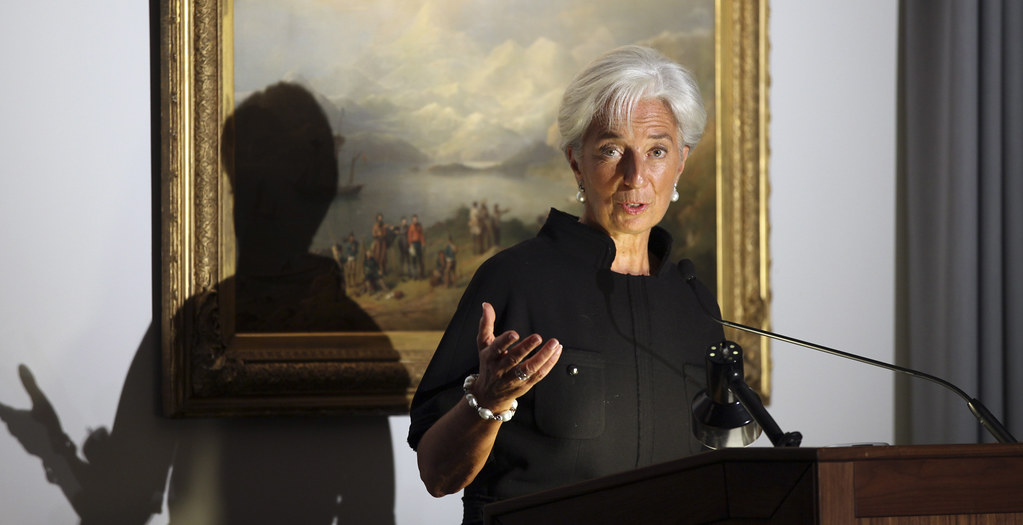

Quick Summary: Lagarde Confirms ECB’s Commitment to Data
- ECB’s Kazāks emphasizes the September interest rate decision will rely on new data, reflecting a cautious approach.
- Christine Lagarde confirmed the ECB’s commitment to a data-dependent strategy, with no forward guidance until September.
- Belgian policymaker Pierre Wunsch favors a rate hike if data trends negatively, highlighting internal ECB divisions.
- Slovak policymaker Peter Kazimir insists on at least one more rate hike unless upcoming data is compelling.
- Kazāks maintains flexibility, keeping rate hikes on the table, dependent on fresh inflation data and projections.
Source: Open external resource
Source: Read original article
In the ongoing saga of the European Central Bank’s monetary policy, Martins Kazāks stands as a pivotal figure. The Latvian central bank chief, a voting member of the ECB Governing Council, is emphasizing a critical point: the decision on whether to raise interest rates in September hinges on incoming data, particularly inflation and wage figures. This data-dependent approach underscores the ECB’s cautious stance amidst a backdrop of persistent inflation and uncertain economic growth.
The ECB’s strategy, as reiterated by President Christine Lagarde, is firmly rooted in a meeting-by-meeting evaluation, with no forward guidance offered until crucial data is assessed. This approach reflects the internal debates within the ECB, where figures like Belgian policymaker Pierre Wunsch advocate for proactive rate hikes if the economic indicators don’t improve. Similarly, Slovak policymaker Peter Kazimir has voiced the necessity for additional hikes unless the data before September presents a compelling case against it.
Kazāks’s position is particularly noteworthy for its nuance. He doesn’t advocate for a rate hike at all costs, nor does he suggest a pause is prudent. Instead, he presents a balanced view, weighing the ‘pros and cons’ of tightening monetary policy further. This reflects the broader conflict within the ECB: balancing inflation risks, particularly from energy and service prices, against the potential pitfalls of slowing growth and trade uncertainties.
As the ECB navigates these turbulent waters, the upcoming data releases, including August inflation figures and new staff projections, will be pivotal. These will likely influence the hawks within the ECB, who are poised to push for a rate hike if inflationary pressures persist. Conversely, a softening in these numbers could strengthen the case for maintaining current rates. The stakes are high, and the decisions made will reverberate across financial markets.
Ultimately, the ECB’s path forward remains uncertain, a fact underscored by Kazāks’s latest comments. The financial world watches closely, aware that the implications of the ECB’s next move will extend far beyond the eurozone, impacting global economic dynamics in the months to come.
On July 23, 2026, Lagarde said the ECB was back to a data-dependent baseline and would decide in September. More recently, Christine Lagarde reiterated on July 23, 2026 that the Governing Council would “make our decision in September” after reviewing the next wave of incoming data and would not give forward guidance.
The June 2026 ECB meeting account said members saw a deterioration in the inflation outlook after the Middle East conflict pushed energy risks higher, while still evaluating how strongly those pressures might feed through into broader prices. Kazāks has previously said he wanted to see August inflation data before making up his mind, and Lagarde has publicly committed the ECB to a meeting-by-meeting approach.
In separate Reuters reporting this summer, Belgian policymaker Pierre Wunsch said that if the data were not moving “in the right direction,” he would argue for a second hike rather than waiting, and Slovak policymaker Peter Kazimir went even further, saying in late July that the ECB would need to raise rates “at least once more” unless “very convincing” data changed the picture before September. The sharper point from the coverage is that Kazāks did not endorse a pause: he kept a further move on the table and tied it directly to fresh data, especially the next inflation print and updated ECB staff projections.
Reuters reporting carried by Investing says Kazāks argued that waiting for more data before deciding on September was appropriate, while other hawkish officials have been more forceful. The key new takeaway from the latest reporting is that ECB Governing Council member Martins Kazāks is explicitly refusing to pre-commit to a September move, saying the decision will depend on incoming inflation and wage data even as he acknowledges credible arguments both for another hike and for waiting.
The reporting centers on Kazāks, Latvia’s central bank chief and a voting ECB policymaker, telling media that September remains a live decision rather than a settled one, with “pros and cons” to tightening again. That “pros and cons” framing reflects the central conflict now consuming the ECB: inflation risks linked to energy and persistence in services prices on one side, and soft growth, trade uncertainty, and the danger of overtightening on the other.
Kazāks has previously said he wanted to see August inflation data before making up his mind, and Lagarde has publicly committed the ECB to a meeting-by-meeting approach. The ECB’s strategy, as reiterated by President Christine Lagarde, is firmly rooted in a meeting-by-meeting evaluation, with no forward guidance offered until crucial data is assessed.
Kazāks maintains flexibility, keeping rate hikes on the table, dependent on fresh inflation data and projections. This data-dependent approach underscores the ECB’s cautious stance amidst a backdrop of persistent inflation and uncertain economic growth.
The scale and speed of this development has caught many observers off guard. Each new update adds another dimension to a story that is still unfolding, and the full picture will only become clear as more verified details emerge from the people and institutions directly involved.
Analysts who have tracked this issue closely say the current moment represents a genuine turning point. The decisions made in the coming weeks are expected to set the direction for months ahead, with ripple effects likely to extend well beyond the immediate actors in the story.
For those directly affected, the practical impact is already visible. People navigating this fast-changing situation are dealing with real consequences while new information continues to reshape what is known and what remains open to interpretation.
Historical parallels offer some context, though experts caution against drawing too close a comparison. Similar situations have played out before, but the specific combination of pressures, personalities, and timing here makes this moment distinct in ways that matter for how it ultimately resolves.
The political and economic dimensions of this story are deeply intertwined. What appears as a single event on the surface is in practice the convergence of multiple pressures that have been building quietly over a longer period than most public reporting has captured.