


Quick Summary: Bachelet Faces Challenges Amid Political Shifts in Chile
- Rebeca Grynspan emerged as the frontrunner with 10 “encourage” votes — this positions her as a key contender in the UN secretary-general race.
- Carolyn Rodrigues-Birkett, nominated in June 2026, received 9 “encourage” votes — she could become the first woman and Caribbean national to lead the UN.
- The straw poll on July 30, 2026, was the first numerical test — it clarified the leaderboard and candidate momentum.
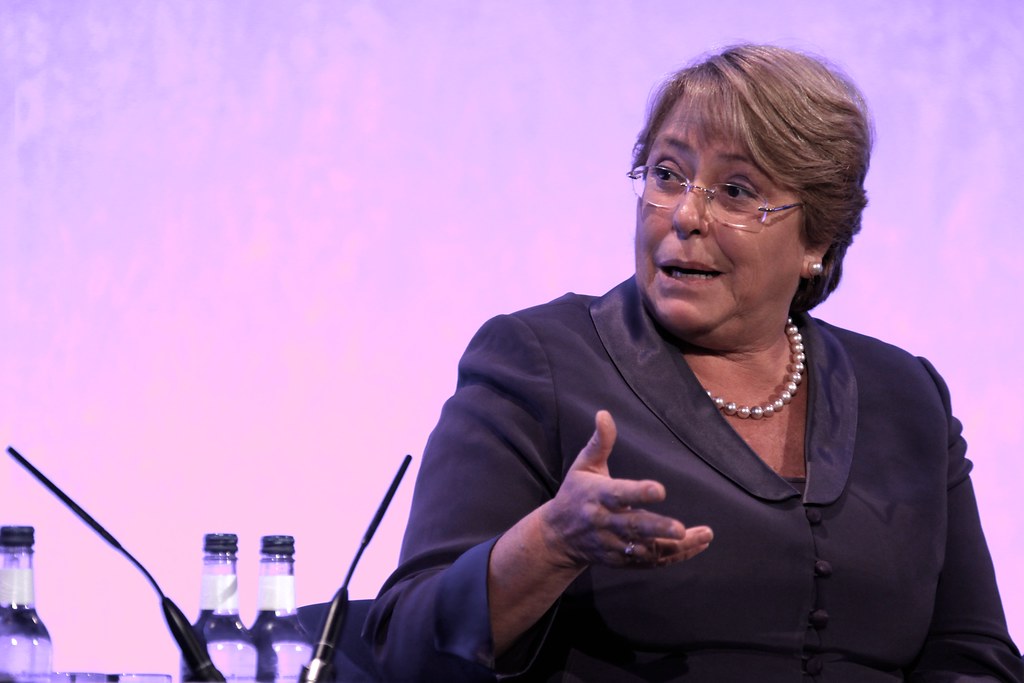
- Michelle Bachelet received mixed support with 6 “encourage” votes — her candidacy faces challenges due to political shifts in Chile.
- The informal vote signals momentum shifts — candidates now face the challenge of securing veto-proof support.
Source: Open external resource
Source: Read original article
The race for the UN Secretary-General is heating up, with Costa Rica’s Rebeca Grynspan taking an early lead. In the first secret UN Security Council straw poll, Grynspan secured 10 “encourage” votes, setting the stage for a fierce competition dominated by issues of electability, gender, and great-power politics. Shifts is at the center of this development.
Guyana’s Carolyn Rodrigues-Birkett is another strong contender, coming in second with 9 “encourage” votes. Her rapid rise since her nomination in June 2026 marks her as a potential trailblazer as the first woman and Caribbean national to hold the position. Meanwhile, Argentina’s Rafael Grossi, with 7 votes, is leveraging his nuclear-era crisis experience as a unique asset.
The informal, non-binding vote offers a glimpse into candidate momentum, yet the real test lies in navigating the opaque Security Council process, where the five veto powers hold significant sway. As the council’s secretive voting continues, candidates must convert early support into a consensus that withstands potential vetoes.
With the UN facing financial crises and political marginalization, the choice of Secretary-General is more critical than ever. The next rounds of secret straw polls will further shape the race, as candidates aim to secure a recommendation to the 193-member General Assembly by late September or early October 2026.
Rodrigues-Birkett, Guyana’s UN ambassador and former foreign minister, has surged quickly after being nominated only on June 25, 2026, and would be both the first woman and first Caribbean national to lead the UN. The official UN candidate page shows Olara Otunnu was nominated on July 24, 2026, just days after the July 23 UN Town Hall featuring the main contenders, meaning the public debate happened before the full field was in place.
That July 30, 2026 straw poll was the first hard numerical test of the field, and it immediately clarified the leaderboard: Guyana’s Carolyn Rodrigues-Birkett came second with 9 “encourage” votes, while Argentina’s Rafael Grossi had 7, according to diplomats cited by Reuters-based reporting. What happens next is a series of additional secret straw polls through late summer, with historical precedent suggesting the process could run into late September or early October 2026 before the Security Council settles on a single name to recommend to the 193-member General Assembly.
The biggest fresh development in the race to succeed António Guterres is that Costa Rica’s Rebeca Grynspan has emerged as the early frontrunner in the first secret UN Security Council straw poll, taking 10 “encourage” votes and opening a decisive new phase in a contest now dominated by questions of electability, gender, and great-power acceptability. The same reporting said Michelle Bachelet received 6 “encourage,” 5 “discourage,” and 4 “no opinion” votes; Macky Sall got 6, 7, and 2; Maria Fernanda Espinosa got 5, 2, and 8; and Uganda’s Olara Otunnu, a late entrant, drew 2, 5, and 8.
The vote was informal and non-binding, but it is the clearest signal yet of who has momentum and who is already struggling. What makes the field especially newsworthy is that it mixes establishment UN insiders with politically scarred former heads of state, and nearly every candidacy carries a specific vulnerability.
The deeper debate behind the numbers is whether the UN wants a managerial reformer, a geopolitical heavyweight, or a symbolic breakthrough candidate at a moment of institutional weakness. The central conflict driving the story is no longer just who has the strongest résumé; it is whether any candidate can survive the opaque Security Council process and avoid being knocked out by one of the five veto powers: the United States, China, Russia, Britain, or France.
The straw poll on July 30, 2026, was the first numerical test — it clarified the leaderboard and candidate momentum. Quick Summary: Explainer: Who are the candidates running for UN secretary-general?
With the UN facing financial crises and political marginalization, the choice of Secretary-General is more critical than ever. The biggest fresh development in the race to succeed António Guterres is that Costa Rica’s Rebeca Grynspan has emerged as the early frontrunner in the first secret UN Security Council straw poll, taking 10 “encourage” votes and opening a decisive new phase in a contest now dominated by questions of electability, gender, and great-power acceptability.
The scale and speed of this development has caught many observers off guard. Each new update adds another dimension to a story that is still unfolding, and the full picture will only become clear as more verified details emerge from the people and institutions directly involved.
Analysts who have tracked this issue closely say the current moment represents a genuine turning point. The decisions made in the coming weeks are expected to set the direction for months ahead, with ripple effects likely to extend well beyond the immediate actors in the story.
For those directly affected, the practical impact is already visible. People navigating this fast-changing situation are dealing with real consequences while new information continues to reshape what is known and what remains open to interpretation.
Historical parallels offer some context, though experts caution against drawing too close a comparison. Similar situations have played out before, but the specific combination of pressures, personalities, and timing here makes this moment distinct in ways that matter for how it ultimately resolves.
The political and economic dimensions of this story are deeply intertwined. What appears as a single event on the surface is in practice the convergence of multiple pressures that have been building quietly over a longer period than most public reporting has captured.