

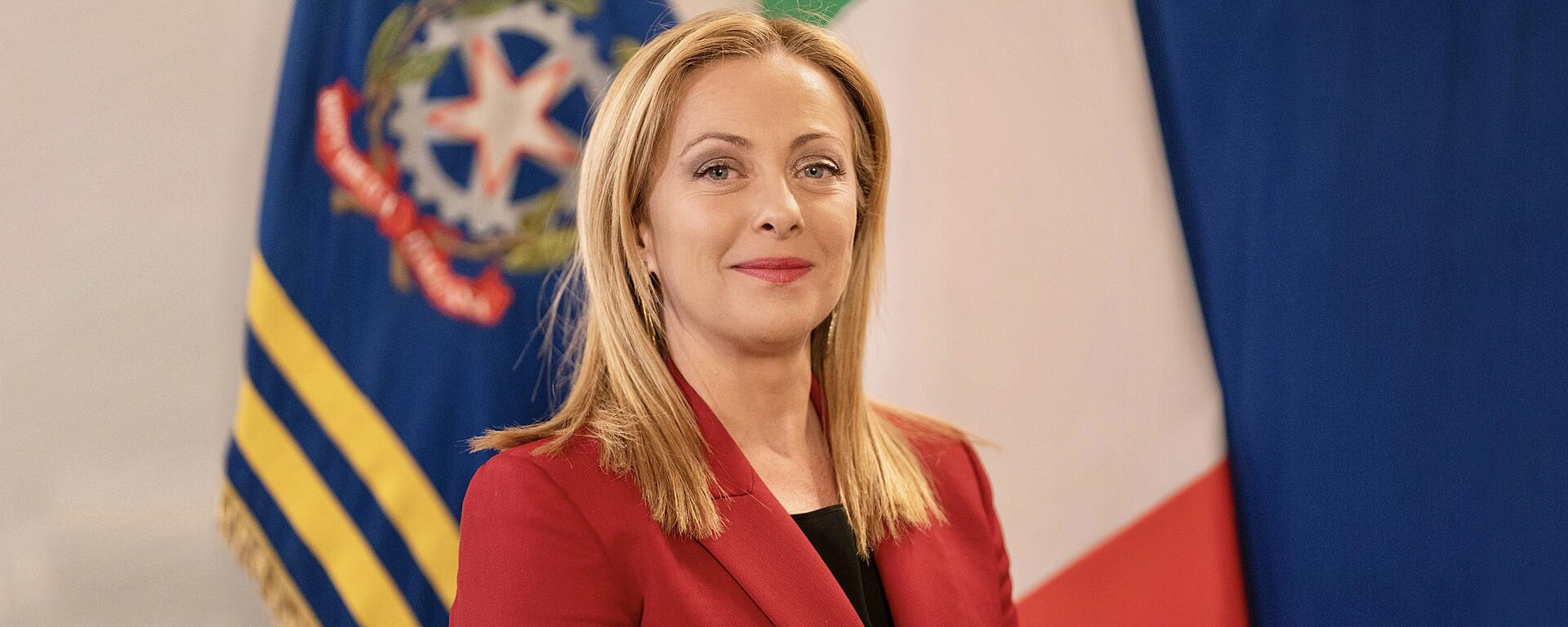

Quick Summary: Critics Challenge Melonis Stability Amid Economic and Health Concerns
- Meloni’s government has lasted due to a pragmatic approach, despite some stalled reforms.
- Security legislation under Meloni has been politically successful, addressing public-order offenses.
- Meloni’s administration reached 1,414 consecutive days, a record for uninterrupted Italian governance.
- Critics argue Meloni’s longevity doesn’t equate to substantial reforms, citing failed initiatives.
- Opposition highlights economic and healthcare issues, challenging Meloni’s claims of success.
Source: Open external resource
Source: Read original article
Giorgia Meloni stands at the forefront of Italian politics, having achieved what no postwar Italian leader has managed: an uninterrupted tenure of 1,414 days. This milestone, surpassing Silvio Berlusconi’s record, is now the cornerstone of her reelection campaign. Yet, while she boasts of stability, critics argue these years have been marked by missed opportunities and unfulfilled promises. Melonis is at the center of this development.
Meloni’s administration has been characterized by a blend of pragmatism and populist restraint, a strategy that has kept her in power since October 2022. However, some of her ambitious reforms, such as judicial changes and direct prime ministerial elections, have either stalled or failed outright. Meanwhile, her government’s focus on security legislation has found more success, with measures addressing protests and public-order offenses.
Despite these achievements, opposition voices grow louder. They point to economic stagnation and declining healthcare investment as evidence of Meloni’s shortcomings. Elly Schlein of the Democratic Party encapsulates this sentiment with the phrase, “Meloni celebrates, Italy does not.” Rising political figures like Roberto Vannacci also threaten to disrupt Meloni’s coalition, testing her grip on the nationalist right.
ANSA says Meloni is openly talking as if her coalition can become the first in republican history to complete a full term, which would happen in 2027 if the government survives intact. Reuters’ recent analysis says Meloni’s government has lasted because she “tempered her populist instincts with pragmatism” after taking power in October 2022, but the same reporting says some of her biggest promised changes have either stalled or backfired.
At the same time, security legislation has been much more successful politically: Reuters says Meloni’s government repeatedly answered high-profile incidents with tougher criminal measures, including a sweeping 2025 security decree covering protests, prison riots, squatting and broader public-order offenses. At the rally she called stability “our first great reform,” and AP reported that her administration has now reached 1,414 consecutive days in office, a precise number that gives the story its force because no Italian government has yet completed a full five-year term without interruption.
A flagship judicial overhaul was put to a referendum and lost decisively in March 2026, while her plan for direct election of the prime minister, once called the “mother of all reforms,” has not moved toward implementation before the next election. Italian media are now framing the coming budget season and the run-up to a possible spring 2027 vote as the real decision point: if Meloni can convert this week’s 1,413-day record into another year of discipline, she may go into the next election arguing that she gave Italy something rare and tangible, stability itself.
That creates the central contradiction now driving coverage: Meloni can claim endurance, but not necessarily delivery on the structural reforms she said would remake the Italian state. ” What makes the latest reporting more than a ceremonial anniversary is the fight over whether longevity equals achievement.
The most concrete policy vulnerability in this week’s reporting is migration. That split, stalled institutional reform but aggressive law-and-order legislation, is one reason both supporters and opponents think the next year matters more than the record itself.
Reuters’ recent analysis says Meloni’s government has lasted because she “tempered her populist instincts with pragmatism” after taking power in October 2022, but the same reporting says some of her biggest promised changes have either stalled or backfired. At the same time, security legislation has been much more successful politically: Reuters says Meloni’s government repeatedly answered high-profile incidents with tougher criminal measures, including a sweeping 2025 security decree covering protests, prison riots, squatting and broader public-order offenses.
At the rally she called stability “our first great reform,” and AP reported that her administration has now reached 1,414 consecutive days in office, a precise number that gives the story its force because no Italian government has yet completed a full five-year term without interruption. Meanwhile, her government’s focus on security legislation has found more success, with measures addressing protests and public-order offenses.
Meloni’s administration reached 1,414 consecutive days, a record for uninterrupted Italian governance. Opposition highlights economic and healthcare issues, challenging Meloni’s claims of success.
That creates the central contradiction now driving coverage: Meloni can claim endurance, but not necessarily delivery on the structural reforms she said would remake the Italian state. Giorgia Meloni stands at the forefront of Italian politics, having achieved what no postwar Italian leader has managed: an uninterrupted tenure of 1,414 days.
The scale and speed of this development has caught many observers off guard. Each new update adds another dimension to a story that is still unfolding, and the full picture will only become clear as more verified details emerge from the people and institutions directly involved.
Analysts who have tracked this issue closely say the current moment represents a genuine turning point. The decisions made in the coming weeks are expected to set the direction for months ahead, with ripple effects likely to extend well beyond the immediate actors in the story.
For those directly affected, the practical impact is already visible. People navigating this fast-changing situation are dealing with real consequences while new information continues to reshape what is known and what remains open to interpretation.
Historical parallels offer some context, though experts caution against drawing too close a comparison. Similar situations have played out before, but the specific combination of pressures, personalities, and timing here makes this moment distinct in ways that matter for how it ultimately resolves.
The political and economic dimensions of this story are deeply intertwined. What appears as a single event on the surface is in practice the convergence of multiple pressures that have been building quietly over a longer period than most public reporting has captured.