

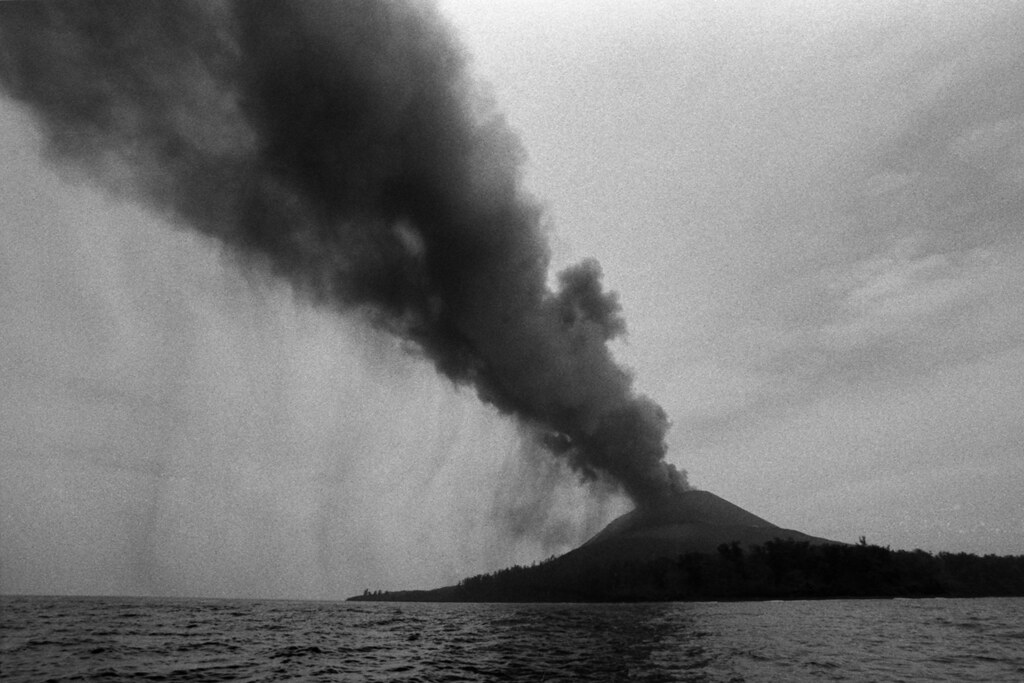

Quick Summary: BMKG Reports Intense Anak Krakatau Eruption Disrupting Air Travel
- Anak Krakatau’s eruption on September 4–5 marked the most intense activity in 2026, spreading ash across multiple regions.
- Hang Nadim airport in Batam canceled five flights linked to Jakarta, affecting airlines like Super Air Jet and Citilink.
- 516 flight movements were disrupted, impacting around 22,800 passengers, with significant closures at Soekarno-Hatta airport.
- Ash plumes reached up to 15,000 meters, leading to extended airport closures and affecting international travel.
- Passengers faced long queues and cancellations, with Singapore Airlines alone canceling 19 flights between Singapore and Jakarta.
Source: Open external resource
Source: Read original article
Indonesia’s aviation network was thrown into chaos as Anak Krakatau erupted, spewing ash and forcing widespread flight cancellations. The eruption, the most intense recorded in 2026, led to a significant disruption in air travel, with over 500 flights affected and thousands of passengers stranded.
The situation escalated rapidly, with airports like Soekarno-Hatta facing repeated closures as authorities struggled to manage the ash cloud. The closures, initially seen as precautionary, became prolonged as ash contamination persisted, impacting both domestic and international flights.
This eruption’s timing couldn’t be worse, as Anak Krakatau’s activity has been on the rise since July, leading to heightened alerts and operational challenges for aviation authorities. Despite the lack of tsunami threats, the eruption’s impact on air travel remains a significant concern.
As authorities work to manage the fallout, the focus remains on passenger safety and operational efficiency. With continued monitoring of ash distribution, the aviation industry faces the challenge of clearing the backlog and resuming normal operations.
Authorities said this September 4–5 sequence was the most intense Anak Krakatau activity recorded in 2026, with ash spreading across Banten, West Java, Jakarta, Lampung and Bengkulu. BNPB has told residents who hear blasts or feel vibrations to stay calm and avoid spreading unverified information, while warning the public to stay at least 3 kilometers from the active crater.
In Batam, Hang Nadim airport canceled five flights tied to Jakarta routes, including Super Air Jet IU-850 and IU-851, Citilink QG-940 and QG-941, and Batik Air ID-6863. That matters because the 2018 Anak Krakatau disaster still haunts public perception.
AP reported that by mid-afternoon Sunday the closures had affected 516 flight movements, including 202 at Soekarno-Hatta, impacting about 22,800 passengers. BMKG said ash was identified as high as 6,000 meters on the Java side, while another plume reached as high as 15,000 meters on the Sumatra side; AP separately reported one plume rising to about 6,100 meters, or 20,000 feet.
Channel NewsAsia reported “snaking queues” at Soekarno-Hatta as passengers scrambled for refunds and rebookings, and Singapore Airlines alone canceled 19 flights between Singapore and Jakarta on Sunday. One passenger, Henny Yensan, 44, said “everybody was disappointed,” a small quote that captures how a geologic event 150 kilometers away abruptly paralyzed a major international hub.
The immediate next decisions are operational: whether the latest NOTAM windows can safely expire, whether additional airports remain shut beyond Sunday afternoon, and whether airlines can clear the growing backlog without further cancellations if Anak Krakatau’s heightened activity, which officials say has been building since July 2026, continues into the new week. The official NOTAM sequence underlines how fast the situation worsened: Soekarno-Hatta was shifted to NOTAM A3346/26, Halim to A3347/26, and Radin Inten II to B1125/26 as conditions kept changing.
Authorities said this September 4–5 sequence was the most intense Anak Krakatau activity recorded in 2026, with ash spreading across Banten, West Java, Jakarta, Lampung and Bengkulu. The eruption, the most intense recorded in 2026, led to a significant disruption in air travel, with over 500 flights affected and thousands of passengers stranded.
In Batam, Hang Nadim airport canceled five flights tied to Jakarta routes, including Super Air Jet IU-850 and IU-851, Citilink QG-940 and QG-941, and Batik Air ID-6863. Quick Summary: Indonesia cancels flights at Jakarta airport and others as Anak Krakatau volcano erupts – The Washington Post Anak Krakatau’s eruption on September 4–5 marked the most intense activity in 2026, spreading ash across multiple regions.
The scale and speed of this development has caught many observers off guard. Each new update adds another dimension to a story that is still unfolding, and the full picture will only become clear as more verified details emerge from the people and institutions directly involved.
Analysts who have tracked this issue closely say the current moment represents a genuine turning point. The decisions made in the coming weeks are expected to set the direction for months ahead, with ripple effects likely to extend well beyond the immediate actors in the story.
For those directly affected, the practical impact is already visible. People navigating this fast-changing situation are dealing with real consequences while new information continues to reshape what is known and what remains open to interpretation.
Historical parallels offer some context, though experts caution against drawing too close a comparison. Similar situations have played out before, but the specific combination of pressures, personalities, and timing here makes this moment distinct in ways that matter for how it ultimately resolves.
The political and economic dimensions of this story are deeply intertwined. What appears as a single event on the surface is in practice the convergence of multiple pressures that have been building quietly over a longer period than most public reporting has captured.