


Quick Summary: Trump and Xi Prioritize AI Hotline Over Trade in Washington Summit
- Trump and Xi Jinping’s meeting may prioritize an AI ‘hotline’ over trade deals, highlighting technological risks.
- The U.S. and China have made uneven progress on past trade commitments, with modest expectations for the current summit.
- Xi’s visit includes significant military pageantry, underscoring the symbolic importance of the event.
- Economic and tech competition between the U.S. and China is escalating, particularly in AI and rare earths.
- Treasury Secretary Scott Bessent proposed an AI safety mechanism, suggesting a shift in focus from trade to technology.
Source: Open external resource
Source: Read original article
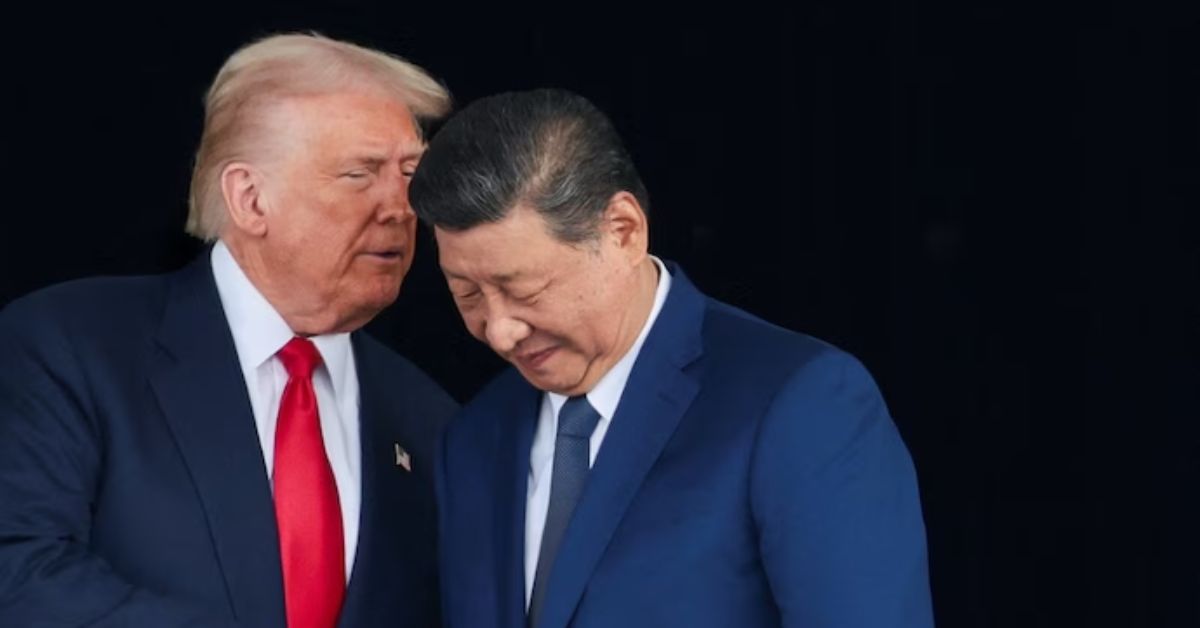
In a move that underscores both diplomatic theater and strategic necessity, Donald Trump recently rolled out the red carpet for Chinese President Xi Jinping. This historic state visit, marked by pomp and circumstance, is less about grand trade deals and more about establishing an AI ‘hotline’ between the two superpowers. The shift in focus from tariffs to technology reveals the underlying urgency both nations feel about managing potential AI miscalculations.
Xi’s visit to Washington is a spectacle of military pageantry, with Trump personally greeting him at Joint Base Andrews. Yet, behind the ceremonial facade lies a complex web of rivalry over trade, artificial intelligence, and strategic power. Despite the grandeur, the summit is expected to yield modest progress on trade, with analysts predicting no sweeping deals. Instead, the emphasis seems to be on creating safeguards against technological missteps.
The U.S. and China have been locked in an escalating tech competition, particularly in the AI sector. The proposal for an AI safety notification mechanism by Treasury Secretary Scott Bessent marks a significant policy movement. Bessent emphasized the importance of transparency between the world’s leading AI powers, suggesting that this could be the summit’s most tangible outcome.
The visit is politically charged, as Trump, known for his adversarial stance on China, now seeks to stabilize relations through personal diplomacy. The meeting takes place amid ongoing disputes over AI, trade, and rare earths, with both sides searching for narrower stabilizers to manage their rivalry. As the state dinner concludes and further talks loom, the world watches to see if a concrete AI communication channel or trade de-escalation will emerge from this ‘historic’ visit.
The White House said the Thursday arrival ceremony would include 479 military personnel, a Marine Band performance of both national anthems, and a military flyover featuring one B-2 Spirit and four F-22 Raptors, underscoring the symbolic weight Washington is putting on a visit it called “a significant milestone” more than a decade after Xi’s last White House state visit in September 2015. -China AI “hotline,” a striking sign that both governments now see technological miscalculation, not tariffs alone, as the most urgent risk in the relationship.
and China have made “uneven progress” on commitments announced when Trump and Xi met in Beijing in May, and that analysts expect only “modest progress” rather than any sweeping deal. The surprising reversal in the story is political as much as diplomatic: Trump, who built much of his rise on attacking China, is now publicly rolling out the red carpet for Xi even as the underlying disputes remain unresolved.
AP reported that Trump is hosting Xi even as economic and tech competition is “only escalating,” especially in “an artificial intelligence race,” while Beijing has used its near-monopoly over rare earth minerals, which are critical for products from smartphones to fighter jets, to strengthen its leverage in trade talks triggered by Trump’s tariffs and sanctions. Bessent said, “We think that, just like with any cross-border activity, that moving from opaque to more transparency between the number one and the number two AI powers in the world is very important,” and Reuters reported the idea would cover AI incidents that rise to the national-security level.
That contradiction is what makes the visit newsworthy now: neither side appears ready for a grand bargain, yet both appear worried enough about the consequences of unmanaged rivalry that they are searching for narrower stabilizers, especially in AI and trade administration. AP has reported the talks could continue at the working level into Monday, suggesting that any real decisions on tariff reductions, rare-earth understandings or an AI incident-notification framework may emerge in phased readouts rather than a single dramatic signing ceremony.
Xi arrived in Washington on Wednesday, September 23, for a three-day state visit culminating in White House talks on Thursday, September 24, and Trump took the unusual step of personally greeting him at Joint Base Andrews before hosting a full state program. The White House schedule says the state dinner took place Thursday night, September 24, and Trump and Melania Trump are due to host Xi and Peng Liyuan again on Friday morning, September 25, before a visit to the National Archives and the formal close of the trip.
Xi’s visit to Washington is a spectacle of military pageantry, with Trump personally greeting him at Joint Base Andrews. The visit is politically charged, as Trump, known for his adversarial stance on China, now seeks to stabilize relations through personal diplomacy.
-China AI “hotline,” a striking sign that both governments now see technological miscalculation, not tariffs alone, as the most urgent risk in the relationship. and China have made “uneven progress” on commitments announced when Trump and Xi met in Beijing in May, and that analysts expect only “modest progress” rather than any sweeping deal.
Treasury Secretary Scott Bessent proposed an AI safety mechanism, suggesting a shift in focus from trade to technology. Bessent said, “We think that, just like with any cross-border activity, that moving from opaque to more transparency between the number one and the number two AI powers in the world is very important,” and Reuters reported the idea would cover AI incidents that rise to the national-security level.
The scale and speed of this development has caught many observers off guard. Each new update adds another dimension to a story that is still unfolding, and the full picture will only become clear as more verified details emerge from the people and institutions directly involved.
Analysts who have tracked this issue closely say the current moment represents a genuine turning point. The decisions made in the coming weeks are expected to set the direction for months ahead, with ripple effects likely to extend well beyond the immediate actors in the story.
For those directly affected, the practical impact is already visible. People navigating this fast-changing situation are dealing with real consequences while new information continues to reshape what is known and what remains open to interpretation.
Historical parallels offer some context, though experts caution against drawing too close a comparison. Similar situations have played out before, but the specific combination of pressures, personalities, and timing here makes this moment distinct in ways that matter for how it ultimately resolves.
The political and economic dimensions of this story are deeply intertwined. What appears as a single event on the surface is in practice the convergence of multiple pressures that have been building quietly over a longer period than most public reporting has captured.