


Quick Summary: Flávio Bolsonaro Leads Brazils Presidential Race as Runoff Looms
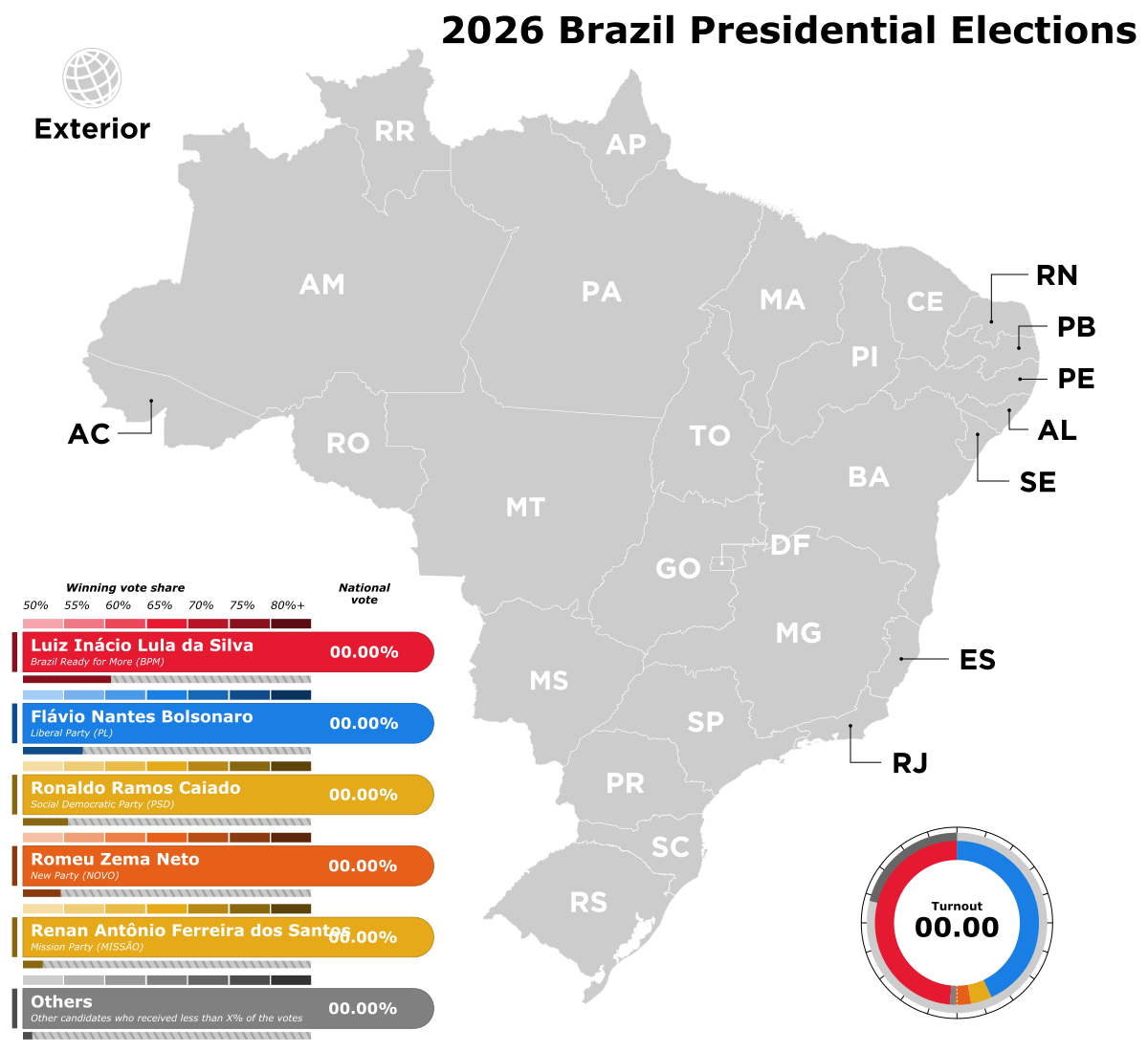
- Brazil’s presidential race heads to a runoff after Flávio Bolsonaro leads with 47.03% against Lula’s 45.16% — neither candidate reached the 50% threshold.
- The Master Bank scandal, involving money laundering, entangles both political sides, impacting Supreme Court justice Alexandre de Moraes’s reputation.
- Voting disruptions in Paraná due to heavy rains and power outages were reported, yet the runoff was confirmed.
- Lula’s last-minute ban on fixed-odds betting was seen as an electoral move in a tight race.
- The election outcome could lead to potential unrest or institutional changes, depending on the winner.
Source: Open external resource
Source: Read original article
Brazil’s political landscape teeters on the edge as the presidential election moves to a runoff. The first-round results have set the stage for a fierce battle between Flávio Bolsonaro and Luiz Inácio Lula da Silva, with neither candidate securing the necessary majority for an outright win. Brazils is at the center of this development.
This election isn’t just a contest between left and right; it’s a referendum on the integrity of Brazil’s institutions. The Master Bank scandal, a web of money laundering allegations, has cast a shadow over the judiciary, implicating figures like Supreme Court justice Alexandre de Moraes. This controversy threatens to undermine the very institutions meant to uphold democracy.
As the runoff approaches, the stakes couldn’t be higher. Lula’s recent ban on fixed-odds betting, perceived as a strategic electoral maneuver, adds another layer of complexity to an already volatile situation. Meanwhile, disruptions in voting due to severe weather conditions have only fueled concerns about the election’s legitimacy.
The outcome of this election will not only determine Brazil’s next leader but could also reshape the country’s democratic framework. If Bolsonaro wins, he might push for changes affecting the Supreme Court and his father’s legal issues. On the other hand, a loss could ignite unrest reminiscent of past political upheavals.
On September 29, AP reported Lula moved to ban fixed-odds betting days before the vote, in a decision one voter said came too late to save “$26,000” lost from his bank account, and analysts portrayed it as a nakedly electoral intervention in a tight race. AP, reporting on election day October 4, said Brazil’s electoral court confirmed no first-round victor and that the contest would continue between Lula, 80, and Bolsonaro, 45, the son of former president Jair Bolsonaro.
On October 4, AP said voting disruptions hit Paraná because of heavy rains and power outages, according to Superior Electoral Court president Kassio Nunes Marques, though the court still confirmed the runoff. In other words, the next decision is not just who governs after October 2026, but whether the winner uses the mandate to stabilize institutions or to reopen the struggle over the rules themselves.
The Australian Institute article says the Master Bank case, a money-laundering and fraudulent-management investigation, has “entangling both sides of politics” while inflicting reputational damage on Supreme Court justice Alexandre de Moraes because his wife and children’s law firm held a 131 million reais contract, about US$25 million, linked to representing bank owner Daniel Vorcaro. The Australian Institute article says the Supreme Court unsealed documents in September alleging Flávio Bolsonaro received US$12 million to produce an unreleased political film about his father, “The Dark Horse,” even as he campaigns as the anti-establishment alternative.
The Australian Institute article warns that if Bolsonaro loses, Brazil could see renewed “stop the steal” style attacks on the electoral system and even unrest resembling 2023; if he wins, it says he would gain the authority to push changes affecting the Supreme Court and his father’s legal fate. Brazil’s presidential race lurched into a runoff on October 4 after first-round results showed far-right candidate Flávio Bolsonaro ahead of President Luiz Inácio Lula da Silva, turning what had already been framed as a test of democratic resilience into an immediate fight over legitimacy, the Supreme Court and the fallout from the sprawling Master Bank scandal.
AP separately reported two weeks ago that Brazil’s Supreme Court was already facing an “unprecedented crisis,” with suspicions of graft, bias and police interference hanging over several justices ahead of the election. What makes the story stand out is that the campaign’s central controversy is no longer just left versus right, but whether a corruption and judiciary scandal will discredit the very institutions that punished the elder Bolsonaro after the 2022 crisis.
Brazil’s presidential race lurched into a runoff on October 4 after first-round results showed far-right candidate Flávio Bolsonaro ahead of President Luiz Inácio Lula da Silva, turning what had already been framed as a test of democratic resilience into an immediate fight over legitimacy, the Supreme Court and the fallout from the sprawling Master Bank scandal. AP separately reported two weeks ago that Brazil’s Supreme Court was already facing an “unprecedented crisis,” with suspicions of graft, bias and police interference hanging over several justices ahead of the election.
16% — neither candidate reached the 50% threshold. What makes the story stand out is that the campaign’s central controversy is no longer just left versus right, but whether a corruption and judiciary scandal will discredit the very institutions that punished the elder Bolsonaro after the 2022 crisis.
The scale and speed of this development has caught many observers off guard. Each new update adds another dimension to a story that is still unfolding, and the full picture will only become clear as more verified details emerge from the people and institutions directly involved.
Analysts who have tracked this issue closely say the current moment represents a genuine turning point. The decisions made in the coming weeks are expected to set the direction for months ahead, with ripple effects likely to extend well beyond the immediate actors in the story.
For those directly affected, the practical impact is already visible. People navigating this fast-changing situation are dealing with real consequences while new information continues to reshape what is known and what remains open to interpretation.
Historical parallels offer some context, though experts caution against drawing too close a comparison. Similar situations have played out before, but the specific combination of pressures, personalities, and timing here makes this moment distinct in ways that matter for how it ultimately resolves.
The political and economic dimensions of this story are deeply intertwined. What appears as a single event on the surface is in practice the convergence of multiple pressures that have been building quietly over a longer period than most public reporting has captured.