

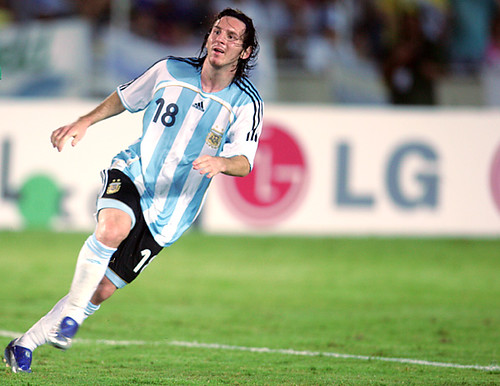

Quick Summary: Argentina Faces New Era After Messis Final Match Draws Massive Crowd
- Lionel Messi’s final match with Argentina drew over 85,000 fans — marking the end of a 21-year international career.
- Messi declared his retirement final, stating, “I emptied myself, I have nothing more to give.”.
- The farewell match against Benin was held at Buenos Aires’ Monumental stadium — transforming the event into a national spectacle.
- Messi cited a grueling World Cup campaign and his late father’s illness as factors in his decision.
- The Argentine Football Association now faces the challenge of a post-Messi era — raising questions about the team’s future leadership.
Source: Open external resource
Source: Read original article
In a moment that felt both inevitable and unimaginable, Lionel Messi bid farewell to the Argentina national team on October 7, 2026. Over 85,000 fans packed into Buenos Aires’ Monumental stadium to witness the end of a 21-year journey that saw Messi become a defining figure in global football. Messis is at the center of this development.
Messi’s retirement wasn’t just a personal decision; it was a national moment. “The time has come,” he said, confirming that his decision was final. The emotional weight of his words was felt by fans and teammates alike, with midfielder Enzo Fernández visibly moved during the ceremony.
This farewell comes after a grueling World Cup campaign and personal struggles, including the illness of Messi’s late father. These factors contributed to his decision to step away, despite Argentina reaching the 2026 World Cup final. The country now faces the daunting task of moving forward without its iconic leader.
As Argentina transitions into a post-Messi era, the focus shifts to who will lead the Albiceleste. The team, built around the 2022 champions, must find a way to maintain its global prowess without the player who has been its heart and soul for two decades.
The most important new development is not simply that Messi retired, but that his goodbye has now happened in public, on the field, before a packed stadium, ending weeks of suspense after he announced on August 31 that he was stepping away from the national team following Argentina’s 0-1 loss to Spain in the July 19, 2026 World Cup final in East Rutherford, New Jersey. There is no pending vote or hearing, but the practical next step is Argentina’s transition into a post-Messi era, with current reporting centering on who inherits leadership of the Albiceleste and whether the team built around the 2022 champions can remain a global power without the player who symbolized it for two decades.
Messi leaves four years after leading Argentina to the 2022 World Cup title, ending the country’s 36-year wait for a third crown, and he exits as the defining figure of a 21-year national-team career. The debate sharpened after the 2026 World Cup final defeat to Spain, when many supporters still hoped Messi might continue toward 2030, especially after Argentina had reached another final.
The surprise twist is that even after winning everything internationally and remaining central enough to carry Argentina to the 2026 final, Messi still chose to end it now, not after a decline but while still important enough that his exit required a one-night national farewell. AP reported that Messi posted social-media images of his arrival for one last national-team camp and final training sessions, while Argentine and international outlets focused on the stadium choreography, crowd ovations, and official framing of the event as a historic sendoff.
Buenos Aires Times reports that Messi said he had “no regrets” but pointed to the gruelling World Cup campaign and the serious illness of his late father as part of the burden he carried. Instead, he shut that door on August 31, and this week’s reporting shows teammates and fans absorbing the permanence of that choice.
Reporting this week describes millions watching on television while a crowd of over 85,000 filled the stadium, underscoring the scale of the sendoff and the fact that Argentina is now confronting, as AP put it, the “once-unimaginable reality” of a national side without Messi. Recent reporting says the farewell match came against Benin at River Plate’s Monumental, transforming what might have been a ceremonial sendoff into the definitive closing scene of the Messi-Argentina era.
The team, built around the 2022 champions, must find a way to maintain its global prowess without the player who has been its heart and soul for two decades. There is no pending vote or hearing, but the practical next step is Argentina’s transition into a post-Messi era, with current reporting centering on who inherits leadership of the Albiceleste and whether the team built around the 2022 champions can remain a global power without the player who symbolized it for two decades.
These factors contributed to his decision to step away, despite Argentina reaching the 2026 World Cup final. AP reported that Messi posted social-media images of his arrival for one last national-team camp and final training sessions, while Argentine and international outlets focused on the stadium choreography, crowd ovations, and official framing of the event as a historic sendoff.
As Argentina transitions into a post-Messi era, the focus shifts to who will lead the Albiceleste. Buenos Aires Times reports that Messi said he had “no regrets” but pointed to the gruelling World Cup campaign and the serious illness of his late father as part of the burden he carried.
Over 85,000 fans packed into Buenos Aires’ Monumental stadium to witness the end of a 21-year journey that saw Messi become a defining figure in global football. “The time has come,” he said, confirming that his decision was final.
The scale and speed of this development has caught many observers off guard. Each new update adds another dimension to a story that is still unfolding, and the full picture will only become clear as more verified details emerge from the people and institutions directly involved.
Analysts who have tracked this issue closely say the current moment represents a genuine turning point. The decisions made in the coming weeks are expected to set the direction for months ahead, with ripple effects likely to extend well beyond the immediate actors in the story.
For those directly affected, the practical impact is already visible. People navigating this fast-changing situation are dealing with real consequences while new information continues to reshape what is known and what remains open to interpretation.
Historical parallels offer some context, though experts caution against drawing too close a comparison. Similar situations have played out before, but the specific combination of pressures, personalities, and timing here makes this moment distinct in ways that matter for how it ultimately resolves.
The political and economic dimensions of this story are deeply intertwined. What appears as a single event on the surface is in practice the convergence of multiple pressures that have been building quietly over a longer period than most public reporting has captured.