

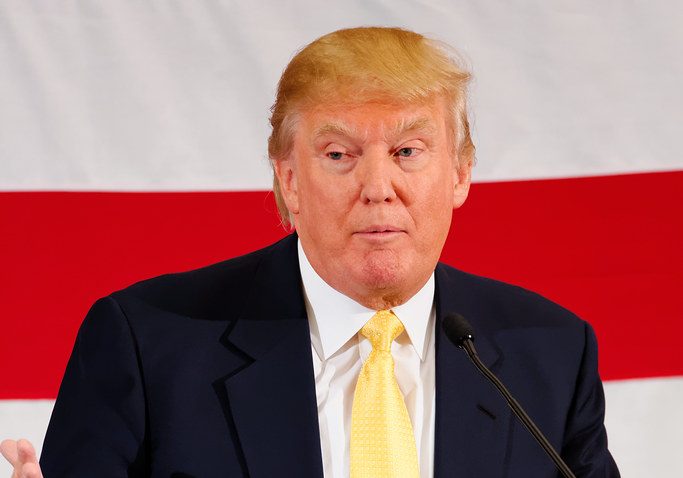

Quick Summary: Protesters Disrupt Trumps Texas Rally Amid GOP Instability
- Trump’s Texas rally was disrupted by protesters — highlighting instability in Republican strongholds.
- Republicans have invested over $300 million in Texas races — indicating a high-stakes battle in traditionally safe territory.
- The Iowa Senate debate saw Hinson and Turek clash on key issues — showing a tightening race with Turek leading in polls.
- Trump’s approval ratings are low amid broader challenges — complicating his support for Republican candidates.
- Hinson’s ties to Trump are under scrutiny — affecting her campaign strategy in Iowa.
Source: Open external resource
Source: Read original article
In the unpredictable world of American politics, even the most secure strongholds can suddenly appear vulnerable. This week, Donald Trump found himself facing an unexpected challenge in Texas, where his rally for Ken Paxton was repeatedly interrupted by protesters, underscoring the volatility of a state Republicans once considered safe. Meanwhile, in Iowa, a Senate debate between Ashley Hinson and Josh Turek revealed a surprisingly competitive race, with Turek holding a slight edge in the polls.
Trump’s presence in Texas was intended to solidify support for Paxton, but the interruptions and absence of key figures like Governor Greg Abbott highlighted the tension within the party. The rally, intended to project strength, instead showcased the cracks in the GOP’s armor, with over $300 million already poured into Texas races. This financial commitment reflects the urgency Republicans feel in defending their territory.
In Iowa, the debate between Hinson and Turek was a microcosm of the broader national struggle. Hinson, once able to rely on Republican dominance, now faces a formidable challenge from Turek, who is capitalizing on dissatisfaction with Trump-era policies. The debate touched on critical issues like immigration and healthcare, with Turek attempting to tie Hinson to an unpopular administration.
The political landscape is shifting, and these election dispatches from Texas and Iowa illustrate the challenges facing the Republican Party. As Trump continues to campaign for embattled allies, his influence is both a boon and a burden, with his low approval ratings and controversial policies casting a long shadow over these races.
The Associated Press reported that Republicans have poured more than $300 million into Texas races so far, an extraordinary figure for a state that usually does not demand this kind of late emergency attention. The most consequential new turn in this New York Times election dispatch is that two supposedly Republican-friendly Senate battlegrounds, Texas and Iowa, now look volatile enough that Donald Trump had to spend Wednesday, October 7, 2026, rescuing Ken Paxton at a protest-rattled San Antonio rally while Ashley Hinson and Josh Turek fought through a high-stakes first Senate debate in Johnston, Iowa.
Iowa Capital Dispatch quoted Hinson saying, “Look, my husband built a successful business that he sold in 2021,” after Turek raised her family’s finances. Greg Abbott was not with Trump at the rally and was instead roughly 330 miles away in Jasper at a hospital opening, according to AP’s live coverage.
In Iowa, October 7 was only the first televised Senate debate, and both campaigns are now moving into the next stretch with fresh footage for ads, a live polling narrative favoring Turek, and more scrutiny on whether Hinson can keep enough distance from Trump without alienating Republican voters. AP said Trump is facing “poor approval ratings,” while the broader headwinds include the Iran war and soaring gas prices.
In Iowa, the first Senate debate Wednesday night put the state’s race into similarly sharp relief. KCCI said the two traded attacks over immigration, while broader debate coverage said they also clashed over health care funding, Social Security, and fuel prices.
That poll, circulating widely on Wednesday as the candidates debated, helps explain why what might once have been a routine Senate hold is now a genuine battleground. The surprise is not just that Democrats are competitive, but that Turek appears to have entered debate night with a measurable edge in a state that has leaned Republican in recent federal cycles.
Meanwhile, in Iowa, a Senate debate between Ashley Hinson and Josh Turek revealed a surprisingly competitive race, with Turek holding a slight edge in the polls. The rally, intended to project strength, instead showcased the cracks in the GOP’s armor, with over $300 million already poured into Texas races.
Iowa Capital Dispatch quoted Hinson saying, “Look, my husband built a successful business that he sold in 2021,” after Turek raised her family’s finances. In Iowa, October 7 was only the first televised Senate debate, and both campaigns are now moving into the next stretch with fresh footage for ads, a live polling narrative favoring Turek, and more scrutiny on whether Hinson can keep enough distance from Trump without alienating Republican voters.
This week, Donald Trump found himself facing an unexpected challenge in Texas, where his rally for Ken Paxton was repeatedly interrupted by protesters, underscoring the volatility of a state Republicans once considered safe. Hinson, once able to rely on Republican dominance, now faces a formidable challenge from Turek, who is capitalizing on dissatisfaction with Trump-era policies.
AP said Trump is facing “poor approval ratings,” while the broader headwinds include the Iran war and soaring gas prices. In Iowa, the first Senate debate Wednesday night put the state’s race into similarly sharp relief.
The scale and speed of this development has caught many observers off guard. Each new update adds another dimension to a story that is still unfolding, and the full picture will only become clear as more verified details emerge from the people and institutions directly involved.
Analysts who have tracked this issue closely say the current moment represents a genuine turning point. The decisions made in the coming weeks are expected to set the direction for months ahead, with ripple effects likely to extend well beyond the immediate actors in the story.
For those directly affected, the practical impact is already visible. People navigating this fast-changing situation are dealing with real consequences while new information continues to reshape what is known and what remains open to interpretation.
Historical parallels offer some context, though experts caution against drawing too close a comparison. Similar situations have played out before, but the specific combination of pressures, personalities, and timing here makes this moment distinct in ways that matter for how it ultimately resolves.
The political and economic dimensions of this story are deeply intertwined. What appears as a single event on the surface is in practice the convergence of multiple pressures that have been building quietly over a longer period than most public reporting has captured.