

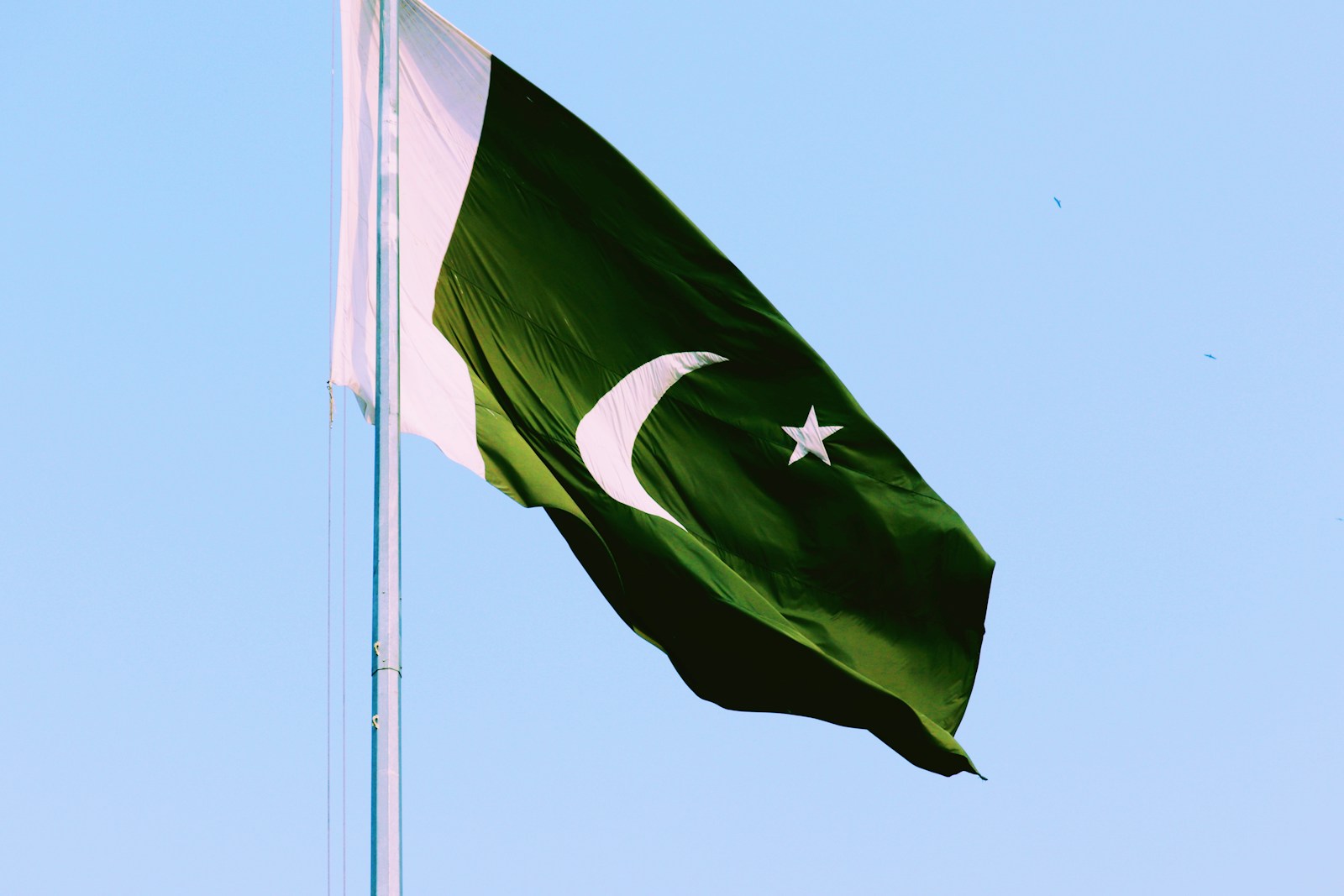

Quick Summary: Pakistan Targets $100 Billion Exports By 2035 to Secure Economic Sovereignty
- Planning Minister Ahsan Iqbal emphasized a $100 billion export target by 2035 — he linked this to Pakistan’s economic sovereignty.
- Pakistan’s exports were only $32 billion in 2024 — significantly lower than Bangladesh, Malaysia, and Vietnam.
- Ahsan criticized reliance on consumption-driven growth — he advocated for production- and export-led strategies to avoid external-account crises.
- Dr. Nadeem Javaid highlighted barriers such as high energy costs and regulatory issues — these hinder Pakistan’s export competitiveness.
- The conference theme, “Mission USD100 Billion,” suggests a coordinated national campaign — aims to elevate export policy above political turnover.
Source: Open external resource
Source: Read original article
Pakistan stands at a crossroads, grappling with a persistent balance-of-payments crisis that threatens its economic autonomy. Planning Minister Ahsan Iqbal has delivered a stark message: without a shift to a competitive, export-driven economy, the nation risks losing its economic sovereignty.
In a compelling address at the 39th annual conference of the Pakistan Society of Development Economists, Iqbal laid out a bold vision for Pakistan’s economic future. He argued that the country must abandon its consumption-driven growth model in favor of a production- and export-led strategy. The $100 billion export target by 2035 is not just a number; it’s a lifeline for economic stability.
Contextually, Pakistan’s current export figures are dwarfed by regional competitors. With exports at $32 billion in 2024, compared to Bangladesh’s $47 billion and Vietnam’s staggering $404 billion, the urgency for reform is palpable. The cycle of growth leading to increased imports and trade deficits must be broken.
Dr. Nadeem Javaid, Vice Chancellor of the Pakistan Institute of Development Economics, echoed these sentiments, pointing out the structural barriers that stifle export growth. High energy costs, tariffs, and regulatory uncertainty are just a few of the hurdles that need addressing.
As Pakistan embarks on this ambitious journey, the real test will be whether rhetoric can translate into action. The focus must be on creating competitive export clusters and lowering costs for businesses. Only then can Pakistan hope to achieve its export goals and secure its economic future.
His most memorable line was that “exports of USD 100 billion dollars is the scoreboard, not the strategy,” a warning that slogans alone will not fix the machinery of export competitiveness. In the latest reporting published October 15, 2026, Business Recorder says Planning Minister Ahsan Iqbal used the opening session of the 39th annual conference of the Pakistan Society of Development Economists in Islamabad to argue that Pakistan must abandon “consumption-driven growth” and move to “production- and export-led growth” if it wants to stop recurring external-account crises.
Radio Pakistan’s account from October 14 says he warned that “the future of a Pakistani export order should not depend on the future of a political administration,” which suggests the government is trying to elevate export policy above normal political turnover. The most concrete number in the story is the target itself: $100 billion in exports by 2035.
Ahsan contrasted that ambition with Pakistan’s actual goods exports of about $32 billion in calendar 2024, versus $47 billion for Bangladesh, $330 billion for Malaysia, and $404 billion for Vietnam. To prove the point, he cited the 6 percent growth recorded in 2022, saying it came with record imports of $80 billion and a trade deficit of $50 billion.
5 billion then, but by 2024 Vietnam had surged to $404 billion. Ahsan said the country repeatedly falls into a cycle where growth boosts imports, weakens the external account, pressures the exchange rate, and forces stabilizing crackdowns.
As for what happens next, the immediate follow-through is likely to center on whether the government can turn this conference rhetoric into a measurable export plan with sector, market, and timeline benchmarks. His sharpest line was, “A nation’s economic sovereignty rests on its ability to pay its way in the world,” a formulation that turned a familiar macroeconomic complaint into a national-security-style warning about dependence on borrowing.
In the latest reporting published October 15, 2026, Business Recorder says Planning Minister Ahsan Iqbal used the opening session of the 39th annual conference of the Pakistan Society of Development Economists in Islamabad to argue that Pakistan must abandon “consumption-driven growth” and move to “production- and export-led growth” if it wants to stop recurring external-account crises. Radio Pakistan’s account from October 14 says he warned that “the future of a Pakistani export order should not depend on the future of a political administration,” which suggests the government is trying to elevate export policy above normal political turnover.
Pakistan’s exports were only $32 billion in 2024 — significantly lower than Bangladesh, Malaysia, and Vietnam. The $100 billion export target by 2035 is not just a number; it’s a lifeline for economic stability.
With exports at $32 billion in 2024, compared to Bangladesh’s $47 billion and Vietnam’s staggering $404 billion, the urgency for reform is palpable. Ahsan contrasted that ambition with Pakistan’s actual goods exports of about $32 billion in calendar 2024, versus $47 billion for Bangladesh, $330 billion for Malaysia, and $404 billion for Vietnam.
To prove the point, he cited the 6 percent growth recorded in 2022, saying it came with record imports of $80 billion and a trade deficit of $50 billion. 5 billion then, but by 2024 Vietnam had surged to $404 billion.
The scale and speed of this development has caught many observers off guard. Each new update adds another dimension to a story that is still unfolding, and the full picture will only become clear as more verified details emerge from the people and institutions directly involved.
Analysts who have tracked this issue closely say the current moment represents a genuine turning point. The decisions made in the coming weeks are expected to set the direction for months ahead, with ripple effects likely to extend well beyond the immediate actors in the story.
For those directly affected, the practical impact is already visible. People navigating this fast-changing situation are dealing with real consequences while new information continues to reshape what is known and what remains open to interpretation.
Historical parallels offer some context, though experts caution against drawing too close a comparison. Similar situations have played out before, but the specific combination of pressures, personalities, and timing here makes this moment distinct in ways that matter for how it ultimately resolves.
The political and economic dimensions of this story are deeply intertwined. What appears as a single event on the surface is in practice the convergence of multiple pressures that have been building quietly over a longer period than most public reporting has captured.