


Quick Summary: Trumps Influence Tested in Georgia as Ossoff Targets Collins
- AP reported Friday that Ossoff’s campaign has spent nearly $3 million on a Trump-focused ad attacking Collins for his closeness to the president, a sign that the incumbent believes Trump is at least as much a liability as an asset in Georgia.
- The Hill’s Decision Desk HQ forecast, updated Thursday, October 15, rates the Georgia Senate race “Likely D” and gives Ossoff an 88% chance of winning, versus 12% for Collins.
- The Hill’s finance data show Ossoff had raised $97,986,263 and still had $50,591,024 cash on hand as of his July quarterly filing, compared with Collins’ $9,693,229 raised and $2,832,627 cash on hand.
- That debate intensified this week during their final debate, where, according to AP, Collins refused to disavow his denial of the 2020 election results.
- At the same debate, Ossoff tried to kill off 2028 speculation by saying flatly, “I have zero interest in running for president.”.
Source: Open external resource
Source: Read original article
In the high-stakes arena of Georgia politics, the Senate race between Jon Ossoff and Mike Collins is heating up, with Donald Trump’s influence casting a long shadow. Ossoff, the incumbent, is leveraging Trump’s polarizing presence to his advantage, spending nearly $3 million on ads that tie Collins to the former president. This strategy suggests that Ossoff sees Trump’s influence as more of a liability than an asset in this key swing state.
Forecasts from The Hill’s Decision Desk HQ paint a favorable picture for Ossoff, giving him an 88% chance of retaining his seat. Despite Collins’ full-throttle embrace of Trump, he trails in the polls by about 9 to 10 points. The numbers are clear: Ossoff is ahead, and Collins’ alignment with Trump hasn’t closed the gap.
Financially, Ossoff is also in a stronger position, having raised nearly $98 million compared to Collins’ $9.7 million. This financial edge allows Ossoff to maintain a relentless campaign against Collins, framing him as a Trump acolyte rather than an independent voice for Georgia.
During their final debate, Collins’ refusal to disavow his denial of the 2020 election results was a focal point, highlighting the ideological clash. Ossoff, meanwhile, dismissed speculation about a future presidential run, focusing instead on serving Georgia.
As Election Day approaches, all eyes are on Georgia. Will Trump’s rally in Dalton alter the dynamics, or will Ossoff’s lead hold firm? The race is a litmus test for Trump’s enduring influence in swing states, and the outcome will reverberate beyond Georgia’s borders.
AP reported Friday that Ossoff’s campaign has spent nearly $3 million on a Trump-focused ad attacking Collins for his closeness to the president, a sign that the incumbent believes Trump is at least as much a liability as an asset in Georgia. The Hill’s Decision Desk HQ forecast, updated Thursday, October 15, rates the Georgia Senate race “Likely D” and gives Ossoff an 88% chance of winning, versus 12% for Collins.
The Hill’s finance data show Ossoff had raised $97,986,263 and still had $50,591,024 cash on hand as of his July quarterly filing, compared with Collins’ $9,693,229 raised and $2,832,627 cash on hand. That debate intensified this week during their final debate, where, according to AP, Collins refused to disavow his denial of the 2020 election results.
At the same debate, Ossoff tried to kill off 2028 speculation by saying flatly, “I have zero interest in running for president. 5%; a recent Trafalgar survey completed October 9 showed Ossoff at 51% and Collins at 43%.
4 million raised in the third quarter, a figure that signals continued donor energy around Ossoff and his anti-Trump message. AP noted that Collins “did not alter his stance” when pressed, a potent detail in a state where Trump’s post-2020 efforts remain politically radioactive with many swing voters.
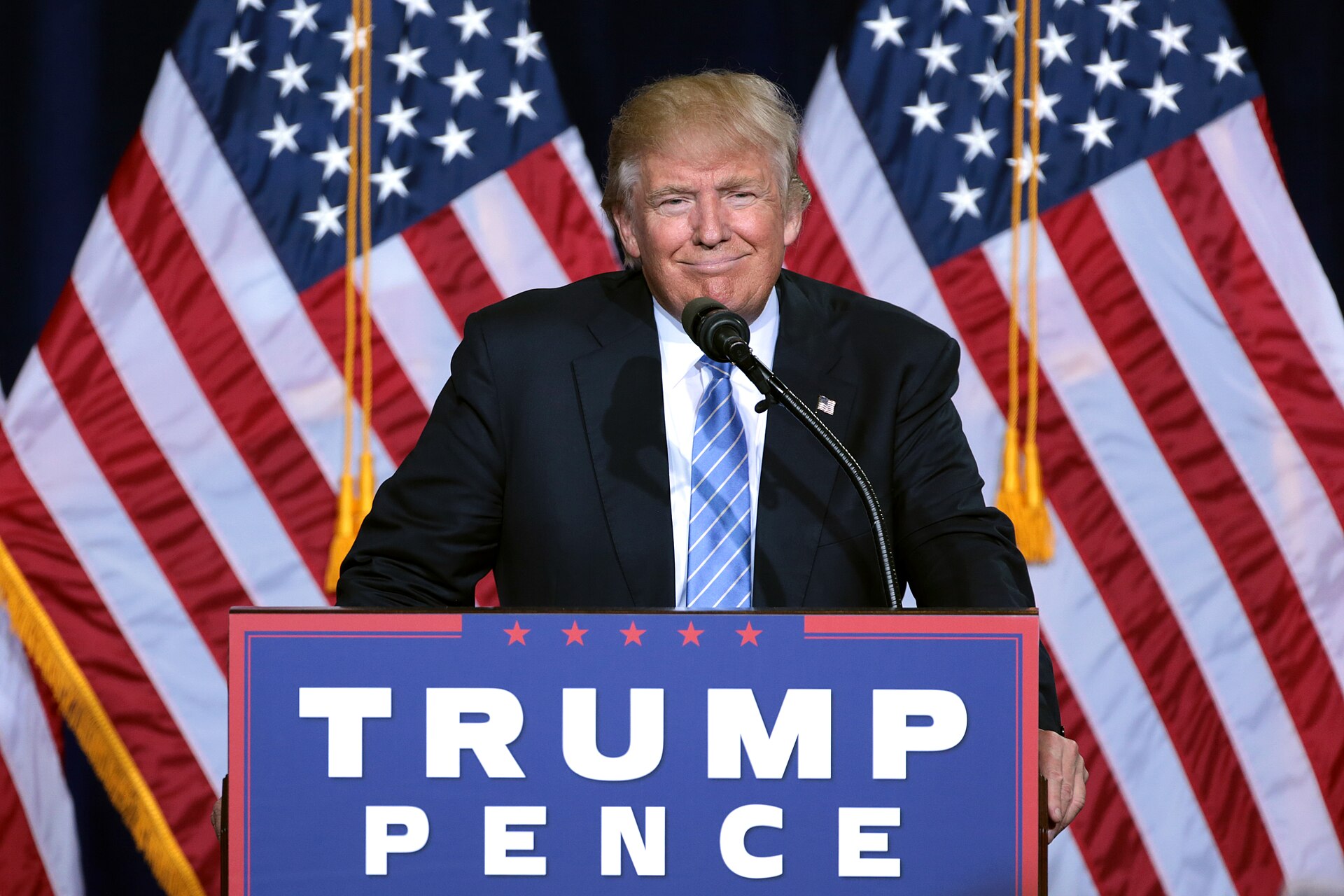
Watch for any post-rally polling movement, whether Collins adjusts his message after the debate fallout over 2020 election denial, and whether Ossoff’s heavy spending continues to frame Collins as a Trump proxy rather than an independent Georgia conservative. Donald Trump’s Friday push into Georgia has sharpened, not settled, the central question of the Senate race: whether Mike Collins can turn his full embrace of Trump into a winning coalition in a state where Jon Ossoff is still leading in public polling and trying to make the election a referendum on the president.
– Firstpost AP reported Friday that Ossoff’s campaign has spent nearly $3 million on a Trump-focused ad attacking Collins for his closeness to the president, a sign that the incumbent believes Trump is at least as much a liability as an asset in Georgia. AP reported Friday that Ossoff’s campaign has spent nearly $3 million on a Trump-focused ad attacking Collins for his closeness to the president, a sign that the incumbent believes Trump is at least as much a liability as an asset in Georgia.
The Hill’s Decision Desk HQ forecast, updated Thursday, October 15, rates the Georgia Senate race “Likely D” and gives Ossoff an 88% chance of winning, versus 12% for Collins. The Hill’s finance data show Ossoff had raised $97,986,263 and still had $50,591,024 cash on hand as of his July quarterly filing, compared with Collins’ $9,693,229 raised and $2,832,627 cash on hand.
That debate intensified this week during their final debate, where, according to AP, Collins refused to disavow his denial of the 2020 election results. Ossoff, the incumbent, is leveraging Trump’s polarizing presence to his advantage, spending nearly $3 million on ads that tie Collins to the former president.
At the same debate, Ossoff tried to kill off 2028 speculation by saying flatly, “I have zero interest in running for president. Forecasts from The Hill’s Decision Desk HQ paint a favorable picture for Ossoff, giving him an 88% chance of retaining his seat.
During their final debate, Collins’ refusal to disavow his denial of the 2020 election results was a focal point, highlighting the ideological clash. 5%; a recent Trafalgar survey completed October 9 showed Ossoff at 51% and Collins at 43%.
The scale and speed of this development has caught many observers off guard. Each new update adds another dimension to a story that is still unfolding, and the full picture will only become clear as more verified details emerge from the people and institutions directly involved.
Analysts who have tracked this issue closely say the current moment represents a genuine turning point. The decisions made in the coming weeks are expected to set the direction for months ahead, with ripple effects likely to extend well beyond the immediate actors in the story.
For those directly affected, the practical impact is already visible. People navigating this fast-changing situation are dealing with real consequences while new information continues to reshape what is known and what remains open to interpretation.
Historical parallels offer some context, though experts caution against drawing too close a comparison. Similar situations have played out before, but the specific combination of pressures, personalities, and timing here makes this moment distinct in ways that matter for how it ultimately resolves.
The political and economic dimensions of this story are deeply intertwined. What appears as a single event on the surface is in practice the convergence of multiple pressures that have been building quietly over a longer period than most public reporting has captured.