


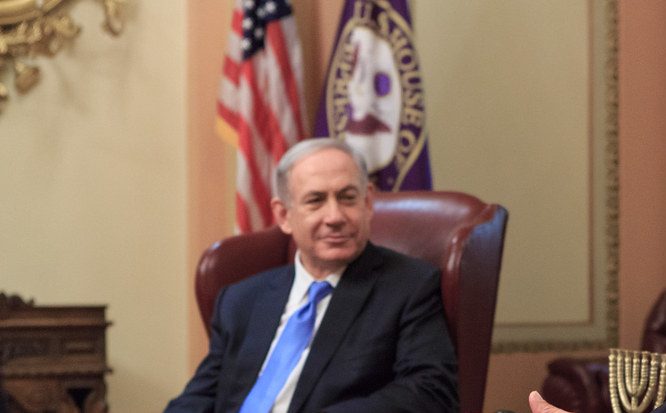

Quick Summary: Netanyahu Rejects U.n. Report Accusing Israel of Genocide
- Nobel laureate Navi Pillay urges Israelis to oppose actions in Gaza — her appeal aims to spark civic action.
- The U.N. report accuses Israeli leaders of genocidal acts — it intensifies global scrutiny and debate.
- Israeli leaders, including Netanyahu, fiercely reject the accusations — they label Pillay’s findings as biased.
- U.S. public opinion is shifting, with more Democrats critical of Israel — this could impact future elections.
- Jewish dissent in the U.S. grows, with many opposing Israeli policies — this reflects broader ethical concerns.
Source: Open external resource
Source: Read original article
Nobel Peace Prize laureate Navi Pillay has issued a powerful call to action, urging Israelis to confront the alleged genocidal actions being carried out in Gaza in their name. Her appeal is not just a symbolic gesture; it’s a demand for accountability and change. Netanyahu is at the center of this development.
Pillay’s stance is grounded in a U.N. report that accuses Israeli leaders, including Prime Minister Benjamin Netanyahu, of committing acts that amount to genocide. This report, which Pillay once chaired, outlines severe allegations, including the killing of Palestinians and the imposition of destructive conditions. The response from Israeli officials has been vehement, with Netanyahu dismissing Pillay as a “bigot” and the Foreign Ministry drawing controversial comparisons to Nazi propaganda.
The controversy has sparked significant debate in the United States, where public opinion is shifting. Recent polls indicate a growing number of Democrats, and even some Jewish Americans, are critical of Israel’s actions. This shift could have profound implications for U.S. policy and future elections, as support for Israel becomes a contentious issue.
Within the American Jewish community, dissent is deepening. Many are challenging the alignment of Jewish identity with uncritical support for Israeli government policies. This reflects a broader ethical debate, as figures like Peter Beinart argue for principles of equality and caution against conflating criticism of Israel with antisemitism.
As this debate unfolds, Pillay’s commission calls for action extend beyond rhetoric to potential legal and political consequences. The commission advocates for humanitarian access, investigations, and an end to arms transfers that could facilitate further violence. The unfolding situation underscores a critical juncture where international law, public opinion, and political action intersect, potentially reshaping the landscape of Middle East politics.
The report examined conduct and official statements from October 7, 2023 through July 31, 2025, and said the evidence showed the specific intent required for a genocide finding. ” In the electoral arena, the story points to Abdul El-Sayed’s Michigan Senate win after AIPAC spent nearly $30 million against him, plus survey data showing 39 percent of Jewish voters would be less likely to support a candidate backed by an AIPAC-funded super PAC, versus 13 percent more likely.
The AP account says more than 73,000 Palestinians have died in Gaza, according to the Hamas-run Gaza Health Ministry, including more than 1,000 killed since the start of the latest ceasefire, while Hamas’s October 7, 2023 attack killed about 1,200 people in Israel and took 251 hostages. The timeline over the past week is unusually tight: Pillay’s Nobel selection was announced on October 9, 2026; the current article was published on November 12; and the dispute has intensified as Pillay has paired her legal conclusions with a public demand for civic action.
Even among Jewish respondents, the latest reporting highlighted concern that advocacy for Israeli government policy is feeding backlash: 80 percent said Israel’s actions in Gaza and the West Bank had increased antisemitism in the United States, and 66 percent said the same about AIPAC funding a super PAC to target critics of Israel. The sharpest new development is that 2026 Nobel Peace Prize laureate Navi Pillay has now moved from legal findings to a direct public appeal to Israelis themselves, saying on November 12, “Israelis, crimes are committed in your name.
It also said Prime Minister Benjamin Netanyahu, President Isaac Herzog and former defense minister Yoav Gallant had incited genocide. Among Jewish adults, 30 percent said Israel has committed genocide, while 49 percent said it has not.
Public opinion has shifted alongside those casualty figures: about three-quarters of Jewish adults said Israel’s initial response was justified, but only about 4 in 10 still say that about its ongoing operations. Peter Beinart said younger Jews are applying to Israel and Palestine “the same principles of equality” they expect as minorities in the United States, and he warned against equating Jewish identity with loyalty to any Israeli government.
” In the electoral arena, the story points to Abdul El-Sayed’s Michigan Senate win after AIPAC spent nearly $30 million against him, plus survey data showing 39 percent of Jewish voters would be less likely to support a candidate backed by an AIPAC-funded super PAC, versus 13 percent more likely. Quick Summary: Nobel Peace Prize Laureate Urges Israelis to Act Over Gaza Genocide as American Jewish Dissent Deepens – greatreporter Nobel laureate Navi Pillay urges Israelis to oppose actions in Gaza — her appeal aims to spark civic action.
Among Jewish adults, 30 percent said Israel has committed genocide, while 49 percent said it has not. Public opinion has shifted alongside those casualty figures: about three-quarters of Jewish adults said Israel’s initial response was justified, but only about 4 in 10 still say that about its ongoing operations.
The commission advocates for humanitarian access, investigations, and an end to arms transfers that could facilitate further violence. report that accuses Israeli leaders, including Prime Minister Benjamin Netanyahu, of committing acts that amount to genocide.
The scale and speed of this development has caught many observers off guard. Each new update adds another dimension to a story that is still unfolding, and the full picture will only become clear as more verified details emerge from the people and institutions directly involved.
Analysts who have tracked this issue closely say the current moment represents a genuine turning point. The decisions made in the coming weeks are expected to set the direction for months ahead, with ripple effects likely to extend well beyond the immediate actors in the story.
For those directly affected, the practical impact is already visible. People navigating this fast-changing situation are dealing with real consequences while new information continues to reshape what is known and what remains open to interpretation.
Historical parallels offer some context, though experts caution against drawing too close a comparison. Similar situations have played out before, but the specific combination of pressures, personalities, and timing here makes this moment distinct in ways that matter for how it ultimately resolves.
The political and economic dimensions of this story are deeply intertwined. What appears as a single event on the surface is in practice the convergence of multiple pressures that have been building quietly over a longer period than most public reporting has captured.