


Quick Summary: GCSA Expands AI Security Efforts With Hong Kong Research Hub
- HKU and GCSA launched a new AI and cybersecurity research centre on October 19, 2026 — the centre aims to connect research with real-world security scenarios.
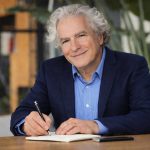
- Professor Ho Chen has been named as the acting director — he is the Chair of Cybersecurity at HKU’s School of Computing and Data Science.
- The centre will focus on AI, cybersecurity, and governance — it will recruit experts from HKU, GCSA, and international partners.
- GCSA’s recent activities include another AI cybersecurity institute in Kuala Lumpur — this suggests an accelerated expansion strategy.
- GCSA highlights research areas like model-poisoning protection and agent behavior monitoring — these areas are crucial for AI-security.
Source: Open external resource
Source: Read original article
The University of Hong Kong (HKU) and the Global Cybersecurity Alliance (GCSA) have officially launched a groundbreaking Centre for AI and Cybersecurity Research. Announced on October 19, 2026, this new initiative is set to bridge the gap between academic research and real-world security applications, with Professor Ho Chen at the helm as the acting director.
This launch is not just an academic exercise; it marks a significant step in GCSA’s strategic expansion in AI security. With a focus on integrating AI and cybersecurity research into operational use cases, the centre aims to tackle pressing security challenges by drawing on expertise from HKU, GCSA, and international partners. The absence of detailed operational plans, however, leaves questions about its immediate impact.
GCSA’s broader agenda, as outlined in their public materials, includes addressing threats related to AI and Web3, as well as financial security and global governance. This context suggests the HKU centre could become a pivotal player in applied AI-defense work, focusing on areas like model-poisoning protection and agent behavior monitoring.
While the specific deliverables and funding details remain undisclosed, the launch of this centre signals a robust commitment to enhancing AI security frameworks. The coming weeks will likely reveal more about the centre’s research programs, industry partnerships, and governance outputs, which will be crucial for assessing its long-term significance.
For now, the hard facts from this week are simple but important: the centre was announced on October 19, 2026; HKU and GCSA are the founding institutions; Professor Ho Chen is the acting director; and the project is being framed around the intersection of AI, cybersecurity, and governance at a moment when GCSA is rapidly expanding its AI-security footprint. This HKU launch follows another GCSA-linked AI cybersecurity institute announcement on August 5, 2026, when GCSA and the Academy of Engineering and Technology of the Developing World announced a similar research institute in Kuala Lumpur.
GCSA’s site also highlights product and research areas including model-poisoning protection, prompt-injection detection, agent behavior monitoring, access control, and third-party risk review for AI “skills” or plugins. hk) The main named figure in the announcement is Professor Ho Chen, identified by HKU as Chair of Cybersecurity at the School of Computing and Data Science and as the acting director of the new centre.
3% on CyberGym and ranked among leading AI cybersecurity agents. hk) The most specific institutional clue about what the alliance wants this centre to become comes from GCSA’s own broader public materials, which describe the organization as focused on AI and Web3 threats, anti-fraud, financial security, and global governance.
HKU said the centre will draw researchers from HKU, GCSA, and international partner institutions, and will also recruit experts in artificial intelligence, cybersecurity, and technology governance into research and advisory roles. In other words, this is at least the second AI-cyber research institution GCSA has helped unveil in roughly 10 weeks, suggesting an accelerated expansion strategy rather than a one-off university partnership.
There are no disclosed grant amounts, no named external funders, no launch partners beyond HKU and GCSA, and no announced first projects, which leaves a gap between the ambition of the announcement and the evidence available so far. HKU, Mirage News, and PR Newswire all describe the centre as a joint establishment between The University of Hong Kong and the Global Cybersecurity Alliance, but none of the latest reports surfaced in the last 24 hours disclose a budget, staffing count, funding split, or launch-year targets.
Announced on October 19, 2026, this new initiative is set to bridge the gap between academic research and real-world security applications, with Professor Ho Chen at the helm as the acting director. For now, the hard facts from this week are simple but important: the centre was announced on October 19, 2026; HKU and GCSA are the founding institutions; Professor Ho Chen is the acting director; and the project is being framed around the intersection of AI, cybersecurity, and governance at a moment when GCSA is rapidly expanding its AI-security footprint.
GCSA highlights research areas like model-poisoning protection and agent behavior monitoring — these areas are crucial for AI-security. The University of Hong Kong (HKU) and the Global Cybersecurity Alliance (GCSA) have officially launched a groundbreaking Centre for AI and Cybersecurity Research.
The scale and speed of this development has caught many observers off guard. Each new update adds another dimension to a story that is still unfolding, and the full picture will only become clear as more verified details emerge from the people and institutions directly involved.
Analysts who have tracked this issue closely say the current moment represents a genuine turning point. The decisions made in the coming weeks are expected to set the direction for months ahead, with ripple effects likely to extend well beyond the immediate actors in the story.
For those directly affected, the practical impact is already visible. People navigating this fast-changing situation are dealing with real consequences while new information continues to reshape what is known and what remains open to interpretation.
Historical parallels offer some context, though experts caution against drawing too close a comparison. Similar situations have played out before, but the specific combination of pressures, personalities, and timing here makes this moment distinct in ways that matter for how it ultimately resolves.
The political and economic dimensions of this story are deeply intertwined. What appears as a single event on the surface is in practice the convergence of multiple pressures that have been building quietly over a longer period than most public reporting has captured.