

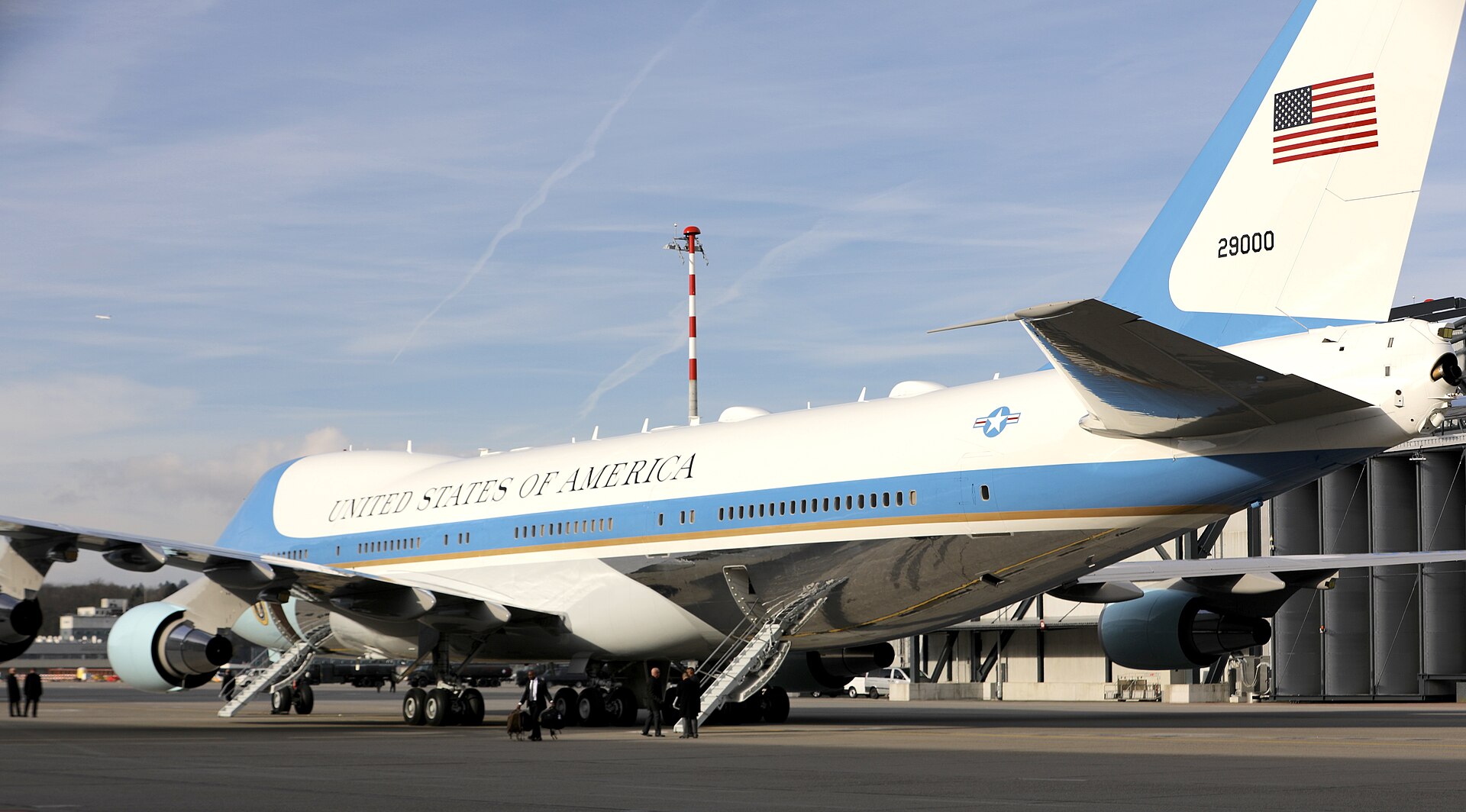

Quick Summary: Qatar-Gifted Boeing 747 Becomes Trump’s Interim Air Force One
- The jet is valued at $400 million, with modifications under $400 million — raising questions about cost-effectiveness.
- Trump unveiled the Qatar-gifted Boeing 747-8 as Air Force One, sparking debate over foreign influence.
- The aircraft serves as a temporary solution until Boeing’s delayed replacements arrive in 2028.
- Trump’s presentation emphasized prestige, calling it “the most luxurious in the world.”.
- Critics question the ethics and security of accepting a foreign-donated presidential aircraft.
Source: Open external resource
Source: Read original article
In a move that has stirred both admiration and controversy, President Donald Trump unveiled the Qatar-gifted Boeing 747-8 as the new Air Force One. This aircraft, valued at $400 million, is more than just a stopgap; it’s a bold statement on the world stage.
Trump has positioned this jet as a necessary solution to Boeing’s delays, but the decision to accept a foreign gift of this magnitude raises eyebrows. The Air Force has assured that the plane meets rigorous security standards, yet the political implications of such a gift cannot be ignored.
Contextually, this unveiling comes at a time of heightened scrutiny over foreign influence in U.S. politics. While Trump touts the aircraft’s luxury and exclusivity, critics argue that it’s a symbol of blurred lines between personal branding and state affairs.
As the plane prepares for its debut flight over July 4th celebrations, the debate continues. Will it be seen as a patriotic triumph or a $400 million symbol of potential foreign influence?
The jet itself has been widely valued at about $400 million, and the Air Force had previously said the security and mission modifications would cost less than another $400 million. President Donald Trump publicly unveiled the Qatar-gifted Boeing 747-8 on Friday, June 19, in its first official appearance as Air Force One, turning what had been a yearlong ethics and security fight into a live test of whether a $400 million foreign-donated jet can credibly serve as the president’s aircraft.
had been in “a little bit of a logjam” waiting for replacement jets that were originally due in 2024. The aircraft is serving as what officials call a “bridge” until Boeing delivers the two long-delayed VC-25B replacement planes, which are now expected in 2028 rather than the original 2024 window.
The central controversy remains the same one that exploded when the Pentagon accepted the jet last year: whether a foreign-government gift can ever be separated from influence, security risk, and personal benefit. In May and earlier this year, the dominant question was whether the administration should accept the jet at all; by June 19, the administration was staging a ceremonial rollout and talking about July 4 flyovers.
The effect is to fold the jet into the administration’s patriotic pageantry almost immediately after its official debut, rather than easing it quietly into service. The plane is expected to serve this summer as the interim Air Force One while Boeing’s two replacement aircraft remain on track for 2028, and the immediate milestones are test flights, operational deployment, and the promised Fourth of July appearance.
A normal president wants to stay away from aircraft,” he said Friday. The Air Force vouched for the jet’s security posture in its release and has said it is ready as an interim presidential aircraft this summer.
President Donald Trump publicly unveiled the Qatar-gifted Boeing 747-8 on Friday, June 19, in its first official appearance as Air Force One, turning what had been a yearlong ethics and security fight into a live test of whether a $400 million foreign-donated jet can credibly serve as the president’s aircraft. The aircraft serves as a temporary solution until Boeing’s delayed replacements arrive in 2028.
This aircraft, valued at $400 million, is more than just a stopgap; it’s a bold statement on the world stage. had been in “a little bit of a logjam” waiting for replacement jets that were originally due in 2024.
The aircraft is serving as what officials call a “bridge” until Boeing delivers the two long-delayed VC-25B replacement planes, which are now expected in 2028 rather than the original 2024 window. In May and earlier this year, the dominant question was whether the administration should accept the jet at all; by June 19, the administration was staging a ceremonial rollout and talking about July 4 flyovers.
The effect is to fold the jet into the administration’s patriotic pageantry almost immediately after its official debut, rather than easing it quietly into service. A normal president wants to stay away from aircraft,” he said Friday.
The scale and speed of this development has caught many observers off guard. Each new update adds another dimension to a story that is still unfolding, and the full picture will only become clear as more verified details emerge from the people and institutions directly involved.
Analysts who have tracked this issue closely say the current moment represents a genuine turning point. The decisions made in the coming weeks are expected to set the direction for months ahead, with ripple effects likely to extend well beyond the immediate actors in the story.
For those directly affected, the practical impact is already visible. People navigating this fast-changing situation are dealing with real consequences while new information continues to reshape what is known and what remains open to interpretation.
Historical parallels offer some context, though experts caution against drawing too close a comparison. Similar situations have played out before, but the specific combination of pressures, personalities, and timing here makes this moment distinct in ways that matter for how it ultimately resolves.
The political and economic dimensions of this story are deeply intertwined. What appears as a single event on the surface is in practice the convergence of multiple pressures that have been building quietly over a longer period than most public reporting has captured.