56.9 F
San Francisco
Thursday, April 30, 2026
Home Blog Page 356

Trump Threatens to Close Democrat Programs by Friday

0


Key takeaways

• President Trump will cut Democrat programs if the shutdown continues.
• He says these cuts will be permanent and never return.
• Republican programs will remain safe from elimination.
• Negotiations between Republicans and Democrats stay stalled.

Trump Plans Closing Democrat Programs This Friday

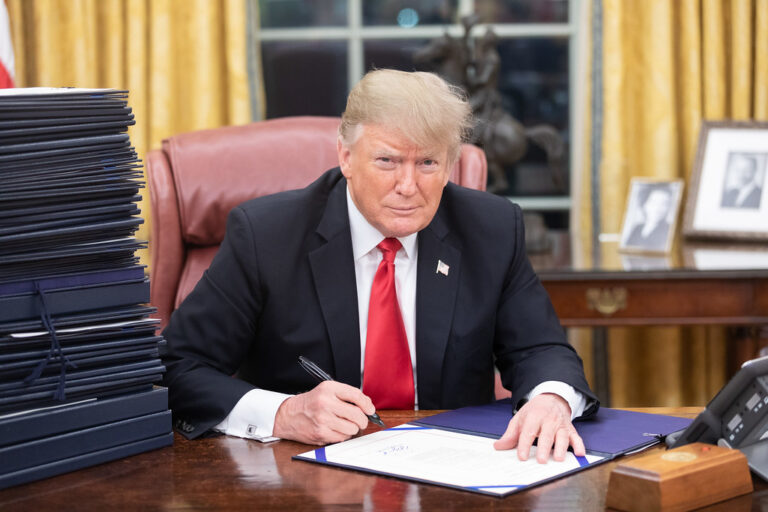
President Trump warned that he will shut down Democrat programs by Friday if the government shutdown drags on. He has not shared details about which programs he will close. However, he made it clear that programs he calls “Republican programs” will stay open. Meanwhile, he said the Democrat programs will disappear and never come back.

Why Trump Targets Democrat Programs

First, Trump has grown frustrated with the budget talks. He feels Democrats will not budge on their demands. Therefore, he used strong language in his threat. He told reporters he is closing Democrat programs he opposes. He claimed Republican programs are working well, so they will not be touched.

Moreover, Trump has accused federal workers who back Democrats of undeserving back pay. In his view, those workers should not receive wages once the government reopens. Instead, he wants to redirect resources to projects he supports.

Also, the Office of Management and Budget prepared to lay off thousands of federal workers in September. That plan came from a close Trump ally. It showed how serious the White House is about cutting programs tied to Democrats.

Impact of Closing Democrat Programs

Shutting down Democrat programs could affect millions of people. For example, health, education, or housing projects run by these programs might lose funding. Families who rely on that aid could face new hardships. Small businesses that work with these programs may also suffer.

Furthermore, local governments often depend on federal grants labeled as Democrat programs. If those grants end, state budgets could feel the strain. Schools might cut classes. Clinics may reduce hours. Nonprofit groups could see lower donations.

Meanwhile, federal employees tied to those programs might face layoffs. Losing a government job can disrupt a family’s finances. It can also lower morale among other workers. Finally, a prolonged shutdown can hurt the overall economy. Consumer confidence may drop, and markets could react poorly to continued uncertainty.

What Comes Next

The big question is what happens after Friday. Trump could pick a list of programs to cut. Then Congress would learn which programs face the axe. If lawmakers want to stop these cuts, they must strike a deal to end the shutdown.

Senate leaders have tried to bring both sides together. So far, they have not been able to bridge big differences. Democrats want more funding for social and economic programs. Republicans want stricter immigration rules and border security. Until they agree, the threat of closing Democrat programs will hang over the process.

Furthermore, if Trump follows through, he will likely veto any bill restoring those programs. That move would force Congress to override his veto with a two-thirds majority. Achieving that majority is very hard, especially in the current polarized climate.

Finally, public opinion could play a role. Voters may react strongly if key services end. Citizens who use health clinics or job training programs may voice their concerns. That feedback could push some lawmakers to find a compromise.

Details on Back Pay and Layoffs

Donald Trump has said federal workers tied to Democrat programs do not deserve back pay. Once the shutdown ends, federal employees usually get paid for missed days. However, Trump argues that workers who support policies he disagrees with should not benefit.

Meanwhile, the Office of Management and Budget sent a memo about laying off thousands of federal staff. These layoffs would target employees in agencies running the Democrat programs. Although the plan is not final, it signals the administration is serious about cuts.

Also, some departments have already paused hiring and new contracts. That freeze slowed the pace of government projects. If layoffs happen, these projects could stall completely.

Moreover, private contractors working under Democrat program grants could lose work. That effect would ripple through the private sector. Companies might lay off staff or close offices in response.

Finally, even workers not directly tied to the programs may worry about job security. An uncertain employment outlook can lower productivity across agencies. It can also delay planning and research for future projects.

Conclusion

President Trump’s threat to close Democrat programs by Friday marks a new phase in this shutdown battle. With both sides far from agreement, the window to avoid these cuts is closing fast. If no deal emerges, the country may soon see which programs vanish for good.

FAQs

What are the Democrat programs Trump wants to close?

Trump has not named them yet. He says they include projects he disagrees with and labels as aligned with Democrats.

When will the announced cuts take effect?

He plans to announce cuts and close those Democrat programs by Friday if the shutdown continues.

Will federal employees lose back pay?

Trump has suggested some workers tied to Democrat programs may not get back pay once the government reopens.

How could closing Democrat programs affect everyday people?

Cuts could disrupt health clinics, school grants, housing aid, and local government support. Many families and businesses rely on those funds.
Stephen Miller’s Hidden Grip on Trump


Key Takeaways

• Illinois Gov. JB Pritzker warns that Stephen Miller is manipulating President Trump.
• Pritzker points to Trump’s “diminished capacity” as an opening for aides to seize power.
• Miller is driving tough deportation tactics at DHS, CBP and ICE.
• Experts raise questions about the president’s mental fitness and health signs.
• Critics fear Miller’s influence could push Trump toward authoritarian rule.

Stephen Miller’s Growing Influence

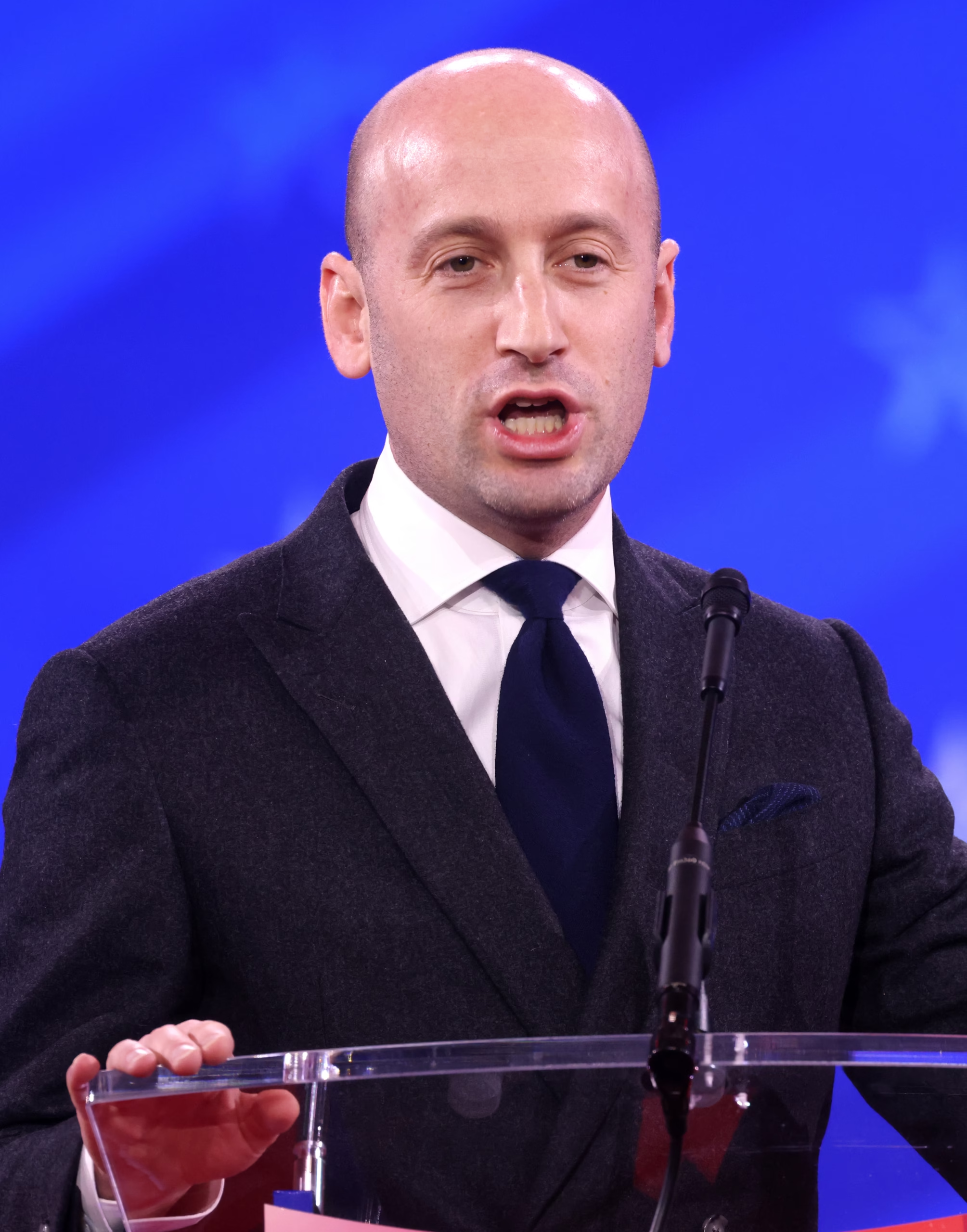
Illinois Governor JB Pritzker says one of President Trump’s closest aides is pulling the strings behind key policies. On a recent podcast, Pritzker described Stephen Miller’s actions as a clear case of manipulation. He urged Americans to notice how Miller uses the president’s weakened state to gain more control.

In simple terms, Pritzker argues that Trump is not in full command of his decisions. Meanwhile, aides like Miller step in and push their own agenda. As a result, the lines between Trump’s choices and Miller’s demands have blurred.

Stephen Miller’s Role in Deportation Plans

Pritzker joined The Bulwark’s Tim Miller to discuss the Trump administration’s plan to deport more immigrants. He said Stephen Miller is the main author of these aggressive moves. At the Department of Homeland Security, U.S. Customs and Border Protection, and Immigration and Customs Enforcement, Pritzker sees Miller as the driving force.

Moreover, Miller has long pushed strict immigration measures. He helped write speeches, crafted policies, and met with top officials daily. In the governor’s view, Miller uses his close access to Trump to force those policies forward. Therefore, decisions about family separation, asylum rules, and detention have his fingerprints all over them.

Trump’s Diminished Capacity

According to Pritzker, Donald Trump’s “diminished capacity” opens the door for power grabs. He noted that no one around the president seems willing to help him. Instead, they prefer to hold onto influence by steering him. In this environment, Stephen Miller thrives. He gains power by filling gaps left by the president’s hesitations.

Critics have long questioned Trump’s mental fitness and physical health. Bruises on his hands and swollen ankles alarm experts. Some say these signs point to chronic venous insufficiency, which impairs blood flow. If true, this condition could explain moments of confusion or fatigue. While medical privacy laws keep full details secret, observers worry Miller might exploit any weakness.

How Miller Pushes an Authoritarian Vision

Pritzker said Stephen Miller aims to turn President Trump into an authoritarian leader. He warned that this path would harm the country’s democratic traditions. Rather than working within the norms of U.S. governance, Miller reportedly seeks to centralize power in the White House.

For example, Pritzker argued that Miller has promoted policies that undercut judicial review or limit press freedom. He pointed to executive orders that bypass Congress. In addition, Miller’s approach often relies on fear and harsh rhetoric. Pritzker finds this strategy dangerous because it erodes public trust in institutions.

Why People Should Pay Attention

First, the concentration of power in a small circle can lead to policy mistakes. Without checks and balances, decisions may go unchallenged. Second, when one aide gains outsized influence, the president’s true priorities blur. Citizens no longer know which ideas reflect the leader himself and which come from an adviser. Third, the push toward harsh immigration tactics has real human impact. Families face separation, and asylum seekers confront ever-tougher barriers.

Therefore, understanding Stephen Miller’s influence matters for every American. It shapes border policy, civil liberties, and the tone of political debate. As a result, voters may wish to ask candidates about how they would restore balance in the White House.

Possible Scenarios Ahead

If Miller continues to hold sway, Trump’s next term—if he wins—could follow an even more rigid agenda. In that scenario, critics fear stronger anti-immigrant rules, expanded surveillance powers, and reduced oversight of executive actions. On the other hand, if Miller loses his perch, Trump might seek new allies or reconsider some policies altogether.

Moreover, public awareness and media scrutiny can affect Miller’s reach. As more people read or hear warnings from leaders like Pritzker, pressure builds on Republicans in Congress. They might demand clearer guidance from the president himself or call for hearings on executive orders.

In addition, grassroots activism could push back on deportation efforts. Local communities, faith groups, and aid organizations have already mobilized to support asylum seekers. Their work highlights the human toll of aggressive policies and keeps the debate alive.

What This Means for Democracy

When one aide gains unchecked power, democratic norms can erode. The framers of the U.S. Constitution designed three coequal branches of government to prevent this. Yet if a president acts as a figurehead while advisers like Stephen Miller steer major decisions, democracy weakens.

Therefore, many scholars believe that an informed public is the best safeguard. Citizens need clear facts, open debate, and a healthy respect for institutions. The more they understand how power flows in the White House, the better they can hold leaders accountable.

Conclusion

Illinois Governor JB Pritzker has sounded the alarm about Stephen Miller’s influence on President Trump. He warns that Miller uses the president’s weakened state to push an authoritarian agenda. By leading tough deportation plans and steering other major policies, Miller has become a central figure in the administration. As questions about Trump’s health and mental fitness persist, Miller’s role only grows more critical. Watching this dynamic unfold could shape the future of U.S. democracy.

Frequently Asked Questions

What is Stephen Miller known for in the Trump administration?

Stephen Miller is best known for crafting tough immigration policies and influencing speeches and executive orders. He pushed measures on asylum limits, family separation, and border security.

Why does JB Pritzker mention Trump’s “diminished capacity”?

Pritzker uses that phrase to suggest the president may lack full mental clarity. He argues this condition lets aides like Miller gain more power over decisions.

How could Stephen Miller’s influence affect future policies?

If Miller keeps his sway, policies may grow harsher on immigration. He could also push for stronger executive powers and fewer checks from Congress.

What signs have experts noted about Trump’s health?

Observers have pointed to bruised hands and swollen ankles. Some believe these are symptoms of chronic venous insufficiency, which hinders blood flow.

5 Wild Moments at Trump Milei Meeting

0

Key Takeaways:

  • The Trump Milei meeting aimed to secure U.S. tariff cuts and a currency swap line.
  • The U.S. offered Argentina a $20 million bailout to shore up its struggling peso.
  • Trump clashed with an ABC reporter over a past Stephanopoulos interview.
  • He praised Argentine President Javier Milei as a “very great leader.”
  • Five unforgettable moments defined the Trump Milei meeting that afternoon.

On Tuesday, October 14, President Donald Trump hosted Argentine President Javier Milei in the Oval Office. During the Trump Milei meeting, leaders discussed ways to help Argentina’s cash-strapped economy. The Trump administration unveiled a $20 million bailout for the peso. Meanwhile, experts say one goal was to secure tariff exemptions for Argentine exports. Another goal was to set up a $20 billion currency swap line to boost Argentina’s foreign reserves ahead of its crucial midterm elections.

Inside the Trump Milei Meeting

The Trump Milei meeting brought sharp words, surprising jokes, and firm promises. First, Argentina asked for lower U.S. tariffs on farm goods and meat. Then, Milei sought details on how a currency swap line would prop up the peso. Experts say this swap line could trade dollars for pesos to stabilize the market. Finally, Trump made it clear that the United States would support Argentina in tough times.

1. Trump Attacks ABC News Reporter

During the Trump Milei meeting, an ABC News reporter moved in for a question. Trump refused to answer and exploded at the reporter. He said, “After what you did with George Stephanopoulos to the vice president, I don’t take questions from ABC Fake News.” He blamed Stephanopoulos for cutting off Vice President JD Vance in a recent interview. This heated moment dominated the start of the Trump Milei meeting.

2. Trump Blasts ‘Nasty’ Stephanopoulos

Shortly after, Trump detailed his beef with Stephanopoulos. He told reporters, “JD had a very nasty person interviewing him. It’s wrong to cut off a respected vice president mid-sentence.” With that, he set the tone for the rest of the Trump Milei meeting. He made it clear he would defend his team against tough questions.

3. Trump Jokes About Argentine Beaches

A reporter then asked Trump if he planned to visit Argentina. Trump joked about his size, saying, “My body is a little larger than Joe Biden’s. I’m not sure it would be appreciated on the beach.” The audience laughed. This light moment showed a different side of the Trump Milei meeting. Even amid serious talks about money, Trump found time for humor.

4. Trump Vows U.S. Support for Argentina

Next, a reporter asked Trump for his message to Argentina. Trump smiled and said, “We love them. We will be there for them.” He promised the United States would back Argentina through its economic hurdles. This pledge formed a key part of the Trump Milei meeting. It signaled a strong U.S. commitment to help its South American partner.

5. Trump Praises Milei as a ‘Very Great Leader’

Finally, Trump praised the Argentine president. He called Milei a “very great leader” with bold solutions. Trump noted Milei’s plan to cut government spending and attract foreign investments. This praise capped off the Trump Milei meeting on a friendly note. It contrasted with Trump’s rocky talks with other world leaders.

Why This Meeting Matters

The Trump Milei meeting came at a tense time for Argentina. Its peso lost value fast, and foreign reserves fell sharply. With midterm elections looming, Argentina needs stable markets. The U.S. offer of a $20 million bailout could buy time. Meanwhile, a $20 billion currency swap line could shore up reserves. Finally, lower tariffs might boost Argentine exports to the U.S.

This meeting also showed Trump’s personal style. He mixed sharp attacks with quick humor. He used this moment to defend his media battles and to build ties with Milei. At the same time, Trump laid out U.S. support for Argentina’s economic overhaul.

What Comes Next

After the Trump Milei meeting, both sides said they would follow up quickly. Argentine officials will send a list of products for tariff relief. U.S. officials will finalize the details of the swap line. Analysts will watch Argentina’s peso in the coming days. They will also track Milei’s popularity ahead of the vote.

With that, the Trump Milei meeting ended. It stood out for its sharp moments, its jokes, and its bold promises. Above all, it showed how world leaders can blend tough talks with personal flair.

Frequently Asked Questions

What was announced during the Trump Milei meeting?

The U.S. offered a $20 million bailout for Argentina’s peso and discussed a $20 billion currency swap line. Argentina also sought lower U.S. tariffs on its exports.

Why did Trump criticize ABC News?

Trump blamed an ABC News reporter for a “fake news” video. He was upset over a past interview where George Stephanopoulos cut off Vice President JD Vance.

How will the currency swap line work?

A currency swap line lets Argentina exchange dollars for pesos to boost its foreign reserves. This tool can help stabilize the peso and support the country’s economy.

How did Trump describe Javier Milei?

Trump praised Milei as a “very great leader.” He highlighted Milei’s plan to reduce government spending and attract foreign investment.

Fossil Fuel PR Exposed: Big Oil’s Smoky Secrets

0

Key Takeaways

• A new three-minute animation exposes fossil fuel PR tactics borrowed from Big Tobacco.
• Filmmakers turned scenes from a comedy film to reveal the industry’s greenwashing schemes.
• Health groups call on PR and ad agencies to refuse fossil fuel contracts.
• Over 2,700 creatives and 1,500 agencies have pledged to drop fossil fuel work.
• Campaigners urge clear conflict-of-interest rules at the next UN climate summit.


Fossil Fuel PR Exposed: Big Oil’s Smoky Secrets

With less than a month to go until the next United Nations climate summit, a new short film has exploded online. It shows how fossil fuel PR borrows old tricks from Big Tobacco. In under three minutes, the animation lays bare the ways oil and gas companies hide their damage. It also calls on PR and advertising agencies to refuse future work for polluters.

The Hidden Power of Fossil Fuel PR

Fossil fuel PR hides the harm done by coal, oil, and gas. It spins facts, downplays danger, and delays action on climate change. In the past, tobacco firms used ads and lobbyists to keep people smoking. Now, Big Oil hires top agencies to greenwash its image. By casting doubt on science, polluters protect their profits. They fuel our cars and heat our homes. Yet they also burn away the future of life on Earth.

From Big Tobacco to Big Oil

In the 1950s, tobacco companies denied smoking caused cancer. They hired public relations experts to manipulate public opinion. They funded misleading studies and censored critics. Today, the fossil fuel industry repeats that playbook. It funded false research, suppressed warnings, and paid for friendly media. In fact, many scientists warned about climate risks decades ago. Fossil fuel PR stalled reforms, weakened regulations, and divided communities.

The Animation That Calls Them Out

Filmmakers Daniel Bird and Adam Levy created The Well-Oiled Plan. They worked with the Global Climate and Health Alliance, a group of over 200 health and civil society organizations. The short borrows scenes from My Pet Footprint, a comedy film in progress with Greenpeace. That feature film uses dark humor to explore climate grief. For the new animation, actors play versions of the fossil fuel PR machine. Comedians Cody Dahler and Michael Spicer lead the cast along with Jaylah Moore-Ross and Sinead Phelps.

Bird explains that his film draws a straight line from individual smoking to an industrial process. He says polluters now use a more sophisticated PR machine than tobacco ever did. Meanwhile, audiences see how cunning messages shape public views on climate science. The animation asks viewers to imagine a world where conscience is removable. It suggests that oil companies lack any moral compass when profits outweigh life itself.

Campaigns Fighting Fossil Fuel PR

Since a landmark exposé a decade ago revealed internal memos from a major oil firm, more journalism and lawsuits have shone light on industry deception. In 2020, Fossil Free Media launched the Clean Creatives project. It targets PR and ad agencies serving Big Oil. So far, 2,700 creatives and 1,500 agencies have signed a pledge to refuse fossil fuel PR contracts. Despite that progress, many polluters still pour money into ads and PR from willing firms.

The Global Climate and Health Alliance released a report on the health toll of coal, oil, and gas. It documents disease and death at every stage of the fossil fuel lifecycle. Campaign lead Shweta Narayan warns that companies spend millions on PR to hide pollution and illness. She urges agencies to adopt fossil-free contracts. In her words, firms cannot claim to champion sustainability while greenwashing polluters and delaying policy.

A Call for Fossil-Free Contracts

The animation backs a clear demand: PR and advertising agencies must cut ties with fossil fuel clients. Narayan says agencies must disclose all fossil fuel work and ensure they do not block the shift to clean energy. She notes that many PR firms spread climate disinformation while also advising health groups. That conflict of interest risks public well-being.

Clean Creatives executive director Duncan Meisel adds that health organizations must avoid agencies with fossil fuel clients. He stresses that coal, oil, and gas contribute to long-term illness and early death. Agencies that help sell these products cannot promote public health. He also points out that health groups can harness their buying power to accelerate the marketing industry’s exit from fossil fuels.

Looking Ahead to the UN Climate Summit

Brazil will host the next UN Climate Change Conference. Hundreds of organizations, including the Global Climate and Health Alliance, call on Brazil to set clear rules. They want a red line drawn around corporate influence. They argue that no PR or advertising firm serving Big Oil should shape the story of the climate talks.

Jeni Miller, executive director of the health alliance, urges the UN framework to adopt conflict-of-interest rules and ethical procurement standards. She reminds us how health experts once stood up to Big Tobacco. Now, she says, it’s time to stand up to Big Oil and its fossil fuel PR machine.

Conclusion

As global leaders prepare for the climate summit, the fight against fossil fuel PR is growing. A powerful new animation strips away the spin, exposing how oil and gas firms borrow old tobacco tricks. At the same time, creative professionals and health advocates pledge to end industry greenwashing. Their goal is clear: no more fossil fuel PR work and a fast transition to clean energy. With public pressure rising, the next climate talks could mark a turning point against Big Oil’s smoky secrets.

FAQs

What exactly is fossil fuel PR?

Fossil fuel PR refers to efforts by coal, oil, and gas companies to shape public opinion. They hire public relations and advertising agencies to downplay environmental damage. This work often delays climate action and confuses communities about fossil fuel harm.

Why compare fossil fuel PR to Big Tobacco tactics?

Both industries used similar strategies: funding misleading research, blocking regulations, and crafting persuasive ads. Big Tobacco denied smoking’s risks for decades. Now, Big Oil tries to cast doubt on climate science and promote its own image.

How can agencies adopt fossil-free contracts?

Agencies can refuse to work for fossil fuel clients. They can also share a public list of all clients to ensure transparency. By doing so, they join thousands of creatives and agencies pledging not to greenwash polluters.

What changes do campaigners want at the UN climate summit?

Campaigners ask Brazil and the UN to ban PR and ad firms that work for fossil fuel clients from shaping summit communications. They seek clear conflict-of-interest rules and ethical procurement standards for all contractors.

Why Jack Smith Chose a Florida Trial for Trump Case


Key takeaways:

  • Jack Smith ignored critics and treated the Trump case like any DOJ case.
  • He chose Florida as the trial site because documents and obstruction acts happened there.
  • The Florida trial showed these events were not official acts in Washington.
  • Smith had strong evidence of willful possession and obstruction.
  • He avoided incitement charges due to high First Amendment standards.

Florida trial: Why Smith picked Florida for Trump’s case

Former special counsel Jack Smith spoke at University College London with former FBI general counsel Andrew Weissmann. After outlining his ICC work, Weissmann asked why Smith brought the classified documents case against Donald Trump to Florida. Smith said he tunes out media noise. Good prosecutors ignore critics and focus on doing work by the book.

He noted that the documents sat in Florida and that two key obstruction acts occurred there. Under venue rules, cases go where the crime happens. Moreover, holding a Florida trial reinforced that these were personal actions outside Washington. That point mattered because it showed the alleged crimes were not “official acts.”

Florida trial: Obstruction and Classified Documents

Weissmann pushed Smith to compare Trump’s case with those of Mike Pence and Joe Biden. Smith said the facts differ greatly. In the Trump case, documents were still classified and active. The person under investigation refused to hand them back. He tried to hide them and even said they were “his” files. That clear willful behavior made obstruction charges possible.

By contrast, Pence had fewer documents. Biden’s papers were over fifteen years old. Neither resisted returning them. Thus, no obstruction acts occurred in those cases. In addition, Smith said he faced almost four times as many documents in the Trump case. The combination of volume, active classification, and hiding behavior made the Florida trial venue obvious.

Broader charge strategy

Smith explained he used statutes with long legal histories. Those laws have clear Supreme Court interpretations. He believed these charges would let him present all key evidence to a jury. He avoided novel counts so jurors would not face confusing debates.

For instance, he left out incitement or insurrection charges. He said courts have tested those laws little. Also, the First Amendment sets a high bar for incitement. He felt he did not need those fights when other charges stood on solid ground.

Tuning out media noise

When critics second-guessed the Florida trial choice, Smith called that noise. He said good prosecutors ignore media chatter and focus on facts and law. Critics do not change evidence, so they should not change strategy.

Smith contrasted that calm approach with one that chases headlines. He stressed that staying on track matters most in high-profile cases.

Ensuring a fair trial

Smith said doing every step “by the book” means treating the Trump case like any DOJ matter. Venue rules rest on where crimes occur. Florida had the clearest ties to both the documents and obstruction acts. Respecting those rules showed the system treats all equally, even a former president. That, he argued, builds public trust.

Conclusion

Jack Smith used venue law, solid statutes, and strong evidence to build his case. He ignored critics and focused on facts. By choosing a Florida trial, he tied the charges to where the alleged crimes happened. He highlighted clear differences between Trump’s case and other document matters. Above all, he showed that a fair, straightforward approach can hold anyone accountable under the law.

Frequently Asked Questions

What is the main reason Jack Smith chose Florida for the trial?

He chose Florida because the classified documents and key obstruction acts happened there, meeting venue rules and strengthening the case.

How did Trump’s case differ from Pence and Biden cases?

Trump’s case involved active classified documents and willful hiding, while the other cases had older files and no obstruction.

Why did Smith avoid charging incitement or insurrection?

He said those charges lack clear legal history and carry a high First Amendment standard, making existing charges strong enough.

What does venue choice mean in a criminal case?

Venue choice decides where a case is tried based on where the crimes took place, ensuring fairness and rule following.

Trump Jokes About Supplying Tomahawks to Argentina

0

Key Takeaways:

  • President Trump joked about giving Tomahawks to Argentina’s leader.
  • He implied using missiles against political rivals.
  • The quip came during a Buenos Aires press conference.
  • Milei and Trump shared a playful, right-wing bond.
  • The moment sparked debate about mixing humor with weapons talk.

Trump Offers Tomahawks to Argentina

During a Buenos Aires press event, President Donald Trump surprised everyone. He offered Argentina’s leader Tomahawk missiles with a grin. Reporters had asked if he would discuss arming Ukraine. Trump said Ukraine’s president wanted “a lot of Tomahawks.” Then he turned to Argentina’s new president, Javier Milei, and asked if he needed any too.

Tomahawks to Argentina

Trump quipped that the missiles would be “for your opposition.” He laughed and labeled Democrats “sick people” who would use weapons on rivals if they could. Milei smiled, treated it as humor, and thanked Trump. Both men quickly moved on, but the offhand remark spread across news feeds worldwide.

Setting the Scene

The conference room was packed with Argentinian and American journalists. Flags of both nations framed the stage. Despite the formal setting, Trump kept his tone casual. He often breaks tension with humor, even on serious topics. He had just wrapped up discussions about energy, trade, and debt. Then a simple question about Ukraine weapons led to a surprising mention of Tomahawks.

A History of Tomahawks

Tomahawk missiles have served the US military for nearly four decades. They fly low, use GPS guidance, and strike targets up to 1,000 miles away. They first saw action in the Gulf War. Later, they played key roles in Iraq and Libya. Their precision made them a symbol of American military strength. When Trump mentioned Tomahawks, he tapped into that reputation. The name alone carries weight, making the joke both bold and memorable.

Understanding the Humor

Trump’s humor often relies on hyperbole and surprise. He mixes serious subjects with offhand lines. In this case, he exaggerated by casually offering real missiles. That twist made the moment feel both playful and shocking. Some found it funny, while others saw it as tone-deaf. Regardless, it became a defining moment of the meeting.

The Role of Humor in Diplomacy

World leaders often use jokes to ease tension. Humor can help build rapport and deflect tough questions. For instance, Winston Churchill and Franklin Roosevelt joked during war talks to keep spirits high. Similarly, Trump may use humor to show confidence. It sends a signal that he feels in control. However, when the joke involves weapons, the line between humor and threat can blur. Diplomats usually guard against that risk, but Trump’s off-the-cuff style defies tradition.

Political Underpinnings

Javier Milei is a radical libertarian who won Argentina’s presidency on anti-establishment promises. He vows to cut taxes, deregulate markets, and challenge traditional parties. Trump shares a similar distrust of the political mainstream. By offering Tomahawks “for the opposition,” he underscored their common disdain for rivals. The quip fit their narrative of outsider politics. It also highlighted how both leaders use bold language to rally supporters.

Global Reaction and Social Media Buzz

After the event, social media exploded. Some users posted memes of missiles labeled “Opposition.” Others worried that joking about weapons showed insensitivity. Political commentators debated the ethics of mixing humor with lethal arms. Foreign diplomats watched with interest. They noted that Trump’s style can redefine diplomatic norms, for better or worse. Meanwhile, fact-checkers reminded audiences that no real missile transfer was planned.

What Happens Next

Attention now shifts to Trump’s upcoming meeting with Ukraine’s President Zelenskyy. Will he again mention Tomahawks? Or focus on more traditional security discussions? Journalists will listen closely for any offhand quip. In Argentina, Milei may use the humorous moment to boost his image at home. He has shown skill at leveraging viral moments to gain support. Yet both leaders must balance humor with the real demands of governance.

Diplomatic Implications

Though the missile joke did not harm US-Argentina relations, it revealed the power of words in diplomacy. Leaders usually choose their remarks carefully. But Trump’s spontaneous style shows how off-the-cuff lines can dominate headlines. While humor can build trust, joking about weapons risks misunderstanding. It may seem aggressive to some audiences, or trivialize serious matters. Navigating that risk is key for any leader who uses humor on the global stage.

Lessons from the Tomahawks Joke

This episode offers several lessons:
• Modern diplomacy blends humor with serious policy to engage media.
• Political figures can use bold rhetoric to energize supporters.
• Jokes about military hardware can spark both laughs and concern.
• Shared humor can strengthen bonds but also test diplomatic protocol.

Conclusion

In a playful moment in Buenos Aires, President Trump offered Tomahawks to Argentina’s leader as a joke. He turned a weapons discussion into political banter about rivals. The quip mixed military imagery with humor and highlighted shared right-wing views. It sparked global reactions and reminded everyone of the fine line between jest and seriousness. As Trump moves on to meet other world leaders, the Tomahawks joke stands as proof of his unique approach to politics and diplomacy.

FAQs

What inspired Trump’s missile joke?

He made the comment after being asked about military aid for Ukraine and decided to include Argentina’s president.

Are Tomahawks available for Argentina?

No. The offer was purely humorous and no missile deal exists.

How did Argentinian President Milei react?

He smiled, treated the remark lightly, and moved on to policy discussions.

Could joking about weapons backfire?

Yes. While humor can ease tension, it can also seem insensitive or aggressive if audiences misinterpret it.

Florida Teacher Investigation Stirs Free Speech Debate

0

Key Takeaways:

  • A Miami-Dade teacher faces a state probe after reposting a critical message online.
  • She never mentioned activist Charlie Kirk in her posts.
  • The investigation is part of a wider effort to flag politically charged content.
  • Critics warn this teacher investigation threatens free speech rights.

Teacher Investigation in Miami-Dade

A teacher at Palmetto Middle School now faces a state investigation over her social media activity. Officials vowed to find educators who spoke ill of right-wing activist Charlie Kirk after his murder. However, she never posted about him. Instead, she shared a repost criticizing the Florida education commissioner’s vow to “investigate” teachers. That single action triggered her teacher investigation. She told the local paper she is puzzled. “I don’t know which post they flagged,” she said. School leaders and her principal have not commented on the ongoing case.

What Are They Looking At?

State authorities focus on any posts deemed politically charged. In Miami-Dade alone, eight teachers face a similar inquiry. Parents or administrators flagged each post. Many involved reposts or comments critical of state officials. In her case, the original message urged people to call the commissioner and “tell him to go to hell.” It also slammed Governor DeSantis. Marvin Dunn, a former professor and activist, first shared it. As a result, investigators added her to their list. Meanwhile, district officials say they cannot speak on ongoing investigations.

Broader Censorship in Florida Schools

Florida has passed laws to curb certain books in school libraries. Public university boards fill with governor allies. Diversity and equity programs vanish from college campuses. These moves spark debates about academic freedom and free speech. Many educators now fear that any strong opinion could lead to scrutiny. Thus, this teacher investigation links to a larger fight over who controls classroom views.

The Impact on Educators

Teachers worry that every social media post could trigger a probe. They feel pressured to self-censor and avoid political topics. That stress hurts teacher morale. In fact, surveys show nearly one in three college professors in Florida apply for jobs in other states. This trend threatens a brain drain, as top educators leave for safer climates.

Public Reaction and Debate

Free speech advocates call these investigations an attack on educators’ rights. They argue private opinions deserve protection. Other parents support strict oversight, wanting teachers to stay neutral. These conflicting views fuel a heated debate. National observers now watch Florida’s next steps closely.

What Comes Next for Teachers

Educators await clear rules from state and district leaders. Many ask for social media guidelines and training. Others seek legal protections for off-duty speech. Until new policies appear, teachers may cut back on online activity. That could limit their connection with students and families outside class.

Lessons from Similar Cases

Courts in other states have sometimes sided with teachers. Judges ruled that private posts deserve First Amendment protection. Yet Florida’s recent laws lean toward tighter control. Legal experts expect challenges that could reach higher courts. Teachers watch these battles for hints on how to protect their rights.

Role of School Leadership

Principals and superintendents must guide staff through these changes. They can clarify which posts risk an investigation. In Ersoff’s case, silence from her principal added to her anxiety. Strong leadership could help teachers feel supported and informed, reducing fear and confusion.

Advice for Teachers

Educational experts recommend that teachers separate personal and professional accounts. They also advise using strict privacy settings. However, even private posts can become public. Thus, district policies must clearly outline acceptable online behavior. Teachers should review existing guidelines and ask questions when unsure.

Potential Outcomes of the Investigation

If officials find a rule violation, Ersoff could receive a warning, suspension, or other discipline. Some investigations end without action. Others carry more serious consequences. The outcome will depend on district rules and the state’s findings. The fear of severe penalties still alarms many teachers.

The Role of Parents and Community

Parents submit reports when they see posts they view as biased. Some worry politics now overshadows teaching quality. Community meetings debate how much political speech teachers should be allowed. While some citizens demand strict neutrality, others defend open discussion and diverse viewpoints.

Navigating Online Speech

Teachers now weigh every word before posting. Even casual reposts can spark a teacher investigation. Many plan to avoid political content altogether. Yet self-censorship may stifle valuable conversations and reduce teacher visibility online.

Looking Ahead

The Ersoff case will set a tone for future action. A harsh penalty might chill speech among teachers statewide. A lenient outcome could reassure educators. Still, the broader climate of control will continue until clear rules emerge.

Conclusion

This teacher investigation highlights a broader conflict over speech in Florida schools. It shows how politics now reaches into classroom walls and private online spaces. Teachers face new risks when sharing opinions. Parents and policymakers must find a fair balance between oversight and free speech. Clear guidelines and open talk can help resolve this tension.

Frequently Asked Questions

Why is the teacher under investigation if she didn’t mention Charlie Kirk?

She reposted a critical message aimed at the education commissioner, and officials treat that criticism as part of the same probe.

How many teachers face similar probes in Miami-Dade?

Eight teachers in Miami-Dade are currently under investigation for posts flagged as politically charged.

Can private social media posts lead to disciplinary action?

Yes. Even private posts can trigger a probe if they become public or get reported to authorities.

What steps can teachers take to protect their free speech rights online?

They can separate personal from professional accounts, adjust privacy settings, review district policies, and ask for clear guidelines.

Flood Damage Hits 100,000 Homes: What’s Next?

0


Key Takeaways:

• Torrential rains have caused severe flood damage across the region.
• Officials report about 100,000 homes damaged so far.
• Rescue teams and volunteers are working around the clock.
• Residents face health risks, power cuts, and unsafe roads.
• Authorities warn more storms could make flood damage worse.

Flood Damage Hits 100,000 Homes

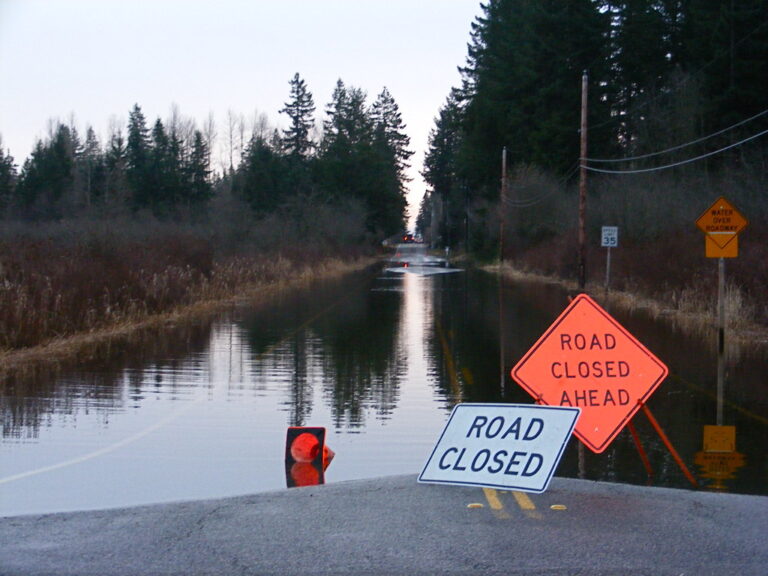
Flood damage has turned streets into rivers and backyards into lakes. Rain fell without stopping for days. Consequently, rivers spilled over their banks. As a result, entire neighborhoods are under water. Officials say about 100,000 homes stand damaged. Many families have no place to stay. Meanwhile, shelters are filling up fast. The scale of flood damage is historic for this area.

Understanding How Flood Damage Occurs

Heavy rainfall creates fast-moving water. It seeps under doors and through weak walls. This water ruins floors, furniture, and electrical wiring. Beyond that, muddy water brings in debris and bacteria. Therefore, flood damage poses health hazards. Mold can grow in just twenty-four hours. In addition, flooding can weaken a home’s foundation. Thus, quick action becomes vital to prevent further damage.

Early Warning Signs of Flood Damage

Before walls collapse, some hints show up:
• Water stains on walls or ceilings
• Musty smells in basements or closets
• Cracks in foundation or drywall
• Warped floors or doors that stick
If you notice these signs, call for help right away. Acting quickly can reduce flood damage and repair costs.

How Residents Are Coping with Flood Damage

Many families lost most of their belongings. Yet they stay strong through community support. Neighbors share food, clothes, and blankets. Volunteers bring water and medical supplies. Even pets have shelters now. Some people use sandbags to block more water. Others reinforce windows with plywood. In short, they do whatever it takes to protect what remains. Local churches and charities also offer hot meals and clothing.

Government Response to Flood Damage

Authorities declared a state of emergency within hours. They deployed rescue boats and helicopters. National guard units set up mobile kitchens. Additionally, they sent teams to clear roads and restore power lines. Cleanup crews work day and night to pump out water. Yet officials warn that it could take weeks to repair all homes. They urge residents to stay away from flooded zones. Otherwise, more injuries and damage could occur.

Health and Safety Risks After Flood Damage

Floodwater carries harmful germs and chemicals. Touching or drinking it can lead to skin rashes, vomiting, and fever. Once water recedes, mold grows rapidly in damp areas. Inhaling mold spores may cause breathing problems. Broken glass and hidden debris also risk cuts and infections. To stay safe, always wear protective boots and gloves. Also, boil drinking water until officials confirm it is clean.

Preventing Future Flood Damage

Experts say flood damage can be less severe with simple steps:

• Install flood vents in basements
• Elevate appliances and electrical panels
• Seal cracks in foundation and walls
• Create a backyard drainage system
• Keep gutters and drains clear of debris
By planning ahead, homeowners can reduce risks when storms arrive again.

What to Do If You Face Flood Damage

If your home floods, follow these steps:

1. Turn off gas, electricity, and water supply to avoid accidents.
2. Evacuate to a safe location and call emergency services.
3. Photograph all damage for insurance claims.
4. Wear protective gear before entering your house.
5. Disinfect and dry surfaces to stop mold growth.
6. Contact your insurance company as soon as possible.
Taking prompt action helps you recover faster from flood damage.

Looking Ahead

Communities will need months to rebuild. However, the outpouring of help gives hope. Authorities plan stronger flood defenses and better early warnings. Meanwhile, families start cleaning and fixing their homes. With teamwork and resilience, life will return to normal. Yet the memory of this flood damage will remind everyone to stay prepared.

FAQs

How can I protect my home from flood damage?

You can install flood vents, seal foundation cracks, and keep drainage clear. Elevate appliances and turn off utilities before a storm.

What health risks come after flood damage?

Floodwater holds germs and chemicals. Mold grows quickly, risking breathing issues. Always wear protective gear and boil water until it’s safe.

Who pays for repairs after flood damage?

Insurance may cover flood damage if you have flood insurance. Otherwise, government aid and community charities can help.

When should I return home after flood damage?

Return only when authorities declare it safe. They will check for structural damage, gas leaks, and clean water.

Unexpected Economic Growth Despite Tariffs

0

Key Takeaways

  • US economic growth will outpace earlier forecasts this year
  • Global economic growth gets a small boost despite new tariffs
  • Tariffs from the Trump administration proved less disruptive than expected
  • Higher consumer spending helps sustain growth in many countries

Why economic growth beat the odds

Economists recently raised their outlook for economic growth. They noted that tariffs did not hit activity as hard as they feared. As a result, both the US and global economy will grow a bit more this year. Moreover, consumers kept spending and businesses adjusted their plans smoothly. In addition, lower disruption in factory output and shipping helped avoid big slowdowns.

What changed the forecast for economic growth

First, many companies found ways to cope with new trade fees. They redirected shipments, altered supply chains, and absorbed some added costs. Next, consumer demand stayed strong. Wage gains and healthy job markets encouraged people to keep shopping. Therefore, retailers and service providers enjoyed solid sales.

Furthermore, some industries even saw renewed investment. For example, car makers expanded plants overseas to avoid fees. Tech firms boosted factory capacity in friendly regions. As a result, trade shifts smoothed the impact on overall activity. Thus, economic growth held up better than earlier models predicted.

How tariffs shaped economic growth

Initially, many feared a full trade war could stall growth. However, this year’s signs showed more balance. Tariffs raised prices in certain areas, but they did not collapse entire sectors. Instead, firms moved parts and materials around to minimize fees. Besides, governments granted waivers or delayed some duties. Consequently, the trade tension cut growth by less than expected.

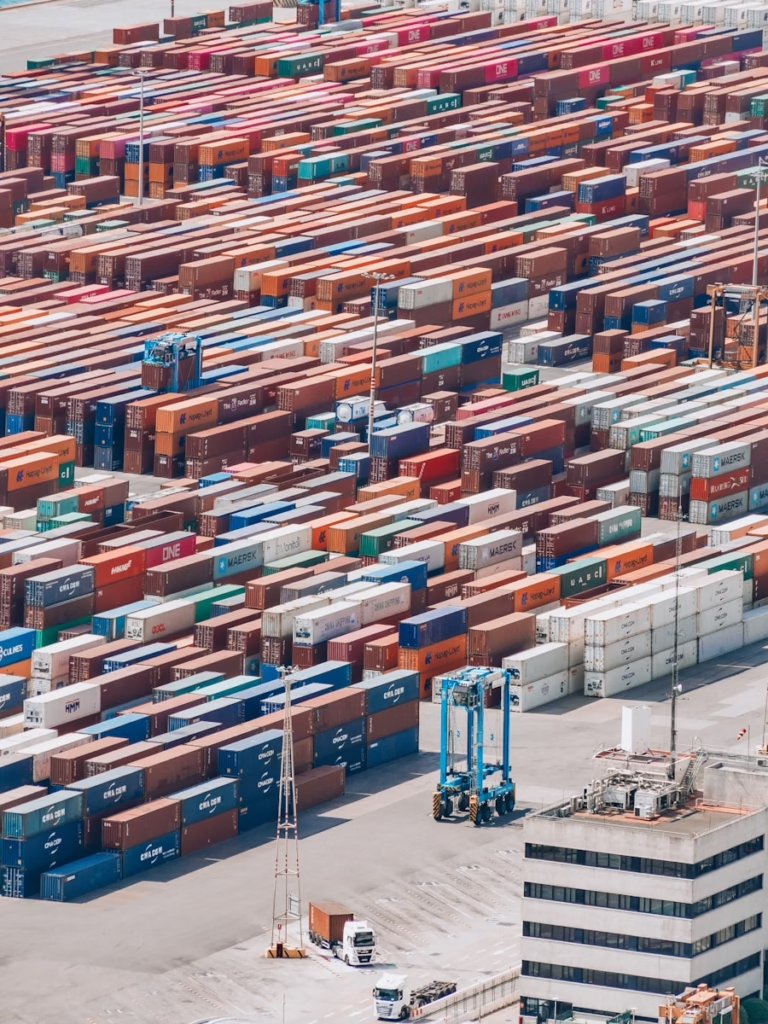
Moreover, import volumes dipped only slightly. Shipping routes changed, but ports stayed busy. In turn, factory output rose modestly. In short, trade frictions nudged growth down, but did not send it into reverse. This resilience helped drive better-than-expected forecasts for economic growth.

Effects on consumers and businesses

Consumers reacted in surprising ways. They shifted buying patterns but did not stop spending. For instance, people swapped pricey imported items for local options. Also, some cut back on big ticket purchases while boosting everyday buys. Yet, overall spending rose enough to keep the economy moving.

Likewise, businesses stayed confident. Many companies reported solid earnings this quarter. They noted that trade costs weighed on margins, but did not derail profit plans. Furthermore, firms used technology to track costs and adjust pricing more quickly. As a result, they kept hiring and investing.

In the labor market, job growth remained healthy. Employers added workers as sales held firm. This steady demand for labor supported wage growth. And higher pay meant consumers had more money to spend. Consequently, households felt less pressure from tariffs and more support from paychecks.

Future outlook for economic growth

Looking ahead, forecasters predict moderate but steady gains. They warn that new trade moves could still shift the picture. However, for now, markets see a resilient trend. As long as consumer demand stays strong, growth should hold up. Plus, any easing of trade barriers would add a fresh boost.

At the same time, companies must stay vigilant. They need to watch costs and keep flexible supply chains. If tensions flare again, smart planning will limit harm. In addition, governments may choose to negotiate deals that ease trade worries. Either way, the new baseline for economic growth looks firmer than before.

In conclusion, a mix of consumer strength, smart business moves, and manageable tariffs drove the surprise. Even with trade uncertainty, economic growth stayed on track and gained a bit of momentum. This outcome shows how adaptable economies can be when challenges arise.

Frequently Asked Questions

What is driving the current economic growth?

Rising consumer spending, healthy job gains, and firms adjusting supply chains all support the recent upturn.

How did tariffs affect manufacturing?

Tariffs raised costs in some areas, but companies shifted production and found workarounds to keep output stable.

Will consumer prices keep rising because of tariffs?

Some prices may tick up, but wage growth and competition help limit big spikes in everyday costs.

What could slow down this economic growth?

New trade disputes, a sharp drop in consumer demand, or major disruptions in global supply chains could weaken the trend.

New Mormon church leader Takes the Helm

0

Key Takeaways

  • Russell M. Nelson died at 101, leaving a leadership vacancy.
  • Dallin H. Oaks has been named the new Mormon church leader.
  • Oaks will guide over 16 million members worldwide.
  • He has served the church in top roles for decades.
  • The transition marks a new chapter for the faith.

The Mormon church leader role has passed to Dallin H. Oaks. Church officials announced his selection soon after the death of Russell M. Nelson. Nelson led the faith for seven years and reached 101 before he died. Now Oaks steps up to guide a growing community. Members around the globe await his first addresses and plans.

Why the Mormon church leader Change Matters

Leadership in a large faith shapes its future. The Mormon church leader sets tone, vision, and policy. As the new leader, Oaks carries heavy responsibility. He will hope to unite members, strengthen core teachings, and expand outreach. His views on social issues and technology will shape how the church adapts. Therefore, his role change matters to millions each day.

Who Is Dallin H. Oaks?

Dallin H. Oaks has decades of service in key church roles. He joined the top council in 1984 and became a counselor to the president in 2018. Before that, he worked as a lawyer, judge, and university president. He earned a reputation for calm judgment and clear teaching. In addition, he studied history and law, giving him a broad view of modern challenges. Members respect his steady approach and deep faith.

Early Life and Career

Oaks was born in 1932 in Provo, Utah. He served a mission in England as a young man. Later, he earned degrees in history and law at top universities. His work as a law professor made him a respected scholar. He then served on Utah’s Supreme Court. This mix of faith and public service set him apart.

Church Service and Teaching

In his church roles, Oaks led committees on education, welfare, and doctrine. He taught at the church’s university for years. Members say he speaks simply and with heart. He often uses stories and examples to explain spiritual truths. Over time, he has built close ties with leaders around the world.

What This Means For Members

For many, the new Mormon church leader will bring fresh direction. Oaks has said he plans to focus on family, community, and personal faith. He also intends to strengthen missionary work in cities and rural areas. Moreover, he will guide how the church uses technology for teaching and worship.

Support for Families

Oaks values family life as central to faith. He has emphasized parenting, marriage, and home-centered worship. Under his leadership, members can expect more resources on strengthening family bonds. For example, there may be new workshops and online tools for family study.

Global Growth and Missions

The faith has grown faster in parts of Africa, Asia, and Latin America. Oaks will likely expand missions in these regions. He has noted the importance of local language and culture. As a result, members outside the U.S. may see more materials in their native tongues.

Technology and Online Worship

In recent years, the church has used online platforms for services. Oaks has praised virtual gatherings that reach isolated members. He may push for more digital tools to connect families and small groups. This could include interactive apps or live-streamed events.

Looking Ahead Under the New Leader

Transition periods can bring both hope and questions. Oaks will address key topics in the coming months. He may share his vision in worldwide meetings. Members will watch his talks for guidance on faith, culture, and service.

Maintaining Doctrinal Stability

Despite change, the church values steady doctrine. Oaks has pledged to uphold core teachings on Jesus Christ and family. He plans to work with other leaders to ensure unity. This steady approach aims to reassure members during a big shift.

Adapting to Social Change

Like many faiths, the church faces modern social challenges. Oaks has spoken on issues such as technology, work-life balance, and social media. He will likely guide how members navigate these in light of faith. Clear guidance can help people make choices aligned with their beliefs.

Fostering Service and Community

Service has long been a pillar of the faith. Oaks has led global relief efforts in the past. As the new leader, he may launch fresh projects to aid the poor and disaster victims. This focus can strengthen the church’s public image and community bonds.

FAQs

Who chooses the Mormon church leader?

A council of top leaders selects the new head based on seniority and spiritual confirmation.

How long will Dallin H. Oaks serve as leader?

He will serve for life or until he chooses to step down. In practice, leaders serve into advanced age.

What priorities will the new leader have?

Oaks aims to reinforce family bonds, expand global missions, and use technology for worship.

Will the transition affect local congregations?

Local meetings will continue as usual. Leaders will follow guidance from the new church president.