
70.4 F
San Francisco
Friday, June 12, 2026
Home Blog Page 50

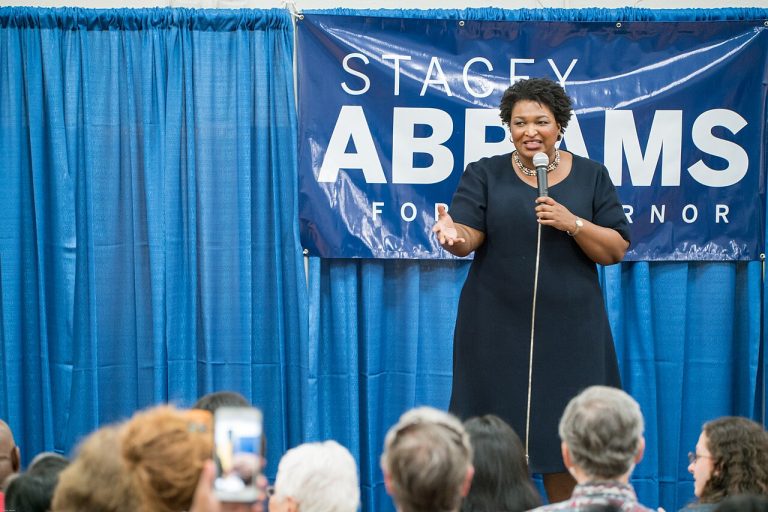
Stacey Abrams Criticized Prioritizing Loyalty to Trump Over Democracy

Quick Summary: Stacey Abrams Criticized Prioritizing Loyalty to Trump Over Democracy

  • Stacey Abrams criticized Georgia Republicans for prioritizing loyalty to Trump over democracy.
  • Georgia’s GOP is embroiled in internal conflicts over election administration and Trump loyalty.
  • Brad Raffensperger, Georgia’s Secretary of State, faces backlash for not overturning the 2020 election.
  • Georgia Republicans are using Abrams as a political foil despite internal party disputes.
  • The outcome of Georgia’s 2026 contests will reflect the GOP’s stance on Trump and democracy.

Stacey Abrams is sounding the alarm on a critical issue facing Georgia Republicans: their unwavering allegiance to Donald Trump. Her warning that they are ‘running to be supplicants to Trump, not defenders of democracy’ has ignited a firestorm within the state’s GOP, where election administration and loyalty to Trump are at the forefront.

Georgia’s political landscape is fraught with tension as the Republican Party grapples with its identity. The 2020 election continues to cast a long shadow, with candidates and activists still entrenched in Trump’s false claims. Brad Raffensperger, the incumbent Secretary of State, finds himself caught in the crossfire, defending his refusal to overturn the 2020 results while trying to maintain credibility in a pro-Trump party.

This internal conflict is not just about Trump or Abrams; it’s about the future of democracy in Georgia. Abrams’ pointed critique highlights a broader struggle within the GOP: whether to adhere to state election laws or succumb to Trump’s influence. The stakes are high, with Georgia’s 2026 statewide contests poised to be a battleground for these competing ideologies.

Despite the internal discord, Georgia Republicans continue to use Abrams as a political scapegoat. Her past involvement with the New Georgia Project, which faced a significant ethics fine, is leveraged against her, even as the party’s primary focus remains on Trump’s post-2020 conduct. The question remains whether Georgia Republicans will prioritize institutional integrity or political survival.

The Washington Post reported last week that Raffensperger remains at odds with Vernon Jones, one of the 16 Georgia Republicans who signed on as purported Trump electors in 2020 despite Joe Biden carrying the state. The freshest, most consequential reporting tied to that headline is not a new policy move by Stacey Abrams but the way her warning about Georgia Republicans “running to be supplicants to Trump” has collided with this month’s Georgia Republican fights over election administration, where loyalty to Donald Trump and 2020 election narratives are again dominating statewide politics.

Although not from the past 7 days, AP previously reported that the New Georgia Project, founded by Abrams, paid a $300,000 fine, described as the largest ethics fine in Georgia history, and that state investigators were still probing coordination questions tied to 2018 activity. One of the key figures in that coverage is incumbent Secretary of State Brad Raffensperger, who has tried to reframe himself to Republican voters by stressing that he defended Georgia election law against attacks from “Stacey Abrams, Joe Biden’s Justice Department and the woke world,” even as Trump allies continue to target him for refusing to overturn Biden’s 2020 win in Georgia.

That creates a striking twist in the story: even Republicans who resisted Trump’s 2020 pressure are still campaigning by attacking Abrams, while Abrams is arguing that many of those same Republicans have failed the bigger test by allowing Trump to dictate the party’s terms. The near-term question is whether Georgia Republican voters reward figures associated with Trump’s election grievances or stick with officials like Raffensperger who refused to bend the rules in 2020 while still trying to remain viable in a pro-Trump party.

What happens next is likely to be decided through Georgia’s 2026 statewide contests and the immediate outcome of Republican primaries for election-related offices. Recent reporting says the 2020 election “continues to haunt Georgia” and has become a defining fault line in the GOP contest for the office that oversees voting, with candidates and activists still litigating Trump’s false claims about the state’s results.

Republicans have used that issue aggressively against her, but the current twist is that the state’s loudest election-integrity rhetoric is now colliding with a GOP primary in which the biggest internal divide is still over Trump’s conduct after the 2020 election, not Abrams’ past campaign ecosystem. That detail is central to the conflict because it turns Abrams’ charge into a live argument about whether Georgia Republicans are rewarding officials who resisted Trump or candidates who embraced his effort to undo the election.

The freshest, most consequential reporting tied to that headline is not a new policy move by Stacey Abrams but the way her warning about Georgia Republicans “running to be supplicants to Trump” has collided with this month’s Georgia Republican fights over election administration, where loyalty to Donald Trump and 2020 election narratives are again dominating statewide politics. Although not from the past 7 days, AP previously reported that the New Georgia Project, founded by Abrams, paid a $300,000 fine, described as the largest ethics fine in Georgia history, and that state investigators were still probing coordination questions tied to 2018 activity.

Her past involvement with the New Georgia Project, which faced a significant ethics fine, is leveraged against her, even as the party’s primary focus remains on Trump’s post-2020 conduct. Brad Raffensperger, Georgia’s Secretary of State, faces backlash for not overturning the 2020 election.

Brad Raffensperger, the incumbent Secretary of State, finds himself caught in the crossfire, defending his refusal to overturn the 2020 results while trying to maintain credibility in a pro-Trump party. That creates a striking twist in the story: even Republicans who resisted Trump’s 2020 pressure are still campaigning by attacking Abrams, while Abrams is arguing that many of those same Republicans have failed the bigger test by allowing Trump to dictate the party’s terms.

The near-term question is whether Georgia Republican voters reward figures associated with Trump’s election grievances or stick with officials like Raffensperger who refused to bend the rules in 2020 while still trying to remain viable in a pro-Trump party. The outcome of Georgia’s 2026 contests will reflect the GOP’s stance on Trump and democracy.

Her warning that they are ‘running to be supplicants to Trump, not defenders of democracy’ has ignited a firestorm within the state’s GOP, where election administration and loyalty to Trump are at the forefront. The 2020 election continues to cast a long shadow, with candidates and activists still entrenched in Trump’s false claims.

The scale and speed of this development has caught many observers off guard. Each new update adds another dimension to a story that is still unfolding, and the full picture will only become clear as more verified details emerge from the people and institutions directly involved.

Analysts who have tracked this issue closely say the current moment represents a genuine turning point. The decisions made in the coming weeks are expected to set the direction for months ahead, with ripple effects likely to extend well beyond the immediate actors in the story.

For those directly affected, the practical impact is already visible. People navigating this fast-changing situation are dealing with real consequences while new information continues to reshape what is known and what remains open to interpretation.

Historical parallels offer some context, though experts caution against drawing too close a comparison. Similar situations have played out before, but the specific combination of pressures, personalities, and timing here makes this moment distinct in ways that matter for how it ultimately resolves.

The political and economic dimensions of this story are deeply intertwined. What appears as a single event on the surface is in practice the convergence of multiple pressures that have been building quietly over a longer period than most public reporting has captured.
Read more on Digital Chew

Xavier Becerra Emerges as Key Figure in Competitive Race

0

Quick Summary: Xavier Becerra Emerges as Key Figure in Competitive Race

  • Xavier Becerra’s late surge has transformed the California gubernatorial race into a competitive contest.
  • Steve Hilton maintains a lead with 22% of likely voters, but Becerra is closing in with strong Democratic support.
  • Tom Steyer’s self-funding of $193 million keeps him in the race, complicating Democratic consolidation.
  • The Republican field is narrowing, with Hilton gaining an edge after Trump’s endorsement.
  • The June 2 primary will determine if Democrats can prevent two Republicans from advancing.

The California gubernatorial race is heating up as Xavier Becerra’s late surge has turned what seemed like a Republican advantage into a fierce battle for the top two spots. With Steve Hilton still leading the pack at 22%, Becerra’s rise is drawing significant attention and support from Democrats eager to consolidate their position.

Tom Steyer, with his massive $193 million self-funding, remains a formidable contender, preventing a full Democratic coalescence around Becerra. Meanwhile, Hilton’s position as the leading Republican has been bolstered by a key endorsement from Donald Trump, which has widened the gap between him and fellow Republican Chad Bianco.

The stakes are high as the June 2 primary approaches. The Democratic field must rally to block a potential Republican advance, while Hilton aims to secure his spot in the general election. The outcome remains uncertain, with recent polls showing narrow margins that could shift with voter turnout and last-minute campaigning.

Also on May 19, KQED reported Democrats were increasingly consolidating behind Becerra and Steyer, with Hilton still leading overall at 22%. The freshest reporting points to a split-screen race: the Los Angeles Times reported on May 19 that Hilton and Becerra were leading in the final weeks, while KQED’s May 19 account said the state Democratic Party’s final poll showed Hilton at 22% of likely voters, Becerra ahead among Democrats, and Steyer still close enough to keep the outcome unsettled.

The Los Angeles Times reported that he jumped nine points in a California Democratic Party poll, pulling even with Steyer at 13% in one recent snapshot, and NBC Bay Area reported on May 13 that an Emerson College poll showed Becerra leading for the first time. In that same KQED report, the key number hanging over the race was Steyer’s extraordinary self-funding: $193 million pumped into his own campaign, a sum large enough to keep him competitive even as Becerra gained momentum.

The central conflict now is not simply Democrat versus Republican, but whether Democrats can avoid splintering badly enough under California’s top-two primary system to let two Republicans advance on June 2, 2026. KQED reported that “the chances of both Republicans advancing past the June 2 primary to the general election appear increasingly slim” because the gap between Hilton and fellow Republican Chad Bianco widened after President Donald Trump endorsed Hilton in April.

By contrast, another recent poll cited by political trackers had Hilton at 22%, Becerra at 20%, Steyer at 14%, Bianco at 13%, and both Katie Porter and Matt Mahan at 9%, underscoring how narrow the margins remain and how a few points could decide the final two spots. Axios reported on April 13 that Swalwell suspended his campaign after endorsements evaporated, and subsequent coverage described the race as wide open afterward.

On May 19, the Los Angeles Times said Hilton and Becerra were in a tightening race in the final weeks. The AP also reported this month that parts of the tech world are rallying to former San Jose mayor Matt Mahan as “the only sane” Democrat in the race, another sign that anti-establishment and pro-business factions are still resisting a clean Democratic coalescence behind Becerra.

Steve Hilton maintains a lead with 22% of likely voters, but Becerra is closing in with strong Democratic support. Tom Steyer’s self-funding of $193 million keeps him in the race, complicating Democratic consolidation.

With Steve Hilton still leading the pack at 22%, Becerra’s rise is drawing significant attention and support from Democrats eager to consolidate their position. Tom Steyer, with his massive $193 million self-funding, remains a formidable contender, preventing a full Democratic coalescence around Becerra.

In that same KQED report, the key number hanging over the race was Steyer’s extraordinary self-funding: $193 million pumped into his own campaign, a sum large enough to keep him competitive even as Becerra gained momentum. KQED reported that “the chances of both Republicans advancing past the June 2 primary to the general election appear increasingly slim” because the gap between Hilton and fellow Republican Chad Bianco widened after President Donald Trump endorsed Hilton in April.

The scale and speed of this development has caught many observers off guard. Each new update adds another dimension to a story that is still unfolding, and the full picture will only become clear as more verified details emerge from the people and institutions directly involved.

Analysts who have tracked this issue closely say the current moment represents a genuine turning point. The decisions made in the coming weeks are expected to set the direction for months ahead, with ripple effects likely to extend well beyond the immediate actors in the story.

For those directly affected, the practical impact is already visible. People navigating this fast-changing situation are dealing with real consequences while new information continues to reshape what is known and what remains open to interpretation.

Historical parallels offer some context, though experts caution against drawing too close a comparison. Similar situations have played out before, but the specific combination of pressures, personalities, and timing here makes this moment distinct in ways that matter for how it ultimately resolves.

The political and economic dimensions of this story are deeply intertwined. What appears as a single event on the surface is in practice the convergence of multiple pressures that have been building quietly over a longer period than most public reporting has captured.
Read more on Digital Chew

Japan Withdraws From Tournament, Reshaping Competition Field

Quick Summary: Japan Withdraws From Tournament, Reshaping Competition Field

  • Japan withdrew from the 2026 Honkbalweek Haarlem due to team assembly issues, and the Czech Republic was announced as their replacement.
  • The Dominican Republic also withdrew, citing funding constraints, and was replaced by the International Globetrotters.
  • Italy, Chinese Taipei, Curaçao, and the Czech Republic are now part of a more diverse and unpredictable tournament field.
  • The International Globetrotters’ inclusion pays homage to the tournament’s tradition of inviting club teams.
  • The tournament will run from June 26 to July 4, 2026, featuring six teams and 21 games.

The 2026 Honkbalweek Haarlem is shaping up to be a tournament like no other. With Japan and the Dominican Republic out, and the Czech Republic and International Globetrotters stepping in, the event has undergone a significant transformation. This shake-up has injected a fresh dose of unpredictability and international flair into the tournament. Japan Withdrew is at the center of this development.

Japan’s withdrawal, announced in late March, was a shock to many, as the defending champions cited difficulties in assembling a team. The Czech Republic, a rising force in European baseball, has taken their place. Tournament director Peter Herkemij welcomed the Czechs, highlighting their recent performances and approach to the sport as a perfect fit for the event.

The Dominican Republic’s exit, due to funding issues, led to the inclusion of the International Globetrotters, a club team with historical ties to the tournament’s tradition. This decision recalls the legacy of the Grand Rapids Sullivans, a club that dominated the event in the past.

With Italy fresh off a World Baseball Classic semifinal run, Chinese Taipei as a strong Asian contender, and Curaçao as a Caribbean powerhouse, the field is more diverse than ever. The tournament promises to be a thrilling showcase of international baseball talent.

Running from June 26 to July 4, 2026, the event will feature 21 games, with the Netherlands hosting the evening matches. The inclusion of the Globetrotters and the Czech Republic marks a bold new chapter for Honkbalweek Haarlem, blending tradition with innovation.

According to World Baseball Network, defending champion Japan withdrew in late March because it could not assemble a team, and tournament director Peter Herkemij announced the Czech Republic as the replacement on March 28. Organizers reportedly invoked the Grand Rapids Sullivans, a Michigan club that played Haarlem 14 times between 1963 and 1998 and won a record six tournament titles, more than any other participating team.

Haarlem Baseball Week will run from June 26 through July 4, 2026, one day longer than prior editions, with a single round robin from June 26 to July 1, playoff games on July 2 and July 3, and the championship on Saturday, July 4. But the publication argues the replacement field may be “more interesting than it would have been,” because Italy enters off a 2026 World Baseball Classic semifinal run, Chinese Taipei remains the Asian power in the event, Curaçao returns as a strong Caribbean program, and the Czech Republic arrives as a fast-rising European federation.

WBN says the Czechs recently finished third at the European Championship and became one of the surprise stories of the 2026 World Baseball Classic, making their debut at Haarlem feel less like a downgrade from Japan than a bet on Europe’s current baseball momentum. The timing adds emotional weight: longtime Sullivans leader Bob Sullivan died in February 2026 at age 88, and WBN suggests the Globetrotters’ inclusion reads partly as a tribute to that older Haarlem tradition of inviting club and all-star teams rather than only national sides.

Tickets for regular and VIP admission went on sale February 27, and the official tournament site says streaming and schedule details will be handled through its digital platforms. ” That article crystallizes what had been separate notices into a single narrative: first Curaçao was confirmed on January 21, then Chinese Taipei on January 24, Italy on February 2, the Netherlands on February 5, Czechia on March 28, and finally the Globetrotters on May 11.

The most direct quote in the latest reporting comes from Herkemij, who welcomed the Czechs by saying, “Their recent performances and the way they approach the sport of baseball are a perfect fit for our event. That means two of the six tournament slots changed hands between late March and mid-May, an unusually dramatic shake-up for a nine-day event with 21 games.

Running from June 26 to July 4, 2026, the event will feature 21 games, with the Netherlands hosting the evening matches. Organizers reportedly invoked the Grand Rapids Sullivans, a Michigan club that played Haarlem 14 times between 1963 and 1998 and won a record six tournament titles, more than any other participating team.

But the publication argues the replacement field may be “more interesting than it would have been,” because Italy enters off a 2026 World Baseball Classic semifinal run, Chinese Taipei remains the Asian power in the event, Curaçao returns as a strong Caribbean program, and the Czech Republic arrives as a fast-rising European federation. The timing adds emotional weight: longtime Sullivans leader Bob Sullivan died in February 2026 at age 88, and WBN suggests the Globetrotters’ inclusion reads partly as a tribute to that older Haarlem tradition of inviting club and all-star teams rather than only national sides.

Japan’s withdrawal, announced in late March, was a shock to many, as the defending champions cited difficulties in assembling a team. Tournament director Peter Herkemij welcomed the Czechs, highlighting their recent performances and approach to the sport as a perfect fit for the event.

The Dominican Republic also withdrew, citing funding constraints, and was replaced by the International Globetrotters. Italy, Chinese Taipei, Curaçao, and the Czech Republic are now part of a more diverse and unpredictable tournament field.

The scale and speed of this development has caught many observers off guard. Each new update adds another dimension to a story that is still unfolding, and the full picture will only become clear as more verified details emerge from the people and institutions directly involved.

Analysts who have tracked this issue closely say the current moment represents a genuine turning point. The decisions made in the coming weeks are expected to set the direction for months ahead, with ripple effects likely to extend well beyond the immediate actors in the story.

For those directly affected, the practical impact is already visible. People navigating this fast-changing situation are dealing with real consequences while new information continues to reshape what is known and what remains open to interpretation.

Historical parallels offer some context, though experts caution against drawing too close a comparison. Similar situations have played out before, but the specific combination of pressures, personalities, and timing here makes this moment distinct in ways that matter for how it ultimately resolves.

The political and economic dimensions of this story are deeply intertwined. What appears as a single event on the surface is in practice the convergence of multiple pressures that have been building quietly over a longer period than most public reporting has captured.
Read more on Digital Chew

Bristol Airport Expand Increase Capacity From 12 to 15 Million

Quick Summary: Bristol Airport Expand Increase Capacity From 12 to 15 Million

  • Bristol Airport’s expansion plan aims to increase capacity from 12 to 15 million passengers annually, sparking legal and environmental battles.
  • Local groups, including Bristol Airport Action Network, oppose the plan, citing threats to Felton Common’s ecology.
  • The airport’s £500 million investment plan includes new routes to major international destinations, pending approval.
  • Public consultation on the proposal runs until June 28, 2026, with a decision expected later in the year.
  • Opponents argue the expansion could set a precedent for commercial use of common land.

Bristol Airport’s ambitious expansion plans have ignited a fierce battle, pitting the promise of international connectivity against environmental and legal challenges. The airport aims to boost its passenger capacity from 12 million to 15 million annually, a move that could transform it into a major hub with new routes to New York, Orlando, Doha, Dubai, and Abu Dhabi. However, this vision is entangled in a web of legal and environmental hurdles.

Local groups like the Bristol Airport Action Network and Save Felton Common are rallying against the expansion, arguing that it threatens the ecological balance of Felton Common. They claim the airport’s plans, including the installation of landing lights and access roads on common land, would disrupt the area’s unique ecology. Debbie Johnson, chair of Save Felton Common, warns that the development could ‘literally slice the common into two parts.’

The airport, on the other hand, argues that the expansion is crucial for regional economic growth and connectivity. It highlights the potential for increased business opportunities and improved customer experience, backed by a £500 million investment. The airport also emphasizes its commitment to environmental assessments and public transport improvements.

As the public consultation period runs until June 28, 2026, the outcome remains uncertain. The legal and environmental objections could delay or even derail the project, raising questions about the balance between development and preservation. The decision, expected later this year, will be a pivotal moment for Bristol Airport and its ambitious growth plans.

On May 6, 2026, Local Government Lawyer reported that Bristol Airport Action Network and Save Felton Common had launched a fundraising appeal to pay for legal and expert advice from Leigh Day Solicitors. In a separate March 4, 2026 announcement, infrastructure director Andrew Goodenough said, “We have ambitious plans to transform our customer experience over the next couple of years,” while detailing a £30 million terminal extension, a floor-space increase of almost 45 percent, and a total of 38 retail and food-and-beverage outlets.

North Somerset Council says Bristol Airport Ltd has submitted a plan for “an increase in passenger capacity from 12 to 15 million passengers per year,” plus runway and site-boundary extensions and related works. In other words, the key action this week is procedural but consequential: the scheme is now officially in the planning system, under reference 26/P/0686/OU2, with a clock running on comments and objections.

Bristol Airport says the wider programme involves about £500 million of investment and would add roughly 3 million passengers a year by the late 2030s. Over the next month, the crucial deadline is June 28, 2026, when the consultation closes.

After that, North Somerset Council will review submissions and set out the decision-making timetable, with a formal ruling expected later in 2026 unless legal or procedural complications push it back. The airport is also selling the plan as an economic and operational expansion, saying it wants one in four passengers to arrive by public transport, building on a £60 million public transport interchange that it says already supports around 250 public transport movements a day.

” The same spokesperson added that those destinations are “important areas for worldwide business opportunities,” and said a “full environmental assessment” would accompany the growth application. Campaigners say the airport wants a 400-metre strip of landing lights, access roads, fencing, and associated infrastructure on registered common land.

Public consultation on the proposal runs until June 28, 2026, with a decision expected later in the year. As the public consultation period runs until June 28, 2026, the outcome remains uncertain.

In other words, the key action this week is procedural but consequential: the scheme is now officially in the planning system, under reference 26/P/0686/OU2, with a clock running on comments and objections. Bristol Airport says the wider programme involves about £500 million of investment and would add roughly 3 million passengers a year by the late 2030s.

Over the next month, the crucial deadline is June 28, 2026, when the consultation closes. After that, North Somerset Council will review submissions and set out the decision-making timetable, with a formal ruling expected later in 2026 unless legal or procedural complications push it back.

The scale and speed of this development has caught many observers off guard. Each new update adds another dimension to a story that is still unfolding, and the full picture will only become clear as more verified details emerge from the people and institutions directly involved.

Analysts who have tracked this issue closely say the current moment represents a genuine turning point. The decisions made in the coming weeks are expected to set the direction for months ahead, with ripple effects likely to extend well beyond the immediate actors in the story.

For those directly affected, the practical impact is already visible. People navigating this fast-changing situation are dealing with real consequences while new information continues to reshape what is known and what remains open to interpretation.

Historical parallels offer some context, though experts caution against drawing too close a comparison. Similar situations have played out before, but the specific combination of pressures, personalities, and timing here makes this moment distinct in ways that matter for how it ultimately resolves.

The political and economic dimensions of this story are deeply intertwined. What appears as a single event on the surface is in practice the convergence of multiple pressures that have been building quietly over a longer period than most public reporting has captured.

Read more on Digital Chew

Homeland Security Secretary Mullin Reiterated Risking Travel Disruptions

0

Quick Summary: Homeland Security Secretary Mullin Reiterated Risking Travel Disruptions

  • Homeland Security Secretary Mullin reiterated a threat to pull CBP officers from sanctuary city airports, risking travel disruptions.
  • The U.S. Travel Association warned that such a move would devastate the travel industry and local economies dependent on international visitors.
  • Airlines for America cautioned that reduced CBP staffing could cause major operational disruptions at key airports.
  • Transportation Secretary Duffy expressed skepticism, highlighting internal administration division over the proposal.
  • The threat targets major airports in cities like New York, Los Angeles, and Chicago, crucial for international travel and commerce.

In a move that could shake the travel industry to its core, Homeland Security Secretary Markwayne Mullin has doubled down on a controversial proposal to withdraw U.S. Customs and Border Protection officers from airports in sanctuary cities. This bold threat, initially dismissed as mere political posturing, now looms as a genuine crisis for international travel.

The implications are staggering. Major airports in cities such as New York, Los Angeles, and Chicago could see their operations grind to a halt without the federal customs staffing necessary to process international passengers and cargo. The U.S. Travel Association has sounded the alarm, warning of devastating consequences for both the travel sector and the local economies that rely on international tourism.

But the proposal is not without its critics within the administration. Transportation Secretary Sean Duffy has openly questioned the logic behind using airport staffing as a tool in the immigration crackdown, arguing that it could weaponize air travel and inflict unnecessary economic harm.

As the administration grapples with internal divisions and mounting external pressure, the travel industry braces for potential chaos. The threat to sanctuary city airports has shifted from a rhetorical flourish to a tangible policy battle, one that could disrupt international travel at some of America’s busiest gateways.

AP reported that it is “not clear how much support this idea has within the administration,” and that uncertainty matters because courts blocked Trump’s earlier first-term efforts in 2017 to strip funding from sanctuary cities. Travel Association and major airline interests had issued formal condemnations, and by Saturday, May 23, the AP story had pushed the dispute into broad national circulation, underscoring that the proposal is being taken seriously across government and industry.

That shifted the story from rhetoric to a concrete policy threat, because airports cannot process international passengers and cargo without federal customs staffing. A striking wrinkle is that the administration still appears divided on whether it can or should carry the threat out.

Reuters also reported on May 21 that officials could stop processing international travelers and cargo at major airports in those cities. On Wednesday, May 20, Mullin met travel and airline executives at DHS and reiterated the staffing threat.

On Thursday, May 21, The Atlantic and Reuters put the private warning into public view. Travel Association said Friday, May 22, that “such a move would have devastating consequences for the travel industry and communities that depend on international visitation,” while Airlines for America warned that reducing CBP staffing at major airports would cause “a significant operational disruption” to carriers, travelers and cargo flows.

” That intra-administration split is one of the clearest signs yet that the idea is colliding with economic and operational realities. The new version of pressure is different, however, because it focuses not on grants but on federal staffing that is essential to international operations.

Transportation Secretary Duffy expressed skepticism, highlighting internal administration division over the proposal. On Wednesday, May 20, Mullin met travel and airline executives at DHS and reiterated the staffing threat.

This bold threat, initially dismissed as mere political posturing, now looms as a genuine crisis for international travel. Major airports in cities such as New York, Los Angeles, and Chicago could see their operations grind to a halt without the federal customs staffing necessary to process international passengers and cargo.

Travel Association has sounded the alarm, warning of devastating consequences for both the travel sector and the local economies that rely on international tourism. ” That intra-administration split is one of the clearest signs yet that the idea is colliding with economic and operational realities.

The scale and speed of this development has caught many observers off guard. Each new update adds another dimension to a story that is still unfolding, and the full picture will only become clear as more verified details emerge from the people and institutions directly involved.

Analysts who have tracked this issue closely say the current moment represents a genuine turning point. The decisions made in the coming weeks are expected to set the direction for months ahead, with ripple effects likely to extend well beyond the immediate actors in the story.

For those directly affected, the practical impact is already visible. People navigating this fast-changing situation are dealing with real consequences while new information continues to reshape what is known and what remains open to interpretation.

Historical parallels offer some context, though experts caution against drawing too close a comparison. Similar situations have played out before, but the specific combination of pressures, personalities, and timing here makes this moment distinct in ways that matter for how it ultimately resolves.

The political and economic dimensions of this story are deeply intertwined. What appears as a single event on the surface is in practice the convergence of multiple pressures that have been building quietly over a longer period than most public reporting has captured.
Read more on Digital Chew

CDC Added Ebola Entry Screening Expansion

0

Quick Summary: CDC Added Ebola Entry Screening Expansion

  • The CDC added Atlanta to its Ebola entry screening on May 22, 2026, following Washington Dulles.
  • The WHO declared the Bundibugyo-strain outbreak an international emergency.
  • 82 confirmed Ebola cases and seven deaths reported in the DRC, with 750 suspected cases.
  • The Trump administration barred non-citizens from affected regions from entering the U.S.
  • Red Cross mourns three volunteers who died after handling bodies in Congo.

Ebola screening: Key Takeaways

Ebola screening is at the center of this developing story, and the following analysis explains what matters most right now.

The U.S. has taken a decisive step in its fight against the Ebola outbreak by expanding entry screenings to Atlanta’s Hartsfield-Jackson International Airport. This move, effective from May 22, 2026, comes on the heels of similar measures at Washington Dulles, underscoring the escalating global concern over the Bundibugyo strain of Ebola.

The World Health Organization’s recent declaration of the outbreak as an international emergency has prompted swift action. With 82 confirmed cases and seven deaths in the Democratic Republic of the Congo, the stakes are high. The Trump administration’s decision to restrict entry for non-citizens from affected regions marks a significant shift from a purely health-focused response to a broader containment strategy.

Amid these developments, the Red Cross has revealed the tragic loss of three volunteers who contracted Ebola while performing humanitarian work in Congo. This highlights the grave risks faced by those on the front lines and the urgent need for effective containment measures.

As the situation unfolds, the U.S. must balance public health measures with immigration policies, ensuring that the response remains proportionate to the evolving threat. The rapid implementation of these screenings indicates a belief among officials that the outbreak could worsen, necessitating further action.

The CDC said Atlanta was chosen in part because it had “previously conducted enhanced public health entry screening” and already had procedures in place. health officials widened Ebola entry screening to Atlanta late on May 22, 2026, just days after starting it at Washington Dulles, as the Congo outbreak worsened enough for the World Health Organization to declare an international emergency and the Red Cross disclosed that three volunteers had died after handling bodies.

The World Health Organization figure cited in the latest Reuters reporting says there are 82 confirmed Ebola cases in the DRC, along with seven confirmed deaths, 177 suspected deaths, and nearly 750 suspected cases tied to the Bundibugyo strain. That strain is central to the alarm because, as the report notes, there is “no approved vaccine or treatment,” raising the stakes for border screening, case finding, and burial protocols.

The CDC describes airport checks as only one layer of a broader strategy that includes overseas exit screening, airline illness reporting, and post-arrival public-health monitoring. But the political edge comes from the travel restrictions added by the administration this week, which go beyond health monitoring and directly target non-citizen travelers with recent exposure to the affected region.

On Sunday, the WHO declared the Bundibugyo-strain outbreak an emergency of international concern. widens screening beyond Dulles and Atlanta and whether the outbreak’s suspected-case numbers start converting into more confirmed infections and deaths.

Reuters, in the version carried by Emirates 24|7, framed that move as giving Americans returning from the Democratic Republic of the Congo, Uganda, or South Sudan “a second entry point” into the United States. The Trump administration also moved this week to bar non-citizens who recently traveled to the DRC, Uganda, or South Sudan from entering the United States, turning what might have been a narrow public-health story into a broader immigration-and-containment crackdown.

Amid these developments, the Red Cross has revealed the tragic loss of three volunteers who contracted Ebola while performing humanitarian work in Congo. The WHO declared the Bundibugyo-strain outbreak an international emergency.

The Trump administration’s decision to restrict entry for non-citizens from affected regions marks a significant shift from a purely health-focused response to a broader containment strategy. must balance public health measures with immigration policies, ensuring that the response remains proportionate to the evolving threat.

That strain is central to the alarm because, as the report notes, there is “no approved vaccine or treatment,” raising the stakes for border screening, case finding, and burial protocols. On Sunday, the WHO declared the Bundibugyo-strain outbreak an emergency of international concern.

widens screening beyond Dulles and Atlanta and whether the outbreak’s suspected-case numbers start converting into more confirmed infections and deaths. Reuters, in the version carried by Emirates 24|7, framed that move as giving Americans returning from the Democratic Republic of the Congo, Uganda, or South Sudan “a second entry point” into the United States.

The scale and speed of this development has caught many observers off guard. Each new update adds another dimension to a story that is still unfolding, and the full picture will only become clear as more verified details emerge from the people and institutions directly involved.

Analysts who have tracked this issue closely say the current moment represents a genuine turning point. The decisions made in the coming weeks are expected to set the direction for months ahead, with ripple effects likely to extend well beyond the immediate actors in the story.

For those directly affected, the practical impact is already visible. People navigating this fast-changing situation are dealing with real consequences while new information continues to reshape what is known and what remains open to interpretation.

Historical parallels offer some context, though experts caution against drawing too close a comparison. Similar situations have played out before, but the specific combination of pressures, personalities, and timing here makes this moment distinct in ways that matter for how it ultimately resolves.

The political and economic dimensions of this story are deeply intertwined. What appears as a single event on the surface is in practice the convergence of multiple pressures that have been building quietly over a longer period than most public reporting has captured.
Read more on Digital Chew

Poland Received Reinforcement of Natos Eastern Flank

0

Quick Summary: Poland Received Reinforcement of Natos Eastern Flank

  • Poland received F-35 fighter jets as part of NATO’s eastern flank reinforcement, ordering 32 of the US-made aircraft.
  • Xi Jinping ordered an ‘all-out rescue’ after a coal mine explosion in China killed 82 people, deploying 345 rescue personnel.
  • US-Iran negotiations show signs of progress, with Trump optimistic about reaching an agreement.
  • Ukraine warns Belarus against deepening involvement in Russia’s war, amid Lukashenka’s offer to meet Zelenskyy.
  • A court in Portugal held two French nationals in pretrial detention over child abandonment charges.

Poland’s strategic decision to bolster its military capabilities by acquiring 32 F-35 fighter jets marks a significant shift in its defense posture. This move, part of NATO’s broader effort to reinforce its eastern flank, underscores the growing security concerns in the region. Poland Received is at the center of this development.

The acquisition of these advanced aircraft signals Poland’s commitment to strengthening its defense infrastructure amid rising tensions with neighboring countries. The F-35s, known for their versatility and advanced technology, will enhance Poland’s ability to respond to potential threats swiftly and effectively.

In the broader context of regional security, Poland’s military reinforcement aligns with NATO’s strategic objectives. As tensions simmer in Eastern Europe, particularly with Russia’s aggressive posturing, Poland’s actions reflect a proactive approach to safeguarding its sovereignty and supporting allied defense initiatives.

While the geopolitical landscape remains volatile, Poland’s investment in its military capabilities serves as a deterrent against potential aggressors. This strategic shift not only fortifies Poland’s defense but also strengthens NATO’s collective security framework.

In parallel, Poland received F-35 fighter jets as part of NATO’s eastern flank reinforcement, and Euronews notes that Poland has ordered 32 of the US-made multirole aircraft. A court in Setúbal ordered a 41-year-old woman and a 55-year-old man, both French, held in pretrial detention after a two-day hearing on accusations including aggravated assault, endangerment and abandonment of boys.

The bulletin’s second major item shifts from diplomacy to disaster in China, where Xi Jinping ordered an “all-out rescue” after a coal mine explosion that killed 82 people. Euronews adds a concrete operational figure: six emergency rescue teams totaling 345 personnel were sent to the site, according to Xinhua.

On May 22, Euronews was already reporting Lukashenka’s meeting offer and Ukraine’s warning over Belarus. Euronews updated that item at 21:06 GMT+2 on Saturday, May 23, and paired it with wider regional diplomacy, including reporting that Pakistan’s army chief was in Tehran while US Secretary of State Marco Rubio signaled progress in peace efforts.

The central tension is obvious: Trump is publicly projecting optimism, but the negotiations are described as unstable enough to flip back toward military escalation. The main actors are Trump, Rubio, Iranian officials, and Pakistan’s military leadership, which appears to be involved in the diplomatic traffic around Tehran.

Euronews highlights Aliaksandr Lukashenka’s offer to meet Volodymyr Zelenskyy amid warnings that Russia may be trying to open a new front through Belarus. The sharpest line comes from the Ukrainian side: Zelenskyy had earlier warned Belarus of “consequences” if it deepened its involvement in Russia’s full-scale war.

Poland’s strategic decision to bolster its military capabilities by acquiring 32 F-35 fighter jets marks a significant shift in its defense posture. The bulletin’s second major item shifts from diplomacy to disaster in China, where Xi Jinping ordered an “all-out rescue” after a coal mine explosion that killed 82 people.

Euronews adds a concrete operational figure: six emergency rescue teams totaling 345 personnel were sent to the site, according to Xinhua. On May 22, Euronews was already reporting Lukashenka’s meeting offer and Ukraine’s warning over Belarus.

This move, part of NATO’s broader effort to reinforce its eastern flank, underscores the growing security concerns in the region. In the broader context of regional security, Poland’s military reinforcement aligns with NATO’s strategic objectives.

The scale and speed of this development has caught many observers off guard. Each new update adds another dimension to a story that is still unfolding, and the full picture will only become clear as more verified details emerge from the people and institutions directly involved.

Analysts who have tracked this issue closely say the current moment represents a genuine turning point. The decisions made in the coming weeks are expected to set the direction for months ahead, with ripple effects likely to extend well beyond the immediate actors in the story.

For those directly affected, the practical impact is already visible. People navigating this fast-changing situation are dealing with real consequences while new information continues to reshape what is known and what remains open to interpretation.

Historical parallels offer some context, though experts caution against drawing too close a comparison. Similar situations have played out before, but the specific combination of pressures, personalities, and timing here makes this moment distinct in ways that matter for how it ultimately resolves.

The political and economic dimensions of this story are deeply intertwined. What appears as a single event on the surface is in practice the convergence of multiple pressures that have been building quietly over a longer period than most public reporting has captured.

Read more on Digital Chew

Matt Mahan Faces Setbacks as Key Committees Shut Down

Quick Summary: Matt Mahan Faces Setbacks as Key Committees Shut Down

  • San Jose Mayor Matt Mahan’s campaign for California governor faces setbacks as key committees shut down.
  • Netflix co-founder Reed Hastings retracted a $1 million donation, signaling waning support.
  • Mahan’s campaign raised $15 million but remains stuck in single-digit polling.
  • Allegations of illegal coordination with an independent committee could lead to $5 million in penalties.
  • With the primary approaching, Mahan’s campaign narrative shifts from momentum to potential collapse.

San Jose Mayor Matt Mahan’s once-promising bid for California governor is unraveling faster than anyone anticipated. Just days before the June 2 primary, Mahan’s campaign is facing a series of crippling blows that could spell the end of his political aspirations. The most glaring sign of trouble came when a major pro-Mahan committee filed to shut down, and Netflix co-founder Reed Hastings demanded the return of his $1 million donation. This retreat from key backers suggests a lack of confidence in Mahan’s ability to secure a place in the runoff.

Despite raising a formidable $15 million, Mahan’s campaign remains mired in single-digit polling, overshadowed by self-funding billionaire Tom Steyer, who has spent over $137 million. The financial infrastructure that once buoyed Mahan now appears to be crumbling, with committees folding and donors withdrawing support. The situation is further complicated by allegations of illegal coordination with the California Back to Basics committee, which could result in hefty fines if proven true.

The unfolding drama is a stark contrast to the campaign’s earlier momentum, fueled by Silicon Valley’s elite. Mahan’s pitch as a moderate Democrat willing to challenge his party’s status quo is now overshadowed by the political and ethical quagmire he finds himself in. The impending primary and the looming FPPC complaint have turned what was once a promising campaign into a cautionary tale of political ambition and miscalculation.

CNN reported this month that Mahan had brought in $14 million, more than any candidate besides self-funding billionaire Tom Steyer, who had already spent more than $137 million on advertising. San Jose Mayor Matt Mahan’s once-hyped run for California governor took its clearest hit yet on Friday, May 23, when San José Spotlight reported that one pro-Mahan outside committee had filed to shut down and another had returned a $1 million donation from Netflix co-founder Reed Hastings, a sign that major backers may be pulling away just days before California’s June 2 primary.

San José Spotlight reported that Deliver for Mahan filed papers to wind down, while California Back to Basics refunded Hastings’ $1 million contribution that had been made on May 15 and sent back five days later. His campaign had raised $15 million in direct donations this year, according to San José Spotlight, and earlier reporting described him as a Silicon Valley-funded moderate with heavy backing from tech and business figures.

Around that same time, supporters were reportedly pushing an “all or nothing” effort to raise $35 million into an escrow account by mid-April, an extraordinary number for a candidate who still had not broken out. Big donors routinely make strategic decisions, but asking for $1 million back so close to an election is a flashing warning light, especially when paired with a shutdown filing from a supportive committee.

The complaint, filed with the California Fair Political Practices Commission, could expose the campaign to penalties of up to $5 million if regulators substantiate the allegations. San José Spotlight said visible warning signs emerged in April, when Mahan’s campaign split with longtime strategist Eric Jaye, a major figure in his political orbit.

The FPPC complaint is now hanging over the campaign, the June 2, 2026 primary is just days away, and Mahan must somehow reverse a race narrative that has shifted from outsider momentum to possible collapse. Right now, the most newsworthy fact is simple: after raising roughly $15 million and attracting some of Silicon Valley’s richest names, Matt Mahan’s bid is no longer defined by expansion, but by contraction.

Despite raising a formidable $15 million, Mahan’s campaign remains mired in single-digit polling, overshadowed by self-funding billionaire Tom Steyer, who has spent over $137 million. San José Spotlight reported that Deliver for Mahan filed papers to wind down, while California Back to Basics refunded Hastings’ $1 million contribution that had been made on May 15 and sent back five days later.

His campaign had raised $15 million in direct donations this year, according to San José Spotlight, and earlier reporting described him as a Silicon Valley-funded moderate with heavy backing from tech and business figures. Around that same time, supporters were reportedly pushing an “all or nothing” effort to raise $35 million into an escrow account by mid-April, an extraordinary number for a candidate who still had not broken out.

Big donors routinely make strategic decisions, but asking for $1 million back so close to an election is a flashing warning light, especially when paired with a shutdown filing from a supportive committee. Netflix co-founder Reed Hastings retracted a $1 million donation, signaling waning support.

Mahan’s campaign raised $15 million but remains stuck in single-digit polling. The complaint, filed with the California Fair Political Practices Commission, could expose the campaign to penalties of up to $5 million if regulators substantiate the allegations.

The scale and speed of this development has caught many observers off guard. Each new update adds another dimension to a story that is still unfolding, and the full picture will only become clear as more verified details emerge from the people and institutions directly involved.

Analysts who have tracked this issue closely say the current moment represents a genuine turning point. The decisions made in the coming weeks are expected to set the direction for months ahead, with ripple effects likely to extend well beyond the immediate actors in the story.

For those directly affected, the practical impact is already visible. People navigating this fast-changing situation are dealing with real consequences while new information continues to reshape what is known and what remains open to interpretation.

Historical parallels offer some context, though experts caution against drawing too close a comparison. Similar situations have played out before, but the specific combination of pressures, personalities, and timing here makes this moment distinct in ways that matter for how it ultimately resolves.

The political and economic dimensions of this story are deeply intertwined. What appears as a single event on the surface is in practice the convergence of multiple pressures that have been building quietly over a longer period than most public reporting has captured.
Read more on Digital Chew

Armstrong Williams Became Sparking Controversy Over Ideological

0

Quick Summary: Armstrong Williams Became Sparking Controversy Over Ideological

  • Armstrong Williams became part owner of The Baltimore Sun in early 2024, sparking controversy over the paper’s ideological direction.
  • The purchase by Williams and Sinclair executive David D. Smith led to criticism due to Sinclair’s right-leaning reputation.
  • Williams’ columns and broadcast content have become more visible in the paper, raising concerns about editorial independence.
  • Critics argue the ownership change could reshape the paper’s coverage, while supporters see it as ideological diversification.
  • No recent official backlash or legislative response has been reported following Williams’ commentary.

Armstrong Williams is not just a commentator; he’s a co-owner of The Baltimore Sun, a role that has ignited a fierce debate over the paper’s future direction. Since Williams and Sinclair executive David D. Smith acquired the paper in early 2024, critics have been vocal about the potential shift in its editorial stance. With Sinclair’s reputation for right-wing bias, the concern is palpable.

Williams’ increasing presence in the paper through his columns and broadcast content has only fueled these fears. The Baltimore Sun, a staple of Maryland’s media landscape, now finds itself at the center of a storm over its ideological leanings. Critics worry that the paper’s new ownership could skew its reporting and opinion pieces to align with conservative viewpoints, a stark contrast to the political leanings of its readership.

The debate intensified following the sale, with critics arguing that the paper might become a mouthpiece for its conservative owners. Supporters, however, argue that this change brings much-needed diversity to a media environment they perceive as predominantly left-leaning. Williams’ role as both owner and commentator blurs the lines between editorial independence and ownership influence, a dynamic that continues to stir controversy.

While there hasn’t been a recent official backlash or legislative response specifically tied to Williams’ commentary, the situation remains fluid. The real test will be whether The Baltimore Sun’s new leadership can maintain its journalistic integrity in the face of these ideological pressures. As Williams continues to publish under the Sun’s banner, the paper’s future direction remains uncertain, leaving both critics and supporters watching closely.

What is available right now points to this as an opinion piece by Armstrong Williams, the conservative commentator who became part owner of The Baltimore Sun in early 2024 alongside Sinclair executive David D. NPR reported on February 26, 2024, that the paper’s purchase by Smith and Williams “sparked outrage and bafflement,” with critics focusing on Sinclair’s rightward reputation and the increasingly visible role of Williams’ own columns and broadcast content in the paper.

That strongly suggests “The dangerous new purity tests consuming US politics” is part of the same stream: a polemical argument about factionalism inside American politics, not a reported enterprise story that has generated measurable new facts, court action, or official response. There are, however, no reliable open-web signs in the past 7 days of a fresh official backlash, advertiser revolt, newsroom walkout, court filing, or legislative response specifically triggered by this commentary headline.

His site republishes multiple Sun columns from January, February, and April 2026, including pieces labeled “Moral clarity in an age of corruption,” “Chaos is the strategy, and too many are helping it succeed,” and “The illusion of a strong economy,” each presented as commentary rather than new reporting. That debate sharpened after the January 2024 sale, when David D.

Openly available reposts and Williams’ own site show a pattern of recent Baltimore Sun commentaries carrying broad moral and political arguments rather than breaking reported disclosures. One telling detail from accessible reporting is that NPR said the newly controlled paper was already featuring Williams’ columns and stories tied to his broadcast interviews within weeks of the sale.

I also could not confirm any new vote counts, polling numbers, subscription figures, traffic data, or financial disclosures attached to the column itself. I found the column’s ecosystem and the ownership context, but not fresh, independently reported developments specific to that headline in the last week.

NPR reported on February 26, 2024, that the paper’s purchase by Smith and Williams “sparked outrage and bafflement,” with critics focusing on Sinclair’s rightward reputation and the increasingly visible role of Williams’ own columns and broadcast content in the paper. That strongly suggests “The dangerous new purity tests consuming US politics” is part of the same stream: a polemical argument about factionalism inside American politics, not a reported enterprise story that has generated measurable new facts, court action, or official response.

There are, however, no reliable open-web signs in the past 7 days of a fresh official backlash, advertiser revolt, newsroom walkout, court filing, or legislative response specifically triggered by this commentary headline. Quick Summary: Armstrong Williams Became Sparking Controversy Over Ideological Armstrong Williams became part owner of The Baltimore Sun in early 2024, sparking controversy over the paper’s ideological direction.

Smith acquired the paper in early 2024, critics have been vocal about the potential shift in its editorial stance. His site republishes multiple Sun columns from January, February, and April 2026, including pieces labeled “Moral clarity in an age of corruption,” “Chaos is the strategy, and too many are helping it succeed,” and “The illusion of a strong economy,” each presented as commentary rather than new reporting.

That debate sharpened after the January 2024 sale, when David D. Openly available reposts and Williams’ own site show a pattern of recent Baltimore Sun commentaries carrying broad moral and political arguments rather than breaking reported disclosures.

The scale and speed of this development has caught many observers off guard. Each new update adds another dimension to a story that is still unfolding, and the full picture will only become clear as more verified details emerge from the people and institutions directly involved.

Analysts who have tracked this issue closely say the current moment represents a genuine turning point. The decisions made in the coming weeks are expected to set the direction for months ahead, with ripple effects likely to extend well beyond the immediate actors in the story.

For those directly affected, the practical impact is already visible. People navigating this fast-changing situation are dealing with real consequences while new information continues to reshape what is known and what remains open to interpretation.

Historical parallels offer some context, though experts caution against drawing too close a comparison. Similar situations have played out before, but the specific combination of pressures, personalities, and timing here makes this moment distinct in ways that matter for how it ultimately resolves.

The political and economic dimensions of this story are deeply intertwined. What appears as a single event on the surface is in practice the convergence of multiple pressures that have been building quietly over a longer period than most public reporting has captured.

Read more on Digital Chew

Bassirou Diomaye Faye Dismissed Escalating a Power Struggle

0

Quick Summary: Bassirou Diomaye Faye Dismissed Escalating a Power Struggle

  • President Bassirou Diomaye Faye dismissed Prime Minister Ousmane Sonko and dissolved the government, escalating a power struggle.
  • The dissolution follows months of tension between Faye and Sonko, who were once allies in the PASTEF movement.
  • Senegal faces economic pressure with looming IMF talks and potential $2 billion fuel subsidy costs.
  • Sonko’s dismissal was announced on state television, marking a sudden shift in Senegal’s political landscape.
  • The government’s collapse could impact Senegal’s debt management and international negotiations.

In a dramatic turn of events, Senegal’s President Bassirou Diomaye Faye has dismissed Prime Minister Ousmane Sonko and dissolved the entire government, igniting a political crisis that threatens to destabilize the nation. This bold move comes amid a backdrop of economic challenges and strained relations between the two leaders, who once stood united against the previous regime.

The dissolution of the government is not just a reshuffle; it’s a complete overhaul that underscores the deepening rift between Faye and Sonko. Their alliance, which brought the PASTEF movement to power, has been unraveling under the weight of internal conflicts and competing ambitions. As Faye asserts his authority, Senegal’s political future hangs in the balance.

Economically, the stakes are high. With the country’s debt crisis looming and crucial IMF negotiations on the horizon, the timing of this political upheaval could not be more critical. Finance Minister Cheikh Diba had been addressing parliament on these issues just hours before the government’s dissolution was announced.

As Senegal navigates this turbulent period, the question remains: will Faye’s decisive action lead to stability, or will it further fracture the political landscape? The coming weeks will be pivotal as the nation seeks to rebuild its leadership and address pressing economic concerns.

AP, Al Jazeera, Africanews and Semafor all describe the decision as the culmination of months of increasingly visible tensions between the two men who together powered PASTEF into office after the March 2024 election. CGTN, citing the same parliamentary debate, added a sharper warning: Senegal’s fuel subsidy costs could exceed the 2026 budget allocation by nearly $2 billion if global oil prices jump sharply.

The split matters because Sonko was not just another prime minister; he was the charismatic opposition leader whose disqualification from the 2024 presidential race cleared the way for Faye to run instead. Al Jazeera reported that before the dismissal, Finance Minister Cheikh Diba told parliament Senegal expects to resume IMF talks in the week of June 8 and hopes to reach agreement on key points by June 30.

On Friday, May 22, 2026, Diba was still addressing parliament about finances and the IMF track. Later that same night, Faye’s office announced Sonko’s dismissal and the government’s dissolution on state television.

By Saturday, May 23, 2026, AP, Al Jazeera, Africanews, El País and others were reporting the break as the formal collapse of the Faye-Sonko governing duo. Faye and Sonko were sold to voters as inseparable anti-establishment allies who had defeated the old ruling order together, yet the president has now used the powers of office to remove the man who helped make him electable.

Senegal’s biggest political shock this weekend is that President Bassirou Diomaye Faye has now formally fired Prime Minister Ousmane Sonko and dissolved the entire government, turning a once-celebrated ruling partnership into an open power struggle at the very moment Dakar is trying to steady a debt-hit economy and restart talks with the IMF. On the other side, the official line from the presidency was delivered in dry but sweeping language by Ba, whose televised statement made clear this was an immediate severing of the government’s top leadership, not a negotiated transition.

Al Jazeera reported that before the dismissal, Finance Minister Cheikh Diba told parliament Senegal expects to resume IMF talks in the week of June 8 and hopes to reach agreement on key points by June 30. On Friday, May 22, 2026, Diba was still addressing parliament about finances and the IMF track.

Later that same night, Faye’s office announced Sonko’s dismissal and the government’s dissolution on state television. By Saturday, May 23, 2026, AP, Al Jazeera, Africanews, El País and others were reporting the break as the formal collapse of the Faye-Sonko governing duo.

Faye and Sonko were sold to voters as inseparable anti-establishment allies who had defeated the old ruling order together, yet the president has now used the powers of office to remove the man who helped make him electable. Senegal’s biggest political shock this weekend is that President Bassirou Diomaye Faye has now formally fired Prime Minister Ousmane Sonko and dissolved the entire government, turning a once-celebrated ruling partnership into an open power struggle at the very moment Dakar is trying to steady a debt-hit economy and restart talks with the IMF.

The scale and speed of this development has caught many observers off guard. Each new update adds another dimension to a story that is still unfolding, and the full picture will only become clear as more verified details emerge from the people and institutions directly involved.

Analysts who have tracked this issue closely say the current moment represents a genuine turning point. The decisions made in the coming weeks are expected to set the direction for months ahead, with ripple effects likely to extend well beyond the immediate actors in the story.

For those directly affected, the practical impact is already visible. People navigating this fast-changing situation are dealing with real consequences while new information continues to reshape what is known and what remains open to interpretation.

Historical parallels offer some context, though experts caution against drawing too close a comparison. Similar situations have played out before, but the specific combination of pressures, personalities, and timing here makes this moment distinct in ways that matter for how it ultimately resolves.

The political and economic dimensions of this story are deeply intertwined. What appears as a single event on the surface is in practice the convergence of multiple pressures that have been building quietly over a longer period than most public reporting has captured.

Read more on Digital Chew