
59.2 F
San Francisco
Thursday, June 18, 2026
Home Blog Page 74

Voter Purge Trump Administration Shakes Confidence in What Comes Next

Quick Summary

  • Domingo Garcia, a Dallas lawyer, had his voter registration canceled without explanation, raising concerns about wrongful purging.
  • The Trump administration has screened 67 million voter registrations, flagging tens of thousands as potential noncitizens or deceased.
  • Critics argue the voter roll purge could disenfranchise eligible voters, with legal battles already underway.
  • The SAVE database expansion to 25 states has intensified scrutiny over federal involvement in election administration.
  • Voting-rights advocates have filed lawsuits, challenging the legality and accuracy of the Trump administration’s voter checks.

Voter Purge: Key Takeaways

Voter Purge is at the center of this developing story, and the following analysis explains what matters most right now.

The Trump administration’s aggressive push to purge voter rolls is stirring a legal and political hornet’s nest. With over 67 million voter registrations screened and tens of thousands flagged as potential noncitizens or deceased, the scale of this operation has raised alarm bells nationwide.

Critics argue that this massive voter roll purge could disenfranchise thousands of eligible voters, citing cases like that of Domingo Garcia, a long-time voter whose registration was inexplicably canceled. The administration defends the program as necessary for maintaining accurate voter lists, but opponents see it as an overreach that risks erasing valid voters.

At the heart of the controversy is the Department of Homeland Security’s SAVE database, which has been expanded to 25 states. This move has sparked a series of legal battles, with voting-rights advocates filing lawsuits against the administration and states utilizing the database. They argue that the checks are an “illegal and unprecedented quest” for voter data.

As the 2026 midterms approach, the stakes are high. The outcome of these legal challenges could shape the future of election integrity and voter rights in the United States. With the courts now involved, the nation watches closely to see if this voter purge will be halted or if more eligible voters will find themselves disenfranchised.

citizen through his parents as a teenager, said he received a letter after Texas checked its 18 million registrations and was given 30 days to prove citizenship. The most consequential new detail is the scale: the Trump administration has now run at least 67 million voter registrations through the Department of Homeland Security’s SAVE database, and tens of thousands were flagged as possible noncitizens or deceased voters in a push critics say could wrongly knock eligible people off the rolls before the November 2026 midterms.

AP reports that even if every flagged record were ultimately confirmed, the potential noncitizen figure would amount to about 400 per 1 million registrations, while roughly 384,000 potentially deceased voters identified in about 67 million registrations would still be less than 1% of the total. AP highlights Domingo Garcia, a 68-year-old Dallas lawyer and voting-rights activist who said local officials canceled his registration “without explanation” even though he has voted for 50 years, including in Texas’s March 3 primary; he suspects he was wrongly tagged as deceased.

Texas’s March 3 primary is a key marker because Garcia said he voted in it before later losing his registration, underscoring that the issue is not only who can register, but whether already active voters can be removed between elections. 4 million-record check was recent, and the broader 25-state SAVE expansion dates to April 2025, meaning the infrastructure for these reviews is already in place as election officials head toward the 2026 cycle.

4 million recently run in North Carolina alone. The administration and allied Republican officials frame the program as a way to improve list maintenance and detect noncitizen voting, while critics say the federal government is inserting itself directly into election administration in a way that could produce a mass purge driven by bad data.

The immediate next phase is likely to be a mix of more state-level checks, more court fights over data sharing and due process, and a growing scramble by affected voters to cure or challenge flags before November’s midterm deadlines hit. With at least 67 million registrations already screened and lawsuits mounting, the next major developments to watch are whether courts slow the program, whether more states announce match totals, and how many flagged voters are ultimately proven to be lawful voters after all.

Voting-rights advocates have filed lawsuits, challenging the legality and accuracy of the Trump administration’s voter checks.

The scale and speed of this development has caught many observers off guard. Each new update adds another dimension to a story that is still unfolding, and the full picture will only become clear as more verified details emerge from the people and institutions directly involved.

Analysts who have tracked this issue closely say the current moment represents a genuine turning point. The decisions made in the coming weeks are expected to set the direction for months ahead, with ripple effects likely to extend well beyond the immediate actors in the story.

For those directly affected, the practical impact is already visible. People navigating this fast-changing situation are dealing with real consequences while new information continues to reshape what is known and what remains open to interpretation.

Historical parallels offer some context, though experts caution against drawing too close a comparison. Similar situations have played out before, but the specific combination of pressures, personalities, and timing here makes this moment distinct in ways that matter for how it ultimately resolves.

The political and economic dimensions of this story are deeply intertwined. What appears as a single event on the surface is in practice the convergence of multiple pressures that have been building quietly over a longer period than most public reporting has captured.
Senator Cassidy Loses in Primary – Trump : It's Nice That His Career Is

Quick Summary

  • Senator Cassidy lost the Louisiana GOP primary — his impeachment vote against Trump proved politically fatal.
  • Cassidy’s attempts to reconcile with Trump failed — despite heavy spending, he didn’t reach the runoff.
  • Trump’s influence remains strong — Cassidy’s loss serves as a warning to other Republicans.
  • AP analysis highlighted Cassidy’s failure — despite efforts, his impeachment vote overshadowed his term.
  • The defeat underscores Trump’s power — the race was a test of loyalty within the GOP.

Senator Cassidy: Key Takeaways

Senator Bill Cassidy’s political career met an abrupt end as he was ousted in the Louisiana GOP primary. Despite his efforts to mend fences with former President Trump, Cassidy’s impeachment vote in 2021 came back to haunt him, proving that Trump’s influence remains a formidable force within the Republican Party. Senator Cassidy is at the center of this development.

Despite spending nearly double his opponents’ combined funds, Cassidy failed to advance to the runoff. His defeat is a stark reminder of the price of crossing Trump, as highlighted by Trump’s gleeful declaration that Cassidy’s political career is over. This race was more than a local contest; it was a referendum on loyalty to Trump, with Cassidy’s loss signaling to other Republicans the potential consequences of dissent.

AP’s analysis points to Cassidy’s attempts to align with Trump post-impeachment, yet the shadow of his vote loomed large. The election became a battleground of loyalty rather than policy, with Trump’s endorsement proving decisive. Cassidy’s downfall is a cautionary tale for any Republican considering a break from Trump’s orbit.

Cassidy’s defeat is not just a personal loss but a broader lesson in the GOP’s current dynamics. The race highlights Trump’s enduring hold over the party, even as broader political issues like inflation and international conflicts swirl. This outcome serves as a stark warning to Republicans: political debts to Trump may come due, regardless of past reconciliation attempts.

Julia Letlow and Louisiana Treasurer John Fleming in the May 16, 2026 Republican primary, meaning the two Trump-aligned rivals now advance to a June 27 runoff while the incumbent senator is out. ” That line has become the defining frame of the result because the race was broadly understood as a test of whether one of the few Republicans who voted to convict Trump after January 6 could survive in today’s GOP.

The broader stakes go beyond Louisiana because Cassidy’s loss is already being read as a warning to other Republicans who have crossed Trump or might do so in the future: even years later, even after attempts at reconciliation, and even with major spending advantages, the political debt may still come due. What makes the outcome more than a routine primary loss is the conflict underneath it: Cassidy spent five years trying to navigate back into Trump’s good graces after voting to convict him in the Senate impeachment trial over the January 6 attack, but the latest reporting says the effort failed with Republican primary voters anyway.

What happens next is now concrete: Letlow and Fleming face each other in the June 27 runoff, and the next question is whether Trump’s endorsement remains decisive in picking not just who gets eliminated, but who ultimately claims the seat. AP’s analysis says Cassidy “tried to get along with Trump” after that vote, yet retribution still arrived; PBS similarly reported that his impeachment vote “shadowed” his entire second term.

STAT reported that Cassidy, a major Republican voice on health care, was targeted not only by MAGA forces but also by MAHA-aligned activists angry over his role in the Robert F. ” In other words, the senator’s defeat was not just about impeachment memory but also about a newer coalition of Trump and Kennedy-aligned forces that treated him as a symbol of establishment resistance even after he cast consequential votes that might once have been expected to help him make peace with the right.

On May 15, major outlets were still framing the race as Cassidy “fighting for his political life” and testing Trump’s grip on the GOP; on May 16, Louisiana voters delivered the result; by May 17 and today’s follow-up coverage, the story had already widened into a national lesson about Trump’s continued ability to purge dissenters late in his second term. That has turned this race into a cautionary case inside the GOP about whether dissent from Trump can ever truly be politically repaired.

Cassidy’s attempts to reconcile with Trump failed — despite heavy spending, he didn’t reach the runoff. AP analysis highlighted Cassidy’s failure — despite efforts, his impeachment vote overshadowed his term.

The defeat underscores Trump’s power — the race was a test of loyalty within the GOP.

The scale and speed of this development has caught many observers off guard. Each new update adds another dimension to a story that is still unfolding, and the full picture will only become clear as more verified details emerge from the people and institutions directly involved.

Analysts who have tracked this issue closely say the current moment represents a genuine turning point. The decisions made in the coming weeks are expected to set the direction for months ahead, with ripple effects likely to extend well beyond the immediate actors in the story.

For those directly affected, the practical impact is already visible. People navigating this fast-changing situation are dealing with real consequences while new information continues to reshape what is known and what remains open to interpretation.

Historical parallels offer some context, though experts caution against drawing too close a comparison. Similar situations have played out before, but the specific combination of pressures, personalities, and timing here makes this moment distinct in ways that matter for how it ultimately resolves.

The political and economic dimensions of this story are deeply intertwined. What appears as a single event on the surface is in practice the convergence of multiple pressures that have been building quietly over a longer period than most public reporting has captured.

Trumps Crypto 'trump Scammed Leaves No Room for Easy Answers

0

Quick Summary

  • Eric Trump’s presence on a Beijing trip coincided with a Trump-linked fintech’s China deal, raising conflict-of-interest concerns.
  • World Liberty Financial, tied to the Trump family, offered investors access for $5 million in tokens, despite a collapse in token value.
  • Eric Trump threatened legal action against MSNBC after they highlighted his alleged board role in a Trump-linked fintech.
  • Alt5 Sigma, associated with the Trump family, pursued a deal with a Chinese firm linked to the Communist Party, sparking political scrutiny.
  • The Trump family’s crypto ventures have left many retail investors at a loss, intensifying the grift narrative.

Trumps Crypto: Key Takeaways

Trumps Crypto is at the center of this developing story, and the following analysis explains what matters most right now.

In the tangled web of Trump’s presidency, crypto ventures have emerged as a new frontier of controversy. The intersection of politics, profit, and power is on full display as allegations of grift and conflict of interest swirl around the Trump family’s dealings.

Eric Trump’s involvement in a Beijing trip, while a family-linked fintech pursued a deal with a Chinese company, has ignited a political firestorm. The optics of a president’s son being present during sensitive negotiations have only fueled the flames of controversy. Critics argue that the Trump family is leveraging political influence for personal gain, a claim bolstered by the collapse of their crypto token’s value.

As the story unfolds, the spotlight is on whether the Trump family is using their political clout to enrich themselves through questionable crypto ventures. The involvement of Chinese companies, potential legal battles, and the financial losses of ordinary investors all add layers to this complex saga.

Ultimately, this controversy is not just about ethics but about the very nature of political power and its potential for exploitation. As more details emerge, the full extent of the Trump family’s crypto dealings will come to light, offering a clearer picture of the intersection between politics and profit.

Reuters reported in March that World Liberty Financial offered investors “guaranteed direct access” to members of its team if they locked up $5 million in tokens for six months in exchange for voting rights. Separately, Reuters reported just weeks ago that the 297 qualifiers for Trump’s latest Mar-a-Lago meme-coin event held about $29 million worth of $TRUMP, down sharply from the roughly $148 million held by qualifiers for the inaugural May 2025 contest.

The same broader ecosystem has produced public infighting, including a lawsuit involving World Liberty Financial and crypto billionaire Justin Sun, while Mary Trump, the president’s niece, launched her own mocking meme coin this week and taunted him online with, “They said I’d never touch crypto. The most vivid line attached to that dynamic came earlier from blockchain analysis cited by CNBC: about 764,000 wallets that bought the $TRUMP meme coin had lost money.

The sharpest new twist in the “presidency built on grift” story is that the Trump family’s crypto-business nexus has moved from ethics outrage into an active, fast-moving conflict involving China-linked dealmaking, threatened litigation, and fresh evidence that access to the president is still being sold even as the flagship token behind it has collapsed. Critics are focused on the possibility that foreign or politically sensitive counterparties can effectively buy influence or at least buy access, while Trump allies insist the reporting overstates or misstates formal roles.

lawmakers have warned has ties to the Chinese Communist Party. The story accelerated on Friday, May 15, when Eric Trump publicly threatened legal action after MSNBC host Jen Psaki raised the issue on air.

” That exchange matters because it turned what might have remained a niche financial-ethics story into a broader political controversy involving documentary contradictions, a threat to sue a major broadcaster, and renewed attention to the Trump family’s overlapping business and state roles. The numbers around Trump’s crypto-access machine remain stark.

Quick Summary Eric Trump’s presence on a Beijing trip coincided with a Trump-linked fintech’s China deal, raising conflict-of-interest concerns.

The Trump family’s crypto ventures have left many retail investors at a loss, intensifying the grift narrative.

The scale and speed of this development has caught many observers off guard. Each new update adds another dimension to a story that is still unfolding, and the full picture will only become clear as more verified details emerge from the people and institutions directly involved.

Analysts who have tracked this issue closely say the current moment represents a genuine turning point. The decisions made in the coming weeks are expected to set the direction for months ahead, with ripple effects likely to extend well beyond the immediate actors in the story.

For those directly affected, the practical impact is already visible. People navigating this fast-changing situation are dealing with real consequences while new information continues to reshape what is known and what remains open to interpretation.

Historical parallels offer some context, though experts caution against drawing too close a comparison. Similar situations have played out before, but the specific combination of pressures, personalities, and timing here makes this moment distinct in ways that matter for how it ultimately resolves.

The political and economic dimensions of this story are deeply intertwined. What appears as a single event on the surface is in practice the convergence of multiple pressures that have been building quietly over a longer period than most public reporting has captured.
Badenochs Warning Badenoch Warns Burnham Would Trigger ‘economic Chaos’

0

Quick Summary

  • Badenoch warns that Burnham could trigger economic chaos, causing UK borrowing costs to surge.
  • Market reactions show a jump in 30-year gilt yields by almost 13 basis points to 5.779%.
  • Investors are pricing in the risk of a Burnham-led government borrowing heavily.
  • Burnham’s critics liken him to ‘Liz Truss mark 2’ due to his views on bond markets.
  • Burnham attempts to reassure markets, insisting he supports current fiscal rules.

Badenochs Warning: Key Takeaways

Badenochs Warning is at the center of this developing story, and the following analysis explains what matters most right now.

Kemi Badenoch’s warning that Andy Burnham could unleash ‘economic chaos’ is not just political theater—it’s a reflection of market fears. As Burnham inches closer to a potential Labour leadership bid, UK borrowing costs are reacting as if the threat is already here. The markets have spoken, and they’re not whispering.

The numbers are stark: 30-year gilt yields have jumped nearly 13 basis points, signaling that investors are wary of a Burnham-led government. Critics are quick to label him ‘Liz Truss mark 2,’ pointing to his past remarks about the bond markets. ‘

This isn’t just about Labour’s internal politics; it’s a broader economic concern. Badenoch’s intervention is aimed at more than just Labour voters—it’s a message to the City and mortgage-holders who are watching rates and pensions. The UK’s economic stability is in question, and this political maneuvering is adding fuel to the fire.

In the end, Burnham’s challenge is clear: he must reconcile his vision for a ‘new economy for Britain’ with the existing fiscal rules. If he fails, Badenoch’s ‘economic chaos’ narrative will continue to find support, not just in political soundbites, but in the very fabric of the UK’s financial credibility.

Starmer said on May 17 that “in the coming weeks” the government will announce a new summit with EU partners and seek a more ambitious relationship. 813% hit earlier that week, while 10-year yields rose about 11 basis points, more than double the increase in comparable German bunds.

Oil was up more than 3% to above $109 a barrel, meaning Burnham is trying to reassure markets in the middle of a broader macroeconomic storm rather than a calm backdrop. That matters because Makerfield voted strongly to Leave in 2016, and because Labour is already under strain over Sir Keir Starmer’s push for “closer economic cooperation” with the EU.

The most important new development is that Burnham is no longer being treated as a fringe hypothetical: after a Labour MP in Greater Manchester said he would resign to create a path back to Westminster, investors immediately marked up the political risk. 46 in mid-morning trading, according to market reporting cited by The Independent.

That market move is the clearest real-world evidence behind Badenoch’s attack, because it shows traders are already pricing in the possibility that a Burnham-led government would borrow more heavily. The core clash is over whether Burnham represents a credible economic alternative or a fresh threat to Britain’s fiscal stability.

IG’s Chris Beauchamp said worries about “higher spending commitments” had seen investors “take flight from UK bonds,” and called the rise in yields “particularly grim news” for a UK economy already facing a potential energy shock. The numbers around the wider sell-off made the warning harder for Burnham to shrug off.

Investors are pricing in the risk of a Burnham-led government borrowing heavily.

Burnham’s critics liken him to ‘Liz Truss mark 2’ due to his views on bond markets.

The scale and speed of this development has caught many observers off guard. Each new update adds another dimension to a story that is still unfolding, and the full picture will only become clear as more verified details emerge from the people and institutions directly involved.

Analysts who have tracked this issue closely say the current moment represents a genuine turning point. The decisions made in the coming weeks are expected to set the direction for months ahead, with ripple effects likely to extend well beyond the immediate actors in the story.

For those directly affected, the practical impact is already visible. People navigating this fast-changing situation are dealing with real consequences while new information continues to reshape what is known and what remains open to interpretation.

Historical parallels offer some context, though experts caution against drawing too close a comparison. Similar situations have played out before, but the specific combination of pressures, personalities, and timing here makes this moment distinct in ways that matter for how it ultimately resolves.

The political and economic dimensions of this story are deeply intertwined. What appears as a single event on the surface is in practice the convergence of multiple pressures that have been building quietly over a longer period than most public reporting has captured.

Pakistan's Khyber Pakhtunkhwa Government Expands Cabinet

0

Quick Summary

  • Khyber Pakhtunkhwa’s cabinet expansion led by Chief Minister Sohail Afridi has sparked constitutional concerns and political backlash.
  • The expansion increased the cabinet to 31 members, exceeding constitutional limits and causing internal PTI disputes.
  • Governor Faisal Karim Kundi approved 18 new officeholders, triggering criticism over ignored districts and senior figures.
  • PTI infighting has emerged, with leaders and lawmakers expressing dissatisfaction over being sidelined.
  • The government defends the expansion as necessary for governance, but critics see it as a patronage battle.

Khyber Pakhtunkhwa: Key Takeaways

Khyber Pakhtunkhwa’s recent cabinet expansion, led by Chief Minister Sohail Afridi, has quickly morphed from a display of political strength into a constitutional and political quagmire. With the cabinet swelling to 31 members, the move has sparked outrage within the Pakistan Tehreek-e-Insaf (PTI) party, as key districts and senior figures were seemingly overlooked.

Governor Faisal Karim Kundi’s approval of 18 new officeholders, including ministers, advisers, and special assistants, has only added fuel to the fire. This expansion, which overshoots constitutional limits, has been met with sharp criticism and internal dissent within PTI, highlighting the fractures within the party.

While the government publicly defends the expansion as a step to enhance governance and service delivery, the backlash from within PTI suggests a deeper struggle over patronage and representation. The internal discord has been palpable, with party leaders and lawmakers voicing their discontent over social media and other platforms.

As the dust settles, the focus now shifts to whether Afridi will comply with constitutional limits by reducing the cabinet size and how the party will navigate the district-level and factional tensions that have surfaced. This unfolding situation in Khyber Pakhtunkhwa is a testament to the complex interplay of political power and constitutional constraints.

The hardest news point in the latest reporting is the scale of the expansion itself: Governor Faisal Karim Kundi approved the induction of 18 new officeholders, including 6 ministers, 4 advisers and 8 special assistants, after receiving the summary from Afridi’s office, and the oath-taking was scheduled at the Governor’s House on Sunday, May 17–18, 2026. On May 18, newly elevated minister Shafi Jan said the expansion was meant to “enhance the performance of the provincial government, promote good governance, and improve the delivery of public services,” and he thanked Afridi for “reposing confidence” in him.

On Friday, May 16, the summary was forwarded for approval; on Saturday, May 17, Governor Kundi signed off on it; on Sunday, May 18, the new ministers were sworn in and the first supportive statements were issued; by the same day, fresh reports were already describing PTI rifts and complaints from overlooked factions. Dawn reported that Kundi signed the notification on Saturday, May 17, clearing the way for the new inductions.

Express Tribune reported that after the reshuffle, the number of ministers, including Afridi, rose to 17 and advisers to 6, even though Article 130 sets the ceiling at 15 ministers and 5 advisers. Tribune separately noted that Shafi Jan, who had been serving as special assistant for information, was elevated to minister rank.

Abdul Ghani Afridi, described as close to the chief minister, posted his dissatisfaction through a couplet on social media, while former governor Shah Farman said on social media that no one was included in the cabinet on his recommendation and that he had proposed no names. What happens next is likely to center on whether Afridi drops the reported excess officeholders to meet Article 130 limits and whether the party can contain the district-level and factional anger that the cabinet expansion has now exposed rather than resolved.

Khyber Pakhtunkhwa’s cabinet expansion has quickly turned from a show of strength into a constitutional and political problem, with Chief Minister Sohail Afridi’s new lineup swelling the cabinet to 31 members and immediately triggering complaints inside PTI that key districts and senior figures were ignored. According to that report, “two ministers and one adviser will have to be dropped” to bring the setup back into compliance, turning what was meant to be a power-balancing exercise into an immediate legal and governance headache.

Khyber Pakhtunkhwa: Key Takeaways Quick Summary Khyber Pakhtunkhwa’s cabinet expansion led by Chief Minister Sohail Afridi has sparked constitutional concerns and political backlash.

The scale and speed of this development has caught many observers off guard. Each new update adds another dimension to a story that is still unfolding, and the full picture will only become clear as more verified details emerge from the people and institutions directly involved.

Analysts who have tracked this issue closely say the current moment represents a genuine turning point. The decisions made in the coming weeks are expected to set the direction for months ahead, with ripple effects likely to extend well beyond the immediate actors in the story.

For those directly affected, the practical impact is already visible. People navigating this fast-changing situation are dealing with real consequences while new information continues to reshape what is known and what remains open to interpretation.

Historical parallels offer some context, though experts caution against drawing too close a comparison. Similar situations have played out before, but the specific combination of pressures, personalities, and timing here makes this moment distinct in ways that matter for how it ultimately resolves.

The political and economic dimensions of this story are deeply intertwined. What appears as a single event on the surface is in practice the convergence of multiple pressures that have been building quietly over a longer period than most public reporting has captured.

Aaron Rodgers Signs New Deal With Steelers : Biggest Moments in Pittsburgh | See Link Below ⬇️ 📸 Peter Casey, Peter

0

Quick Summary

  • Aaron Rodgers signed a one-year deal with the Steelers worth up to $25 million, ending offseason uncertainty.
  • Rodgers’ 2025 performance included a 65.7% completion rate, 3,322 yards, 24 touchdowns, and 7 interceptions.
  • Pittsburgh used an unrestricted free-agent tender to maintain leverage over Rodgers’ decision.
  • Rodgers reunites with Mike McCarthy, marking Pittsburgh’s first season with a new head coach since 2007.
  • The Steelers’ roster includes new draft pick Drew Allar, raising questions about the team’s long-term quarterback strategy.

Aaron Rodgers: Key Takeaways

Aaron Rodgers is back with the Pittsburgh Steelers, but the decision to re-sign the 42-year-old quarterback is a move fraught with complexity. With a one-year deal worth up to $25 million, Rodgers returns to a team that is both familiar and in transition. The Steelers, now under new head coach Mike McCarthy, are banking on Rodgers to lead them through a pivotal season.

7% completion rate, 3,322 yards, 24 touchdowns, and 7 interceptions—were enough to secure a division title, but critics question if this move is just a temporary fix. The Steelers’ decision to use an unrestricted free-agent tender on Rodgers highlights their strategic maneuvering to retain him, yet the long-term quarterback solution remains elusive.

Reuniting with McCarthy, who previously led Rodgers to a Super Bowl win in Green Bay, adds another layer of intrigue. This pairing aims to stabilize a year of transition, but the presence of newly drafted quarterback Drew Allar suggests Pittsburgh is still searching for its future leader. The Steelers’ roster choices reflect both immediate ambition and a hesitance to fully commit to a post-Rodgers era.

As Rodgers prepares to participate in organized team activities, the real test will be how this decision impacts the team’s dynamics. Is this a bridge to future success or merely a postponement of an inevitable quarterback overhaul? The upcoming season will provide clarity, but for now, Pittsburgh’s gamble on Rodgers is a bold statement that echoes both confidence and caution.

Rodgers is reuniting with McCarthy, the coach who won a Super Bowl with him in Green Bay, but this is also Pittsburgh’s first year with a new head coach since 2007. CBS Sports said he helped Pittsburgh go 10-7 in the regular season and secure its first division title since 2020, even after suffering multiple fractures in his left wrist in a Week 13 loss to Buffalo.

CBS Sports underscored that contradiction by noting Pittsburgh recently drafted Penn State quarterback Drew Allar in the third round, while still carrying 2025 sixth-rounder Will Howard and veteran Mason Rudolph. 7% completion rate, for 3,322 yards, 24 touchdowns, and 7 interceptions.

Aaron Rodgers’ long, messy offseason limbo ended Saturday when the Steelers agreed to bring him back on a one-year deal worth up to $25 million, with $22 million guaranteed, just before Pittsburgh’s organized team activities begin on Monday, May 18. The biggest new development in the latest reporting is not simply that Rodgers is back, but that Pittsburgh finally forced resolution after weeks of uncertainty and did so on terms that confirm he remains the clear starter for 2026.

The contract structure is also revealing: the Steelers did not get him at the lower placeholder number tied to their rare unrestricted free-agent tender, which NFL Network had pegged at $15 million, but instead agreed to a package with $22 million guaranteed and upside to $25 million. On May 7, NFL Network reported Rodgers was expected to visit Pittsburgh and that the most likely outcome all offseason was a return, though no pact was complete.

On May 16, multiple outlets reported the sides had reached agreement on a one-year contract. The central tension driving this story was Pittsburgh’s increasingly awkward dependence on a 42-year-old quarterback who had not publicly committed while the franchise tried to move into its first season under new coach Mike McCarthy.

Aaron Rodgers: Key Takeaways Quick Summary Aaron Rodgers signed a one-year deal with the Steelers worth up to $25 million, ending offseason uncertainty.

Rodgers reunites with Mike McCarthy, marking Pittsburgh’s first season with a new head coach since 2007.

7% completion rate, 3,322 yards, 24 touchdowns, and 7 interceptions.

Pittsburgh used an unrestricted free-agent tender to maintain leverage over Rodgers’ decision.

The scale and speed of this development has caught many observers off guard. Each new update adds another dimension to a story that is still unfolding, and the full picture will only become clear as more verified details emerge from the people and institutions directly involved.

Analysts who have tracked this issue closely say the current moment represents a genuine turning point. The decisions made in the coming weeks are expected to set the direction for months ahead, with ripple effects likely to extend well beyond the immediate actors in the story.

For those directly affected, the practical impact is already visible. People navigating this fast-changing situation are dealing with real consequences while new information continues to reshape what is known and what remains open to interpretation.

Historical parallels offer some context, though experts caution against drawing too close a comparison. Similar situations have played out before, but the specific combination of pressures, personalities, and timing here makes this moment distinct in ways that matter for how it ultimately resolves.

The political and economic dimensions of this story are deeply intertwined. What appears as a single event on the surface is in practice the convergence of multiple pressures that have been building quietly over a longer period than most public reporting has captured.

easyJet Expansion Morocco Joins Germany, Uk, Spain, France, Netherlands, and More as Easyjet Expands International

0

Quick Summary

  • easyJet is launching its first African base in Marrakech, marking a major expansion into Morocco with 46 routes and 4 million seats in its first year.
  • The new Hamburg–Marrakech route, starting May 1, 2026, will operate twice weekly, restoring a direct connection lost since 2020.
  • This expansion is part of a strategic partnership with the Moroccan National Tourism Office, aiming to cement easyJet’s position as the No. 2 airline in Marrakech.
  • The move is expected to create up to 100 direct jobs and thousands of indirect jobs, boosting the local economy.
  • The expansion highlights a shift towards using Marrakech as a central hub to pull traffic from multiple European markets.

easyJet Expansion: Key Takeaways

easyJet Expansion is at the center of this developing story, and the following analysis explains what matters most right now.

easyJet’s decision to make Marrakech its first African base is more than just a new route announcement; it signals a strategic shift in the airline’s operations. With three aircraft and 4 million seats planned for its first year, this expansion will elevate Marrakech’s status in global aviation.

Starting May 1, 2026, easyJet’s Hamburg–Marrakech route will run twice weekly, reviving a direct link absent since 2020. This move is part of a broader strategy in partnership with the Moroccan National Tourism Office, designed to solidify easyJet’s position as the second-largest airline in Marrakech.

This expansion is not just about new routes but about transforming Marrakech into a central hub for easyJet, pulling in traffic from across Europe. The economic impact is significant, with up to 100 direct jobs and thousands of indirect jobs expected, boosting the local economy.

As easyJet deepens its hold in Morocco, the airline aims to leverage Marrakech to capture market share and control tourism flows from Europe. This strategic move positions Morocco as a key player in the aviation market, with potential long-term benefits for both easyJet and the Moroccan economy.

In its October 16, 2025 statement, Hamburg Airport said Marrakech would be reachable directly from Hamburg again “for the first time since 2020,” with flights available to book immediately. One live schedule listing for May 19, 2026 shows U2 6008 departing Hamburg at 12:50 local time and arriving Marrakech at 16:10 local time, reinforcing that this is no longer just an announced plan but an active service.

easyJet said the Morocco deal would let it offer a record 4 million seats in the first year after the Marrakech base opens, and that the four newly announced routes were Hamburg–Marrakech, Lille–Marrakech, Strasbourg–Marrakech, and Geneva–Tangier. The total Morocco network rises to 46 routes, up from 42 routes in winter 2025.

The Hamburg service itself is scheduled at two flights a week, while Geneva–Tangier is also twice weekly starting March 30, 2026, and Lille and Strasbourg to Marrakech both begin May 3, 2026. easyJet’s Marrakech–Hamburg push is not just another route launch: the most consequential development in the latest reporting is that it sits inside a much bigger Morocco expansion that will make Marrakech home to easyJet’s first African base, with three aircraft, 4 million seats in its first year, and a jump to 46 Morocco routes overall.

The clearest and most concrete reporting comes from easyJet’s own October 15, 2025 announcement and Hamburg Airport’s follow-up release, which show that the Hamburg–Marrakech route begins on May 1, 2026 and runs twice weekly, on Tuesdays and Fridays. ” The airline also said it will serve 24 destinations from Marrakech and already operates across five Moroccan airports: Marrakech, Agadir, Rabat, Essaouira, and Tangier.

Flight-tracking listings show easyJet flight U2 6007 from Marrakech to Hamburg and U2 6008 from Hamburg to Marrakech operating in mid-May 2026, with the Hamburg-bound leg scheduled around 4 hours 10 minutes and the Hamburg-to-Marrakech leg around 4 hours 20 minutes. So what happens next is operational rather than political: the next meaningful test will be whether easyJet adds frequency, holds load factors through the summer 2026 season, and uses the Marrakech base to sustain its claim that Morocco can be a long-term growth market anchored in European leisure demand.

The new Hamburg–Marrakech route, starting May 1, 2026, will operate twice weekly, restoring a direct connection lost since 2020.

The scale and speed of this development has caught many observers off guard. Each new update adds another dimension to a story that is still unfolding, and the full picture will only become clear as more verified details emerge from the people and institutions directly involved.

Analysts who have tracked this issue closely say the current moment represents a genuine turning point. The decisions made in the coming weeks are expected to set the direction for months ahead, with ripple effects likely to extend well beyond the immediate actors in the story.

For those directly affected, the practical impact is already visible. People navigating this fast-changing situation are dealing with real consequences while new information continues to reshape what is known and what remains open to interpretation.

Historical parallels offer some context, though experts caution against drawing too close a comparison. Similar situations have played out before, but the specific combination of pressures, personalities, and timing here makes this moment distinct in ways that matter for how it ultimately resolves.

The political and economic dimensions of this story are deeply intertwined. What appears as a single event on the surface is in practice the convergence of multiple pressures that have been building quietly over a longer period than most public reporting has captured.

Motorcycle Crashes Motorcyclist, 20, Killed In Wreck On Hixson Pike On Saturday

0

Quick Summary

  • A 20-year-old motorcyclist died in a crash on Hixson Pike on May 16, 2026, sparking a fatal crash investigation.
  • Four days earlier, a 19-year-old motorcyclist was killed in a separate crash on Highway 153, highlighting a troubling pattern.
  • The investigation focuses on whether speed or turning movements were factors in the Hixson Pike crash.
  • Eyewitness accounts suggest a car attempted a turn, leading to the collision, but details remain unconfirmed.
  • Chattanooga police are seeking public assistance to gather more evidence and witness statements.

Motorcycle Crashes: Key Takeaways

Motorcycle Crashes is at the center of this developing story, and the following analysis explains what matters most right now.

In a tragic turn of events, a 20-year-old motorcyclist lost his life following a two-vehicle crash on Hixson Pike, marking the second fatal motorcycle accident in Hixson within a week. This alarming pattern has put a spotlight on road safety in the area, demanding urgent attention and action.

The crash, which occurred on May 16, 2026, has been confirmed by Chattanooga police as a fatal incident, escalating from an initial report of critical injuries. This incident follows closely on the heels of another fatality on May 12, when a 19-year-old motorcyclist was killed on Highway 153. Such consecutive tragedies have raised serious questions about the safety of Hixson’s roads.

While the official investigation is still underway, community members and eyewitnesses have shared accounts suggesting that a car attempted a turn, leading to the crash. However, the exact circumstances remain unverified, leaving a gap between public speculation and official findings.

Chattanooga police are actively seeking information from the public to piece together the events leading to these crashes. The community’s response and the police’s findings will likely shape future safety measures on these busy roads.

As the investigation continues, the focus remains on understanding the factors contributing to these crashes. The need for improved road safety measures in Hixson is clear, and the outcome of this investigation could be a turning point in addressing these concerns.

A 20-year-old motorcyclist died after a two-vehicle crash on Hixson Pike on Saturday, May 16, 2026, and the clearest new development in the latest reporting is that Chattanooga police have now confirmed the rider did not survive, turning what began as a “fighting for life” local breaking-news alert into a fatal crash investigation. Its public line, as carried by WDEF, is that the information remains “preliminary and subject to change as the investigation continues,” and police are asking anyone with information to call 423-698-2525.

On Tuesday, May 12, 2026, a 19-year-old motorcyclist was killed in a separate crash on Highway 153 in Hixson, according to WDEF’s latest story. Saturday to a wreck in the 3900 block of Hixson Pike, near the Walmart Neighborhood Market and Big Lots in Hixson.

” That sharply narrows the confirmed facts: one death, zero additional reported injuries, one motorcycle, one other vehicle, and an active police investigation still described as preliminary. Police have publicly confirmed the fatal crash, the time, and the location, but they have not yet publicly assigned fault, identified the dead rider by name, or released a reconstruction narrative.

That account has not been formally confirmed by police, but it is the most vivid reported description now circulating and points to the core unresolved question in the case: exactly how the impact happened and whether speed, turning movement, or right-of-way caused it. The most important unanswered items right now are the rider’s identity, whether the other driver attempted a turn across traffic, whether speed was a factor for either vehicle, and whether investigators recover surveillance footage from the businesses clustered around the 3900 block of Hixson Pike.

I should note that the original Chattanoogan page you referenced was blocked from direct access, so the freshest verifiable reporting I could confirm came from WDEF and contemporaneous local eyewitness discussion rather than a newer reported follow-up from Chattanoogan. , the Hixson Pike crash occurred; by late Saturday or early Sunday, local coverage had shifted from critical injuries to confirmation that the 20-year-old rider had died; and by Sunday, May 17, eyewitness and community reaction had spread online, including one commenter who wrote, “Yes sadly he didn’t survive.

Quick Summary A 20-year-old motorcyclist died in a crash on Hixson Pike on May 16, 2026, sparking a fatal crash investigation.

Four days earlier, a 19-year-old motorcyclist was killed in a separate crash on Highway 153, highlighting a troubling pattern.

The scale and speed of this development has caught many observers off guard. Each new update adds another dimension to a story that is still unfolding, and the full picture will only become clear as more verified details emerge from the people and institutions directly involved.

Analysts who have tracked this issue closely say the current moment represents a genuine turning point. The decisions made in the coming weeks are expected to set the direction for months ahead, with ripple effects likely to extend well beyond the immediate actors in the story.

For those directly affected, the practical impact is already visible. People navigating this fast-changing situation are dealing with real consequences while new information continues to reshape what is known and what remains open to interpretation.

Historical parallels offer some context, though experts caution against drawing too close a comparison. Similar situations have played out before, but the specific combination of pressures, personalities, and timing here makes this moment distinct in ways that matter for how it ultimately resolves.

The political and economic dimensions of this story are deeply intertwined. What appears as a single event on the surface is in practice the convergence of multiple pressures that have been building quietly over a longer period than most public reporting has captured.
Off Iron Honor to Win the Preakness at Laurel Park Napoleon Solo Holds

Quick Summary: Off Iron Honor to Win the Preakness at Laurel Park Napoleon Solo Holds

  • Napoleon Solo won the 151st Preakness at 7-1 odds, beating Iron Honor by 1 1/4 lengths.
  • Trainer Chad Summers and jockey Paco Lopez achieved their first Triple Crown race wins.
  • The absence of Kentucky Derby winner Golden Tempo left the field unusually open.
  • Napoleon Solo’s victory paid $17.80 on a $2 win ticket, highlighting unpredictable betting.
  • The Preakness was held at Laurel Park due to Pimlico’s reconstruction, affecting attendance.

Napoleon Solo’s unexpected victory at the Preakness has thrown the horse racing world into a spin, challenging perceptions and sparking debates about his place in the Triple Crown narrative. With Kentucky Derby winner Golden Tempo absent, the field was wide open, and Solo seized the moment, defeating Iron Honor by 1 1/4 lengths.

This win marked a significant milestone for trainer Chad Summers and jockey Paco Lopez, who both celebrated their first victories in a Triple Crown race. Summers didn’t shy away from the controversy, directly addressing critics by stating, “People will say it wasn’t against the best of the best. We’ll find out the rest of the year.”

The Preakness, held at Laurel Park due to Pimlico’s reconstruction, had an attendance cap of 4,800, adding to the race’s unique atmosphere. The betting landscape was equally unpredictable, with Napoleon Solo paying $17.80 on a $2 win ticket, underscoring the uncertainty that defined this year’s event.

As the dust settles, the focus shifts to the Haskell Stakes at Monmouth Park in July, where Napoleon Solo could face tougher competition. This upcoming race will be pivotal in determining whether his Preakness win was a fluke or a sign of true championship potential.

Iron Honor, who had been the morning-line favorite at 9-2, drifted to 8-1 by post time, while Taj Mahal became the betting favorite at 9-2, the longest odds for a Preakness favorite at the current 1 3/16-mile distance since 1925. The biggest new turn in this story is that the 151st Preakness was not just an upset by Napoleon Solo at 7-1, but a win that immediately reframed a shaky spring campaign into a fresh Triple Crown storyline after Kentucky Derby winner Golden Tempo skipped the race entirely and left a 14-horse field unusually open at Laurel Park on Saturday, May 16, 2026.

69, according to race coverage aggregated by TrueNicks. He passed Taj Mahal near the top of the stretch and then resisted Iron Honor’s late run.

66 seconds, but the pace softened and Napoleon Solo sat close enough to attack. Chad Brown, Iron Honor’s trainer, said his colt “was a bit wide on both turns and it probably took the starch out of him a little bit when it mattered late,” a direct explanation for why the favorite-in-waiting could not quite reel in the winner.

Brittany Russell, whose locally based and unbeaten Taj Mahal was trying to make her the first female trainer to win the Preakness just two weeks after Cherie DeVaux broke through in the Derby, said, “He did what we thought he would do. Everyone said he wasn’t as good as he was in the Champagne.

Because Pimlico is being rebuilt, the Preakness was run at Laurel Park in Laurel, Maryland, with attendance capped at 4,800, far below the scale normally associated with the event. The next concrete step is already on the calendar: Summers said Napoleon Solo is now being pointed to the Haskell Stakes at Monmouth Park in July, where the colt could finally get the higher-profile showdown his camp wanted and where the argument over whether this Preakness win was opportunistic or championship-level will start to get answered.

80 on a $2 win ticket, highlighting unpredictable betting. 69, according to race coverage aggregated by TrueNicks.

” The Preakness, held at Laurel Park due to Pimlico’s reconstruction, had an attendance cap of 4,800, adding to the race’s unique atmosphere. 66 seconds, but the pace softened and Napoleon Solo sat close enough to attack.

Chad Brown, Iron Honor’s trainer, said his colt “was a bit wide on both turns and it probably took the starch out of him a little bit when it mattered late,” a direct explanation for why the favorite-in-waiting could not quite reel in the winner. Brittany Russell, whose locally based and unbeaten Taj Mahal was trying to make her the first female trainer to win the Preakness just two weeks after Cherie DeVaux broke through in the Derby, said, “He did what we thought he would do.

The scale and speed of this development has caught many observers off guard. Each new update adds another dimension to a story that is still unfolding, and the full picture will only become clear as more verified details emerge from the people and institutions directly involved.

Analysts who have tracked this issue closely say the current moment represents a genuine turning point. The decisions made in the coming weeks are expected to set the direction for months ahead, with ripple effects likely to extend well beyond the immediate actors in the story.

For those directly affected, the practical impact is already visible. People navigating this fast-changing situation are dealing with real consequences while new information continues to reshape what is known and what remains open to interpretation.

Historical parallels offer some context, though experts caution against drawing too close a comparison. Similar situations have played out before, but the specific combination of pressures, personalities, and timing here makes this moment distinct in ways that matter for how it ultimately resolves.

The political and economic dimensions of this story are deeply intertwined. What appears as a single event on the surface is in practice the convergence of multiple pressures that have been building quietly over a longer period than most public reporting has captured.

Read more on Digital Chew

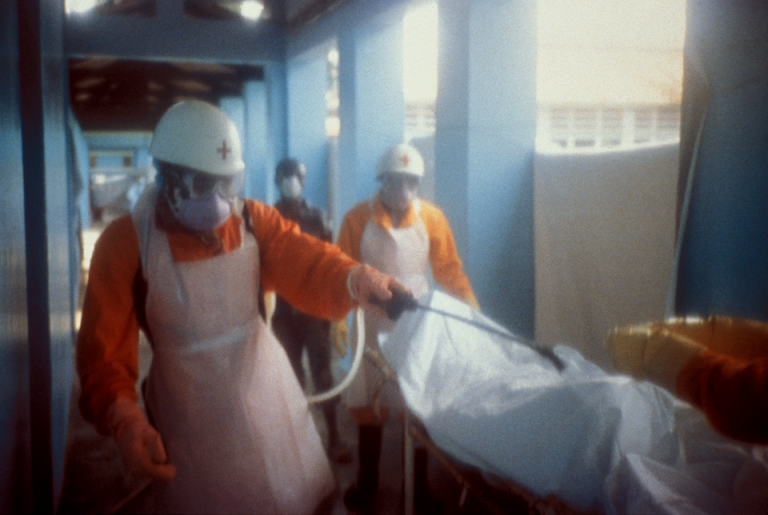
Congo, Uganda Declared Global Emergency Ebola Outbreak

0

Quick Summary: Congo, Uganda Declared Global Emergency Ebola Outbreak

  • WHO declared the Ebola outbreak in Congo and Uganda a global emergency after cases surged past 300 with 88 deaths.
  • The Bundibugyo strain, lacking approved vaccines or treatments, makes this outbreak particularly concerning.
  • Community spread is active, with reports of constant burials in affected areas of eastern Congo.
  • WHO’s emergency declaration aims for international coordination but stops short of a pandemic classification.
  • Authorities are racing to contain the virus amid cross-border transmission and urban travel links.

The World Health Organization has sounded the alarm, declaring the Ebola outbreak in the Democratic Republic of the Congo and Uganda a global emergency. This decision comes as the number of suspected cases has skyrocketed past 300, with 88 tragic deaths reported. The Bundibugyo strain at the heart of this crisis is particularly alarming due to the absence of approved vaccines or treatments, setting the stage for a potentially devastating epidemic.

Reports from the ground paint a grim picture, with constant burials in eastern Congo highlighting the active community spread. The WHO’s declaration of a ‘public health emergency of international concern’ underscores the urgency, even as it stops short of labeling the situation a pandemic. This distinction reflects both the seriousness and the current limitations of the response.

Authorities face a race against time to contain this fast-moving outbreak. The combination of cross-border transmission and urban travel corridors complicates efforts, demanding swift and coordinated international action. The immediate focus is on intensified contact tracing, surveillance, and infection-control measures to prevent further spread.

The speed of the WHO’s response signals the gravity of the situation. Just days after the outbreak was publicly announced, the global emergency declaration was made, emphasizing the need for a robust international response. This swift action is crucial to unlocking broader support and preparedness efforts across affected and neighboring regions.

As the world watches, the decisions made in the coming weeks will set the trajectory for months ahead. The ripple effects of this crisis will likely extend beyond the immediate actors, highlighting the interconnected nature of global health challenges.

The most important new development is that the World Health Organization on Sunday, May 17, 2026 formally declared the Ebola outbreak in the Democratic Republic of the Congo and Uganda a global public health emergency, saying the crisis now involves more than 300 suspected cases and 88 deaths and warning that the rare Bundibugyo strain has no approved vaccine or treatment. ” By Sunday, May 17, AP reported the combined toll had climbed past 300 suspected cases and 88 deaths, a sharp escalation that appears to have driven WHO’s decision to trigger its highest international alert for outbreaks.

AP said officials first announced the latest Congo outbreak on Friday, May 15, and WHO elevated it to a global emergency by Sunday, May 17. ” Africa CDC, meanwhile, has pushed the warning that community spread is active, while AP’s reporting from eastern Congo described residents reporting constant burials in affected areas, a grim signal that official surveillance may still be trailing the true scale of deaths.

What makes this outbreak especially alarming is not just the death toll but the strain involved: WHO said the epidemic is caused by Bundibugyo virus, and unlike the more familiar Ebola-Zaire strain, there are currently no approved Bundibugyo-specific therapeutics or vaccines. Bloomberg reported the agency’s concern that the virus may already be spreading more widely than detected, while WHO’s own emergency declaration explicitly said the event is a “public health emergency of international concern” but “does not meet the criteria of pandemic emergency,” a distinction that underscores both the seriousness and the limits of the current declaration.

AP reported on Friday, May 15, that Congo had recorded 65 deaths and 246 suspected cases in Ituri province, and that Uganda had confirmed one imported fatal case tied to Congo. STAT reported that as of Saturday there were eight confirmed cases, 246 suspected cases, and 80 suspected deaths in DRC’s remote Ituri province, with travel-related cases also identified in Kinshasa and Kampala.

The same report said at least four health care workers had died of suspected infections, a sign of infection-control failures inside medical settings, which is often a dangerous accelerant in Ebola outbreaks. The main institutions driving events are WHO, Congo’s health authorities, Uganda’s health ministry, and Africa CDC.

” By Sunday, May 17, AP reported the combined toll had climbed past 300 suspected cases and 88 deaths, a sharp escalation that appears to have driven WHO’s decision to trigger its highest international alert for outbreaks. ” Africa CDC, meanwhile, has pushed the warning that community spread is active, while AP’s reporting from eastern Congo described residents reporting constant burials in affected areas, a grim signal that official surveillance may still be trailing the true scale of deaths.

Bloomberg reported the agency’s concern that the virus may already be spreading more widely than detected, while WHO’s own emergency declaration explicitly said the event is a “public health emergency of international concern” but “does not meet the criteria of pandemic emergency,” a distinction that underscores both the seriousness and the limits of the current declaration. AP reported on Friday, May 15, that Congo had recorded 65 deaths and 246 suspected cases in Ituri province, and that Uganda had confirmed one imported fatal case tied to Congo.

The Bundibugyo strain, lacking approved vaccines or treatments, makes this outbreak particularly concerning. WHO’s emergency declaration aims for international coordination but stops short of a pandemic classification.

The WHO’s declaration of a ‘public health emergency of international concern’ underscores the urgency, even as it stops short of labeling the situation a pandemic. Just days after the outbreak was publicly announced, the global emergency declaration was made, emphasizing the need for a robust international response.

The scale and speed of this development has caught many observers off guard. Each new update adds another dimension to a story that is still unfolding, and the full picture will only become clear as more verified details emerge from the people and institutions directly involved.

Analysts who have tracked this issue closely say the current moment represents a genuine turning point. The decisions made in the coming weeks are expected to set the direction for months ahead, with ripple effects likely to extend well beyond the immediate actors in the story.

For those directly affected, the practical impact is already visible. People navigating this fast-changing situation are dealing with real consequences while new information continues to reshape what is known and what remains open to interpretation.

Historical parallels offer some context, though experts caution against drawing too close a comparison. Similar situations have played out before, but the specific combination of pressures, personalities, and timing here makes this moment distinct in ways that matter for how it ultimately resolves.

The political and economic dimensions of this story are deeply intertwined. What appears as a single event on the surface is in practice the convergence of multiple pressures that have been building quietly over a longer period than most public reporting has captured.

Read more on Digital Chew