

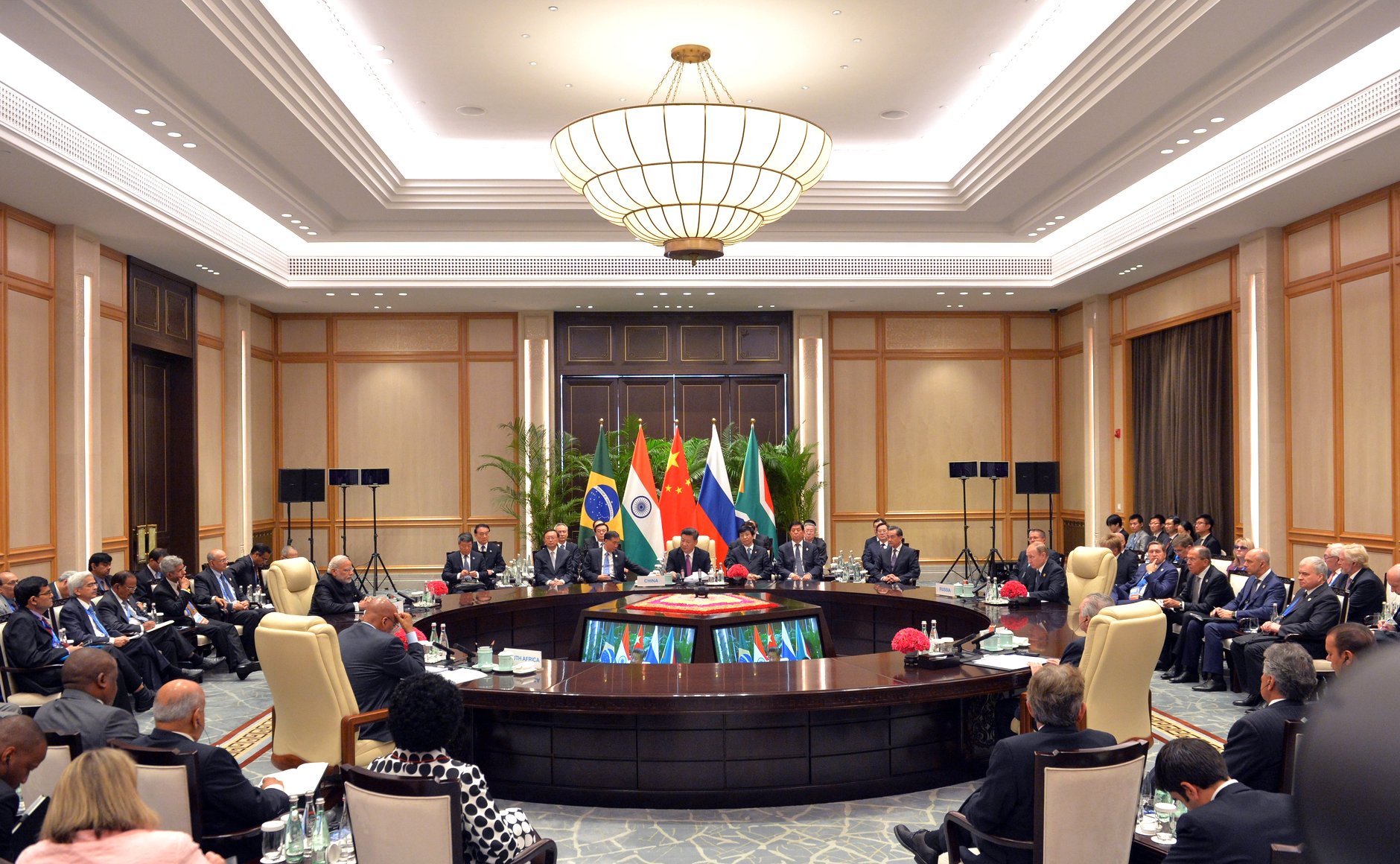

Quick Summary: BRICS Expansion Raises Questions for Mauritius Amid Trade Deficit
- On September 11, 2026, Defimedia highlighted Mauritius’s economic stakes as BRICS leaders convened in New Delhi.
- BRICS, post-2024–25 expansion, represents nearly half the global population and 40% of GDP, focusing on currency and payment systems.
- The September 12–13 summit emphasized commerce, investment, and finance, leaving Mauritius’s benefits uncertain.
- Key players include BRICS, the New Development Bank, the Mauritian government, and Indian summit hosts.
- Mauritius faces a Rs 113.1 billion trade deficit, driving interest in BRICS but lacking guaranteed financial support.
Source: Open external resource
Source: Read original article
As BRICS marks its 20th anniversary, Mauritius finds itself at a crossroads, drawn toward the bloc not by shared ideology but by pressing economic needs. Defimedia’s latest coverage reveals how Mauritius’s growing trade deficit, now at Rs 113.1 billion, makes BRICS an attractive prospect, even as the promise of financial support remains elusive.
The New Delhi summit, held on September 12–13, underscores the strategic importance of BRICS, which now accounts for nearly half the world’s population and 40% of global GDP. Yet, the focus on currency settlements and digital payment systems leaves Mauritius questioning its potential gains as a non-member.
While Mauritius eyes BRICS for economic relief, the reality is complex. The New Development Bank, often seen as BRICS’s financial arm, operates independently, and Mauritius lacks direct membership. This highlights a significant tension: the allure of BRICS as a counterweight to Western institutions versus the legal and financial hurdles Mauritius faces.
In the backdrop of global conflicts and economic instability, the New Delhi summit is a pivotal moment for BRICS to prove its cohesion. For Mauritius, the challenge is to navigate this evolving landscape, weighing the potential of BRICS against traditional alliances. The coming days will reveal if this new equation can offer tangible benefits or remains an ambitious aspiration.
On September 11, 2026, Defimedia published its explainer on the stakes for Mauritius; on September 12 and 13, BRICS leaders are meeting in New Delhi for the 18th summit. Outside analysis published this week describes BRICS, after its 2024–25 expansion, as accounting for nearly half the world’s population and roughly 40% of global GDP in purchasing-power-parity terms, with the upcoming agenda focused on national-currency settlements, digital-payment interoperability, and alternative cross-border payment systems rather than a single replacement currency.
1 billion trade deficit or to broader external vulnerability. What they have specifically done, according to the latest report, is convene the September 12–13 summit around cooperation on commerce, investment, and finance while leaving unresolved the harder question of how far non-members such as Mauritius can benefit.
The principal organizations in play are BRICS itself, the New Development Bank, the Mauritian government and trade institutions, Statistics Mauritius, and Indian summit hosts in New Delhi. The article undercuts any easy narrative by saying access to NDB financing is not automatic and by emphasizing that the bloc’s own geopolitical agenda is crowded with wars, energy instability, and divergent member interests.
The clearest new development in the latest available reporting is that Mauritius is being pulled toward the BRICS orbit less by ideology than by economic stress: Defimedia’s newest BRICS coverage says the country’s widening trade gap, financing needs, and search for alternative markets are making the bloc newly relevant, even as access to BRICS-linked funding remains far from guaranteed. The reporting also makes clear that this is not just about symbolism surrounding the bloc’s 20th year.
The same report stresses that BRICS discussions this week are centered on trade, investment, financial mechanisms, and geopolitical coordination rather than any immediate rescue package for outsiders. The most important caution, and arguably the real revelation in the reporting, is that Mauritius cannot simply assume that BRICS proximity means automatic money.
1 billion trade deficit, driving interest in BRICS but lacking guaranteed financial support. 1 billion, makes BRICS an attractive prospect, even as the promise of financial support remains elusive.
The New Delhi summit, held on September 12–13, underscores the strategic importance of BRICS, which now accounts for nearly half the world’s population and 40% of global GDP. On September 11, 2026, Defimedia published its explainer on the stakes for Mauritius; on September 12 and 13, BRICS leaders are meeting in New Delhi for the 18th summit.
Outside analysis published this week describes BRICS, after its 2024–25 expansion, as accounting for nearly half the world’s population and roughly 40% of global GDP in purchasing-power-parity terms, with the upcoming agenda focused on national-currency settlements, digital-payment interoperability, and alternative cross-border payment systems rather than a single replacement currency. What they have specifically done, according to the latest report, is convene the September 12–13 summit around cooperation on commerce, investment, and finance while leaving unresolved the harder question of how far non-members such as Mauritius can benefit.
Key players include BRICS, the New Development Bank, the Mauritian government, and Indian summit hosts. This highlights a significant tension: the allure of BRICS as a counterweight to Western institutions versus the legal and financial hurdles Mauritius faces.
The scale and speed of this development has caught many observers off guard. Each new update adds another dimension to a story that is still unfolding, and the full picture will only become clear as more verified details emerge from the people and institutions directly involved.
Analysts who have tracked this issue closely say the current moment represents a genuine turning point. The decisions made in the coming weeks are expected to set the direction for months ahead, with ripple effects likely to extend well beyond the immediate actors in the story.
For those directly affected, the practical impact is already visible. People navigating this fast-changing situation are dealing with real consequences while new information continues to reshape what is known and what remains open to interpretation.
Historical parallels offer some context, though experts caution against drawing too close a comparison. Similar situations have played out before, but the specific combination of pressures, personalities, and timing here makes this moment distinct in ways that matter for how it ultimately resolves.
The political and economic dimensions of this story are deeply intertwined. What appears as a single event on the surface is in practice the convergence of multiple pressures that have been building quietly over a longer period than most public reporting has captured.