

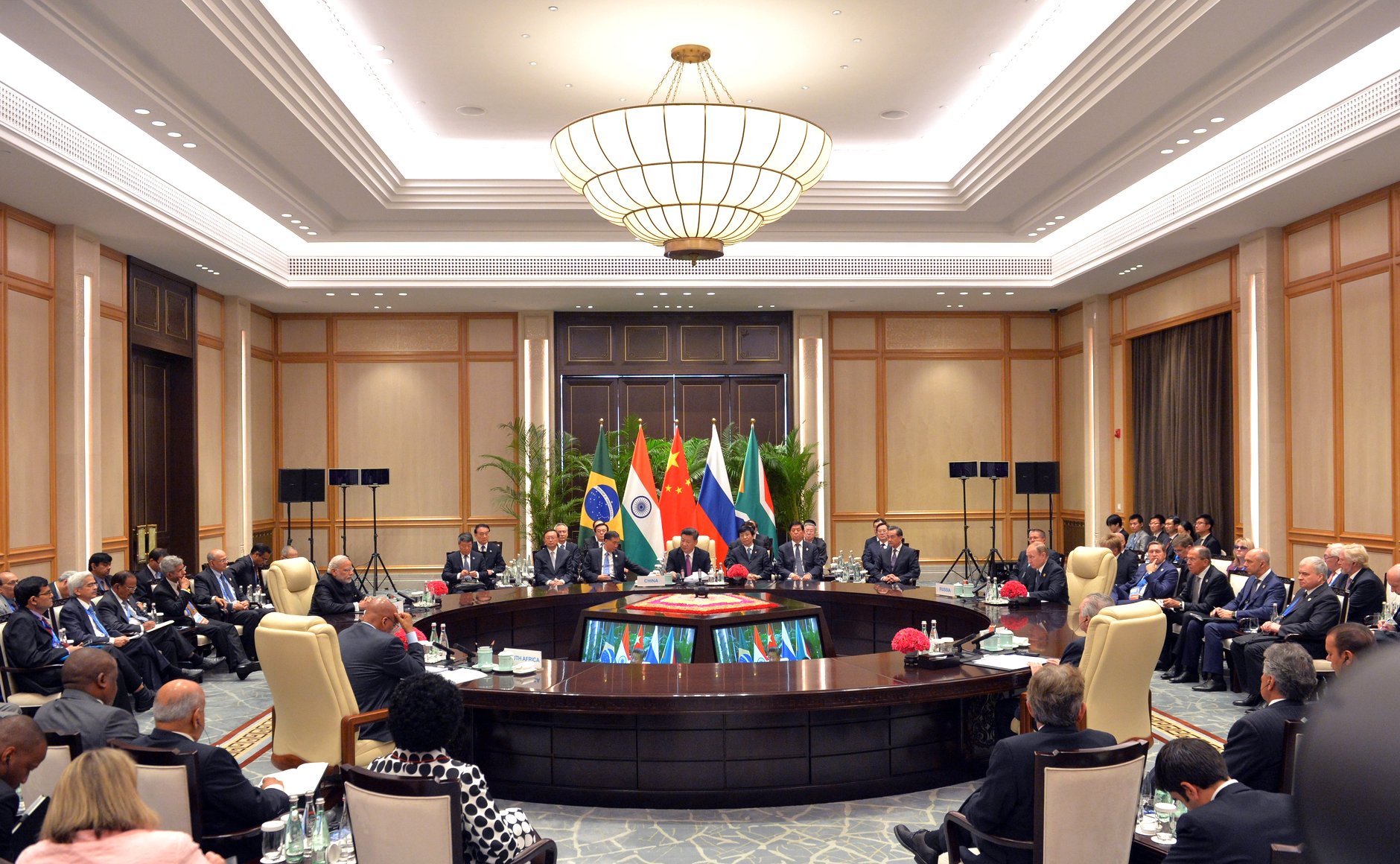

Quick Summary: Russia Becomes Major Player in Indias Petroleum Imports Amid BRICS Talks
- India advanced a BRICS Global Value Chains Action Plan for 2026-2030 — this aims to enhance supply-chain and investment cooperation.
- Trade ministers agreed to send the Strategy 2030 package to BRICS leaders — Piyush Goyal’s team sees this as moving from rhetoric to practical cooperation.
- India seeks to get leaders to sign off on the Economic Partnership 2030 framework — the goal is to avoid conflicts over currencies and influence.
- BRICS now has 11 members accounting for 29.1% of global GDP in 2025 — China represents 60.4% of the bloc’s GDP, raising concerns of dominance.
- India’s energy trade with Russia has surged — Russia now accounts for 40% of India’s petroleum imports, highlighting a shift driven by sanctions.
Source: Open external resource
Source: Read original article
As the BRICS 2026 summit looms, India finds itself at a crossroads. The challenge isn’t just about managing a larger bloc but about steering it towards concrete economic cooperation amid internal tensions. With the summit scheduled for September 12-13, 2026, in New Delhi, the stakes are high for India to transform BRICS into a cohesive economic force.
Under India’s chairship, a significant pre-summit trade package has been advanced, including the BRICS Economic Partnership Strategy 2030. This initiative aims to promote practical trade, supply-chain, and digital-commerce cooperation. The question is whether India can secure agreement on this framework without letting the summit devolve into disputes over currencies or geopolitical dominance, particularly China’s influence.
The expanded BRICS bloc now includes 11 members, contributing to 29.1% of global GDP by 2025. However, China’s substantial share of the bloc’s GDP poses a risk of dominance, a concern that India is keen to address. Meanwhile, India’s energy trade with Russia has surged, with Russia now accounting for 40% of India’s petroleum imports. This shift underscores the economic realignment driven by global sanctions, adding another layer of complexity to the summit’s agenda.
India’s opportunity lies in its ability to leverage the bloc’s increased economic weight while navigating its internal divisions. The upcoming summit will test India’s diplomatic acumen as it seeks to convert broad anti-status-quo sentiment into actionable economic outcomes. The outcome of this summit could redefine BRICS’ role in the global economic landscape, provided India can maintain a balance between collaboration and sovereignty.
According to official and recent media reporting, India’s chairship has advanced a BRICS Global Value Chains Action Plan for 2026-2030, a possible strategic supply-chain and investment-promotion platform including pharmaceuticals and food security, and principles to facilitate digitally delivered services across borders. India’s Commerce Ministry said on August 7 that trade ministers agreed to send the Strategy 2030 package to BRICS leaders for endorsement, with Piyush Goyal’s team framing it as a way to move the bloc from rhetoric toward practical trade, services, supply-chain and digital-commerce cooperation.
India Today reported on September 2 that combined BRICS output at purchasing-power parity stands at $88 trillion versus the G7’s $62 trillion, but said the more immediate shift is in India’s energy trade, where Russia now earns “two in every five dollars” India spends on petroleum. The summit’s real measure of success will therefore be whether Narendra Modi’s government can get leaders to sign off on the Economic Partnership 2030 framework, payments and trade-finance workstreams, and supply-chain cooperation without letting the meeting collapse into a fight over currencies, Iran, or China’s outsized influence.
7 lakh crore on Russian crude and products in the year to March 2026, a striking sign that BRICS economics are increasingly being driven by sanctions-era energy realignment, not just summit declarations. India’s biggest immediate test before the September 12-13, 2026 BRICS summit in New Delhi is not whether the bloc is large enough, but whether it can agree on concrete economic measures despite widening internal splits over trade, currencies, oil, and the West Asia war.
On September 9, multiple reports said the business forum would meet a day before the summit while finance ministers and central bank governors were gathering on September 9-10. Delhi authorities have already warned that traffic disruptions would begin from September 10 and continue through September 14 as security ramps up around Bharat Mandapam.
On September 8, reporting indicated final preparations were under way in New Delhi for the leaders’ summit. Also on September 9, new analyses emphasized that the summit agenda will center on food and energy security, health, disaster resilience and critical supply chains.
The summit’s real measure of success will therefore be whether Narendra Modi’s government can get leaders to sign off on the Economic Partnership 2030 framework, payments and trade-finance workstreams, and supply-chain cooperation without letting the meeting collapse into a fight over currencies, Iran, or China’s outsized influence. Quick Summary: BRICS 2026: Can India Turn a Bigger Bloc Into Economic Power?
– TICE News India advanced a BRICS Global Value Chains Action Plan for 2026-2030 — this aims to enhance supply-chain and investment cooperation. India’s energy trade with Russia has surged — Russia now accounts for 40% of India’s petroleum imports, highlighting a shift driven by sanctions.
With the summit scheduled for September 12-13, 2026, in New Delhi, the stakes are high for India to transform BRICS into a cohesive economic force. Under India’s chairship, a significant pre-summit trade package has been advanced, including the BRICS Economic Partnership Strategy 2030.
Meanwhile, India’s energy trade with Russia has surged, with Russia now accounting for 40% of India’s petroleum imports. 4% of the bloc’s GDP, raising concerns of dominance.
The scale and speed of this development has caught many observers off guard. Each new update adds another dimension to a story that is still unfolding, and the full picture will only become clear as more verified details emerge from the people and institutions directly involved.
Analysts who have tracked this issue closely say the current moment represents a genuine turning point. The decisions made in the coming weeks are expected to set the direction for months ahead, with ripple effects likely to extend well beyond the immediate actors in the story.
For those directly affected, the practical impact is already visible. People navigating this fast-changing situation are dealing with real consequences while new information continues to reshape what is known and what remains open to interpretation.
Historical parallels offer some context, though experts caution against drawing too close a comparison. Similar situations have played out before, but the specific combination of pressures, personalities, and timing here makes this moment distinct in ways that matter for how it ultimately resolves.
The political and economic dimensions of this story are deeply intertwined. What appears as a single event on the surface is in practice the convergence of multiple pressures that have been building quietly over a longer period than most public reporting has captured.