



Quick Summary: Eggs and Fruit Thrown at EU Leaders Convoy as Bulgaria Debates NATO Ties
- Protesters in Varna pelted Ursula von der Leyen’s motorcade with eggs and fruit — signaling a direct confrontation with EU leadership.
- The protest was organized by Bulgaria’s nationalist Vazrazhdane party — demanding Bulgaria avoid deeper military entanglement with NATO.
- Von der Leyen’s visit aimed to announce a stronger EU security stance in the Black Sea — a move met with fierce local opposition.
- Bulgarian Prime Minister Rumen Radev had to leave von der Leyen to address a deadly motorway accident — adding complexity to the day’s events.
- The protest highlights a growing anti-EU and anti-NATO sentiment — raising questions about Bulgaria’s future alignment.
Source: Open external resource
Source: Read original article
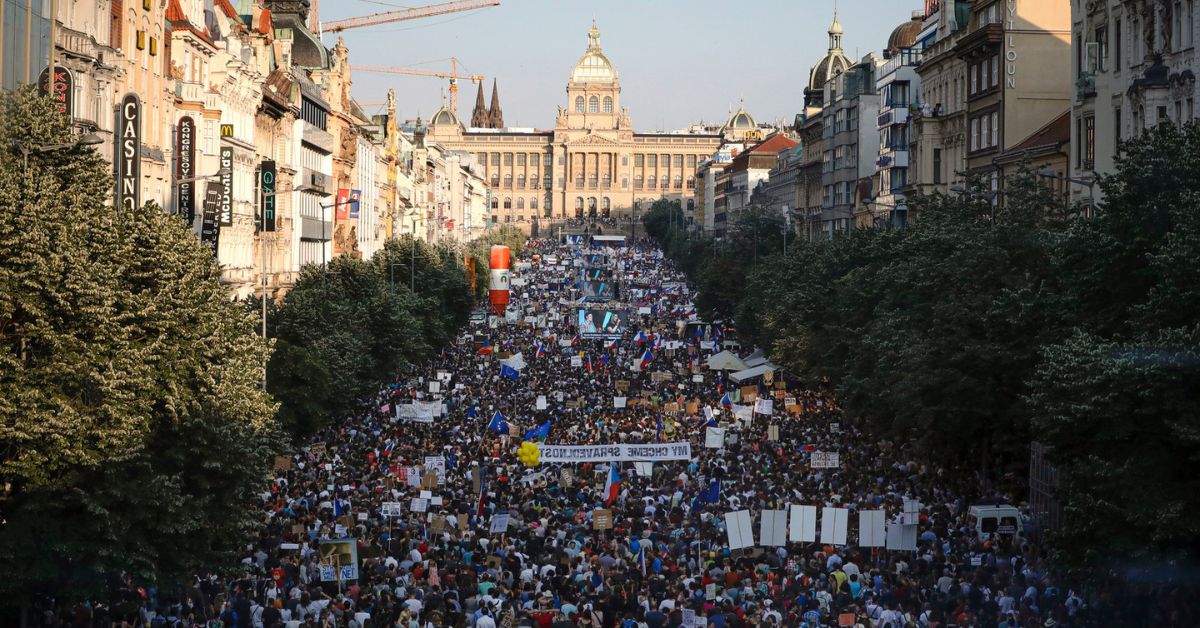
In a dramatic turn of events, Ursula von der Leyen’s visit to Bulgaria was met with unexpected hostility. As her motorcade passed through Varna, it was bombarded with eggs and fruit, a clear message from protesters who demanded that the EU chief leave the country immediately.
The protest was spearheaded by the nationalist Vazrazhdane party, which vehemently opposes Bulgaria’s deeper military alignment with NATO. Their slogan, “Varna wants peace, not war!”, echoed through the streets, reflecting a significant portion of the Bulgarian public’s sentiment.
Von der Leyen’s visit was intended to solidify the EU’s security posture in the Black Sea, a region increasingly pivotal due to the Ukraine conflict. However, the fierce opposition she encountered underscores the complexities of regional politics and the growing skepticism towards EU and NATO policies in Bulgaria.
Adding to the day’s turmoil, a tragic motorway accident in eastern Bulgaria claimed 12 lives, forcing Prime Minister Rumen Radev to leave von der Leyen’s side to address the crisis. This dual narrative of international and domestic challenges paints a picture of a nation at a crossroads.
The protest in Varna is more than just a local skirmish; it signals a potential shift in Bulgaria’s geopolitical stance. As the EU pushes for stronger regional security measures, the response from Bulgarian citizens and political factions will be crucial in shaping the country’s future course.
” The same report said objects were thrown at the convoy carrying von der Leyen and Prime Minister Rumen Radev, a sign that this was not just noisy street theater but a direct confrontation with one of the EU’s top officials. On the same day, a dense-fog motorway disaster in eastern Bulgaria killed at least 12 people, injured 46 more, and involved 86 vehicles, according to the Associated Press.
The names that matter most right now are Ursula von der Leyen, who chose to answer the hostility with a pro-security message; Rumen Radev, the Bulgarian prime minister who hosted her before abruptly leaving for the motorway crash; and Vazrazhdane, the nationalist party whose supporters turned the visit into a made-for-television revolt. ” The immediate political driver is the claim, pushed by Vazrazhdane and allied activists, that Brussels is pulling Bulgaria deeper into the Ukraine war through military and strategic coordination in the Black Sea.
AP reported that Rumen Radev had to leave von der Leyen and head to the crash scene, forcing a change in her schedule. On one side is von der Leyen and the EU mainstream arguing that Black Sea security, maritime surveillance and freedom of navigation require a more assertive European role as fallout from the Ukraine war reaches NATO coastlines.
On the other is Vazrazhdane, a Eurosceptic and explicitly anti-war force in Bulgarian politics, which is framing any deeper alignment with Brussels and NATO as a step toward entanglement in war. Bulgarian media described the protest as organized by or centered around Vazrazhdane supporters, and local reports said the main message was that Bulgaria wants “peace, not war,” not a more militarized Black Sea policy.
The Times of India video headline sharpened that imagery into “Jail Ursula, NATO Go Home,” but the most verifiable reporting from Bulgarian outlets points above all to anti-war chants, demands that she leave, and the throwing of projectiles at the convoy. Von der Leyen was slated to move from Varna to the COP31 climate summit in Antalya on November 11, then to the European Political Community meeting in Dublin on November 12 and the informal European Council on November 13.
The protest highlights a growing anti-EU and anti-NATO sentiment — raising questions about Bulgaria’s future alignment. On the same day, a dense-fog motorway disaster in eastern Bulgaria killed at least 12 people, injured 46 more, and involved 86 vehicles, according to the Associated Press.
The protest was spearheaded by the nationalist Vazrazhdane party, which vehemently opposes Bulgaria’s deeper military alignment with NATO. However, the fierce opposition she encountered underscores the complexities of regional politics and the growing skepticism towards EU and NATO policies in Bulgaria.
” The immediate political driver is the claim, pushed by Vazrazhdane and allied activists, that Brussels is pulling Bulgaria deeper into the Ukraine war through military and strategic coordination in the Black Sea. On the other is Vazrazhdane, a Eurosceptic and explicitly anti-war force in Bulgarian politics, which is framing any deeper alignment with Brussels and NATO as a step toward entanglement in war.
The scale and speed of this development has caught many observers off guard. Each new update adds another dimension to a story that is still unfolding, and the full picture will only become clear as more verified details emerge from the people and institutions directly involved.
Analysts who have tracked this issue closely say the current moment represents a genuine turning point. The decisions made in the coming weeks are expected to set the direction for months ahead, with ripple effects likely to extend well beyond the immediate actors in the story.
For those directly affected, the practical impact is already visible. People navigating this fast-changing situation are dealing with real consequences while new information continues to reshape what is known and what remains open to interpretation.
Historical parallels offer some context, though experts caution against drawing too close a comparison. Similar situations have played out before, but the specific combination of pressures, personalities, and timing here makes this moment distinct in ways that matter for how it ultimately resolves.
The political and economic dimensions of this story are deeply intertwined. What appears as a single event on the surface is in practice the convergence of multiple pressures that have been building quietly over a longer period than most public reporting has captured.