

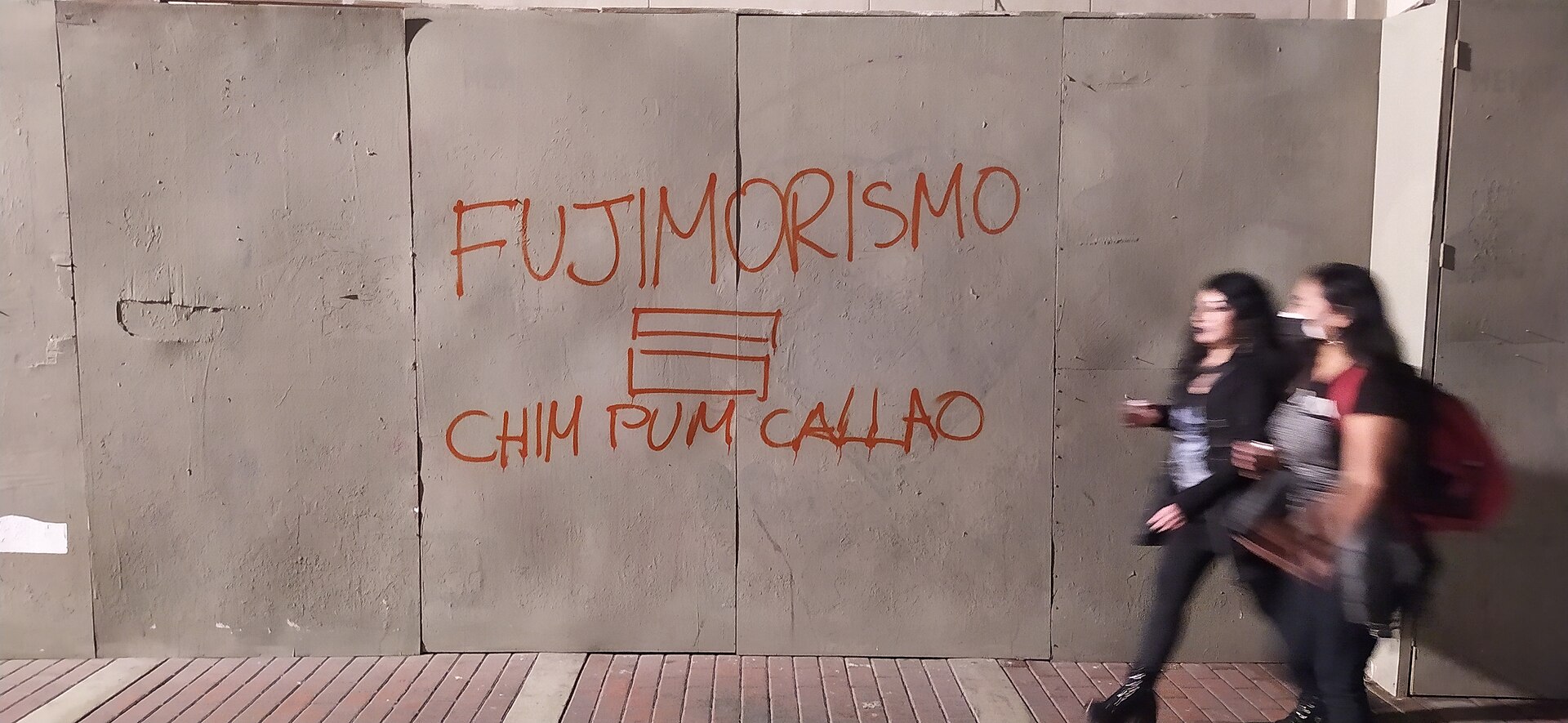

Quick Summary: Perus Electoral Authority to Proclaim Fujimori as President Amid Fraud Allegations
- Keiko Fujimori declared herself president-elect with a final count showing 50.135% of the vote — her rival refuses to accept the result.
- Peru’s electoral authority completed a 22-day count, revealing a margin of roughly 49,600 votes — a contentious outcome in a politically divided nation.
- Roberto Sánchez, Fujimori’s opponent, alleges fraud and plans to challenge the official proclamation — despite election monitors finding no evidence of widespread fraud.
- The National Jury of Elections is set to formally proclaim Fujimori on July 3 — political tensions remain high as protests are anticipated.
- Fujimori’s win is framed as a move to preserve her father’s 1993 Constitution — critics fear an authoritarian shift.
Source: Open external resource
Source: Read original article
Keiko Fujimori has thrust Peru into a political tempest by declaring herself the president-elect after a razor-thin victory. With the electoral authority finalizing the count at 50.135%, Fujimori stands ahead by a mere 49,600 votes. Yet, her rival, Roberto Sánchez, refuses to concede, alleging fraud and vowing to appeal, despite no substantial evidence supporting such claims.
The election, one of Peru’s most contentious, has left the nation on edge. The National Jury of Elections plans to officially proclaim Fujimori’s win on July 3, but the political climate remains fraught. Sánchez’s refusal to accept the results has fueled protests, and the legitimacy of the election process is under scrutiny.
Fujimori’s victory is not just a political milestone but a potential pivot towards preserving her father’s controversial 1993 Constitution. Critics argue this could signal a slide into authoritarianism, a claim bolstered by international concerns, including alleged U.S. pressures for a ‘clean’ election.
As the July 15 credentialing and the July 28 inauguration loom, Peru stands at a crossroads. The coming weeks will test whether the political resistance remains rhetorical or erupts into sustained unrest. Fujimori’s narrow win, while numerically secure, faces a legitimacy battle that could redefine Peru’s political landscape.
Its most forceful claim is that “the purpose of a Keiko Fujimori government can be defined in a single sentence: to preserve her father’s 1993 Constitution … Reuters-based reporting carried by Al Jazeera said Sánchez “will not recognise” a Fujimori victory, alleges fraud and irregularities, and plans to appeal the official proclamation, even as election monitors said there was no evidence of widespread fraud.
On July 15, according to JNE president Roberto Burneo, the winning presidential ticket is due to receive formal credentials. 135% and the country bracing for a formal July 3 proclamation that her rival still says he will not accept.
865%, a margin of roughly 49,600 votes after one of the country’s most contentious recent counts. One Reuters-based account noted that only 11% of the electorate backed her in the first round, underscoring how shallow her initial support was before the polarized runoff.
El Comercio reported that the tally covered 92,766 actas from Peru and abroad, while ANSA described the result as the end of a “tesissimo testa a testa” after 22 days of counting. On June 30, multiple outlets reported that Fujimori’s lead was effectively unbeatable and that she was awaiting final certification.
And on July 28, Peru’s Independence Day, the president-elect is expected to be sworn in for a five-year term. After the count ended, she wrote, “We are getting closer and closer to embarking on a path of order and hope for all Peruvians,” and Reuters reporting said she would wait with “humility and prudence” for the formal declaration.
On July 15, according to JNE president Roberto Burneo, the winning presidential ticket is due to receive formal credentials. Fujimori’s win is framed as a move to preserve her father’s 1993 Constitution — critics fear an authoritarian shift.
Fujimori’s victory is not just a political milestone but a potential pivot towards preserving her father’s controversial 1993 Constitution. 135% and the country bracing for a formal July 3 proclamation that her rival still says he will not accept.
135% of the vote — her rival refuses to accept the result. Roberto Sánchez, Fujimori’s opponent, alleges fraud and plans to challenge the official proclamation — despite election monitors finding no evidence of widespread fraud.
The scale and speed of this development has caught many observers off guard. Each new update adds another dimension to a story that is still unfolding, and the full picture will only become clear as more verified details emerge from the people and institutions directly involved.
Analysts who have tracked this issue closely say the current moment represents a genuine turning point. The decisions made in the coming weeks are expected to set the direction for months ahead, with ripple effects likely to extend well beyond the immediate actors in the story.
For those directly affected, the practical impact is already visible. People navigating this fast-changing situation are dealing with real consequences while new information continues to reshape what is known and what remains open to interpretation.
Historical parallels offer some context, though experts caution against drawing too close a comparison. Similar situations have played out before, but the specific combination of pressures, personalities, and timing here makes this moment distinct in ways that matter for how it ultimately resolves.
The political and economic dimensions of this story are deeply intertwined. What appears as a single event on the surface is in practice the convergence of multiple pressures that have been building quietly over a longer period than most public reporting has captured.