


Quick Summary: Ugandas Gaza Mission Raises Concerns Within Islamic Cooperation
- Uganda’s parliament approved troop deployment to Gaza, marking a significant step in the international stabilization effort.
- The deployment could raise diplomatic concerns for Uganda within the Organization of Islamic Cooperation.
- Uganda’s decision is symbolically important but operationally incomplete due to a funding gap for Gaza reconstruction.
- Israel’s insistence on Hamas disarmament before withdrawal complicates the international force’s deployment.
- Morocco has also pledged troops, while Israel approved only a limited pilot project in Rafah.
Source: Open external resource
Source: Read original article
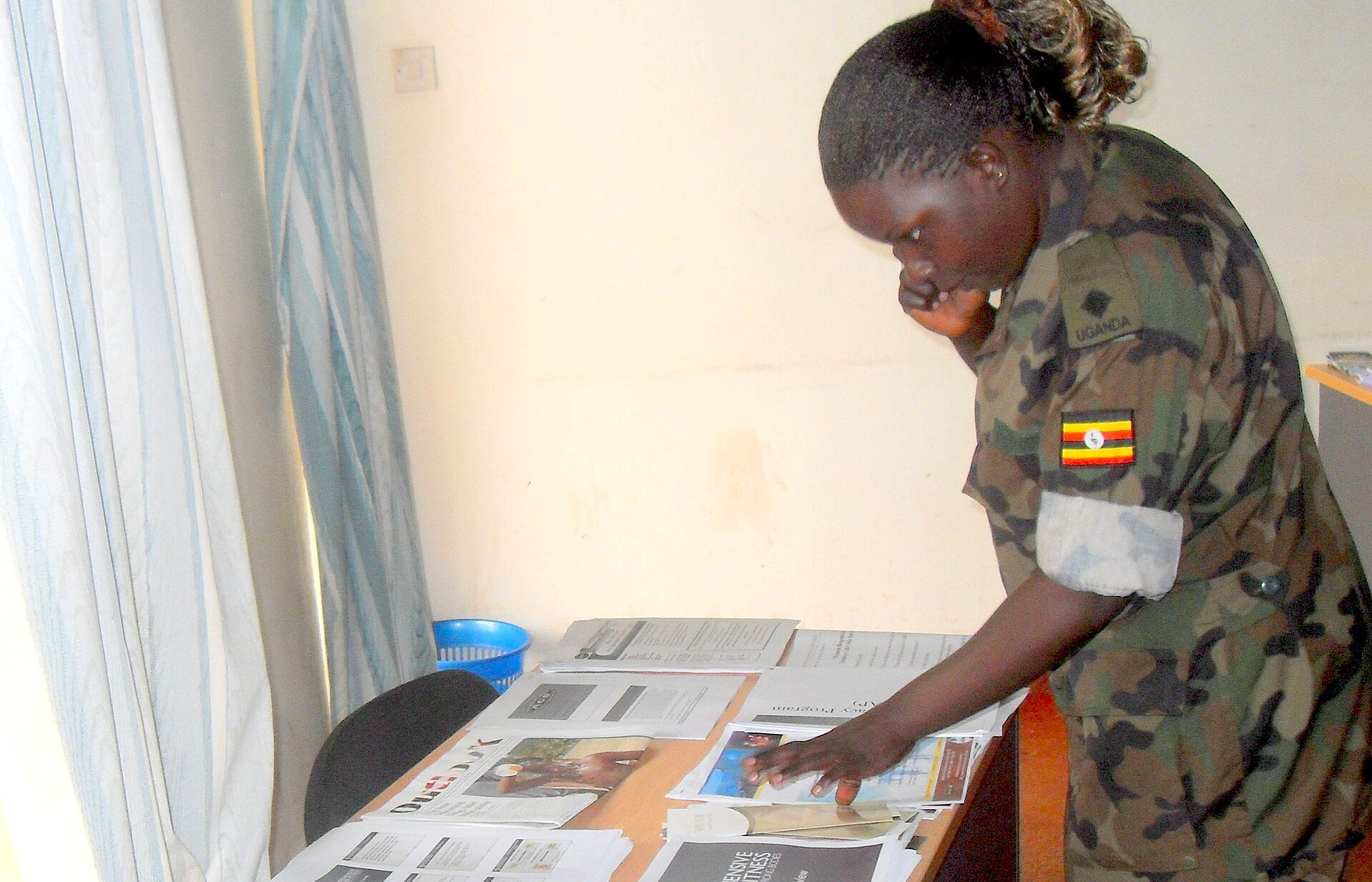
Uganda has taken a bold step by approving the deployment of its troops to Gaza, joining the U.S.-backed International Stabilization Force. This decision, formalized by Uganda’s parliament, places the country at the forefront of an ambitious yet contentious international effort to stabilize the region.
The move is not without its risks. Uganda’s participation could stir diplomatic tensions, particularly as a member of the Organization of Islamic Cooperation. The mission’s alignment with U.S. and Israeli interests may pose political challenges for President Yoweri Museveni’s government.
Despite the symbolic importance of Uganda’s commitment, the broader mission faces significant hurdles. A stark $63 billion gap exists between the estimated $70 billion needed for Gaza’s reconstruction and the $7 billion pledged so far. This financial shortfall raises questions about the mission’s viability and effectiveness.
Israel’s demand for Hamas to disarm before any withdrawal adds another layer of complexity. Prime Minister Benjamin Netanyahu’s firm stance on this issue could delay the international force’s deployment, undermining the mission’s intended sequence of events.
As Uganda steps forward, the world watches to see if other nations will follow suit and if the delicate balance of diplomacy and military presence can be maintained. The outcome of this effort will determine whether Uganda’s decision marks the beginning of a new era of peace or just another chapter in a protracted conflict.
” He warned the deployment could raise “diplomatic concerns” for Uganda as a member of the Organization of Islamic Cooperation, underscoring the domestic political risk for President Yoweri Museveni’s government if the mission is seen as aligning Uganda too closely with Israel or Washington. AP reported that Gaza reconstruction is estimated by the United Nations, World Bank and European Union at $70 billion, while the Board of Peace’s members pledged only $7 billion at their first meeting in February.
The key new development is that Uganda moved from quiet speculation to an actual parliamentary authorization on Thursday, August 6, 2026, with Defense Minister Kiryowa Kiwanuka winning approval to deploy troops as part of the force proposed by President Donald Trump’s Board of Peace. The board also has an unusual political structure: a $1 billion contribution reportedly secures permanent membership, while ordinary appointments last three years with no required contribution.
That gap between the $70 billion rebuilding bill and the $7 billion pledged so far is one reason analysts and officials are treating troop commitments like Uganda’s as symbolically important but operationally incomplete. Trump announced last week a deal under which Hamas would disarm and Israel would withdraw, but AP reported on August 2 that Israel had already communicated “serious security concerns” to the White House.
Hamas official Ghazi Hamad, meanwhile, called the arrangement a “full package” and said Hamas would not move unless Israel also honors its side. On Thursday, July 31, Trump announced the new disarmament-and-withdrawal deal.
On Thursday, August 6, Uganda’s parliament approved troop deployment, giving the force fresh momentum but also exposing how politically fraught the plan remains. At the same time, other reporting in late July indicated Israel had approved only a tightly limited pilot project of about 200 foreign personnel in Rafah, a dramatic reduction from earlier expectations and a sign that the mission may begin as a heavily constrained test rather than a full-scale stabilization operation.
A stark $63 billion gap exists between the estimated $70 billion needed for Gaza’s reconstruction and the $7 billion pledged so far. The board also has an unusual political structure: a $1 billion contribution reportedly secures permanent membership, while ordinary appointments last three years with no required contribution.
On Thursday, July 31, Trump announced the new disarmament-and-withdrawal deal. On Thursday, August 6, Uganda’s parliament approved troop deployment, giving the force fresh momentum but also exposing how politically fraught the plan remains.
At the same time, other reporting in late July indicated Israel had approved only a tightly limited pilot project of about 200 foreign personnel in Rafah, a dramatic reduction from earlier expectations and a sign that the mission may begin as a heavily constrained test rather than a full-scale stabilization operation. Morocco has also pledged troops, while Israel approved only a limited pilot project in Rafah.
The scale and speed of this development has caught many observers off guard. Each new update adds another dimension to a story that is still unfolding, and the full picture will only become clear as more verified details emerge from the people and institutions directly involved.
Analysts who have tracked this issue closely say the current moment represents a genuine turning point. The decisions made in the coming weeks are expected to set the direction for months ahead, with ripple effects likely to extend well beyond the immediate actors in the story.
For those directly affected, the practical impact is already visible. People navigating this fast-changing situation are dealing with real consequences while new information continues to reshape what is known and what remains open to interpretation.
Historical parallels offer some context, though experts caution against drawing too close a comparison. Similar situations have played out before, but the specific combination of pressures, personalities, and timing here makes this moment distinct in ways that matter for how it ultimately resolves.
The political and economic dimensions of this story are deeply intertwined. What appears as a single event on the surface is in practice the convergence of multiple pressures that have been building quietly over a longer period than most public reporting has captured.