

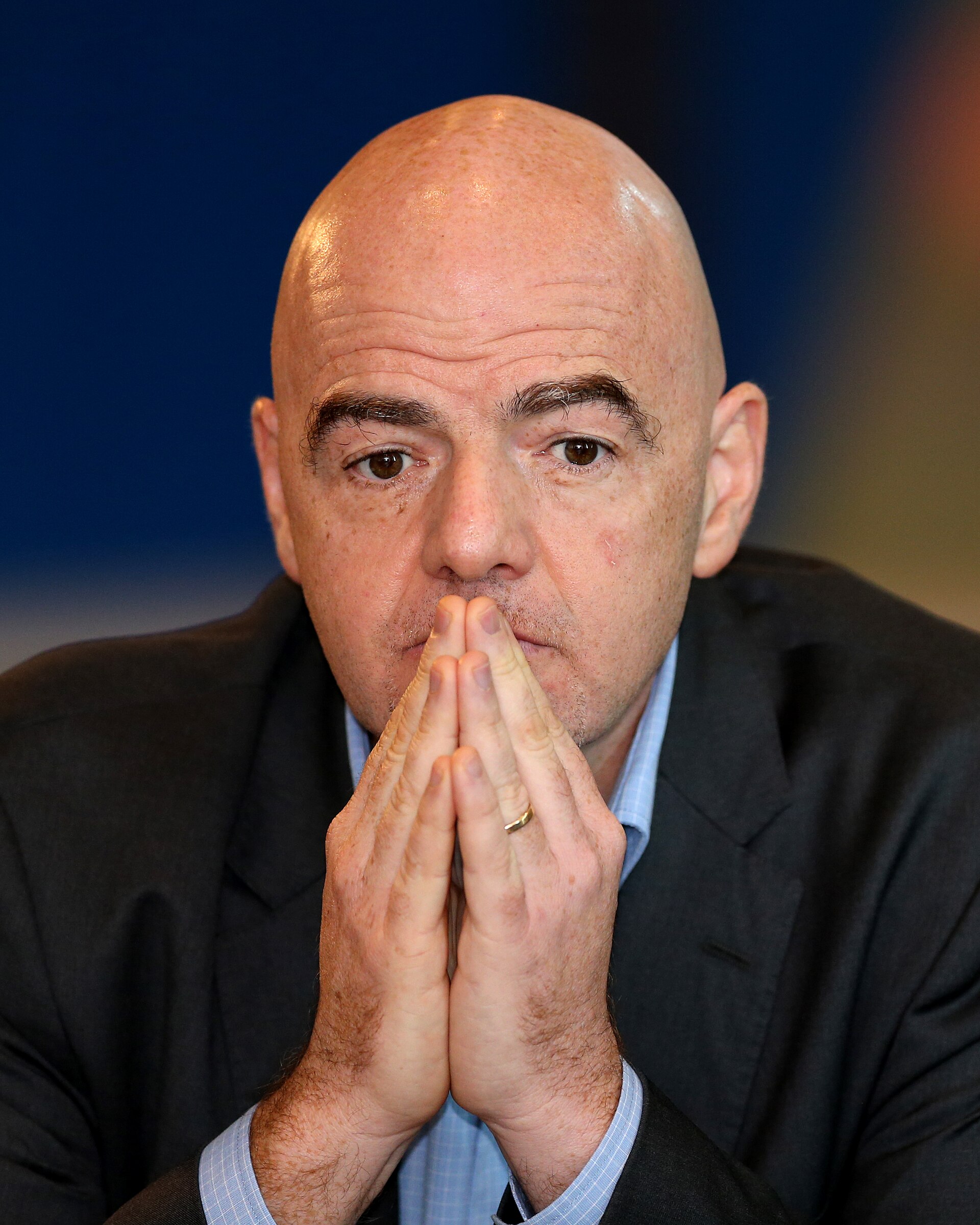

Quick Summary: Infantino Faces European Calls for Inquiry Amid FIFA Scandal
- Gianni Infantino faces pressure from European lawmakers — they urge an investigation into his role in the World Cup controversy.
- FIFA’s decision to suspend Folarin Balogun’s ban sparked backlash — it led to a political and sporting scandal.
- Donald Trump’s involvement added political dimensions — he called Infantino to discuss the Balogun red card.
- Infantino’s ties with Trump are under scrutiny — critics question FIFA’s political neutrality.
- Infantino retains support from key FIFA blocs — African, Asian, and South American associations back him.
Source: Open external resource
Source: Read original article
The FIFA World Cup controversy has erupted into a full-blown political scandal, with Gianni Infantino at its center. The decision to suspend U.S. striker Folarin Balogun’s automatic ban for a red card has not only angered many but also raised questions about FIFA’s integrity and political neutrality.
Infantino’s determination to seek re-election is now overshadowed by calls from European lawmakers for a formal investigation. They argue that the suspension decision, influenced by a call from Donald Trump, undermines FIFA’s commitment to fair play. Trump’s intervention, which he claims was a matter of fairness, has only fueled the fire, prompting scrutiny of Infantino’s relationship with the former U.S. president.
Despite the uproar, Infantino remains confident, backed by the Confederation of African Football, the Asian Football Confederation, and CONMEBOL. These blocs represent a significant portion of FIFA’s member associations, and their support is crucial for Infantino’s political survival. However, if the backlash extends beyond Europe, his position could become precarious.
Historically, FIFA has faced controversies, but this incident, involving political interference and a high-profile player, has brought unprecedented attention. The European Parliament’s push for an investigation could be a turning point, testing FIFA’s internal dynamics and Infantino’s leadership.
As the story unfolds, the question remains whether this scandal will escalate into a cross-confederation challenge, threatening Infantino’s presidency. The next presidential contest is looming, and Infantino’s future hangs in the balance as he navigates the political storm.
The Washington Post reported that the Balogun case appeared to be the first time since 1962 that punishment for a World Cup offense was suspended during the tournament, a statistic that explains why so many rivals saw this not as routine legal housekeeping but as a break with precedent. The Standard reported that Infantino has backing from the Confederation of African Football, the Asian Football Confederation and CONMEBOL, blocs representing 111 of FIFA’s 211 member associations.
Beyond that, the political clock matters: The Standard reports that Infantino is adamant about staying and wants to be re-elected, with the next presidential contest due next year and a further four-year term possible if he stands in 2027. The Standard reported that Balogun was then allowed to start in Monday night’s game, which the United States lost 4-1, turning what might have been a procedural dispute into a much bigger political and sporting embarrassment because the intervention did not even save the host nation’s tournament.
The most consequential new reporting came on July 7, when the Associated Press reported that dozens of European lawmakers were gathering support for an investigation in the European Parliament and urging EU national football associations to push the FIFA Ethics Committee to examine Infantino’s role. ” Trump separately confirmed he had asked for a review of the red card, saying he believed the dismissal was unfair while denying improper pressure.
striker Folarin Balogun out of the round-of-16 match against Belgium after his red card against Bosnia and Herzegovina on July 1. -Belgium match; instead, Belgium’s 4-1 win only made the episode look more damaging by stripping away any sporting justification for the exception.
So the real test is not whether he resigns this week, but whether this scandal grows from a European revolt into a cross-confederation challenge that threatens the coalition of 111 member associations still underpinning his rule. ” AP also tied the current anger to another recent controversy: Infantino’s decision to award Trump a “FIFA Peace Prize,” which critics say deepened the perception that the FIFA president is personally entangled with the White House.
– London Evening Standard Gianni Infantino faces pressure from European lawmakers — they urge an investigation into his role in the World Cup controversy. Beyond that, the political clock matters: The Standard reports that Infantino is adamant about staying and wants to be re-elected, with the next presidential contest due next year and a further four-year term possible if he stands in 2027.
striker Folarin Balogun’s automatic ban for a red card has not only angered many but also raised questions about FIFA’s integrity and political neutrality. Quick Summary: Will FIFA president Gianni Infantino be forced to resign after World Cup controversy?
Donald Trump’s involvement added political dimensions — he called Infantino to discuss the Balogun red card. Infantino’s ties with Trump are under scrutiny — critics question FIFA’s political neutrality.
The scale and speed of this development has caught many observers off guard. Each new update adds another dimension to a story that is still unfolding, and the full picture will only become clear as more verified details emerge from the people and institutions directly involved.
Analysts who have tracked this issue closely say the current moment represents a genuine turning point. The decisions made in the coming weeks are expected to set the direction for months ahead, with ripple effects likely to extend well beyond the immediate actors in the story.
For those directly affected, the practical impact is already visible. People navigating this fast-changing situation are dealing with real consequences while new information continues to reshape what is known and what remains open to interpretation.
Historical parallels offer some context, though experts caution against drawing too close a comparison. Similar situations have played out before, but the specific combination of pressures, personalities, and timing here makes this moment distinct in ways that matter for how it ultimately resolves.
The political and economic dimensions of this story are deeply intertwined. What appears as a single event on the surface is in practice the convergence of multiple pressures that have been building quietly over a longer period than most public reporting has captured.