

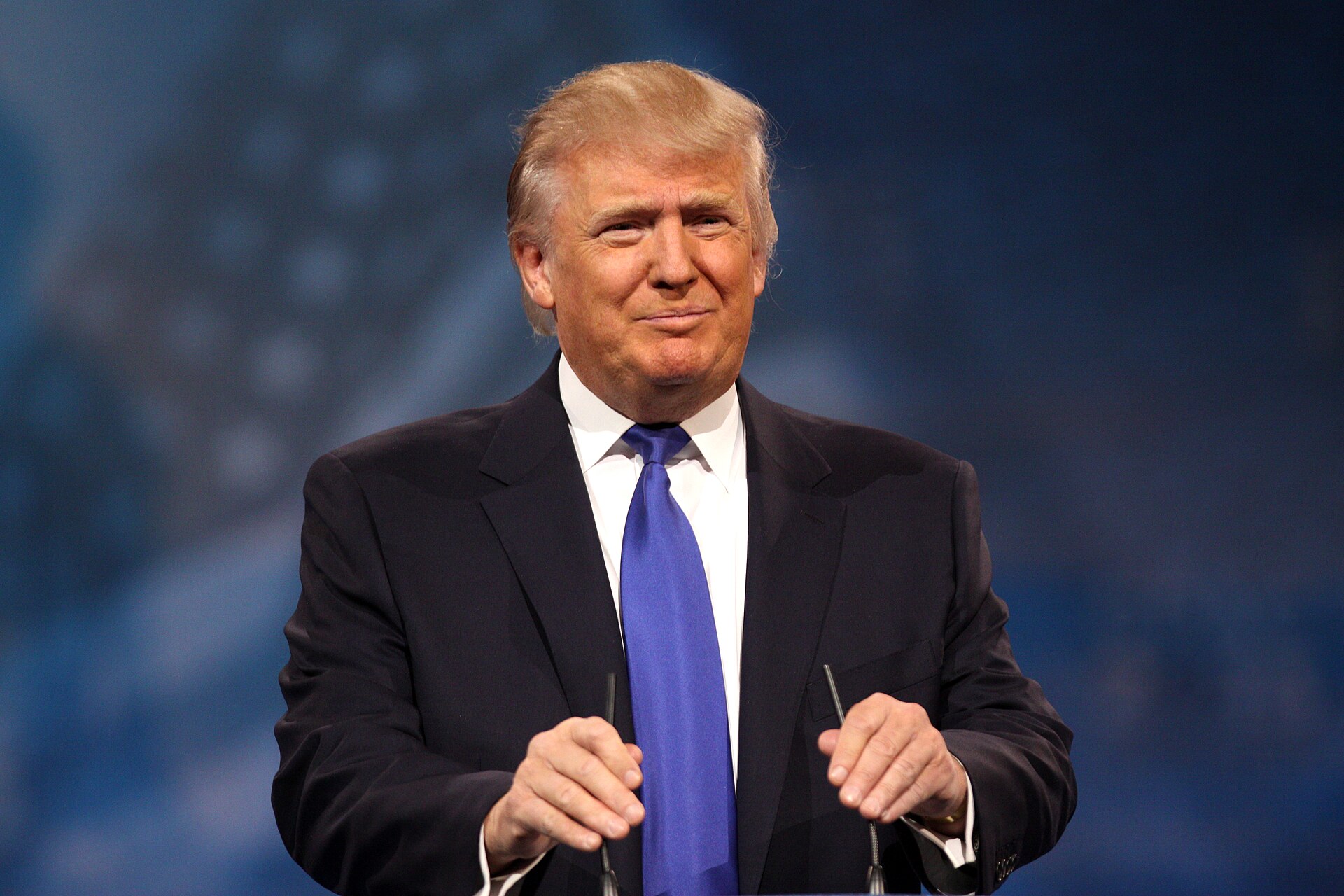

Quick Summary: Ethical Concerns Arise as Trump Attends Irish Open at His Resort
- Donald Trump arrived in Dublin on September 12 for a dual-purpose visit involving diplomacy and a golf tournament.
- The visit includes meetings with Irish President Catherine Connolly and Taoiseach Micheál Martin.
- Trump’s presence at the Irish Open, hosted at his own resort, raises concerns over mixing official duties with personal business interests.
- Approximately 70,000 attendees are expected at the tournament, highlighting its economic significance.
- Security for the visit is extensive, with significant resources allocated to manage the event.
Source: Open external resource
Source: Read original article
Donald Trump’s arrival in Ireland has transformed what could have been a straightforward visit into a contentious intersection of politics and personal business. The former president is not merely attending the Amgen Irish Open; he’s also slated for discussions with Irish leaders, raising eyebrows about the blending of state affairs with his private ventures.
The visit is a calculated mix of diplomacy and commerce, as Trump meets with Irish President Catherine Connolly and Taoiseach Micheál Martin before heading to his resort in Doonbeg for the Irish Open. The event, expected to draw 70,000 attendees, underscores the economic weight of the tournament, but it also throws into sharp relief the ethical questions surrounding Trump’s dual roles.
Critics argue that Trump’s visit is less about diplomacy and more about promoting his business interests. As Democratic critic Sarah Matthews pointedly remarked, Trump seems more invested in his family business than in addressing American economic concerns. This sentiment is echoed by the extensive security measures and protests planned, reflecting the contentious nature of his appearance.
Rory McIlroy’s comment that the tournament will proceed despite the political backdrop captures the tension. The Irish Open, a significant event on the DP World Tour, is now entangled in a broader narrative of political and ethical scrutiny. As Trump wraps up his visit, the focus will remain on whether this trip becomes a larger political issue, especially regarding public spending and security costs.
One of the more striking twists from the past 48 hours is that reporting emerged saying some Irish police officers were threatening not to report for Trump-visit duty because of work-arrangement disputes, adding a labor and operational wrinkle to an already politically charged visit. The strongest factual marker of why this story matters is scale: about 70,000 people were expected to attend the Irish Open from September 10 to 13 at Doonbeg, a village of just 784 residents, and roughly 305 people work at the Trump resort during peak season, according to earlier Irish reporting that framed the economic pull of the event.
By September 11 and 12, AP, AFP and others confirmed the trip was happening immediately, with Trump landing in Dublin on Saturday, September 12, and expected to leave on Sunday evening, September 13, or early the following day after the weekend at his resort. AFP said Trump landed “under tight security” for “two days of diplomacy and golf,” and AP noted the weekend is “more about a major golf tournament held on a course he owns” than a traditional state-style visit.
Irish reporting has already said protests were planned, and AP noted he will hold talks before heading west to the tournament site. Donald Trump’s arrival in Ireland on Saturday has turned what should have been a routine stop at the Amgen Irish Open into a fresh test of how openly a sitting president can mix public office with a private business event he owns.
AP reported Saturday that the visit is explicitly centered on both leader meetings and the tournament at his Atlantic coast resort, while AFP described the trip as again blurring the line between presidency and personal business interests. ” That quote captures the debate driving the coverage: whether this is diplomacy attached to golf, or official power attached to a Trump-branded asset.
Rory McIlroy said this week, “It’s going to be different with him being here but we’re here to play a golf tournament and it’s a good golf course so we’ll keep our heads down and play,” a remark that neatly reflects how the visit is distorting the sporting event around it. On September 7, Irish outlets were emphasizing that presidential talks were being wedged into what was fundamentally a golf-centered appearance and that major policing resources were being readied.
AFP said Trump landed “under tight security” for “two days of diplomacy and golf,” and AP noted the weekend is “more about a major golf tournament held on a course he owns” than a traditional state-style visit. Irish reporting has already said protests were planned, and AP noted he will hold talks before heading west to the tournament site.
Trump’s presence at the Irish Open, hosted at his own resort, raises concerns over mixing official duties with personal business interests. Approximately 70,000 attendees are expected at the tournament, highlighting its economic significance.
The event, expected to draw 70,000 attendees, underscores the economic weight of the tournament, but it also throws into sharp relief the ethical questions surrounding Trump’s dual roles. Donald Trump’s arrival in Ireland on Saturday has turned what should have been a routine stop at the Amgen Irish Open into a fresh test of how openly a sitting president can mix public office with a private business event he owns.
” That quote captures the debate driving the coverage: whether this is diplomacy attached to golf, or official power attached to a Trump-branded asset. Rory McIlroy said this week, “It’s going to be different with him being here but we’re here to play a golf tournament and it’s a good golf course so we’ll keep our heads down and play,” a remark that neatly reflects how the visit is distorting the sporting event around it.
The scale and speed of this development has caught many observers off guard. Each new update adds another dimension to a story that is still unfolding, and the full picture will only become clear as more verified details emerge from the people and institutions directly involved.
Analysts who have tracked this issue closely say the current moment represents a genuine turning point. The decisions made in the coming weeks are expected to set the direction for months ahead, with ripple effects likely to extend well beyond the immediate actors in the story.
For those directly affected, the practical impact is already visible. People navigating this fast-changing situation are dealing with real consequences while new information continues to reshape what is known and what remains open to interpretation.
Historical parallels offer some context, though experts caution against drawing too close a comparison. Similar situations have played out before, but the specific combination of pressures, personalities, and timing here makes this moment distinct in ways that matter for how it ultimately resolves.
The political and economic dimensions of this story are deeply intertwined. What appears as a single event on the surface is in practice the convergence of multiple pressures that have been building quietly over a longer period than most public reporting has captured.