

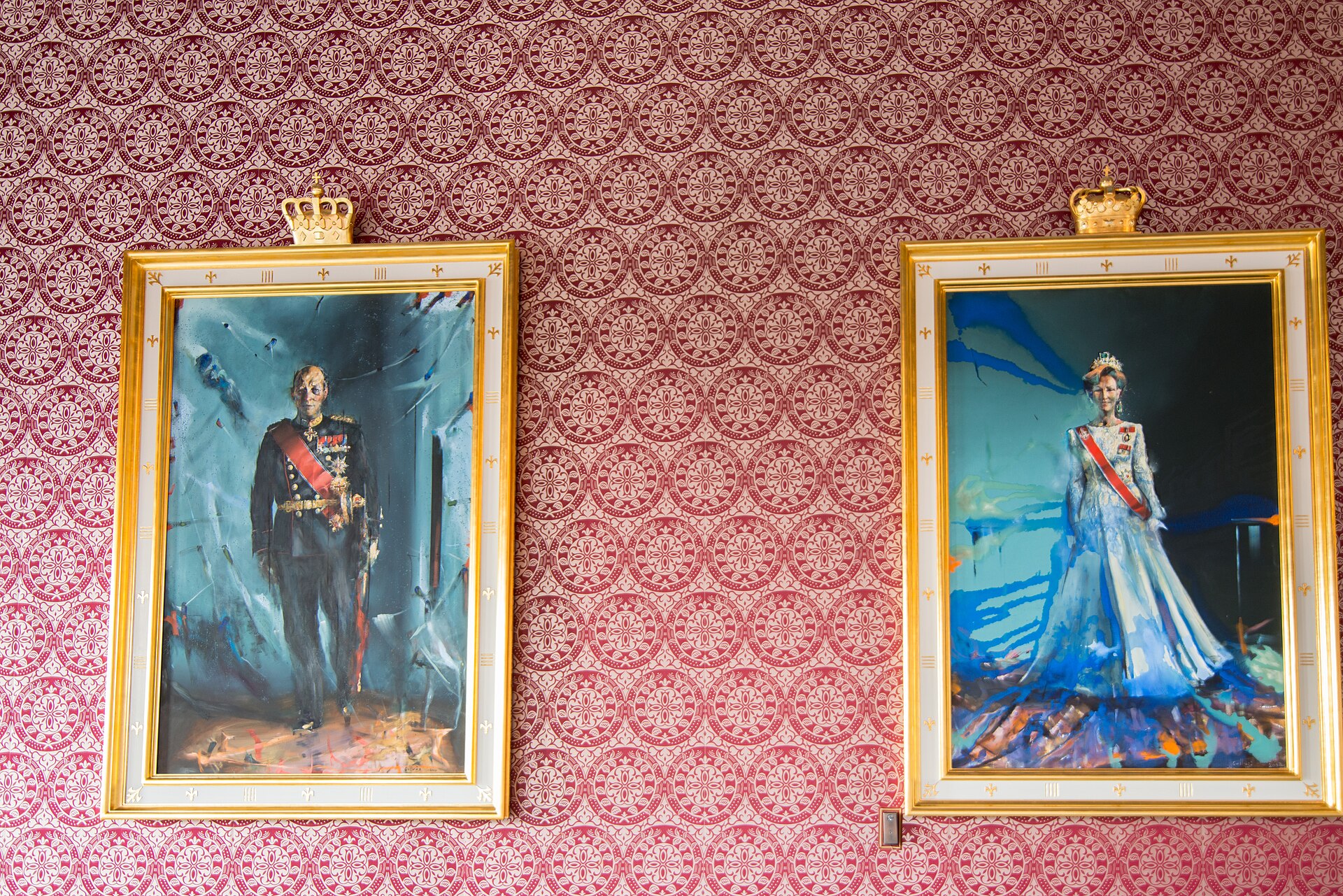

Quick Summary: King Harald Vs Death Sparks Crisis for Norways Monarchy
- Support for Norway’s monarchy fell to 54% in a February poll, down from 72% in 2024, challenging the new king’s legitimacy.
- The royal household announced King Harald’s death, marking the end of his 33-year reign.
- King Harald’s death led to Crown Prince Haakon becoming King Haakon VIII amid political and reputational challenges.
- Mette-Marit, Crown Princess, is under scrutiny due to past ties with Jeffrey Epstein, complicating the monarchy’s image.
- King Harald was hospitalized with a serious condition before passing, leading to canceled royal engagements.
Source: Open external resource
Source: Read original article
King Harald V’s passing at 89 marks more than the end of a long reign; it thrusts Norway into a moment of uncertainty. As Crown Prince Haakon ascends to the throne as King Haakon VIII, the monarchy faces a crisis of confidence.
For over three decades, King Harald was a stabilizing force, modernizing the monarchy and connecting with the public. However, his death comes as public support for the monarchy has sharply declined, from 72% in 2024 to just 54% this year. This shift transforms what could have been a ceremonial transition into a test of legitimacy for the new king.
The controversy surrounding Crown Princess Mette-Marit, linked to Jeffrey Epstein, adds to the challenges. This scandal places the monarchy under intense scrutiny, questioning whether King Haakon can distance his reign from these reputational issues.
King Harald’s death followed a serious health decline, leading to canceled engagements by Queen Sonja and Crown Prince Haakon. His passing was not unexpected, given his deteriorating condition.
As King Haakon VIII begins his reign, the focus will be on how he navigates public ceremonies, constitutional duties, and the pressing need to restore public trust in the monarchy.
AP reported that Harald was admitted to the National Hospital earlier this month, that his health worsened over the previous weekend, that Haakon visited him in hospital on Monday, that the palace escalated the warning on Thursday by calling his condition “very serious,” and that Harald died on Friday, August 28, 2026. The Guardian reported that support for Norway’s monarchy had fallen to 54% in a February poll, down sharply from 72% in 2024, a drop that turns what might have been a purely ceremonial transition into a legitimacy test for the new king.
Given the plunge in support to 54% and the intensity of scrutiny around Mette-Marit, the new king’s first appearances and statements in the coming days will be read not simply as ritual but as an early referendum on whether Norway’s monarchy can regain public trust. In announcing Harald’s death, the royal household said, “It is with deep sadness that we announce that His Majesty King Harald passed away today,” according to the Guardian.
A day earlier, AP said palace officials had described the king’s condition as “very serious,” prompting Queen Sonja and Crown Prince Haakon to cancel engagements. AP also reported that Harald had been suffering from hemolytic anemia and had been on sick leave for several weeks, facts that make clear the death followed a rapidly deteriorating medical episode rather than a sudden shock.
The most important direct official language came from the palace itself. Friday is also the day Haakon, 53, became King Haakon VIII, meaning the transition from health scare to succession was effectively completed within days rather than weeks.
AP has already confirmed the succession, but the substantive next phase will be public ceremonies, constitutional formalities and the first signals from King Haakon VIII about how he intends to lead while defending the monarchy’s credibility. King Harald V’s death on Friday did more than end a 33-year reign at age 89: it immediately pushed Crown Prince Haakon, 53, onto the throne as King Haakon VIII at a moment when Norway’s monarchy is already under unusual political and reputational strain.
The Guardian reported that support for Norway’s monarchy had fallen to 54% in a February poll, down sharply from 72% in 2024, a drop that turns what might have been a purely ceremonial transition into a legitimacy test for the new king. However, his death comes as public support for the monarchy has sharply declined, from 72% in 2024 to just 54% this year.
A day earlier, AP said palace officials had described the king’s condition as “very serious,” prompting Queen Sonja and Crown Prince Haakon to cancel engagements. King Harald V’s passing at 89 marks more than the end of a long reign; it thrusts Norway into a moment of uncertainty.
Friday is also the day Haakon, 53, became King Haakon VIII, meaning the transition from health scare to succession was effectively completed within days rather than weeks. AP has already confirmed the succession, but the substantive next phase will be public ceremonies, constitutional formalities and the first signals from King Haakon VIII about how he intends to lead while defending the monarchy’s credibility.
The scale and speed of this development has caught many observers off guard. Each new update adds another dimension to a story that is still unfolding, and the full picture will only become clear as more verified details emerge from the people and institutions directly involved.
Analysts who have tracked this issue closely say the current moment represents a genuine turning point. The decisions made in the coming weeks are expected to set the direction for months ahead, with ripple effects likely to extend well beyond the immediate actors in the story.
For those directly affected, the practical impact is already visible. People navigating this fast-changing situation are dealing with real consequences while new information continues to reshape what is known and what remains open to interpretation.
Historical parallels offer some context, though experts caution against drawing too close a comparison. Similar situations have played out before, but the specific combination of pressures, personalities, and timing here makes this moment distinct in ways that matter for how it ultimately resolves.
The political and economic dimensions of this story are deeply intertwined. What appears as a single event on the surface is in practice the convergence of multiple pressures that have been building quietly over a longer period than most public reporting has captured.