

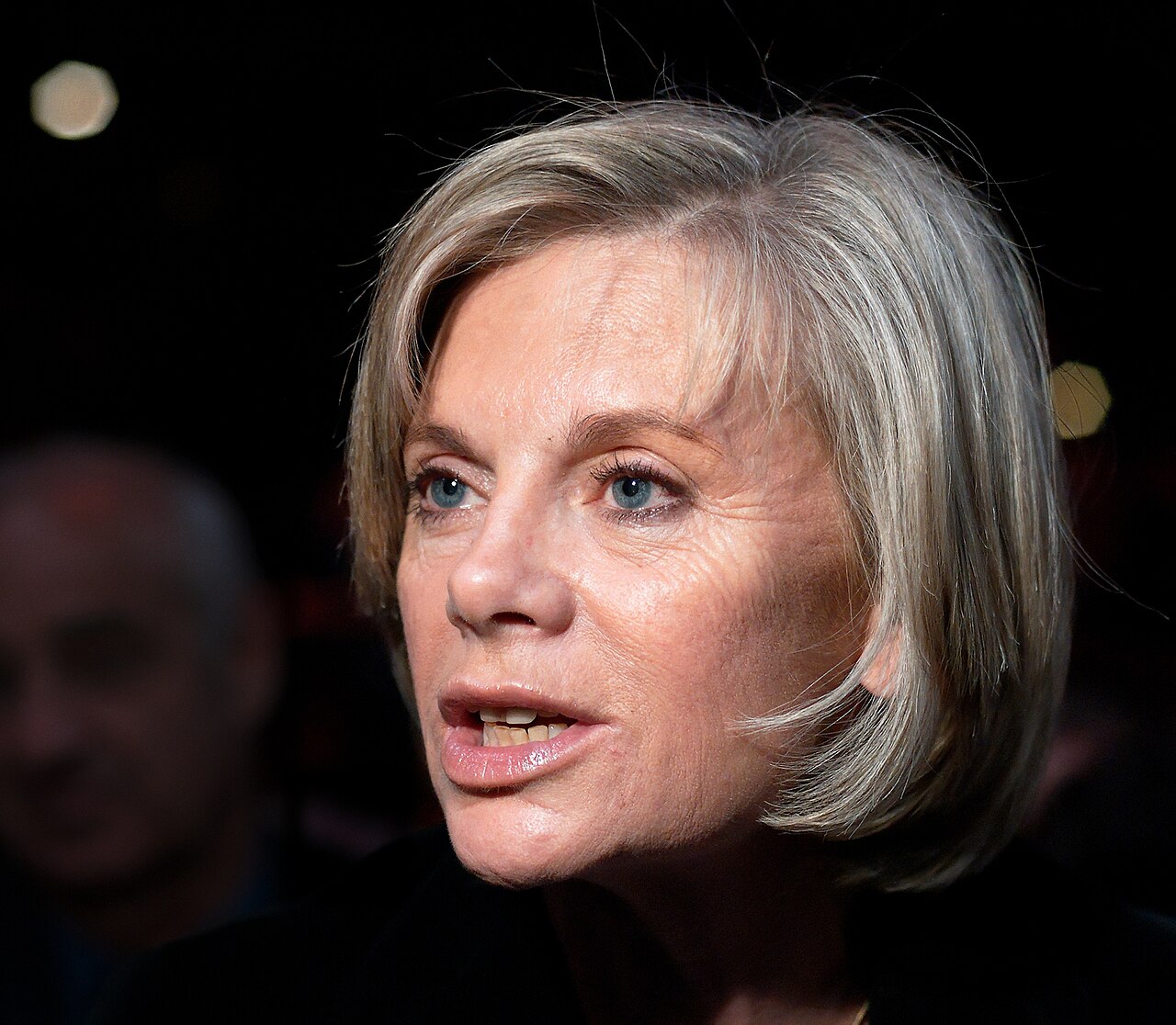

Quick Summary: Cyndi Munson Confronts Three – Way Democratic Primary for Governor
- Cyndi Munson, the first Asian American woman in Oklahoma’s Legislature, faces a three-way Democratic primary for governor.
- Connie Johnson entered the race on May 8, intensifying the Democratic primary set for June 16.
- Munson emphasizes her progressive views and personal background as key to winning in a Republican-dominated state.
- The Republican field is already engaged in a high-profile battle, complicating Munson’s campaign strategy.
- Munson’s candidacy is marked by a focus on education, healthcare, and overturning Oklahoma’s abortion ban.
Source: Read original article
Cyndi Munson’s bid for Oklahoma governor is no longer just about making history; it’s about surviving a competitive Democratic primary. As the first Asian American woman elected to the Oklahoma Legislature, Munson’s campaign initially stood out for its historic significance. However, with former state Sen. Connie Johnson entering the race, the focus has shifted to a three-way Democratic primary set for June 16.
Munson is banking on her progressive views, grassroots strategy, and personal background to carry her through the primary and into a general election in a state dominated by Republicans for 16 years. Her campaign is centered on education, healthcare, and a call to overturn Oklahoma’s abortion ban. Despite her historic candidacy, Munson faces a challenging path, as the Republican side has already consolidated around well-known contenders.
The broader governor’s race is marked by a Republican civil war over Trump loyalty and Gov. Kevin Stitt’s legacy, which could shape the general-election environment Munson hopes to enter. The Democratic primary will test whether voters prefer Munson’s pragmatic, biography-driven appeal or Johnson’s confrontational stance on Oklahoma’s systemic issues.
As the June 16 primary approaches, Munson must navigate a complex political landscape, balancing her historic identity with the need for a compelling governing rationale. Her campaign’s success will depend on her ability to convert her personal story and grassroots support into votes against both Democratic and Republican opponents.
KSWO reported on April 1, when filing opened, that Munson was then the only Democrat officially filed for governor, while the Republican side already had nine candidates. Oklahoma Voice reported on June 5 that Munson, now 41, is arguing her “progressive views, ground game and background” can carry her through the Democratic primary and into a general election in a state where Republicans have held the governor’s office for 16 years and control every statewide elective office and all congressional seats.
Connie Johnson entered the race on May 8, setting up a three-way Democratic primary on June 16 and turning what began as a history-making candidacy into a contest over who can actually survive a deeply Republican state. When she launched the campaign, she said, “I know I’m not what you would call a typical candidate for governor.
NonDoc reported a public brawl in which Drummond said, “I am glad President Trump called Gov. ” Her campaign said the June 16 Democratic primary will feature Johnson, Munson and Arya Azma.
The Democratic primary is June 16, 2026, with Munson facing Connie Johnson and Arya Azma, while the Republican field has already staged a May 28 debate in Lawton that included Drummond, McCall, Mazzei and Keating after each cleared a 12 percent polling threshold for participation. Mike Mazzei at 13 percent and former Public Safety Secretary Chip Keating at 13 percent, with Jake Merrick at 5 percent.
The freshest turn in this story is that Cyndi Munson, the first Asian American woman elected to the Oklahoma Legislature, is no longer running as the lone Democrat for governor: former state Sen. That framing matters because Munson is trying to sell herself not simply as a symbolic candidate, but as a candidate with a specific governing pitch centered on education and health care, including a call to ask voters to overturn Oklahoma’s abortion ban.
NonDoc reported a public brawl in which Drummond said, “I am glad President Trump called Gov. The Democratic primary is June 16, 2026, with Munson facing Connie Johnson and Arya Azma, while the Republican field has already staged a May 28 debate in Lawton that included Drummond, McCall, Mazzei and Keating after each cleared a 12 percent polling threshold for participation.
Munson’s candidacy is marked by a focus on education, healthcare, and overturning Oklahoma’s abortion ban. Her campaign is centered on education, healthcare, and a call to overturn Oklahoma’s abortion ban.
The scale and speed of this development has caught many observers off guard. Each new update adds another dimension to a story that is still unfolding, and the full picture will only become clear as more verified details emerge from the people and institutions directly involved.
Analysts who have tracked this issue closely say the current moment represents a genuine turning point. The decisions made in the coming weeks are expected to set the direction for months ahead, with ripple effects likely to extend well beyond the immediate actors in the story.
For those directly affected, the practical impact is already visible. People navigating this fast-changing situation are dealing with real consequences while new information continues to reshape what is known and what remains open to interpretation.
Historical parallels offer some context, though experts caution against drawing too close a comparison. Similar situations have played out before, but the specific combination of pressures, personalities, and timing here makes this moment distinct in ways that matter for how it ultimately resolves.
The political and economic dimensions of this story are deeply intertwined. What appears as a single event on the surface is in practice the convergence of multiple pressures that have been building quietly over a longer period than most public reporting has captured.