

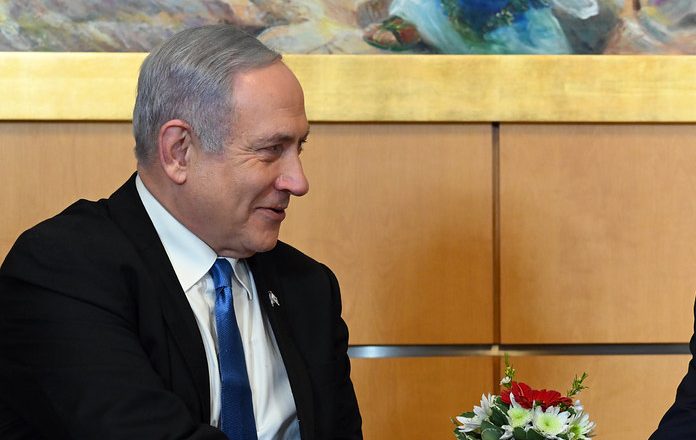

Quick Summary: Israeli Markets Brace for Impact as Netanyahu Faces Election Test
- Investors are tying a possible opposition victory to lower political risk and a stronger shekel.
- Final anti-Netanyahu campaigning intensified the sense of the election being a referendum on his leadership.
- Israelis vote on October 27, 2026, with immediate market reactions expected in the shekel and Tel Aviv equities.
- Netanyahu, the opposition led by Gadi Eisenkot, and market analysts are the main players in this scenario.
- Netanyahu sought backing from President Trump, highlighting his struggle for political survival.
Source: Open external resource
Source: Read original article
In a dramatic twist of political and financial fate, Israel’s markets are poised to react to the potential defeat of Prime Minister Benjamin Netanyahu. Investors are betting that an opposition victory could lower political risks and strengthen the shekel, despite a three-year rally in Israeli assets.
The race, intensified by last-minute endorsements and anti-Netanyahu campaigning, is viewed as a referendum on his leadership, especially after recent conflicts. The stakes are high, with market analysts closely watching the outcome and its implications for Israel’s economy.
Contextually, Netanyahu’s political survival is in question, as he seeks support from international allies like President Trump. This election is not just a political event but a crucial market catalyst, with potential impacts on Israel’s risk premium and economic stability.
As Israelis head to the polls, the immediate market reactions will be telling. The shekel and Tel Aviv equities are expected to reflect the election’s outcome, with investors hoping for reduced geopolitical tensions and a more stable political landscape.
JPMorgan had previously estimated the election could move the shekel by as much as 3% in either direction, and Tel Aviv Stock Exchange research cited in the latest coverage found volatility in leading Israeli share indexes rose by as much as 45% in the weeks after the last 10 elections compared with a typical week. Jerusalem Post, in a Reuters-sourced report published Monday, said investors are explicitly tying a possible opposition victory to lower political risk and a stronger shekel.
On October 24 and 25, final anti-Netanyahu campaigning and last-minute endorsements intensified the sense that the race is a referendum on his leadership after the October 7, 2023 attack and the Gaza war. Israelis vote Tuesday, October 27, 2026, and the first market reaction is likely to show up in the shekel and Tel Aviv equities before any coalition is actually formed.
The main players are Netanyahu, the opposition camp led around former military chief Gadi Eisenkot, and market analysts trying to price the outcome in real time. Separately, Axios reported Sunday that Netanyahu, “fighting for political survival in Tuesday’s elections,” pressed President Donald Trump for more visible backing and spoke with him twice in the previous three days.
Then on October 26, the market story sharpened into a tradable thesis: opposition victory equals lower risk premium, stronger shekel, and a likely positive local market reaction. Israeli markets have already climbed despite three years of war and political turmoil, which means the bullish case now is not about recovery from a crash but about a second leg higher if political risk falls.
Investors’ clearest new bet is that even after a three-year surge in Israeli assets, a Benjamin Netanyahu loss in Tuesday’s election could still push the shekel higher and cut Israel’s risk premium if markets read it as lowering the odds of another confrontation with Iran and easing domestic political strain. The most important fresh reporting, published Monday, is that money managers are no longer just treating the election as political drama but as a direct market catalyst: Reuters reported that some investors see further upside in Israeli stocks and the currency if the opposition defeats Netanyahu after markets already rallied through war and upheaval.
Jerusalem Post, in a Reuters-sourced report published Monday, said investors are explicitly tying a possible opposition victory to lower political risk and a stronger shekel. On October 24 and 25, final anti-Netanyahu campaigning and last-minute endorsements intensified the sense that the race is a referendum on his leadership after the October 7, 2023 attack and the Gaza war.
Israelis vote Tuesday, October 27, 2026, and the first market reaction is likely to show up in the shekel and Tel Aviv equities before any coalition is actually formed. The main players are Netanyahu, the opposition camp led around former military chief Gadi Eisenkot, and market analysts trying to price the outcome in real time.
Separately, Axios reported Sunday that Netanyahu, “fighting for political survival in Tuesday’s elections,” pressed President Donald Trump for more visible backing and spoke with him twice in the previous three days. Then on October 26, the market story sharpened into a tradable thesis: opposition victory equals lower risk premium, stronger shekel, and a likely positive local market reaction.
Netanyahu sought backing from President Trump, highlighting his struggle for political survival. In a dramatic twist of political and financial fate, Israel’s markets are poised to react to the potential defeat of Prime Minister Benjamin Netanyahu.
The scale and speed of this development has caught many observers off guard. Each new update adds another dimension to a story that is still unfolding, and the full picture will only become clear as more verified details emerge from the people and institutions directly involved.
Analysts who have tracked this issue closely say the current moment represents a genuine turning point. The decisions made in the coming weeks are expected to set the direction for months ahead, with ripple effects likely to extend well beyond the immediate actors in the story.
For those directly affected, the practical impact is already visible. People navigating this fast-changing situation are dealing with real consequences while new information continues to reshape what is known and what remains open to interpretation.
Historical parallels offer some context, though experts caution against drawing too close a comparison. Similar situations have played out before, but the specific combination of pressures, personalities, and timing here makes this moment distinct in ways that matter for how it ultimately resolves.
The political and economic dimensions of this story are deeply intertwined. What appears as a single event on the surface is in practice the convergence of multiple pressures that have been building quietly over a longer period than most public reporting has captured.