

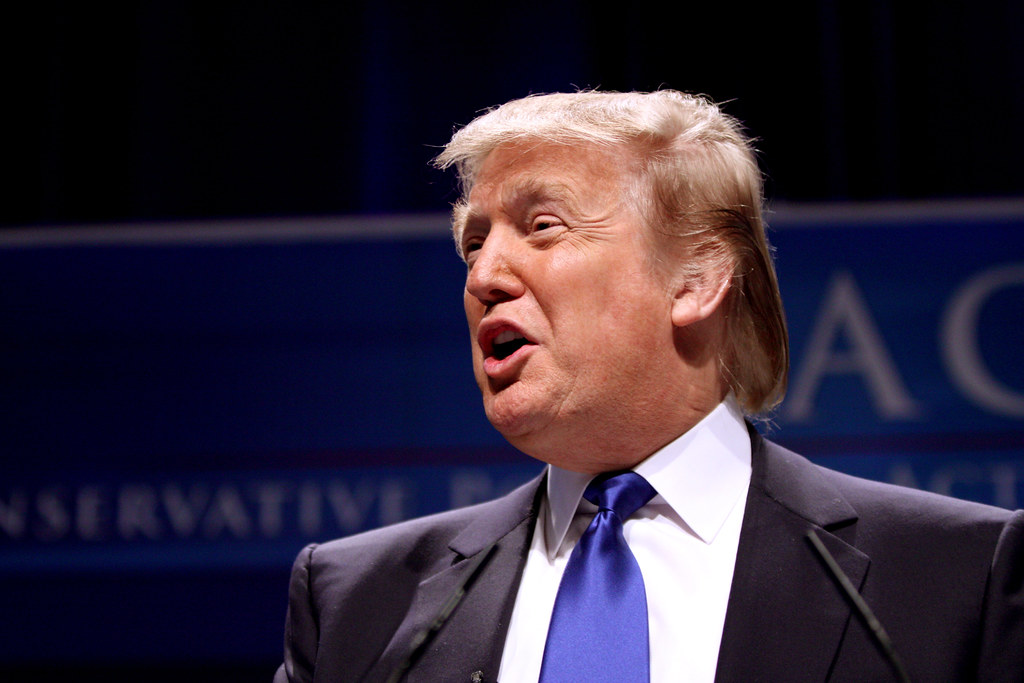

Quick Summary: Trump Attends Pentagon Ceremony Amid 9/11 Political Tensions
- 9/11 conspiracy theories have shifted from fringe to mainstream, impacting U.S. political discourse.
- Republicans are leveraging the 25th anniversary of 9/11 for political attacks against Democrats.
- Figures like Marjorie Taylor Greene highlight the internal conflict within conservative politics over conspiracy rhetoric.
- 9/11 rhetoric is now intertwined with national electoral messaging, raising questions about patriotism and political exploitation.
- Institutions created post-9/11 are now involved in domestic political conflicts, illustrating a shift in conspiracy politics.
Source: Open external resource
Source: Read original article
In a striking twist of political theater, 9/11 conspiracy theories have leaped from the shadowy corners of the internet into the glaring spotlight of mainstream American politics. This shift is no longer just a footnote in history but a central theme in today’s political discourse.
With the 25th anniversary of the September 11 attacks, Republicans have seized the moment to weaponize this historical tragedy against their Democratic opponents. This move isn’t just about revisiting old grievances; it’s about reshaping the narrative of patriotism and loyalty in the political arena. Figures like Marjorie Taylor Greene, once seen as outliers, now represent a more significant fault line within the Republican Party, as they navigate the murky waters of conspiracy rhetoric.
The broader implication of this shift is profound. The rhetoric surrounding 9/11 has evolved from a topic of fringe suspicion to a tool of national electoral messaging. This evolution poses critical questions: Is the memory of 9/11 being used as a legitimate test of patriotism, or is it merely a political weapon? Moreover, how has a party that once denounced 9/11 conspiracy talk come to tolerate, and perhaps even embrace, adjacent forms of conspiratorial politics?
Adding to the complexity is the role of institutions created in the wake of 9/11. These bodies, initially designed to protect national security, are now embroiled in domestic political conflicts. This development suggests that the legacy of 9/11 in politics extends beyond the attacks themselves, highlighting how conspiracy-friendly politics have permeated institutional frameworks.
As the political landscape continues to evolve, the interplay between solemn commemoration and political exploitation of 9/11 remains a contentious issue. The challenge ahead lies in balancing respect for the past with the realities of present-day political strategies.
On the campaign side, Trump this week made an unrelated but headline-dominating promise to send every American adult $5,000 if Republicans hold Congress, illustrating how the same political event space has mixed commemorative symbolism with maximalist election-season spectacle. Axios reported today that Republicans are using the anniversary in multiple midterm races to portray some Democrats and their allies as anti-American, with Michigan singled out as the clearest case: Republican Senate candidate Mike Rogers is expected to use his convention speech to target Democrat Abdul El-Sayed over 9/11.
The most important current development is that the 25th anniversary of the September 11 attacks, observed on Friday, September 11, 2026, has become an active campaign-stage issue, not just a memorial moment. The Washington Post reported yesterday that agencies and structures created after 9/11 have, in its framing, been turned inward in domestic political conflict, saying the Office of the Director of National Intelligence has been central to Trump’s promotion of false election conspiracies and retribution efforts.
What makes the story newly newsworthy this week is the juxtaposition: on the same anniversary cycle, President Donald Trump is attending a Pentagon ceremony marking the deaths of nearly 3,000 people, while campaign operatives and allied media are reviving 9/11 as partisan ammunition. AP reported today that Trump is set to commemorate the anniversary at the Pentagon, one of the three attack sites.
politics, with Republicans using the 25th anniversary to attack opponents while past conspiracy rhetoric tied to figures like Marjorie Taylor Greene remains a live fault line inside mainstream conservative politics. That matters because it shows 9/11 rhetoric moving from historical grievance and fringe suspicion into present-day electoral messaging at the national level.
” That quote is still one of the clearest examples of establishment Republicans acknowledging that 9/11 conspiracy theories had touched elected office itself. The central conflict is twofold: first, whether 9/11 memory is being used as a legitimate test of patriotism or as a political weapon; second, whether a party that once publicly condemned 9/11 conspiracy talk is now more willing to live alongside adjacent forms of conspiratorial politics.
9/11 rhetoric is now intertwined with national electoral messaging, raising questions about patriotism and political exploitation. Institutions created post-9/11 are now involved in domestic political conflicts, illustrating a shift in conspiracy politics.
In a striking twist of political theater, 9/11 conspiracy theories have leaped from the shadowy corners of the internet into the glaring spotlight of mainstream American politics. With the 25th anniversary of the September 11 attacks, Republicans have seized the moment to weaponize this historical tragedy against their Democratic opponents.
The rhetoric surrounding 9/11 has evolved from a topic of fringe suspicion to a tool of national electoral messaging. This evolution poses critical questions: Is the memory of 9/11 being used as a legitimate test of patriotism, or is it merely a political weapon?
Moreover, how has a party that once denounced 9/11 conspiracy talk come to tolerate, and perhaps even embrace, adjacent forms of conspiratorial politics? This development suggests that the legacy of 9/11 in politics extends beyond the attacks themselves, highlighting how conspiracy-friendly politics have permeated institutional frameworks.
The scale and speed of this development has caught many observers off guard. Each new update adds another dimension to a story that is still unfolding, and the full picture will only become clear as more verified details emerge from the people and institutions directly involved.
Analysts who have tracked this issue closely say the current moment represents a genuine turning point. The decisions made in the coming weeks are expected to set the direction for months ahead, with ripple effects likely to extend well beyond the immediate actors in the story.
For those directly affected, the practical impact is already visible. People navigating this fast-changing situation are dealing with real consequences while new information continues to reshape what is known and what remains open to interpretation.
Historical parallels offer some context, though experts caution against drawing too close a comparison. Similar situations have played out before, but the specific combination of pressures, personalities, and timing here makes this moment distinct in ways that matter for how it ultimately resolves.
The political and economic dimensions of this story are deeply intertwined. What appears as a single event on the surface is in practice the convergence of multiple pressures that have been building quietly over a longer period than most public reporting has captured.