

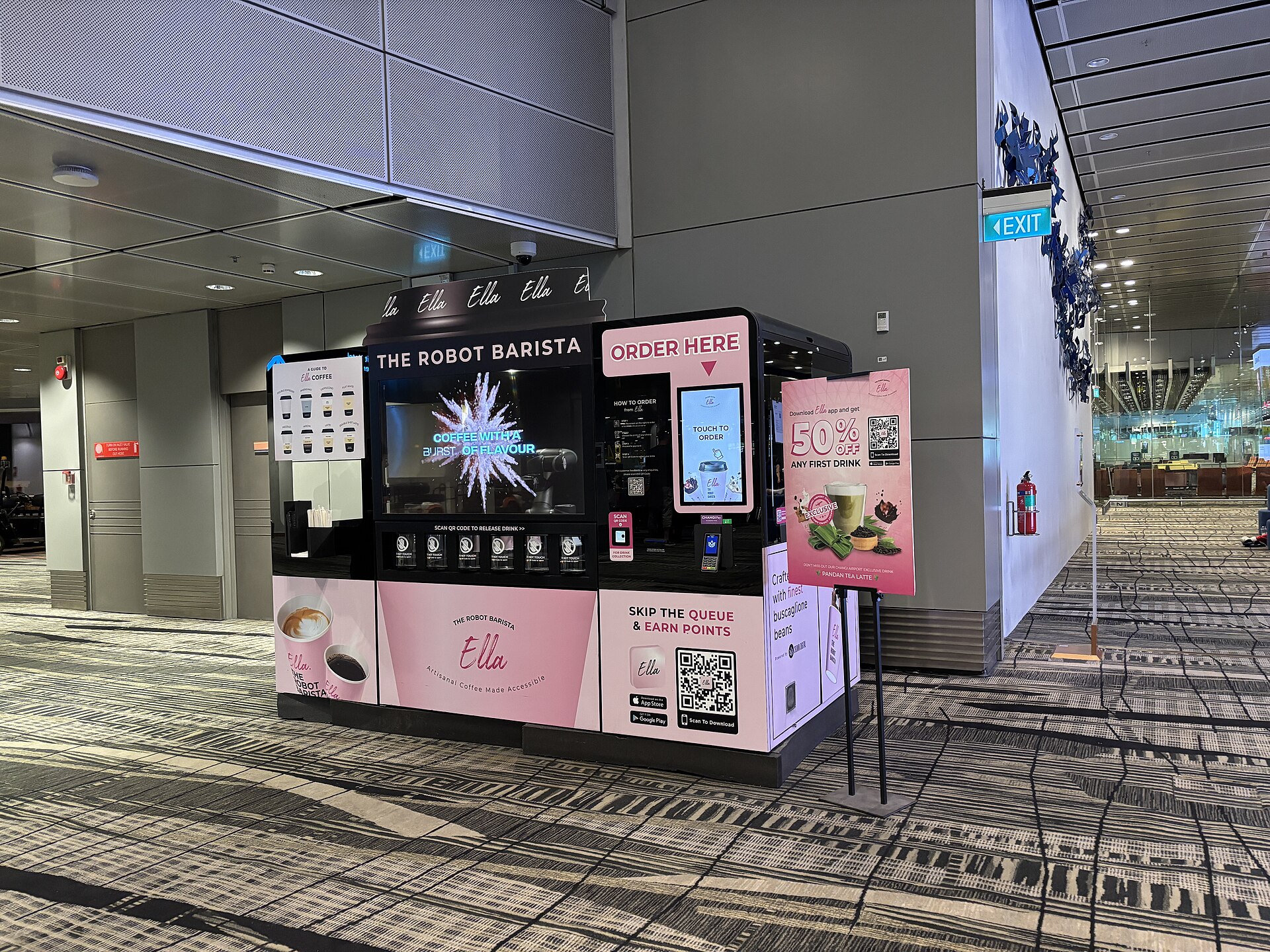

Quick Summary: Robotic Kiosks Surge to $2.18 Billion in 2026, Transforming Coffee Retail
- Hi-Dolphin’s COFE+ robotic café outperformed human baristas at the 2026 Hongqiao International Coffee Culture Festival, making three Americanos in 2 minutes 43 seconds.
- The robotic barista market reached $2.18 billion in 2026, projected to hit $4.05 billion by 2030, emphasizing cost savings over novelty.
- Startup costs for robotic kiosks range from $28,000 to $80,000, significantly lower than traditional café setups costing $200,000 to $500,000.
- Robotic kiosks can replace six barista-equivalents, saving $40,000 to $80,000 annually, with gross margins of 70% to 85% compared to staffed cafés.
- Hi-Dolphin’s COFE+ operates in nearly 70 countries and over 200 cities, serving major clients like Amazon and Google.
Source: Open external resource
Source: Read original article
The future of coffee retail is brewing, and it’s robotic. In 2026, the robotic barista market has surged to $2.18 billion and is expected to reach $4.05 billion by 2030. This isn’t just a tech fad; it’s a serious business solution to rising labor costs and operational inefficiencies.
At the heart of this transformation is Hi-Dolphin’s COFE+ robotic café, which recently bested human baristas at the Hongqiao International Coffee Culture Festival. This victory isn’t just about speed; it’s a statement that automation can deliver quality and efficiency unmatched by human hands. The COFE+ isn’t alone. Across the globe, robotic kiosks are proving their worth by slashing startup costs and boosting profit margins.
The numbers speak volumes. Traditional cafés are struggling with labor costs consuming up to 35% of revenue and turnover rates soaring above 75% in urban areas. In contrast, a single robotic unit can save operators $40,000 to $80,000 annually and achieve gross margins as high as 85%. These machines are not just replacing baristas; they are redefining the economics of coffee retail.
Hi-Dolphin’s COFE+ is leading the charge, operating in nearly 70 countries and serving high-profile clients like Amazon and Google. With over 120 patents and 15 major certifications, this technology is not just a novelty; it’s becoming a staple in the global retail landscape.
The question isn’t whether AI can enter the coffee scene—it’s whether businesses should trust it with their operations and customer experience. As robotic kiosks continue to roll out worldwide, the industry is on the cusp of a major shift. Will this be the end of the traditional coffee shop as we know it? Only time will tell.
In June, Hi-Dolphin said its 7th-generation COFE+ robotic café beat elite baristas at the 2026 Hongqiao International Coffee Culture Festival, finishing three premium Americanos in 2 minutes 43 seconds, or 54 seconds a cup, versus 3 minutes 35 seconds, or 72 seconds a cup, for the humans. The timeline is compressed: the headline EIN market piece was published today, Friday, August 28, 2026; the companion investor-capital story also appeared today; Manna Coffee’s fresh funding news landed August 17; and the strongest public product-performance stunt, COFE+’s barista showdown, was announced June 17 but is still being used as a proof point in this week’s coverage.
05 billion by 2030, but the real news is that the sector is pitching itself not as a novelty anymore, but as a hard-numbers answer to labor costs, with claimed payback periods collapsing to as little as two to six months. 18 billion this year, while a same-day investor-focused EIN report says startup costs for a robotic kiosk run roughly $28,000 to $80,000, versus $200,000 to $500,000 to open a conventional café.
It also claims robotic kiosk operators can reach gross margins of 70% to 85%, versus 40% to 60% for staffed cafés, with high-traffic deployments producing monthly net profits of $12,000 to $18,000 per unit. 25 million in seed financing at a $15 million pre-money valuation, with a goal of activating more than 500 locations.
The bullish reports say automation solves labor shortages, rising wages, and overnight operating gaps, but other 2026 reporting has exposed how messy AI can be in live food-service settings. The main August 28 article says traditional cafés in major Western markets are now seeing labor consume 25% to 35% of revenue, with turnover above 75% a year in metro areas, and estimates each robot can replace about six barista-equivalents while saving $40,000 to $80,000 annually.
1 grams and 1% for the human competitors. Fortune reported in May that Starbucks quietly retired an AI inventory agent after barista complaints that it produced inaccuracies and slowed work, while PBS and other outlets reported that an AI-run café experiment in Stockholm ordered bizarre supplies including 6,000 napkins, four first-aid kits, 3,000 rubber gloves, and canned tomatoes the café did not even use.
Startup costs for robotic kiosks range from $28,000 to $80,000, significantly lower than traditional café setups costing $200,000 to $500,000. Robotic kiosks can replace six barista-equivalents, saving $40,000 to $80,000 annually, with gross margins of 70% to 85% compared to staffed cafés.
Traditional cafés are struggling with labor costs consuming up to 35% of revenue and turnover rates soaring above 75% in urban areas. In contrast, a single robotic unit can save operators $40,000 to $80,000 annually and achieve gross margins as high as 85%.
25 million in seed financing at a $15 million pre-money valuation, with a goal of activating more than 500 locations. The bullish reports say automation solves labor shortages, rising wages, and overnight operating gaps, but other 2026 reporting has exposed how messy AI can be in live food-service settings.
The scale and speed of this development has caught many observers off guard. Each new update adds another dimension to a story that is still unfolding, and the full picture will only become clear as more verified details emerge from the people and institutions directly involved.
Analysts who have tracked this issue closely say the current moment represents a genuine turning point. The decisions made in the coming weeks are expected to set the direction for months ahead, with ripple effects likely to extend well beyond the immediate actors in the story.
For those directly affected, the practical impact is already visible. People navigating this fast-changing situation are dealing with real consequences while new information continues to reshape what is known and what remains open to interpretation.
Historical parallels offer some context, though experts caution against drawing too close a comparison. Similar situations have played out before, but the specific combination of pressures, personalities, and timing here makes this moment distinct in ways that matter for how it ultimately resolves.
The political and economic dimensions of this story are deeply intertwined. What appears as a single event on the surface is in practice the convergence of multiple pressures that have been building quietly over a longer period than most public reporting has captured.